Real Estate and *stuff *
A real person helping real people with real estate
You can scroll the shelf using ← and → keys
You can scroll the shelf using ← and → keys
How to reshape your house for the way you live now — and take control of your future.
by: Gale Steves
As if experiences gained through reaching midlife weren’t enough, the pop of the housing bubble and the uncertain drumbeat of economic news reinforce a resounding truth: things change.
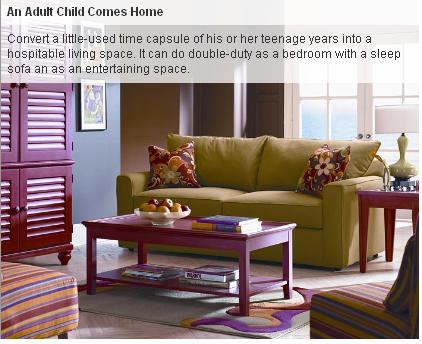 Maybe you’re working from home more often these days, or maybe you’re not sure where you’ll be working after the next quarter. Perhaps you’ve recently divorced, or your postcollege kids have moved out of the house, although a lot of their stuff hasn’t.
Many people in such circumstances consider downsizing — moving to a smaller, easier-to-manage home. But if Sonny doesn’t get a job within the next few months, he may be back. And it might not be too long until Mom will be unable to continue living on her own. Downsizing might not be the right thing right now.
But rightsizing may be. As things change, homes can change, too.
Rightsizing is the concept of working with what you have by making better use of existing space. It is a process in which you analyze the spaces in your home, how you currently use them and the practical possibilities to adapt them to better serve your needs and lifestyle. The promise is that you can live more fully in your longtime family home if you rightsize — and avoid the wrenching process of moving. Whether you’re driven by immediate or future needs, now may be the time to look at your home in a new way.
Rightsizing questions
The rightsizing process starts with an analysis of the existing spaces within your house and how they’re being used. Since home designs and individual lifestyles are diverse, it’s not possible to formulate a definitive list of questions, but typical issues include:
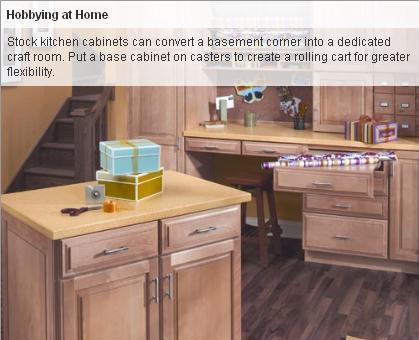 The point is to assess how you actually use the defined spaces in your home. For example, a foyer may be superfluous if your main entry is through the mudroom or garage. Similarly, the oversized great room of the 1990s doesn’t necessarily work for every family. This space might incorporate too many functions to be shared comfortably: TV viewing, eating, homework, reading or game playing. The dining room that gets used three times a year can be repurposed. And for many of us, one home office may simply not be enough; in this economy, more than one family member may be working from home.
How do you want (need) to live in your house?
Next, ask yourself what kind of spaces you really need in your home now. These questions often arise from lifestyle changes that typically occur in midlife, which may make new demands on the spaces available in your home:
Of course, there are many more questions depending on the size and floor plan of your home. But the answers to this set of questions typically can be found in your answers to the first set, which pinpointed the underused and misused areas of your home.
Rightsizing solutions
Start by forgetting about the traditional room names. Give yourself permission to reimagine how these spaces can be used based on your
family’s needs and varied activities. Often, the key to discovering good, usable space is decluttering — clearing out furniture and other items that have accumulated over the years. Visualize how the room would look, and then create a floor plan to work out the furniture changes before you begin to move things around.
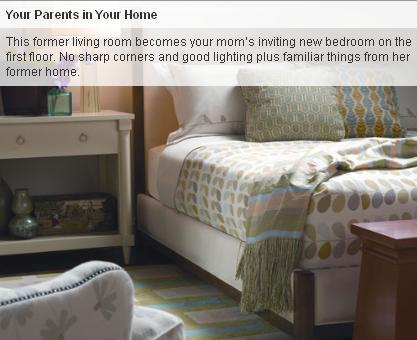 Take that seldom-used living room, for example. It could be a new office for a home-based business with easy access to the front door. Or it may make a perfect “chat room” for quiet conversations when the great room is otherwise occupied with sound and music. If Grandma is coming for an extended stay, could it be reconfigured as an easy-access, main-floor bedroom so she doesn’t have to climb the stairs? Can the first-floor powder room be expanded to a full bath just for her? She might enjoy helping in the kitchen if she didn’t have to reach so high for things stored in the wall cabinets, if she could work while sitting at a counter. Maybe some cabinet reconfiguration and pullout storage accessories are in order. Wouldn’t these rightsizing changes make sense for your own aging-in-place strategy?
Many more possible scenarios can be addressed with rightsizing so you can stay in your home for life (see “Rightsizing Strategies” below). All it takes is honest analysis, a little imagination and the will to change things for the better.
NEED MORE OFFICE SPACE
NEED STUDIO OR HOBBY SPACE
ADD ACCESSIBLE QUARTERS FOR ELDERLY RELATIVE
ADD QUARTERS FOR A BOOMERANG CHILD
NEED EASIER-TO-MANAGE KITCHEN
NEED QUIET SPACE TO READ AND RELAX
NEED MORE STORAGE SPACE
NEED TO MOVE LAUNDRY OUT OF THE BASEMENT
CONVERT POWDER ROOM INTO FAMILY BATH
Gale Steves is author of Rightsizing Your Home: How to Make Your House Fit Your Lifestyle (Northwest Arm Press). She writes about home design issues.
Oh now this is very cool! An iphone app for home buyers to search available homes on Trulia! It would be even better if it was also in a Droid App but one step at a time! Has anyone used this? Iphone people? Where are you? It’s a free app – so please check it out and let me know how you like it.
Direct link to download the free Trulia Home Search app: http://itunes.apple.com/app/trulia-real-estate-search/id288487321

This is a very cute and funny article that a friend showed me from the Improper Bostonian(9/22-10/5) issue. Light reading – enjoy!


Fannie Mae is looking to reduce its inventory of homes by the end of the year and has provided a new incentive for buyers to look towards those homes. They are offering up to 3.5% in closing costs assistance from now until 12/31/2010. There are 190 single family homes in Worcester County alone that would qualify for this bonus incentive! It’s a fantastic time to be a buyer!

Smart Spending…By Claes Bell • Bankrate.com
A home is the biggest purchase that most people will ever make. Doing regular maintenance is the best way to ensure you protect that asset and avoid costly repairs down the line, says Matt Blashaw, licensed contractor and host of the DIY Network show “Money Hunters.”
“You have to think of your home like a car, and you just have to give it the maintenance in order for it to treat you right,” Blashaw says. “When people don’t take the time to do that maintenance, it’s at the worst times — during a heavy winter or now in the rainy season — when the house comes back to bite you.”
But proper do-it-yourself home maintenance can save you money. Here are seven tips to help you get the most out of your home-improvement dollars and keep your home in good working order for years to come.
1. Look for used tools at yard sales and online, and if you need an expensive tool for just one project, don’t be afraid to rent. For a tool you’re planning to use once or twice for a specific project, Blashaw says it doesn’t make sense to pay full price for a brand-new tool. Instead, he suggests going to yard sales and using online classifieds to track down a high-quality used tool that can cost hundreds less.
Another option to save money is tool rental. For hundreds or even thousands less than it would cost to buy them, Blashaw says you can rent professional-grade tools that can make projects go more quickly. Here are some tools Blashaw recommends renting rather than buying:
Another advantage to renting: Rental professionals have a lot of knowledge to offer about how to properly use a tool and get your DIY project done safely.
 2. After you finish a home-improvement project, there are always leftover screws, bolts and other small bits of hardware. You can use store-bought organizers or even glass or plastic food containers to organize and store them. It will keep you from making a trip to the hardware store for a minor fix in the future, and you’ll save money. “We all go out and look for that one little screw, and you have to buy a bag of them,” says Blashaw. “You can just constantly build your collection.”
Larger cuts of wood, especially plywood at least three-quarters of an inch thick or boards more than 3 feet long, especially if they’re of a more expensive hardwood, should also be saved for future use, says Blashaw. Small, thin pieces of wood called shims should be retained to help level out and brace or prop up things in future projects, says Blashaw.
 3. If you’re flexible with your paint colors, there are two great ways to save on painting. “Oops” paint that was mixed incorrectly or a customer didn’t end up buying is available in the paint department of most hardware stores and can go for a fraction of the price of regular paint. Recycled paint is often available for free or at low prices from local municipalities and waste management departments. Another way to save money is to select a paint that requires fewer coats, says Bob Markovich, home editor for Consumer Reports. That means you can buy less paint and still finish the job. Markovich recommends Home Depot’s Behr brand, which led Consumer Reports’ latest ratings in both performance and price.
4. Many times, routine maintenance can extend the life of your home’s major components and prevent expensive and time-consuming repairs in the future. Something as simple as sweeping debris off your roof once a year can help prevent moisture from building up. Moisture can break down your roofing material and cause an expensive leak, says Blashaw.
Blashaw recommends these other cheap and easy preventive measures:
5. For major repairs and home upgrades, you may be able to get a better deal if you shop for materials like tile, air conditioners or lumber separately at a discount store or warehouse rather than paying the markup many installers tack on to materials they provide, according to “The Owner-Builder Book” by Mark and Elaine Smith. Just make sure you work the deal out with the tradesman or contractor beforehand and find out any technical requirements he might have for materials before you buy. Another good way to save money for skilled DIYers is doing the less-complicated-but-labor-intensive first steps of a home-improvement project and calling in a professional to finish it. For instance, if you’re doing a bathroom remodeling job, you can yank outdated mirrors, flooring and fixtures yourself, but call in professionals to do the plumbing and remodeling.
6. Misplaced tools can lead to buying duplicates when you can’t find a critical tool during a home repair. But more than that, a messy, cluttered work space may cause you to abandon a money-saving DIY project altogether, says Blashaw. “A clean work space is going to make you want to work,” says Blashaw. Blashaw suggests putting up a cheap pegboard in your garage and hanging tools on it, then drawing their outline in black permanent marker so you know what goes where.
 He says most people can get by with these basics:
And if you decide to expand your inventory of tools, make sure you create a place for a new tool and its charging station, if it has one.
All in all…these are great ideas but I always recommend buying new tools 🙂
By Steve McLinden of Bankrate.com
 Q: The house next door is vacant. The previous owners let it go into foreclosure and moved out. The bank that owned it has abandoned it. I know because I’ve tried to contact them, and they say they have no record of it. Can I go in, change the locks, fix it up and rent it out? Will I be protected under squatter’s rights?
— Laura
A: The problem is, some entity does own that distressed house, even though it’s not “taking ownership of it” in the way that you and the rest of the neighborhood would like to see. If that foreclosure was not finalized — which is possible — the previous owner is still the owner. If it was finalized, the bank or whoever acquired the bank’s assets owns it.
Sorry, but a bank employee who wasn’t willing to dig into the property’s institutional history isn’t an official information source. Countless distressed properties seem to be disappearing in an ocean of red tape and red ink these days.
Research county records to locate the property deed, which will list the owner. Then make the right contacts from there.
Of course, you could try to take “adverse possession,” where you openly and without resistance “squat” on the property from five years to 25 years or more, depending on applicable laws. At that point, occupancy rights might revert to you.
But I don’t recommend it. The place could all be whisked away from you at a moment’s notice, and any tenants would be out on the street.
By the way, squatters who take over abandoned houses face more legal challenges in the United States than in most other countries. This is true even in so-called “front-door squats,” where occupants make little effort to conceal their presence.
A better option would be to make a cursory cash offer to the owner that would cover back taxes. This assumes you can locate the owner.
There also may be a local process for acquiring the home cheaply. At least 100 U.S cities have modified their abandoned-home laws in the last three years, and many are working with buyers who are interested in seized homes.
Some cities — such as Detroit, Atlanta and Cleveland — have clear-cut processes that allow adjacent owners to acquire abandoned properties.
Home-abandonment laws in this country essentially say owners must clearly demonstrate they have given up rights to a property. Long-term nonuse of a property isn’t quite enough to illustrate that, although it may help illustrate the owner’s intent to abandon.
On the other hand, leaving a house unguarded or free and open in a place that’s easily accessible can be considered abandonment in court. But there are no guarantees.
People who have moved into abandoned homes and started paying property taxes on them in recent years have had some success keeping them — or at least getting those tax payments reimbursed when the houses’ true owners reclaim them. But it’s a process fraught with uncertainty.
In the meantime, if you are entering the property to police it for trash, mow the overgrown grass or perform other upkeep, you are probably trespassing, at least technically.
Of course, few would complain about this case because it improves the neighborhood’s appearance. But if you were to mow into a cable or injure yourself there, you could face nagging legal or insurance complications.
To clean the place without such personal risk, contact the municipality or governing body where you live with a code-compliance complaint — be it for an overgrown lawn, trash, broken windows, vagrancy on the property, etc.
That should at least get an inspector out there who will assess the situation and contact the absentee landowner, if possible. If nothing else, the city will clear the lot and bill the owner.
Side note: Interesting!!! This article hits home about squatters in MA http://www.reuters.com/article/idUSN2849018120080519?pageNumber=1 – beware! It cites an incident where a person posed as the legal owner of the property and took cash (first / last / security) to rent out space that he was not entitled to. The renters are out the money – and a place to live. All the more reason to work with a real estate agent!
This is a great event! Borderland State Park in Sharon is BEAUTIFUL and has some great trails! 
GSRNE (German Shepard Rescue of New England) hosts this event every year to benefit not only their rescue organization but many others. I will be there this year because I have made it part of my business to make a donation in my client’s name after every closing to the MSPCA or the rescue of their choice. I will also be representing Paws NE and CrossPaws! CrossPaws is a brand new company that provides great products for dogs and dog owners and donates a portion of each sale to rescue groups aimed at reducing dog overpopulation in shelters.
Stop by! Enjoy the day! Raffles, prizes, canine good citizen testing, agility and police dog demos and two-mile rescue dog walk! The weather is supposed to be sunny and cool – PERFECT! Saturday, October 2nd, 10am to 3pm, Borderland State Park Sharon, MA

I noticed this morning that was an amazing number of properties in the Worcester area from the weekend listed for sale by the “owner”. Attractive pictures of the insides of homes with “no money down”…”why rent when you can own”…”buy this home cheap”…”hundreds in your area” but no address or purchase price and only a monthly rate. The ads also did not have a company name or a reply to address (not even a Craig’s List reply to email) so the only way you could get in contact with them was to call their phone number.


The phone number varied but was always a 508 number and the ads claimed they were open 9am to 8m Pacific time. I’m not sure why someone in the 508 area code would be working Pacific time hours. So I called and received their recording which directed me to their website. It’s www.homestarsearch.com. I did a quick google search and without even clicking on their web address did see numerous scam alerts such as these…
And the Better Business Bureau had a few things to say about them as well. Including that they do not actually a possess a real estate license to sell properties and have had many complaints, such as this one…
“Most complainants allege difficulties canceling after agreeing to a trial offer granting access to the company’s database of property listings. Other customers complain that property listings on the site are not as advertised, alleging listings are not available in their area; are not offered at the listed price; do not exist; or meet the specific criteria needed by the customer. Others report they reach angry homeowners who have not listed their properties, or that numbers are disconnected or no longer in service. Some complainants seeking rental listing information report that rental properties are limited, contain foreclosure listings, are not offered at the listed price, or have already been rented.”
Beware! Their ads have just about taken over the “real estate for sale” portions of craigslist.org!
 New! We all like new stuff – especially me! And this is brand new… a Facebook page for rentals in Worcester County. If you’re looking for a new place to rent, it’s the one place to go to see all the latest rentals – without dozens of realtors calling and emailing you. If you are a landlord with an empty unit – you can’t pass this up.
A combination of Re/Max with a team of local agents gives you the best of both worlds. Unparalleled expertise and experience with Re/Max with the local face and name of realtors who are HERE and ready to take care of your rental. As a renter, you will be reviewing available units in no time at all. As a landlord, you can relax and know that we are showing your rental and screening the applicants so that you don’t have to!
Check it out…like it…friend us…share it… Remax Renting in Worcester County
 National Punctuation Day! It’s the day to remind ourselves as we’re texting “ur” and “u” and “???” that we do need to pay attention to punctuation when we are writing emails and letters outside of our texting conversations. It’s the “celebration of the lowly comma, correctly used quotation marks, and other proper uses of periods, semi-colons, and the ever-mysterious ellipsis” and this year is the 7th Annual National Punctuation Day.
Wikihow has a great article on the proper use of the question mark. (How do I use that?) here http://www.wikihow.com/Use-Question-Marks-Correctly but I am really fond of the official site myself http://www.nationalpunctuationday.com/.
According to the official site (and since it’s official, we should probably look upon them as experts) here is the best way to celebrate National Punctuation Day…
Enjoy!


