Real Estate and *stuff *
A real person helping real people with real estate
You can scroll the shelf using ← and → keys
You can scroll the shelf using ← and → keys
 As the rental market continues to grow there is a lot of competition for both good places and good tenants. The landlords are put in the difficult situation of finding good tenants with not-so-perfect credit histories and the prospective tenants are desperately trying to plead their case and explain their situation while having a nice and secure place to live.
With any market that is in demand, opportunist abound. I have seen rental ads that offer beautiful homes for out-of-this-world affordable monthly rental prices. These ads take you through a series of websites until you are on a homepage that requests money to sign-up for the rental showing. You should never pay money to “see” an apartment.
The latest scam is for single family rentals. The ad boasts a single family house for rent and seems to be fairly normal other than the monthly rental price is well below current market rates. It lacks any pictures or details other than the town, number of bedrooms and the rental price. There is a delayed response to any information requests via email and no phone number.
After a day or so…an email comes across with a story about how the owner had to move quickly to take advantage of a land deal overseas and will not be able to show you the house. It encourages you to do a drive-by of the property and provides an address for you to do so. The email then states that they can mail you the keys after you provide “some” information about yourself so that they can be secure with who they are renting to if you happen to like the house.
The email continues on to explain that there is a For Sale sign in front of the house which will be removed after you rent it. Here’s the kicker…it’s a REAL HOUSE that is REALLY for sale! If someone at all doubted the legitimacy of the email and did the drive-by, it would all line up. They wouldn’t even have to drive by; they could just Google the address and it would come up!
It gets better…
The email that is responding is a yahoo email that matches the name of the Realtor that has the house listed!! So if the house is listed with me, it would come from amymullen@yahoo.com. Many email programs let you determine the response email (or display email) and they don’t necessarily need to be valid email addresses.
So…if you were wary and decided to check out the house and found it all to be as you expected. And were still wary and decided to continue to respond to this person because it still all appears valid…you will receive another email explaining that they need the security deposit before they can “mail” you the keys to gain entrance. As far as you know, it’s the Realtor who is emailing you. They do not ask for a credit check and do not have a person in the area to show you the house. Then, they have your money and you never receive any keys.
Protect yourself!! By using a Realtor to find your next rental or list your available rentals, we can reduce the number of scams and hopefully save some people from being victims to them.
 No longer exiled to dank basements, high-efficiency — and high-design — heating and cooling equipment has become something homeowners show off.
By Gwendolyn Bounds of The Wall Street Journal
In June, Peter and Sara Starr gave dinner guests a tour of their new Bayside, Calif., home. There’s the designer kitchen fitted with free-standing ergonomic furniture, and the valley views, complete with majestic redwoods. But the pièce de résistance sits just off the living room: a 100-square-foot nook otherwise known as the boiler room.
Inside hums the heart of about $70,000 in state-of-the-art heating and electrical equipment. Rooftop solar panels feed a sleek hot-water tank and an array of batteries storing electricity and feeding excess power back to the grid. Hanging nearby, a petite black boiler provides radiant heat while hundreds of feet of copper piping snake outward, delivering warmth and water to the 1,800-square-foot house.
“It looks like the ‘Star Trek’ Enterprise,” says Peter Starr, 61. “It’s really a little focal point and a sign of pride.”
 Say goodbye to the scary room, that dank, dark spot where boilers and water heaters work among the spiders, with human visits taking place only when something — “Honey, there’s no hot water!” — goes wrong. As homeowners begin to in renewable energy and other high-efficiency equipment, some are spiffing up the mechanical room and, in some cases, trying to make the air conditioner a showpiece. (Bing: Federal tax credits for energy efficiency)
Producers of this stuff are touting style. Take the LG Electronics Co. Art Cool duct-free air-conditioning units, which hang directly on interior walls and can frame works of art. Last year, Nortek Inc. launched a line of Maytag gas furnaces with “fingerprintless” faux stainless doors. General Electric Co. recently rolled out its futuristic, $1,600 GeoSpring hot-water heater, which looks like it might share DNA with the Jetsons’ cartoon robot maid, Rosie.
Slide show: Inside the high-fashion boiler room
Such gadgets are the latest means for leaving the Joneses in the dust.
“The mechanical room is now like the wine room or the library,” says Stephen Bohner, owner of Alchemy Construction Inc. in Arcata, Calif.
Bohner installed some of the Starrs’ equipment. He says all of his new construction projects include renewable-energy equipment, such as solar panels.
“If you are spending money on that stuff, you want to show it off,” he says.
Vince Kimbel recently installed a GeoSpring water heater in his Louisville, Ky., home. The unit combines energy-efficient heat-pump technology with an electric heating element, pulling warmth from surrounding air and transferring it into the tank. Says Kimbel, a builder: “The look translates into people saying, ‘This is different.’ If it was a traditional water heater, they wouldn’t give it a second look.”
The mechanical makeovers come as the residential heating and cooling industry battles back from lean years. Home-improvement spending is expected to climb nearly 5% this year, the first increase since 2006, according to Harvard’s Joint Center for Housing Studies. Helping sales are federal tax credits and rebates that offset outlays on certain energy-efficient equipment.
 Of course, as with any trend, there are downsides to jumping on the bandwagon. Appliance styles can fall out of fashion, and updates cost money. Sears Holdings Corp. has phased out its “Pacific Blue” and “Sedona” orange-hued washers and dryers, replacing them with more au courant colors called “Ginger” and “Chili Pepper.”
And like a stunning pair of stiletto heels, what’s fashionable might not be all that practical. Three years ago, Dirt Devil launched two cordless vacuum models called Kurv and Kone. Now those models, resembling a scepter and small megaphone, are being discontinued.
Slide show: Inside the high-fashion boiler room
“They were great-looking, but from a utilitarian standpoint, they didn’t meet customers’ expectations,” says Dave Chaney, Dirt Devil general manager.
Slide show: 13 amazing facts about green roofs
Payback time on investments such as solar panels can be 10 to 15 years in some cases, and as in electronics, something new and better is always on the horizon. While 70% of future homebuyers said they’d be inclined to buy a “green” house in a down market, according to a McGraw-Hill Construction survey, the struggling housing market means sellers might not recoup what they’ve put into mechanical upgrades.
Some designers are trying to tap into the mania for the design flourishes of Apple’s iPhones and iPods. American Hometec Inc. of Wilmington, Del., in May introduced the Everun tankless water heater, which heats water only as needed. The units, which cost $200 to $1,200, resemble brushed chrome-and-white wine coolers and have slide-touch controls and an optional shelf to hide wires (or hold a vase of flowers).
“It’s designed to be like the iPod of water heaters,” says Dave Millilo, American Hometec’s vice president of marketing.
Others seek their muse in high art. Sears recently launched an in-room air cleaner called the Kenmore PlasmaWave, which takes inspiration from a Richard Serra minimalist sculpture.
“People don’t want to look at things that are unpleasant,” says Ellen Glassman, a Sears vice president overseeing design.
It’s unclear how the interest in pricey, energy-efficient appliances will hold up once certain tax credits and rebates begin to dry up at the end of this year. Earlier this year, Sean and Grace Cunnane of Rock Tavern, N.Y., installed a Viessmann boiler and new royal blue Buderus hot-water tank. The project, which cost $17,000, was partially offset by a $1,500 federal tax credit for the boiler.
“It helped,” says Sean Cunnane, 45.
The retired police officer has been showing off his new stuff to family and neighbors, but he says there’s more behind his latest splurge than bragging rights. With the weak housing market, he says he expects that he and his wife will be in the house living with — and looking at — their purchases “for a while.”
By Michele Lerner of Bankrate.com
 Some homeowners who are “underwater,” or owe more on their mortgage than the home’s current value, are turning to “strategic defaults” in which they simply walk away from mortgage debt.
But financial experts warn the cost of skipping out on mortgage debt can be high.
The American Bankers Association recently informed homeowners about the consequences of strategic default, including the possibility of the bank obtaining a judgment to pursue the homeowner’s assets, such as bank accounts, cars and investments.
Here are four dangers of which homeowners should be aware and more information on the strategic-default environment.
1. Wrecked credit
Regardless of whether a foreclosure is because of a strategic default or other circumstances, it damages a consumer’s credit score.
“A foreclosure is one of the stronger predictors of future credit risk,” says Craig Watts, public-affairs director of FICO, a credit-rating company.
Foreclosures remain on a credit report for as long as seven years, with the impact gradually lessening over time. Watts says FICO scores “generally begin to recover after a couple of years,” assuming the consumer stays current on all payments and other credit accounts.
He says the impact of a foreclosure on a credit score depends on other factors in the borrower’s credit history. The ABA says a foreclosure drops a FICO score by 100 to 400 points.
2. Difficulty getting new mortgage
A voluntary foreclosure also can affect a homeowner’s ability to qualify for a new mortgage for years to come.
Peter Fredman, a Berkeley, Calif., consumer attorney, says Fannie Mae and Freddie Mac will not approve a mortgage for four years after foreclosure, while the ABA says it can take three to seven years to qualify for a new mortgage.
In addition, Fannie Mae this past summer announced a tough new sanction on people who deliberately default on their mortgages. These borrowers will be ineligible for a new Fannie-backed mortgage for seven years after the foreclosure date.
3. Taxes still due
Tax liability is another potential danger of defaulting.
Although the Mortgage Forgiveness Debt Relief Act of 2007 offers protection from federal taxes after a foreclosure through 2012, state taxes still may be due on unpaid debt.
4. Deficiency judgment
A lender can also pursue the remaining debt from an unpaid loan by obtaining a deficiency judgment against the delinquent borrower, or it may work with a collection agency to recoup losses.
Ethical questions also surround strategic defaults. A survey by Trulia.com and RealtyTrac found that 59% of homeowners would not consider defaulting, no matter how much their mortgage was underwater, although the other 41% of homeowners said they would consider a default.
Less risky in some states
Despite the potential negative consequences of a strategic default, the move is less risky in some states than in others.
“The first question for anyone considering a strategic default is whether the homeowners will be liable for the debt anyway,” Fredman says. “Each state has different rules.”
Nonrecourse laws protect homeowners in some states. According to research from the Federal Reserve Bank of Atlanta, the 11 nonrecourse states are Alaska, Arizona, California, Iowa, Minnesota, Montana, North Carolina, North Dakota, Oregon, Washington and Wisconsin.
When a borrower defaults in one of these states, the lender can take the home through a foreclosure but has no right to any other borrower assets. Home-equity loans are ineligible for this protection unless they were used as part of the home purchase.
In some areas, lenders are so overwhelmed with defaulting customers that homeowners can live in their homes for free for a year or longer before the foreclosure is complete.
The average length of time from default to eviction is 400 days in California, Fredman says.
 Price of freedom
The potential consequences of strategic default cannot deter some homeowners from taking the plunge, says Frank Pallotta, executive vice president and managing director of the Loan Value Group in Rumson, N.J.
“While everyone understands the credit-score impact of a strategic default, most borrowers don’t seem to care,” Pallotta says. “They think a 200-point hit on their credit score cannot offset the benefit of living for as long as 18 months rent- and mortgage-free. They see strategic default as a form of financial freedom, especially if they live in a nonrecourse state and know someone who has done this.”
Fredman, who developed the “Should I Pay or Should I Go” online calculator to help consumers evaluate a strategic default, says homeowners considering a strategic default should research tax laws and state regulations about loan defaults. Even nonrecourse states’ laws can affect defaulting borrowers, he says.
“I also think everyone should consult an attorney and probably an accountant, too, because the relative cost of these professionals is not nearly as high as the potential cost of making a mistake,” he says.
The online calculator is a nice tool…but Massachusettes does allow deficiency judgements. Overall, it’s a very risky situation to do a strategic default because the gains are very short-term. There are other options and contacting a Realtor is a great place to start finding out what they are. A Realtor can provide you with a true market evaluation of your home, connect you with mortgage experts and guide you through the various options (renting your home if you do need to relocate etc).
I really like this article…it’s a good reminder that even if you are buying an “as-is” that a home inspection should be done. Most of all…listen to your realtor and your home inspector!
 Don’t let your new home become a money pit of despair. Let a home inspector find the home’s hidden defects before you get stuck with the bill.
By Lisa Scherzer of SmartMoney
After a home inspection turned up everything from leaky toilets to termites, Cincinnati couple Hannah Powers and Ben Clinkinbeard thought about rescinding the $305,000 offer they’d made on a four-bedroom home. Instead, they got an estimate for the cost of repairs, and worked it out that the seller would pick up the $10,000 tab. “You can’t wash dishes and flush the toilet at the same time,” Powers, 28, says. “That’s a problem you’d think someone would mention.”
Though you may think you’ve found your dream house, no property is perfect. Now is a good time to make sure your new home isn’t hiding any defects or problems.
Some homebuyers may overlook a few of “these issues related to home inspection,” says Robert Lattas, a real-estate attorney in Chicago.
Here’s what you should know.
Inspection contingency
As Powers and her husband did, buyers should be sure to make the purchase contingent on a home inspection. The contingency period typically lasts a week or two. This is when the buyer should get an inspector to check the house for problems that need fixing — and to look for other obviously important information that could kill the deal. This could include things like water damage, a furnace that’s too old or flaws in the foundation.
Keep in mind, however, that while a standard home inspection can be revealing, inspectors technically don’t have to check for problems with appliances, sprinkler systems, septic systems, smoke detectors, lead paint, radon, asbestos or pests. Some inspectors, who may also be engineers, can check on these details, but often they’d be considered extras.
Negotiating the repair
Many states, including Illinois and New York, require home sellers to fill out a property disclosure statement, which is supposed to note any “material defects” with the house that are known to the seller.
If the inspection uncovers a problem that wasn’t noted in the disclosure form, the buyer might — depending on how the contract clause was drafted — have the right to terminate the contract, have the problem fixed by the seller before closing or get a credit for the cost of the repair at closing, says Alan E. Katz, a real-estate attorney with Greenfield Stein & Senior in New York.
If the seller lied on his report — for example, he knew there were flooding issues but didn’t disclose the information — the buyer could sue. But the buyer would need to be able to convince a judge or jury that the seller knew of the material defect and did not disclose it to the buyer, Lattas says.
Most real-estate agents and attorneys representing homebuyers would recommend against letting the seller handle the repair. The risk here is that the seller will do a shoddy fix-up job. As a buyer, “I don’t want the seller to fix these issues, because I’m not aware of their quality,” Lattas says. A better alternative is to try to negotiate a repair credit as Powers and her husband did. But be aware that the contract might cap the credit amount.
Final walk-through
A standard contract typically includes a provision requiring the seller to “maintain” the property between the contract date and closing date. That means if the buyer sees a gash on the hardwood floor during the final walk-through that wasn’t there at the time of inspection, that’s considered a changed condition. “You might be able to bring this up and ask for a price abatement,” Lattas says. At that point, the seller will likely concede — he’s out of the property and presumably buying another home.
Also note that every contract indicates what in the house is included in the purchase price and what’s not. Ellen Assael, a real-estate agent with ZipRealty in Westchester, N.Y., had a client who, during the final walk-through, discovered that all the air-conditioning units had been removed. Under the contract, the units were supposed to be left in the house. “There was big trouble at the closing table,” Assael says. Ultimately, the seller gave the buyers a credit.
Property permits
Did the seller add a porch to the house or renovate the kitchen? If he did, make sure you have an amended certificate of occupancy or building permit that verifies the improvements were reviewed by the municipality and done according to code.
“Sometimes owners don’t even know they need to get a permit to reflect the addition,” Katz says. Either way, buyers should have a provision in the contract that has the seller saying that the structure doesn’t violate any code. This could also affect the buyer’s ability to get bank financing. “If you don’t have a valid certificate of occupancy, the bank won’t go through with the mortgage commitment,” Katz says.
 you should be buying a home…or a second home…maybe a third and renting them out.
NEW YORK — Rates on 30-year mortgages fell this week to 4.19 percent, the lowest level in decades. They were pushed down by lower Treasury bond yields.
Investors are buying up Treasury bonds in anticipation of a move by the Federal Reserve designed to lower mortgage rates and yields on corporate debt.
As a result, the average rate for 30-year fixed loans dropped to the lowest level on records dating back to 1971, mortgage buyer Freddie Mac said Thursday. It’s down from 4.27 percent the previous week. The last time rates were this low was in the early 1950s.
The average rate on 15-year fixed loans fell to 3.62 percent, the lowest on records dating back to 1991, Freddie Mac said.
Rates have fallen since spring as investors shifted money into the safety of Treasury bonds. That demand lowers their yields, which mortgage rates tend to track. The 30-year rate was 5.08 percent at the beginning of April. The 15-year rate was 4.39 percent.
Low rates haven’t helped the struggling housing market, which recorded its worst summer in more than a decade. But they have led to a surge in refinancing.
And rates could fall even further in the coming week.
Two Fed officials in recent remarks have suggested the new purchases shouldn’t exceed $500 billion. That would be smaller than a $1.7 trillion program launched during the recession.
The program would likely push mortgage rates down — possibly lower than 4.0 percent on the 30-year fixed loan.
Some analysts say rates are more likely to hover above 4.0 percent, without breaking that threshold.
“A lot of the impact that you would expect from this program is already priced into the market,” said Mike Larson, real estate and interest rate analyst at Weiss Research. “If there’s any risk, it’s that what the Fed announces turns out to be a disappointment in some way. You might see rates go up a little bit.”
To calculate average mortgage rates, Freddie Mac collects rates from lenders around the country on Monday through Wednesday of each week. Rates often fluctuate significantly, even within a given day.
Rates on five-year adjustable-rate mortgages averaged 3.47 percent, the same as the previous week. Rates on one-year adjustable-rate mortgages rose to an average of 3.43 percent from 3.4 percent.
The rates do not include add-on fees known as points. One point is equal to 1 percent of the total loan amount. The nationwide fee for loans in Freddie Mac’s survey averaged 0.8 a point for 30-year and 1-year mortgages. It averaged 0.7 of a point for 15-year and 0.6 of a point for 5-year mortgages.
What you should know before you replace your windows…this is a GREAT article! Mostly because of the ending comment…”You can buy the best window in the world, but if it isn’t put in correctly, you’re throwing away your money”
By Pat Mertz Esswein of Kiplinger’s
 If your windows no longer enhance the façade of your home, shield it from the elements or filter noise, there is no better time to update them. Retailers whose business withered as homeowners stopped spending on big home-improvement projects are ready to deal and eager to keep their installation crews working.
Many dealers have cut markups to the quick, says Susan Selman, who is with Schmidt Windows in suburban Chicago. Plus, the $1,500 tax credit for installing energy-efficient windows in your home, which will help defray some costs, expires at year-end. (Bing: Learn more about the energy-efficiency tax credit)
Just remember that replacing windows is an expensive proposition that includes not only the price of the windows but also the cost of expert installation to ensure that the windows perform as promised.
Replace or repair?
There are two types of replacements. If the original framing is sound and reasonably square, you can install a replacement window into the original opening and replace the sashes, side jambs and trim. If the original frame is rotted or misshapen, you must install a new window, which can cost 50% to 100% more than a replacement window, according to CostHelper.com. Replacing multiple windows will cost you less per window than installing just one or two.
Read: How to pick the perfect window
Tom Patterson, owner of The Window Man stores in Virginia, says that the top question he asks customers is, “How old is your home?” Until the early 1970s, windows were generally well-made with old-growth wood, whose tight grain resists moisture and decay. Newer homes, he says, may have poorly constructed, builder-grade windows that are already failing because their wood frames are susceptible to moisture.
“I’ve put my finger right through the sills of 10-year-old windows,” a sure sign of rot, Patterson says. You can test your sills yourself by trying to poke a screwdriver into them. Or ask a window installer, home inspector or contractor to inspect them.
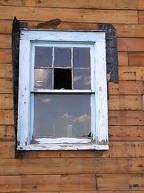 If you have old windows you love and the frames are sound, you could repair them, strip off the old paint and repaint or stain them, and add new storm windows with low-emittance (low-E) coatings, which reduce the sun’s heating and fading effects.
Patterson says low-E storm windows run $200 to $500, depending on size and options, such as higher-performance laminated glass; these windows may be eligible for the tax credit if they meet certain requirements. Patterson charges $40 to $200 per window to install them.
Read: 5 questions to ask your window installer
Calculate your savings
You’ll recoup much of your investment in replacing or repairing windows when you sell your home, but not as much as you would have at the peak of the real-estate market in 2006, according to the Remodeling magazine’s 2009-2010 “Cost vs. Value Report.” The payback on upscale wood windows has dropped the most, from 83% in 2006 to 72% in the 2009 survey.
Be sure to match the style and quality of the new windows to your house — high-end in a luxury home, midrange in an average home, says John Bredemeyer, an appraiser in Omaha, Neb. The value of high-end windows in a tract house won’t necessarily be reflected in the home’s appraised market value. Prospective buyers may love those gorgeous, high-performance windows, but they may not want to pay more for the house to get them.
Your monthly energy bill should show immediate savings. Before you install new windows, however, you may want to seal a leaky house and insulate it. It could cost several thousand dollars, but it may be more cost-effective. To evaluate your options, a home-energy audit, which costs $250 to $600, is a smart idea.
Choose the right window
Before you begin to shop, learn the lingo:
 Windows ordered off-the-shelf in standard sizes cost less than custom sizes with upgrades, such as nonstandard frame colors, hardware finishes and glass types; “between the glass” blinds or shades; and premium screens. High-performance and specialized glass — triple-paned for extremely hot or cold climates or impact-resistant for wind- or hurricane-prone regions — cost more. But that added cost may be worth it. For example, triple-paned glass could save on cooling costs for a room that direct sunlight often heats.
The websites of well-known manufacturers, such as Andersen, Marvin and Pella, include guides that will lead you through the decision-making process. Another resource is the Efficient Windows Collaborative, which is committed to promoting energy efficiency and sustainable building design.
A brand name isn’t everything. Window dealers may sell a single manufacturer’s products or several companies’ products, including those of which you may never have heard. As long as the seller can provide specs showing that the product offers the quality and performance you want at a price you can afford, you shouldn’t fear the unknown.
Read: 4 steps to prevent a remodel gone wrong
Many manufacturers produce windows in various price ranges. If you can’t afford the top of the line, you might get much of what you want with a slightly lower-grade window, says Kerry McDaniel, with Galaxy Exteriors in Los Angeles. He says that big-box stores such as Home Depot and Lowe’s tend to sell the lower-grade lines to stay at the prices they want to offer. Because Lowe’s now sells some Pella windows, Patterson suggests that you ask a local Pella dealer to match the Lowe’s price, if it is lower.
Visit the showroom, if you can, to see and test models that interest you. Do the windows look as attractive in person as they do online or in the catalog? If the window tilts out, open it to see if, given its weight, cleaning it is a job for one person or two.
Read: 5 household chores you shouldn’t do anymore
Select a dealer
There will always be door-to-door window salespeople, not to mention telemarketers, lead-generating websites and the guy operating out of his pickup truck. Don’t go there.
You want a well-established company that has a storefront and a website with helpful information. A dealer who will assess your needs and your home for free is even better.
Slide show: 5 ways your home hurts the environment
Check the dealer’s rating and record of resolved complaints with the Better Business Bureau or with your county or state office of consumer protection. Ask around about the company’s reputation locally. Then obtain several bids. If one company can’t provide the same window as another, ask for the closest comparable product it sells.
Installation, including anchoring, insulating and sealing the window to the house to make it airtight and watertight, is as important as window quality. A poorly installed window may be hard to open and close, and its durability, energy efficiency and appearance will be compromised.
Read: 4 winter prep essentials you shouldn’t skip
“You can buy the best window in the world, but if it isn’t put in correctly, you’re throwing away your money,” Selman says.
By Amy Fontinelle of Investopedia
Are you interested in buying a fixer-upper but don’t have the cash to remodel it? Or maybe you have saved money for remodeling and you’ve found a house you love, but your lender won’t allow you to buy it because the house isn’t considered habitable without toilets.
There are always properties on the market that weren’t maintained by cash-strapped former owners, were treated poorly by renters or were deliberately trashed by former owners who were foreclosed on. Shouldn’t there be a way for someone like you to fix up these neighborhood eyesores and bring them back to life?
A gift from the government
There is a way, and it’s brought to you by the federal government. The Federal Housing Administration’s rehab loan product, the FHA 203(k) loan, was designed for individuals who want to rehabilitate or repair a damaged home so they can live in it as a primary residence. These loans are endorsed by the government to encourage lenders to offer what would otherwise be considered a risky loan product. (Bing: Find an FHA-approved lender)
Because of the risk and expense involved, rehab projects are normally handled by professional real-estate investors who can buy properties with cash and therefore don’t need a bank to approve the property’s condition.
This article will go over how much money you need, the two types of 203(k) loans, eligible properties, eligible repairs and more — in short, what you should know to determine if this type of loan is right for you.
How much cash you need
The FHA 203(k) loan lets you include the money needed for repairs and related expenses — materials and labor — in the loan. If you wanted to buy a home where the kitchen had been ripped out, you could include in the loan the price of new cabinets, countertops, flooring, a refrigerator, stove, oven, microwave, sink, dishwasher and garbage disposal, and the cost to design, permit and install it all
The loan can also include a 10% to 20% contingency reserve for expenses beyond your repair estimates. You can also get up to six months’ worth of mortgage payments included to cover the mortgage while you’re renovating the home so that you won’t have to make a double housing payment.
Types of 203(k) mortgages
There are two types of FHA 203(k) mortgages: regular and streamlined, also called modified. Regular is for properties that need structural repairs; streamlined is for those that need only nonstructural repairs. Either can be used for purchase or refinance.
For the regular 203(k) purchase loan, the maximum mortgage amount is based on the lesser of the as-is value of the property plus rehab costs or 110% of the expected value of the property after rehab. This means that you wouldn’t want to buy a house with an as-is value of $150,000 if it needed $25,000 in repairs unless you had an extra $10,000 in cash, because the most you could borrow would be $165,000 (110% of $150,000).
The streamlined loan allows homebuyers to add as much as $35,000 to the purchase price to pay for improvements.
Of course, in any case, you must have the income to support the mortgage — you can’t just take out a loan for a certain amount because the house warrants it.
Eligible properties
FHA 203(k) loans are intended for owner-occupants, not investors. The following types of properties are eligible:
With such a wide range of qualifying properties, almost anyone can find the right property that will qualify for a 203(k) loan.
Financing conditions and allowable rehab and repair expenses
Regardless of what work you may think the house needs, the lender and FHA have their own requirements that you also must meet. The Department of Housing and Urban Development “requires that properties financed under this program meet certain basic energy-efficiency and structural standards” to “comply with HUD’s Minimum Property Standards (24 CFR 200.926d [PDF] and/or HUD Handbook 4905.1) and all local codes and ordinances.”
The energy-efficiency standards include caulking, insulation and ventilation as well as using the correct size heating and air-conditioning systems for the home. The home is also required to have smoke detectors near each sleeping area.
You might be surprised by the variety of home repairs and improvements that can be financed with the 203(k) loan. These include, but are not limited to, the following:
The FHA does not allow “luxury items” such as tennis courts, swimming pools, hot tubs and barbecue pits to be financed with a 203(k) loan, but some items that you might think of as luxuries, such as whirlpool bathtubs, are allowed. Talk to your lender about the specific improvements you want to make to see what you can finance.
Completing the rehab
Once you complete the purchase and the home is yours, you can start the repairs and remodeling. The FHA requires all repairs to be completed within six months, though lenders can require a shorter time frame.
You’ll begin making mortgage payments right away, as you would on any home. After all, you own it; it doesn’t matter if you’re not living in it yet. As mentioned earlier, however, you can finance your first few mortgage payments.
The rehab and repair money is placed in an escrow account and released as the work is completed and inspected to ensure HUD approval. HUD must also approve the finished product once all work has been completed.
Problems to avoid
Many lenders don’t do FHA 203(k) loans, either because they don’t know how or don’t want to do the extra paperwork. Avoid working with a lender who isn’t experienced with FHA 203(k) loans; the process is complex enough as it is.
Also, make sure you don’t overinvest in the home. Don’t spend so much on repairs and improvements that you won’t be able to recoup your costs if you sell the house.
Look at the average sale prices of move-in-ready homes in your neighborhood and try to put your home within this range. You don’t want to own a $300,000 home in a neighborhood of $200,000 homes, because most people who can afford a $300,000 home will want to live in a neighborhood where all the homes are comparably valued.
Drawbacks
FHA 203(k) loans have a longer closing period than other types of loans. They usually take 60 to 90 days to close, compared with the 30 to 45 days that are common for other loans, including regular FHA loans. If you’re in a hurry to move, the 203(k) loan is not the product for you. You can also expect to pay a higher interest rate because of the increased risk associated with home-improvement loans.
These loans are also more work for lender and require specialized knowledge, so it can be harder to find a lender that will work with you. Application and renovation are lots of work for the homeowner, and lots of red tape is involved. Some borrowers have reported delays in receiving their rehab funds, which adds stress to the process.
Effort pays off
Though it can be more work to find a lender that does FHA 203(k) loans and to complete both the application and renovation, the extra effort can pay off. This type of loan can make it possible for you to buy that perfect house that just needs some reconditioning to be livable again. It can also let you make the leap from renting to homeownership; even if you can’t afford a move-in-ready home, a fixer-upper might be in your price range.
By Stephane Fitch of Forbes
Should you quit renting and buy a home? Doing the math means looking at the “capitalization rate” of the house you covet: the estimated rental income the home could produce as a percentage of the purchase price. The higher the cap rate, the more likely that buying will pay off. The Forbes Luxury Residence Rental Index, or Flurry, tracks cap rates for 100 upscale homes in 10 U.S. cities. Following is a list of those cities, from highest to lowest cap rates.
Neighborhoods: Tanglewood, River Oaks
Capitalization rate: 4.3%
Houston tenants should consider buying.
Neighborhoods: Park Cities, Preston Hollow, Uptown/Turtle Creek
Capitalization rate: 4.2%
Tenants in Texas’ other big city aren’t getting much of a bargain.
Neighborhoods: Buckhead, Sandy Springs
Capitalization rate: 4%
Tenants who buy here can feel good about it.
Neighborhoods: Dupont Circle, Georgetown, Woodley Park
Capitalization rate: 3.6%
Not a bad place to quit renting — if your seat in Congress is safe.
 5. Boston
Neighborhoods: North End, Downtown, Back Bay
Capitalization rate: 3.6%
Tenants here do OK, but buying may be a good move for long-timers.
Sources: Carmela Laurella, Zillow.com.
View the full list of best cities to quit renting and buy a home on Forbes.com.
By C. Jeanne Heida, Associated Content
Buying a first home is an exciting time for many of us. That pride of home ownership plus the freedom of decorating however we’d like is a liberating feeling. Once you own a home, there’s no more worrying about the landlord and whether you can paint that ugly pink kitchen, hang new curtains, or (gasp!) put nails in the walls.
Home ownership does come with a different set of worries, unfortunately. Unlike a rental where the landlord takes care of regular maintenance issues, keeping a house safe from hidden threats is a homeowner’s responsibility. Here are just a few of the hidden threats we’ve uncovered in our home over the years; the list might surprise you.
1. Clogged dryer exhaust ducts. Dryer lint will catch fire very easily, which is why regular vacuuming of the dryer’s exhaust system is a must. What many people aren’t aware of is that dryer lint can also accumulate and possibly ignite in the exhaust ducting under the floors or behind the walls. To remove lint buildup in these ducts, a DIY dryer duct cleaning kit can help clean those hard-to-reach areas.
2. Dirty chimneys. It wasn’t until our chimney flue exploded in flames that we learned how important it was to have chimneys cleaned out at least once a year. Burning wood in the fireplace releases a black, tarry substance called “creosote” which sticks to the chimney walls. If the creosote is allowed to build up, a floating ember is all it takes to set off a fire.
 3. Mice droppings. If your new home is an older home or one that has been vacant for awhile, be extra careful when sweeping out piles of mice poop. Deer mice droppings can transmit the deadly disease known as Hantavirus which is breathed in along with all that stirred up dust. To avoid exposure to Hantavirus, wear latex gloves and a HEPA face mask, and wet down the floor before cleaning.
4. Water heaters. Water heaters are usually set to high temperatures so that a family can enjoy plenty of hot water. Those higher temperatures can also cause accidental burns, especially in young children. Lowering the temperature of your water heater to 120 degrees will prevent scalding burns and lower energy costs as well.
5. Lead paint. Back in the “old days”, some types of household paint contained lead for extra sheen. For homeowners, sanding and scraping off this old paint can generate lots of lead-tainted dust which is both an environmental and health hazard. If your new home was built before the 1970s, check with your city’s Hazardous Waste office first to learn the safe way to prep an old house for a new paint job.
6. Radon gas. One out of 15 homes in the United States has high levels of cancer causing radioactive Radon gas which originates from the uranium found naturally in the soil. Testing for Radon is something you can do with a DIY testing kit. Fixing the problem however is best left to the professionals.
 7. Bad DIY wiring. When we had the wiring updated in our home several years ago, the electrician discovered that an early owner had wired the house himself, using braided cloth extension cords. Before buying an older home, a home inspection by a certified inspector will catch a so-not-to-code wiring job and other unsafe DIY improvements.
8. Carbon monoxide poisoning. Carbon monoxide is an odorless, colorless and flammable gas that is poisonous to humans and their pets. CO gas can build up from a faulty gas furnace or oven, a camp stove or even a chimney. Fixing the escape of CO gas into your home is a job for the professionals, but an easy (and cheap) DIY task for a home owner is to install CO alarms throughout the home.
9. Icicle buildup on the eaves. If you are a southerner that has recently moved to the cold north, icicle buildup is one of those hidden hazards that people don’t often think about. Melting icicles can drop from the eaves and cosh anyone who happens to be standing around. To avoid injury from dropping icicles, it’s best to knock these things off with a shovel first even though they look pretty cool.
10. Squirrels. Attic dwelling squirrels love to nibble away at all that yummy electrical insulation which increases the risk of home fires. To prevent squirrels from entering your attic, check the roof and eaves periodically for signs of gnawing. Open areas should be repaired with a bit of steel mesh after the squirrel has been trapped.
Content provided by Associated Content from Yahoo!
As if the skyrocketing cost of gas and food weren’t bad enough, we must now deal with  the rapidly rising price of water. We all should be conserving water, regardless of its cost. Clean drinking water is our most precious resource, and natural and industrial forces constantly threaten it. Even if your home draws water from a ground well, not a municipal pipeline, saving water makes sense. After all, we all live downstream from someone and rely on our upstream neighbors to use water wisely.
Here are 15 painless ways to save water. They’re good for both your wallet and the world.
Confirm that your home’s water-supply system doesn’t have any small, hidden leaks. Turn off all faucets, ice makers, and water softeners, and read the water meter. Don’t use any water for two hours, then read the meter again. If the readings don’t match, then you’ve got a leak somewhere. Call a licensed plumber to find and fix the problem. Here is some detailed information on how to read a water meter.
The drip, drip, drip from a faulty faucet is more than just annoying. A drip of just one drop per second wastes about 2,700 gallons of water per year! It’s important to repair the faucet at the very first sign of a drip, because it will only get worse over time.
Most hardware stores and home centers sell faucet-repair kits. Just be sure to check the faucet’s installation manual (or the manufacturer’s Web site) to make sure you purchase the correct replacement parts.
There’s something very relaxing (okay, lazy) about using a garden hose to rinse off driveways, sidewalks and patios. However, this practice is a huge water waster. Next time, use a wide push broom or rake to remove leaves, pine needles, grass clippings and other debris.
Aerators introduce air into a faucet’s stream, reducing the amount of water by about half without lowering the pressure. Replace standard faucet aerators with aerators that are equipped with flow restrictors, which can decrease the flow from the standard 2.75 gallons per minute (gpm) down to about 1 gpm.
Wrap all hot-water supply pipes with foam rubber insulation. The dense rubber will keep water that’s trapped in the pipe hotter for longer, reducing the time you have to run cold water while you wait for it to heat up. As a bonus, you’ll save on fuel to heat the water.
It’s most efficient to run only full loads in your washing machine. If you must wash a partial load, adjust the water level to match the size of the load. If you’re buying a new machine, most Energy Star washers use 35 to 50 percent less water (and 50 percent less energy) per load.
Spread a thick layer of bark mulch around flower beds, trees, shrubs and gardens. Mulch not only helps suppress weeds, it also retains moisture so you won’t need to water so often.
A toilet tank can silently leak water for years without your ever knowing. That’s because the water slowly leaks into the bowl, not onto the floor. Here’s an easy way to detect toilet-tank leaks. First, remove the cover from the tank, and add a few drops of food coloring to the water. Wait about 30 minutes or so, then check the water in the toilet bowl. If the bowl takes on the color you’ve added, then the tank leaks. Repair or replace the flush mechanism inside the tank.
Always check the position of lawn sprinklers to ensure they’re not spraying onto the street, driveway, sidewalk or patio. And if you’ve got an automatic sprinkler system, be sure to install a rain sensor that will shut down the system during a rainstorm. Drip irrigation systems, which are generally more precise and efficient, should be used whenever possible.
Don’t use the toilet as a trash can. Dispose of tissues, cotton swabs and dental floss in the trash and you’ll save water and also prevent clogs. Consider replacing toilets with dual-flush models, which use less water depending on the contents being disposed. Another option is the Aquanotion, which allows you to retrofit your current toilet with a dual-flush system.
A full bath can run more than 20 gallons of water, whereas a quick shower gets you clean at around a dozen gallons. Replace standard 2.5-gallon-per-minute (gpm) showerheads with ultra-low-flow models, such as the AquaHelix, which uses 0.5 gpm. I recently bought one that has a shut-off valve built into the head for additional water savings. The tiny push-button valve allows me to stop the water flow while soaping up and shampooing. Then I just push open the valve to resume the water flow. As a result, I now use about half the amount of water as before.
Don’t let the water run while shaving, brushing your teeth or washing your face. And if you like to shave in the shower, that’s fine, just be sure to turn off the water while shaving. (Ladies, this goes for you, too.)
A dishwasher uses less water than washing dishes by hand, especially in households with two or more people. National Geographic reports the machine uses 35 percent less; the University of Bonn, in Germany, found the dishwasher used one-sixth the amount versus washing by hand. To realize the most significant savings, you must run the dishwasher only when it’s completely full and avoid prerinsing the dishes. New Energy Star-certified appliances consume about 30 percent less water (and 41 percent less energy).
Instead of using a garden hose to wash your car, visit a car wash that recycles its water. Furthermore, parking outside during rainstorms will keep your vehicle relatively clean and greatly reduce the number of washings needed.
Water lawns and gardens during the early morning hours, when temperatures are cooler. This timing will help reduce water evaporation from the sun. You can also maximize efficiency by watering in the evening, although this leaves some plants susceptible to fungus.we all should be conserving water, regardless of its cost. Clean drinking water is our most precious resource, and natural and industrial forces constantly threaten it. Even if your home draws water from a ground well, not a municipal pipeline, saving water makes sense. After all, we all live downstream from someone and rely on our upstream neighbors to use water wisely.


