Real Estate and *stuff *
A real person helping real people with real estate
You can scroll the shelf using ← and → keys
You can scroll the shelf using ← and → keys
 Baby boomers want their kids to have the American Dream. And why shouldn’t they?
One in five baby boomers has helped their child or grandchild buy a home by loaning them money, giving them a down payment, or co-signing a mortgage, and more than two-thirds of baby boomers want to provide this type of support in the future, according to a survey sponsored by Better Homes and Gardens Real Estate.
The survey also found:
 This seems like big news! I was just reading this article from Orlando which is a very hard hit area of the country.
“Starting Thursday, home owners with “underwater” mortgages can apply for a new Fannie Mae and Freddie Mac refinance program geared for pretty much everyone who owes more on a home than it’s worth.
Matt Hamilton has dutifully paid the loan on his Maitland house and a Longwood rental condo, but until now he could not refinance them to obtain more affordable interest rates because the properties are financially underwater.
Starting Thursday, Hamilton and many of the other quarter-million Orlando-area residents with “underwater” mortgages can apply for a new Fannie Mae and Freddie Mac refinance program geared for pretty much everyone who owes more on a home than it’s worth — including landlords and second-home owners.
“It’s been difficult because I’m so far in the hole that no one wants to refinance me,” said Hamilton, a product developer for Longwood-based Onlinelabels.com. “But if you look at my payment history, I am a safe risk.”
The federal government’s previous foreclosure-prevention efforts, such as the Home Affordable Modification Program (HAMP), lowered the interest rates on mortgages of home owners at risk of foreclosure because they had lost income. But the new Home Affordable Refinance Program (HARP) is seen as a possible game changer even for home owners who are underwater but who have stayed employed and continue making their payments.
Home owners who have missed mortgage payments in the past six months need not apply. And not all the details — such as loan limits — have been disclosed yet. But this is one of the first refinance programs that doesn’t require an appraisal to determine the value of the house.
“It’s a reward for the responsible borrower who swallowed a bitter pill but still kept moving,” said Travis BeMent, mortgage-loan originator for Home Loans Today of Orlando. “There’re a lot of people out there ready to pounce on this.”
The HARP application process begins Thursday, just as new reports show that more than half of the mortgaged homes in Metro Orlando are saturated with more debt than they are worth. In all, 254,146 mortgaged homes in the four-county metro area are in that situation, according to a report released Tuesday by the mortgage-research company Corelogic.
Even though Orlando has a greater share of underwater homes than Florida overall or the nation as a whole, the percentage of “negative-equity” houses in the metro area actually decreased slightly during the third quarter: 51.6% of the mortgaged homes in Orange, Seminole, Osceola, and Lake counties were worth less than their loans in the July-through-September period, down from 53.1% in the second quarter.
About 44% of the mortgaged houses in Florida, and 22% of those in the nation, were underwater in the third quarter, according to Tuesday’s report.
Many of those mortgages were sold to home owners who purchased at the peak of the market in 2006-07, when sales prices were double what they are today and when interest rates ranged from 5.7% to 6.5%, according to the Orlando Regional REALTOR® Association. Today, interest rates on a 30-year mortgage are less than 4%.
One cautionary note about HARP: Interest rates could change by the time a qualified property owner’s refinancing application is processed, BeMent said. Fannie and Freddie are not expected to have the ability to process the new loans until as late as next March.
But HARP, he noted, also offers a break to home owners who want to refinance for 15 or 20 years instead of 30 years. To qualify, an owner must have a mortgage backed by Fannie Mae or Freddie Mac and will likely need a credit score of at least 620.
Orlando lawyer Jeremy Sloane hasn’t missed any payments on a rental home he owns in east Orange County’s Avalon community, but he still loses money on the property every month because the mortgage he took out in 2006 far exceeds the rent he collects, now that prices have collapsed. He said he has already talked to FBC Mortgage about the new federal refinancing program.
“At the end of the day, I don’t think it’s anyone’s responsibility but myself to make the payments, but the frustrating part was that other people have been able to get out of their situation and not take a loss,” Sloane said. “This program will hopefully make it a lot more palatable renting out that house and not taking a loss.”
 Washington is giving you less green for going green, as the feds reel back the 2011 energy tax credits from a lavish $1,500 to a paltry $500.
2011’s federal energy tax credits of up to $500 for various home improvements are a far cry from what they were last year. But if the limits and other fine print—which we’ll get to—doesn’t dissuade you and you really need to upgrade one or more of the following systems, take advantage of the energy tax credits.
The energy tax credits are small, but at least a credit is better than a deduction:
Other limits on energy tax credits besides $500 max
Certain systems capped below $500
No matter how much you spend on some approved items, you’ll never get the $500 credit—though you could combine some of these:
| System | Cap |
| New windows | $200 max (and no, not per window—overall) |
| Advanced main air-circulating fan | $50 max |
| Qualified natural gas, propane, or oil furnace or hot water boiler | $150 max |
| Approved electric and geothermal heat pumps; central air-conditioning systems; and natural gas, propane, or oil water heaters | $300 max |
And not all products are created equal in the feds’ eyes. Improvements have to meet IRS energy-efficiency standards to qualify for the tax credit. In the case of boilers and furnaces, they have to meet the 95 AFUE standard. EnergyStar.gov has the details.
Tax credits cover installation—sometimes
Rule of thumb: If installation is either particularly difficult or critical to safe functioning, the credit will cover labor. Otherwise, not. (Yes, you’d have to be pretty handy to install your own windows and roof, but the feds put these squarely in the “not covered” category.)
Installation covered for:
Installation not covered for:
How to claim the 2011 energy tax credit
Housing is a significant driver of the national economy— it accounts for more than 15% of the gross domestic product. In addition, six of the last eight recessions have ended as a result of robust housing markets; war spending ended the other two recessions. Home ownership is strongly tied to jobs in this country. For every two homes sold, one job is created in this country. In addition, each home purchase generates as much as $60,000 in economic activity over time.
It Pays to Support Responsible Home Ownership
Understand the role that home ownership plays in our economy and the programs that help make it attainable and sustainable for responsible home owners.
Your Mortgage Deduction: Turn Tax Savings into Home Value
There’s savings to be had when you own a home and take the mortgage interest deduction each year. Here are some smart—and fun—ways to use your accumulated tax savings.
Benefits of Home Ownership
Being a home owner is more than just having a roof over your head. It offers important social benefits, like higher academic achievement, more cohesive communities, better connected families, improved health and safety, and a stronger economy. Thinking of buying home? Let me know!

 NAR Home Buyer and Seller Survey Reflects Tight Credit Conditions
Recent home buyers are staying well within their means with notably higher incomes and modestly higher downpayments than buyers in the previous year due to the restrictive mortgage credit environment, despite historically favorable housing affordability conditions, according to a study released today at the 2011 Realtors® Conference & Expo.
The 2011 National Association of Realtors® Profile of Home Buyers and Sellers is the latest in a long-running series of large national NAR surveys evaluating demographics, preferences, marketing and experiences of recent home buyers and sellers.
NAR 2011 President Ron Phipps, broker-president of Phipps Realty in Warwick, R.I., notes financing obstacles were more challenging for entry-level home buyers. “First-time home buyers fell to a 37 percent market share in the past year from a record high 50 percent in the 2010 study,” he said. “Although last year’s findings were boosted by the home buyer tax credit, long-term survey averages show that four out of 10 buyers are typically first-time buyers. This segment is critical to a housing recovery because they help existing home owners sell and make a trade.”
Seventy-eight percent of recent home buyers said their home is a good investment, and 45 percent believe it’s better than stocks. According to survey results, most buyers believe in the long-term value of home ownership.
The study shows the median age of first-time buyers was 31 and the median income was $62,400, up from $59,900 in the 2010 study. The typical first-time buyer purchased a 1,570 square foot home costing $155,000; the estimated median monthly mortgage principal and interest payment was $794. The typical repeat buyer was 53 years old and earned $96,600, notably higher than the $87,000 median reported in the 2010 profile. Repeat buyers purchased a median 2,100 square foot home costing $219,500, with an estimated median payment of $1,006.
Paul Bishop, NAR vice president of research, clarified the impact of unnecessarily restrictive mortgage credit. “The bar has been raised to qualify for a loan. Buying your first home has never been particularly easy, but with record-high housing affordability conditions and a pent-up demand, we normally would expect a stronger performance,” he said. “This underscores how important it is to open the credit spigot for creditworthy buyers – banks simply need to get back into the business of lending. Higher home sales would help create jobs through related economic activity.”
The median downpayment for all home buyers was 11 percent, ranging from 5 percent for first-time buyers to 15 percent for repeat buyers. “The downpayment size for both repeat buyers and first-time buyers was a full percentage point higher than in the 2010 study, another indication of tighter lending requirements,” Bishop said.
“To illustrate, the median price paid by repeat buyers in the survey was 2.1 percent higher than in the 2010 study, but their income was 11.0 percent greater, despite lower interest rates. First-time buyers paid 1.9 percent more, but their income was 4.2 percent higher,” Bishop added.
Although overall home prices have trended lower, other NAR survey data show the median price paid by owner-occupants is notably higher than paid by investors, who are under-represented in this study and largely use cash to purchase heavily discounted distressed homes.*
First-time buyers who financed their purchase used a variety of resources for the downpayment: 79 percent tapped into savings, 26 percent received a gift from a friend or relative, typically from their parents, and 7 percent received a loan from a relative or friend. Nine percent sold stocks or bonds and 8 percent tapped into a 401(k) fund. Ninety-four percent of entry-level buyers chose a fixed-rate mortgage.
Fifty-four percent of first-time buyers financed with a low-downpayment FHA mortgage, and 6 percent used the VA loan program which requires no downpayment.
Sixty-four percent of all buyers are married couples, 18 percent are single women, 10 percent single men, 7 percent unmarried couples and 1 percent other. Last year 58 percent were married couples, 20 percent single women, 12 percent single men, 8 percent unmarried couples and 1 percent other. “The growth in married couples suggests buyers with dual incomes are better positioned to qualify for a mortgage in this tight credit environment,” Bishop said.
Buyers searched a median of 12 weeks and visited 12 homes, both unchanged from 2010. Nine percent of recent buyers also own one or more investment properties, and 4 percent own at least one vacation home.
Seventy-seven percent of respondents purchased a detached single-family home, 9 percent a condo, 8 percent a townhouse or rowhouse, and 6 percent some other kind of housing. The typical home had three bedrooms and two bathrooms.
Fifty-one percent of all homes purchased were in a suburb or subdivision, 18 percent were in an urban area, 18 percent in a small town, 11 percent in a rural area and 3 percent in a resort or recreation area. The median distance from the previous residence was 12 miles, the same as in the 2010 study.
More than half of buyers considered purchasing a foreclosure but didn’t buy one for a variety of reasons: 29 percent couldn’t find the right house; 15 percent each reported poor condition and a difficult process.
Eighty-nine percent of respondents used real estate agents and brokers; this was the most common method to purchase a home. Other methods include directly from a builder, 7 percent; and directly from the previous owner, 4 percent. Sixty percent of buyers working with real estate professionals were represented by a buyer’s agent.
As demonstrated in previous studies, buyers use a wide variety of resources in searching for a home: 88 percent use the Internet, 87 percent use real estate agents, 55 percent yard signs, 45 percent attend open houses and 30 percent review print or newspaper ads. While buyers also use other resources, they generally start their search process online and then contact an agent.
When buyers were asked where they first learned about the home they purchased, 40 percent said the Internet; 35 percent from a real estate agent; 11 percent a yard sign or open house; 6 percent from a friend, neighbor or relative; 5 percent home builders; 2 percent a print or newspaper ad; 2 percent directly from the seller; and less than 1 percent from a home book or magazine.
Ninety-one percent of home buyers who used the Internet to search for a home purchased through a real estate agent, as did 70 percent of non-Internet users, who were more likely to purchase directly from a builder or from an owner they already knew in a private transaction.
Local metropolitan multiple listing service websites were the most popular Internet resource, used by 56 percent of buyers; followed by real estate agent websites, 46 percent; Realtor.com, 45 percent; real estate company sites, 40 percent; other websites with real estate listings, 38 percent; and for-sale-by-owner sites, 14 percent; other categories were notably smaller.
The biggest factors influencing neighborhood choice were quality of the neighborhood, cited by 67 percent of buyers; convenience to jobs, 49 percent; overall affordability of homes, 45 percent; and convenience to family and friends, 39 percent. Other factors with relatively high responses include neighborhood design, 32 percent; convenience to shopping, 28 percent; quality of the school district, 27 percent; convenience to schools, 22 percent; and convenience to entertainment or leisure activities, 21 percent.
Commuting costs continue to factor strongly in decisions regarding location, with 73 percent of buyers saying transportation costs were important.
The biggest reason people buy a home is the simple desire to own a home of their own, cited by 27 percent of respondents, including 60 percent of first-time buyers. The next biggest primary reasons for buying were desire for a larger home or a job-related move, each cited by 10 percent of respondents; a change in family situation or the affordability of homes, 8 percent each; and desire to be closer to family, friends or relatives, 7 percent.
The typical home seller was 53 years old and their income was $101,500. Sellers moved a median distance of 20 miles and their home was on the market for 9 weeks, up from 8 weeks in the 2010 profile. Forty-six percent moved to a larger home, 31 percent bought a comparably sized home and 23 percent downsized.
While sellers had been in their previous home for a median of nine years, up from eight years in the 2010 study, first-time buyers plan to stay for 10 years and repeat buyers plan to hold their property for 15 years.
The typical seller who purchased a home nine years ago realized a median equity gain of $26,000, a 16 percent increase, while sellers who were in their homes for 11 to 15 years saw a median gain of $57,900, or 39 percent. “Over time, the survey findings consistently show that the longer you own, the larger your return,” Bishop said.
Home buyers thought the most important services agents provide are helping find the right house, and negotiating price and sales terms.
Like sellers, buyers most commonly choose an agent based on a referral from a friend, neighbor or relative, with trustworthiness and reputation being the most important factors; 89 percent are likely to use the same agent again or recommend to others.
Of sellers working with real estate agents, the study found that 80 percent used full-service brokerage, in which agents provide a range of services that include managing most of the process of selling a home from listing to closing. Ten percent of sellers chose limited services, which may include discount brokerage, and 10 percent used minimal service, such as simply listing a property on a multiple listing service.
Realtors® provide all of these types of services, as do non-member agents and brokers, with comparable findings for each year since questions about brokerage services were added in 2006.
For-sale-by-owner transactions accounted for 10 percent of sales, above the record-low 9 percent in the 2010 study, but well below the record high of 20 percent set in 1987. The share of homes sold without professional representation has trended lower since last reaching a cyclical peak, which was 18 percent in 1997.
Many FSBO properties are not sold on the open market. Factoring out private sales between parties who knew each other in advance, the actual number of homes sold on the open market without professional assistance was 6 percent.
The median transaction price for sellers who used an agent was $215,000, well above the $150,000 median for a home sold directly by an owner, but there were differences in the findings. The median income of unassisted sellers was $82,500, in contrast with $101,500 for agent-assisted sellers. Unassisted sellers were much more likely to be selling a smaller home, and they were more likely to be in an urban or central city area.
The most difficult tasks reported by unrepresented sellers are attracting potential buyers, getting the right price, and understanding and completing paperwork.
NAR mailed an eight-page questionnaire in July and August of 2011 to a national sample of 81,099 home buyers and sellers who purchased their homes between July 2010 and June 2011, according to county records. It generated 5,708 usable responses; the adjusted response rate was 7.3 percent. All information is characteristic of the 12-month period ending in June 2011 with the exception of income data, which are for 2010. Because of rounding and omissions for space, percentage distributions for some findings may not add up to 100 percent.
The 2011 National Association of Realtors® Profile of Home Buyers and Sellers can be ordered by calling 800-874-6500, or online at www.realtor.org/prodser.nsf/Research. The study costs $19.95 for NAR members and $149.95 for non-members.
The National Association of Realtors® , “The Voice for Real Estate,” is America’s largest trade association, representing 1.1 million members involved in all aspects of the residential and commercial real estate industries.
# # #
Information about NAR is available at www.realtor.org. This and other news releases are posted in the News Media section. Statistical data, charts and surveys also may be found by clicking on Research.
Fred and Ethel – the BNI Whales that have been traveling with me since our meeting last week – apologize for being absent yesterday. Monday consumed them as they realized how much time and energy is needed to successfully close a short sale. They were back in full force today though! Spreading the word about the great stuff that can happen with BNI!

The whales started the day posing on the might jeep while it was being loaded with all the necessary items to carry out a full day of real-iting (Fred and Ethel have quite the sense of humor). They are looking forward to get out and away from the desk and the phone after yesterday!
 Fred and Ethel stopped by 10 Dighton Street in Worcester which closed last week to pick up the signs and the lockbox. The new owner was home and they wished him well! Fred thought this was a great way to start the day!
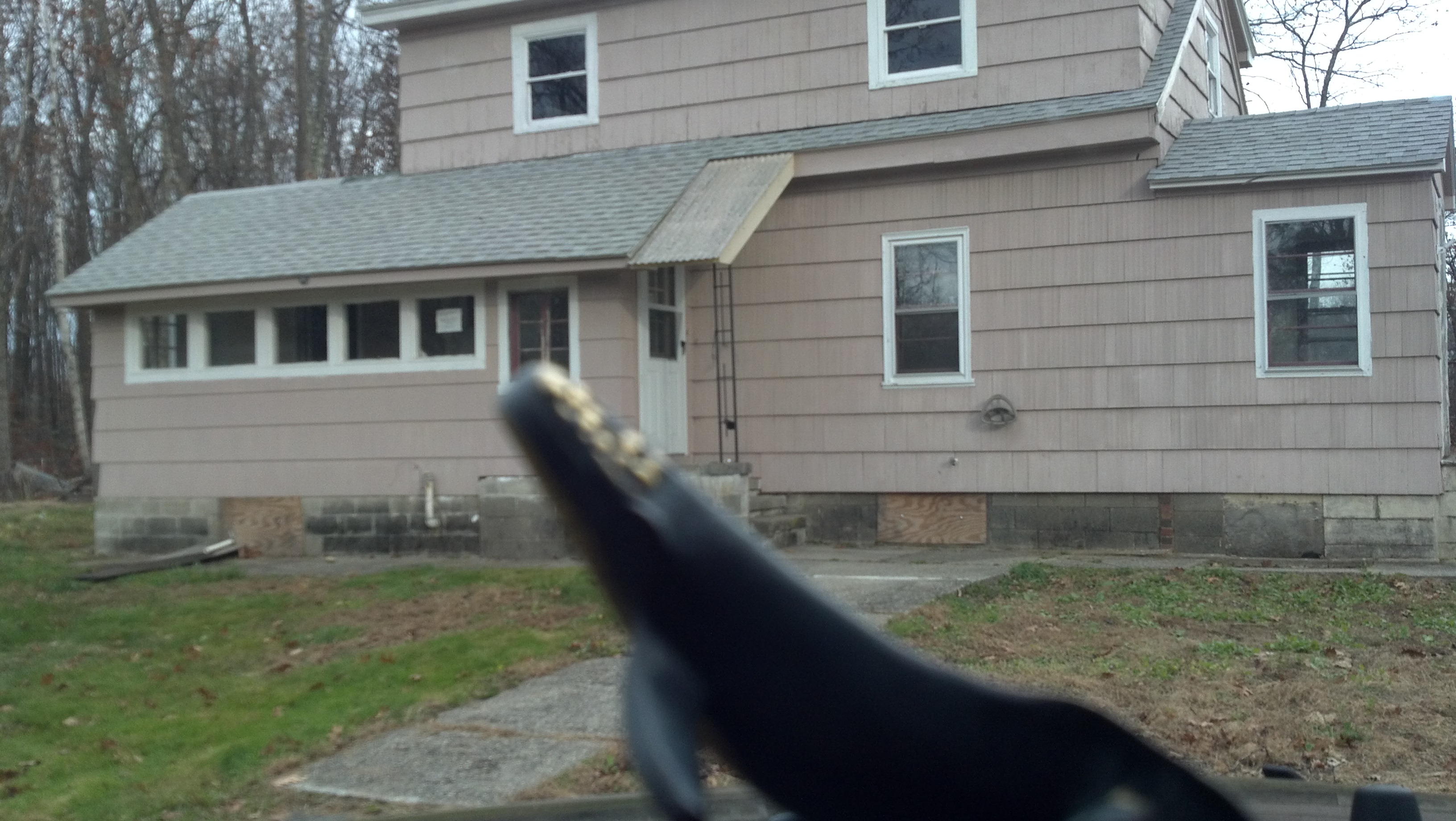 Stopping again on the way into the office for a weekly inspection on a foreclosure listing. 18 Burncoat Street in Leicester is a foreclosure that just came out of contract and is back on the market. With a new price of $59,500 and a passing Title V – it’s a great buy!
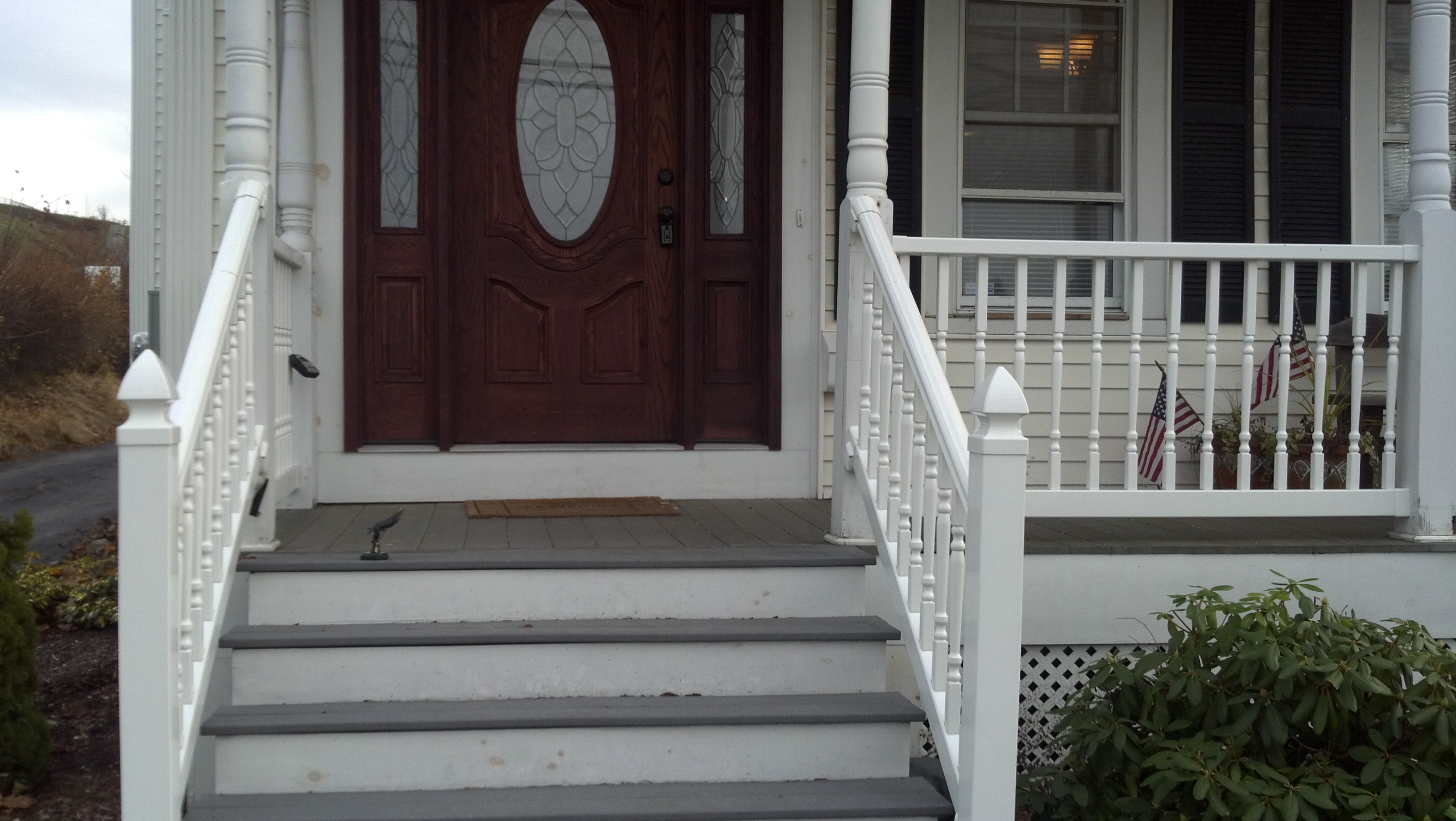 Into the office for Business Builders. Business Builders is an accountability group that meets bi-weekly and is run by Pam Crawford. It helps keep Realtors ON track by holding them accountable to their goals. What works, what doesn’t and most importantly…what are we actually doing that generates business. Great group! It’s nice to connect with the other agents in the office too.
 Fred and Ethel set up in the office for a few hours before the next appointment. Confirming that their recent buyers are good with their pre-qual on a house that needs a new septic, recalling all the banks involved in the short sales, letting the new rental clients that they…above four other applications…got the rental they wanted and then off again!
After a few stops – checking in at a broker’s open to preview a new construction in Leicester…stopping in on the sellers of 10 Dighton in Worcester to wish them well in their trip south for the winter and finally…
 Staples. Ugh! Fred and Ethel feel the same love/hate feeling that I do…so many things that could be used…so much money could be spent! Must…keep…to…budget!! This would be a time to consult with Andrea Goodman…Swampdrainer! She keeps business…in business by keeping their PnL’s tight! At any rate…Fred and Ethel learn that jump drives fail and they must be replaced.
Ending the day with Wes Oliver from Prestige Mortgage at Picadilly’s in Westborough for a frosty cold one and nice chat…Fred and Ethel finally get home to spend some quality time with the huskies…

 Here are a few surprising and simple ways to cut your energy bill this season since the temps have dropped so low the last few nights…we are getting our first taste of the winter season. I found this list and thought it was a nice quick way to save some energy without having to reconstruct the house. I am a fan of the last one!
Put lamps in the corners: Did you know you can switch to a lower wattage bulb in a lamp or lower its dimmer switch and not lose a noticeable amount of light? It’s all about placement. When a lamp is placed in a corner, the light reflects off the adjoining walls, which makes the room lighter and brighter.
Switch to a laptop: If you’re reading this article on a laptop, you’re using 1/3 less energy than if you’re reading this on a desktop.
Choose an LCD TV: If you’re among those considering a flat-screen upgrade from your conventional, CRT TV, choose an LCD screen for the biggest energy save.
Give your water heater a blanket: Just like you pile on extra layers in the winter, your hot water heater can use some extra insulation too. A fiberglass insulation blanket is a simple addition that can cut heat loss and save 4% to 9% on the average water-heating bill.
Turn off the burner before you’re done cooking: When you turn off an electric burner, it doesn’t cool off immediately. Use that to your advantage by turning it off early and using the residual heat to finish up your dish.
Add motion sensors: You might be diligent about shutting off unnecessary lights, but your kids? Not so much. Adding motion sensors to playrooms and bedrooms cost only $15 to $50 per light, and ensures you don’t pay for energy that you’re not using.
Spin laundry faster: The faster your washing machine can spin excess water out of your laundry, the less you’ll need to use your dryer. Many newer washers spin clothes so effectively, they cut drying time and energy consumption in half—which results in an equal drop in your dryer’s energy bill.
Use an ice tray: Stop using your automatic ice maker. It increases your fridge’s energy consumption by 14% to 20%. Ice trays, on the other hand, don’t increase your energy costs one iota.
Use the dishwasher: If you think doing your dishes by hand is greener than powering up the dishwasher, you’re wrong. Dishwashers use about 1/3 as much hot water and relieve that much strain from your energy-taxing water heater. Added bonus: you don’t have to wash any dishes.
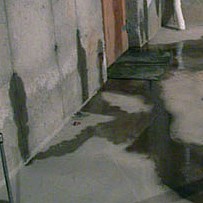 It’s raining so I couldn’t resist this blog. Solving wet-basement problems is one of the most important things you can do to protect the value of your home and health of your family. Additionally, a dry basement is a huge plus to home buyers if your house is on the market now or if you are considering selling. A finished basement is an even bigger plus!
Some wet basements are easy to cure simply by clearing gutters and by diverting gutter water away from the foundation. But if the problem comes from other sources—water flowing toward the house on the surface, seeping in from underground, or backing up through municipal storm drains—you must take more aggressive action.
Here are eight strategies to keep water out of your basement.
If downspouts are dumping water less than 5 feet away from your house, you can guide water farther out by adding plastic or metal gutter extensions.
But extensions aren’t the neatest or most effective long-term solution, especially if you’re likely to trip over them or run over them with a lawn mower. Permanent, underground drain pipe is invisible and capable of moving large quantities of gutter runoff much farther from your house.
For about $10 a foot, a landscaper or waterproofing contractor will dig a sloping trench and install pipe to carry the water safely away.
If you see water dribbling into the basement through cracks or gaps around plumbing pipes, you can plug the openings yourself with hydraulic cement or polyurethane caulk for less than $20.
Plugs work when the problem is simply a hole that water oozes through, either from surface runoff or from wet soil. But if the water is coming up through the floor, or at the joint where floor and walls meet, the problem is groundwater, and plugs won’t do the trick.
If the gutters are working and you’ve plugged obvious holes, but water still dribbles into your basement or crawl space from high on foundation walls, then surface water isn’t draining away from the house as it should.
Your house should sit on a “crown” of soil that slopes at least 6 inches over the first 10 feet in all directions.
Over time, the soil around the foundation settles. You can build it back with a shovel and dirt. One cubic yard of a water-shedding clay-loam mix from a landscape supply house costs around $30 (plus delivery) and is enough for a 2-foot-wide, 3-inch-deep layer along 57 feet of foundation.
Since your home’s siding slightly overlaps its foundation, building up the crown could bring soil–and rot and termites–too close to siding for comfort: 6 inches is the minimum safe distance. In that case, create a berm (a mound of dirt) or a swale (a wide, shallow ditch), landscape features that redirect water long before it reaches your house.
In small areas, berms are easy; a landscape contractor can build one for a few hundred dollars. On bigger projects, berms make less sense because you’ll have to truck in too much soil. In that case, dig a swale (about $1,000). Once landscaping grows in, berms and swales can be attractive features in your yard.
If water is leaking into your basement low on the walls or at the seams where walls meet the floor, your problem is hydrostatic pressure pushing water up from the ground.
First, check whether you have footing drains, underground pipes installed when the house was built to carry water away from the foundation. (Look for a manhole or drain in the basement floor or a cleanout pipe capped a few inches above the floor.)
If the drains are clogged, open the cleanout and flush the pipes with a garden hose. If that doesn’t work, a plumber with an augur can do the job for about $600.
If you don’t have working footing drains, install a curtain drain to divert water that’s traveling underground toward your house.
A type of French drain, a curtain drain is a shallow trench–2 feet deep and 1.5 feet across–filled with gravel and perforated piping that intercepts water uphill of your house and carries it down the slope a safe distance away.
If the drain passes through an area with trees or shrubs, consider switching to solid pipe to reduce the risk of roots growing into the piping and clogging it. Cost: $10 to $16 per linear foot.
If you can’t keep subsurface water out, you’ll have to channel it from the inside.
To create an interior drain system, saw a channel around the perimeter of the floor, chip out the concrete, and lay perforated pipe in the hole. The pipe drains to a collection tank at the basement’s low spot, where a sump pump shoots it out the house.
Starting at about $3,000, an interior system is the best and least disruptive option in an unfinished basement with easy access. It’s also a good choice if your yard is filled with mature landscaping that digging an exterior drainage system would destroy.
Installing an interior drainage system gets the water out but doesn’t waterproof the walls. For that, you need an exterior system: a French drain to relieve hydrostatic pressure and exterior waterproofing to protect the foundation.
It’s a big job that requires excavating around the house, but it may be the best solution if you have a foundation with numerous gaps. It also keeps the mess and water outside, which may be the best choice if you don’t want to tear up a finished basement.
The downside, besides a price tag that can reach $20,000, is that your yard takes a beating, and you may need to remove decks or walkways.
I have done several of these in order to obtain a “mostly” dry basement. I am very happy I did!
 Today feels warm and balmy but you know this time of year – it can turn on you in an instant! A do-it-yourself energy audit can teach you how to be more energy efficient and make you a more-educated consumer should you decide to hire an expert.
By following up on problems, you can lower energy bills by 5% to 30% annually, according to the U.S. Department of Energy’s office of Energy Efficiency and Renewable Energy. With annual energy bills averaging $2,200, according to Energy Star, investing in fixes or energy-efficient replacement products could save you up to $660 within a year.
And self-audits can cost virtually nothing if you already own a flashlight, ladder, measuring stick, candles, eye protection, work clothes, dust mask, and a screwdriver—or roughly $150 if you’re starting from scratch. As for time commitment, expect to spend two to four hours to investigate home systems, refer to utility bills, and conduct research about local norms for products, such as insulation, say experts.
Since there are a variety of ways to conduct a do-it-yourself audit, you’ll need to know your tolerance for the tasks involved.
Some require you play home inspector, climbing into attics and crawlspaces on fact-finding missions and delving into unfinished portions of your home to look at duct work. Questionnaire-based audits rely the assumption that you can answer such questions as how many gallons of water your toilet tank holds to the R-value (thickness) of insulation in your home.
If you don’t have time to familiarize yourself with your home’s systems or confidence about diagnosing problems, are disabled, are squeamish on ladders and in crawlspaces, or are already planning to invest in a major remodel, you may benefit from hiring a pro.
Even homeowners who complete a self-audit often hire a professional to double-check their diagnoses. A self-audit may reveal drafts but not their exact source, such as ducts or insulation, for instance. Because the costs to address a draft can range from minor to major, investing in a paid audit may be justifiable.
All the home systems and appliances that contribute to energy costs. Here’s the breakdown of a typical home’s energy usage that Energy Star references:
While the pros use special equipment to focus on hard-to-research aspects of a home’s building envelope and indoor air circulation, DIY audits can teach you—based on the questions they ask—to identify and address the numerous small ways in which your home wastes energy.
Since lighting, electronics, and appliances collectively account for nearly 30% of the average home’s energy costs, you can make an impact on your bills by replacing old appliances with energy-efficient replacements and simple fixes—plugging appliances into power strips versus wall outlets, making sure refrigerator doors are properly sealed and don’t leak air, and opting for a programmable thermostat.
1. Check your home’s exterior envelope—the windows, doors, walls, and roof exposed to outdoor air. Hold a candle or stick of incense near windows, doors, electrical outlets, range hoods, plumbing and ceiling fixtures, attic hatches, and ceiling fans in bathrooms. When smoke blows, you’ve got a draft from a source that may need caulking, sealant, weather stripping, or insulation.
2. Check insulation R-value or thickness. Where insulation is exposed (in an attic, unfinished basement, or around ducts, water heaters, and appliances), use a ruler to measure, recommends the DOE. Compare your results against those suggested for your region via an insulation calculator.
Although examining in-wall insulation is difficult, you can remove electrical outlet covers, turn off electricity, and probe inside the wall, the DOE notes in its DIY audit guide. However, only a professional’s thermographic scan can reveal if insulation coverage is consistent within a wall. Insulation can settle or may not be uniformly installed.
3. Look for stains on insulation. These often indicate air leaks from a hole behind the insulation, such as a duct hole or crack in an exterior wall.
4. Inspect exposed ducts. They may not work efficiently if they’re dirty, have small holes, or if they pass through unfinished portions of the home and aren’t insulated. Look for obvious holes and whether intersections of duct pipe are joined correctly. Since ducts are typically made out of thin metal that easily conducts heat, uninsulated or poorly insulated ducts in unconditioned spaces can lose 10% to 30% of the energy used to heat and cool your home, says DOE.
The DOE recommends calling a contractor before insulating ducts in basements or crawlspaces, as doing so will make these spaces cooler and could impact other home systems, such as water pipes. Plus, these ducts might release noxious air. DOE also recommends you hire professionals to clean ducts periodically. If you’ve noticed that some rooms get disproportionately hot or cold, bring that to a pro’s attention. It could be duct related.
In addition, some DIY audits—like the City of Seattle’s free online audit guide, suggest hiring a pro if you suspect asbestos materials have been used in insulation or around pipes, ducts, or heating equipment. Airborne or crumbling asbestos particles are a health hazard. And a pro might be the right choice when dealing with insulation around or near electrical or examining electrical systems with bare wires.
A self-audit, like a paid audit, serves as a jumping-off point to help you set priorities for making your home more efficient. Whether or not you choose to make repairs yourself, one thing’s for sure: You’ll come away knowing more about your home’s strengths and weaknesses than you did before.
 On average, a garage addition recoups about 60% of the investment, with the highest rates of return on a basic rather than an upscale job. It’s been my experience that in our area because of the snowy winters – houses with garages have a much higher appeal to buyers. I have several that won’t even look at a house without a garage.
A garage addition makes especially good economic sense in the south-central portion of the country, where home owners can expect to get back almost 66% of the cost of a midrange project, while spending about 13% less than the national average. Returns tend to be lowest in the country’s midsection. In Cleveland, for example, the same garage recoups less than half its cost.
As a general rule, you’re likely to recover a higher percentage of your investment if you build a relatively basic garage–one with open walls, an unfinished concrete floor, and shelves for storage–rather than one with interior drywall and trim, an epoxy floor coating, and designer storage solutions. Such an upscale project runs a national average of more than $90,000 and returns around $48,300, or about 53.6%, of its cost.
But there are financial considerations to adding a garage that go beyond resale value. Protected from the elements, your vehicles will stay in top shape, which could make them more valuable when you sell them. If you include workshop space, you’ll be able to do many home repairs yourself, saving on the cost of pros. And if you outfit the garage so that it’s easy to access stored items, you can save leftover materials, reducing the cost of future projects.
National average cost, 26 x 26 ft. midrange garage addition:
Job cost: $60,600
Resale value: $35,900
Cost recoup: 59.2%
National average cost, 26 x 26 ft. upscale garage addition:
Job cost: $90,100
Resale value: $48,300
Cost recoup: 53.6%
 Real Estate and *stuff *