Real Estate and *stuff *
A real person helping real people with real estate
You can scroll the shelf using ← and → keys
You can scroll the shelf using ← and → keys
 Goodbye Tangerine Tango. Hello emerald, Pantone’s 2013 color of the year.
Why emerald, or as Pantone’s swatch names it: 17-5641?
“Green is the most abundant hue in nature — the human eye sees more green than any other color in the spectrum,” says Leatrice Eiseman, executive director of the Pantone Color Institute, a color consultant to corporations.
Eiseman says emerald sparkles, fascinates, and “brings a sense of clarity, renewal, and rejuvenation, which is so important in today’s complex world.”
Tangerine Tango, last year’s color queen (and my new favorite hue), was a pinkish orange that packed an energy punch. 2013’s emerald is a vivid, verdant green that “enhances our sense of well-being … promoting balance and harmony,” Pantone says.
Expect to see the color on everything from kitchen colors to gas grills to $25 commemorative mugs. Emerald green: love it or hate it?
 Oh yes – we still have a few more resolutions to keep up with! It’s still January! Based on the most-common top-ten resolutions gathered by “Time” magazine, USA.gov, and other sources, here is #3 on an inspiring list of home management goals.
3. Get out of debt (budget for improvements)
Creating a yearly budget for home improvement and maintenance helps prevent overspending, and encourages you to put aside money for major replacements — such as new roofing or a kitchen appliance — that come up every few years.
Protect your home finances by knowing how much you’ll probably spend each year. Data from the U.S. Census Bureau says that average annual maintenance and home improvement expenditures are about $3,300 per household. Leading lending institutions agree; HSH Associates and LendingTree.com place average costs of yearly maintenance and upkeep at 1% to 3% of your home’s initial price.
That means the owner of a $250,000 home should budget between $2,500 to $7,500 each year for upkeep and replacements. Have extra at the end of the year? Save it for more costly upkeep and replacement items down the road — you’ll probably need it then.
 Low-cost kitchen storage strategies bring calm to your kitchen, banishing stress-inducing clutter and leaving the space calm and orderly. Good news for budget-minded cleaning compulsive: Getting organized in the kitchen won’t drain your piggy bank! Stash more cash and control the chaos with these low-cost kitchen storage solutions, all readily available at home centers, discount stores and online.
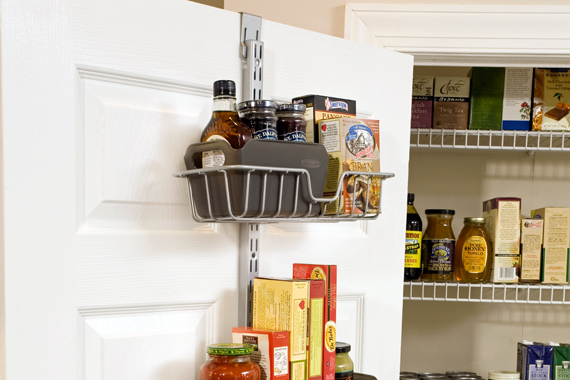 Rack attack: Store pots, everyday dishes, spices, and wine on racks that are freestanding, wall-hung, and ceiling-hung–and voila! Everything is in its own location, visible, and easily accessible!
Position the racks where they make sense: A pot rack above the cooktop; a dish rack close to the dishwasher for quick unloading; spices near the range or meal prep area; a wine rack near the wine glasses and dining table.
You’ll find racks in metal, wood, and other materials, starting as low as $10 to $15.
Shelf expression: You can size an open shelf to fit anywhere you need it and paint or stain it to match your décor. Use shelves for storing such kitchen necessities as cookbooks, attractive dishware, oils and vinegars, and spices.
Home improvement centers have storage sections where you can hunt, but don’t overlook the office supply and bathroom sections for even more low-cost shelves.
You’ll find cool shelves starting as low as $8.
 Great divide: Organize the contents of kitchen drawers and cabinets with wire or wood inserts. Drawer dividers keep utensils sorted and orderly. Vertical dividers inside cabinets create a spot for storing trays and cookie sheets. You’ll also find special inserts for storing knives and spices neatly inside drawers.
Available in wire, wood, or plastic, dividers start at about $3.
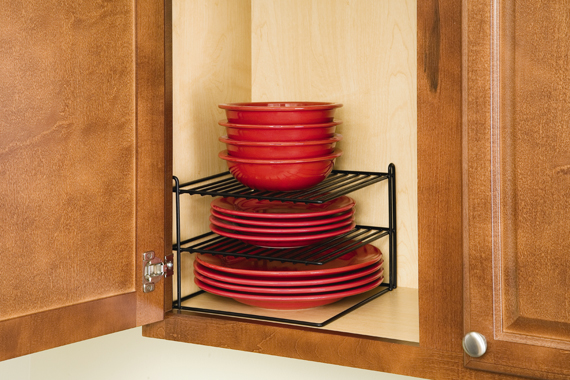 Elevated thinking: Wire stacking shelves have legs to elevate the storage surface. Set a stacking shelf on a countertop, existing shelf, or inside a cabinet to increase kitchen storage space. Use a stacking shelf for canned goods, dishware, spices, and more.
Prices start at about $6.
Hang ups: Install pegs or hooks along a backsplash, inside cabinets, or anywhere on a kitchen wall to create a place for cups, hot pads, cooking utensils, keys, and recipe clips. Hooks are available that fit over doors or come equipped with magnets that adhere to any metal surface.
Pegs and hooks start as low as $1.
Basket case: Baskets come in a variety of materials to complement your décor, from natural woven grasses to canvas to colorful plastic bins. Set baskets on open shelves, inside cupboards, and on the kitchen counter to round up small items, such as napkin rings and bamboo skewers.
Baskets are great for storing dish towels, cloth napkins, and coupons. Prices start as low as $1.
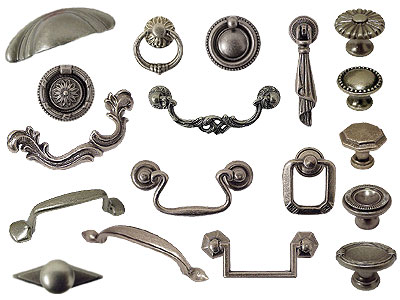 Replace old kitchen cabinet hardware and gain an instant style update that’s simple to do and easy on the budget. It’s a quick way to really make an impact on the room and express yourself. I am all about expressing my individual style and if you take a few moments in this aisle at your local Lowes, you will be amazed at all the choices you have.
Replacing kitchen cabinet hardware is a job you can do yourself. But note there’s a wide range of sizes when it comes to the spans between screws on kitchen cabinet hardware. You’re in luck if your doors feature a knob with a single screw that secures to the door or drawer front, and you want to replace it with the same.
Otherwise, you’ll need to measure precisely the spread between screws. Use a measuring tape to measure from the center of one screw hole to the center of the other. Write the measurement down and count the number of pulls and/or knobs that you need. If you’re making your purchase at a home center, bring the handle and dimensions with you.
If you opt for handles that don’t match up with existing holes, fill holes with wood filler and camouflage the repair with fresh stain or paint. Or you can cover the fix with a backplate that fits behind the new handle.
Hinges can be difficult to switch out because there are so many different types and sizes. If your kitchen cabinet hinges match the finish on the new hardware or if the hinges are hidden anyway, you can keep the originals.
Otherwise, before removing all the hinges, remove just one and then shop around—online or at a home center—to make sure you can find one that will work for your installation.
This a really fun way to the spend the afternoon! It gives a brand new look to your kitchen and it’s easy to do. We will be talking about this in up-coming events at a Lowe’s location in Worcester County – ask me more about it!
 Wow! I want THESE cabinets in my kitchen! Oh yeah…and the magic food preparation that the Jetson had!
Cabinets in motion obey hand signals to open doors, and touch-sensitive drawers glide out with the brush of a fingertip.
Custom cabinet company Anvil Cabinet and Mill offers a creative approach with Anvil Motion, a luxury custom line with ultra-modern automated features that you can dress in any style.
So who is getting me these for Christmas?
 Real Estate and *stuff *