Real Estate and *stuff *
A real person helping real people with real estate
You can scroll the shelf using ← and → keys
You can scroll the shelf using ← and → keys
Yes…it’s 5:30am and I am playing with new software! www.whatyouown.org
This free home inventory software is a downloadable package from M-One Studio (a company that does quite a bit of web marketing work for the major insurance companies). That aside…the software is pretty slick. You can do a room-by-room inventory of your possessions – including pictures and receipts. Save it, add to it and print out a report. It does have privacy features and has received great ratings from Cnet.
This would be great for reviewing your current insurance coverage (home owners or apartment), getting bids on a new insurance policy or preparing for a move. Check it out and have fun with it!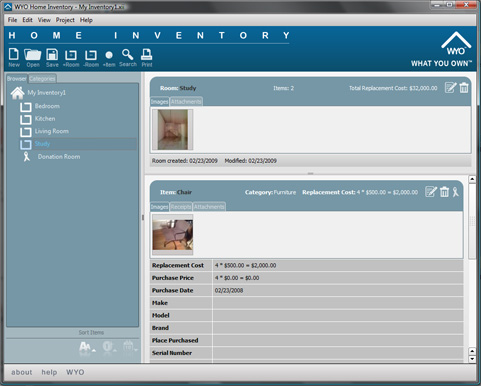
In my travels last weekend, I received a call from a potential new client. I thought this was fantastic as I re-arranged my schedule mid-day to stop in at his parent’s home in Worcester to meet him and see the house he is thinking of listing.
As I worked my through the house with him and his sister, I soon realized it was not as fantastic as I had first thought. He lives in Virginia and was in Massachusetts with his various siblings because their elderly father had just passed away. Their mother is well into her Alzheimer’s disease and now with their father gone and all the adult children living in states other than Massachusetts, they need to move her out of the home she has known.
Their father had a cat, Bull’s-eye, who also has been left without a caretaker with his passing. Bull’s-eye is a  six-toed Hemingway cat. Their mother cannot care for him and he needs a new home. He is an indoor/outdoor cat that gets along well with other cats and dogs. He is very friendly and “guards” the yard. The neighbors have seen him chase away a fox and a possum. He is an avid mouser and very handsome.
The family does care about Bull’s-eye but with the funeral and nursing home arrangements, they are running out of time. They would like to wait until after Labor Day weekend to adopt out Bull’s-eye as they do not want to change any more of their mother’s environment than they have to because of her Alzheimer’s (she has good days and bad days).
Would you like to adopt or foster Bull’s-eye?
I do work with several rescues and there would be a short adoption application for Bull’s-eye but the main concern is to find him a good home where he can continue to be “Bull’s-eye the Six Toed Cat”. As far as we know, he is good health. The family is attempting to find the vet records.
 Steve Sauer’s “pico-dwelling” is a 182 sq ft apartment he has managed to cram a soaking pool, video lounge, and cafe into without feeling cramped in the slightest. Most of the furniture comes from IKEA, natch.
The entire apartment has three living levels in a 11-feet-3-inches wide, by 16-feet-2-inches deep, by 10-feet-4-inches tall space. It contains two beds, a full kitchen with dishwasher, a bathroom with shower, closet space, a dining table, and storage for two bikes. One of the major design secrets was to include three living levels within the space.
The dwelling was seven years in the making. Steve’s day job is designing aircraft interiors for Boeing so he has a bit of a leg up on the average DIY-er. His site shows his steps.
An amazingly inspiring and economical use of space.
http://seattletimes.nwsource.com/html/pacificnw/2012595209_pacificpnwl22.html
I know…mortgages are not a FUN topic but they are very important. Tax saving, ability to have the lifestyle we want while still enjoying our homes, complicated, kind of scary, not always welcome in our lives…it’s all part of it! They can also be an asset to our finances and we have to plan carefully with them.
Yahoo finance has two fantastic and very easy to use calculators that I have just bookmarked.
“How Much Home Can I Afford?” http://finance.yahoo.com/calculator/real-estate/hom01 I like this calculator because it’s REAL. It accounts for car payments, credit card payments and the entire household income in a very easy to use and understand format. This is a fantastic place to start before a buyer goes out and begins to tour homes for sale. Seeing a home that they love and then can’t afford is a sad day.
“Compare” http://finance.yahoo.com/calculator/real-estate/hom08 This calculator is GREAT! It breaks down the components of a mortgage and allows you to compare where you are really paying. It was set up to compare a “no-cost” mortgage to traditional mortgage but is a great learning tool for buyers that are new to mortgages. Have some adult children that are thinking about buying a home? Have them sit down in front of this calculator and start to learn the terms.
Thanks to people who have more time than I do, you can shop for back-to-school supplies (or anything else) on amazon.com AND have 6% of your purchase go towards Huskies in Need!
The fantastic folks at The Husky Exchange have set this up! If you go to The Husky Exchange’s home page (www.TheHuskyExchange.com) and access Amazon.com through the link in the upper right hand corner, Amazon will donate 6% of your purchase price to MUSH, Inc. for the benefit of Siberian Huskies in need. Your purchases, by the way, are not limited to school supplies. The 6% donation applies to everything you buy through that link, from dog treats to books to electronics.
We work closely with the folks at The Husky Exchange and appreciate their efforts!
(Looking to a dopt a husky or any other dog – contact me! I work with Paws New England and Patriot Siberian Husky Rescue and we do need people who are interested in adopting a dog or fostering dogs while they are waiting to be adopted)
So far, the three states that have adopted the program are Massachusetts, Wisconsin and Idaho, and although only a few hundred people have participated since its launch in March, the article says the program hopes to expand.
Already, The Independent says lawmakers and housing experts are wary of the program, which is an unpleasant reminder of some of the unconventional mortgages that helped kick start the housing crisis.
But an even bigger concern is the potential for homeowners who put so little down to end up with negative equity if home values take a turn for the worse. And with Zillow reporting today that 21.5% of U.S. homeowners owed more on their homes than they were worth in the second quarter, the concern is timely indeed.
Housing expert Dean Baker, co-director of the Center for Economic and Policy Research, tells The Independent:
“I don’t understand the logic of this. House prices are still going to fall. And when they do, we haven’t helped these people who are going to have to work like crazy to pay their mortgage off, or they’re going to default. If you’re in a situation where this is the only mortgage you can get, you shouldn’t be buying a house.”
Affordable Advantage was started through a partnership with the National Council of State Housing Agencies with the hopes of breathing new life into a homeownership program through state-run housing finance agencies that ground to a halt after the financial crisis hit.
And the program does more than just offer a $1,000 down payment in exchange for a traditional 30-year mortgage, as opposed to the typical 10% down or 3.5% for homebuyers with loans guaranteed through the FHA.
The Independent says the program also includes such perks as helping homebuyers if they lose their jobs, lowered fees and no requirement that homebuyers purchase mortgage insurance. But Fannie Mae spokeswoman Janis Smith tells The Independent that traditionally, loans through these state housing finance agencies have “very low delinquency rates.” Barry Zigas, director of housing policy for the Consumer Federation of America, also has confidence in such programs:
He argues that vetted low-income buyers have excellent track records in terms of default, as long as they are invested in their communities and have good employment and credit histories, if not savings. “The more equity you bring to your transaction, the more security you bring. But this can be a great way for people to gain access to homeownership who might not have been able to otherwise. And with mortgage rates what they are” — at historical lows — “this program lets those specific people gain mortgages.”
But other housing experts simply can’t get past the fact that the people who are backing these investments are taxpayers, through both government-sponsored Fannie Mae and the Treasury, which is the main purchaser of the bonds issued by the housing finance agencies.
By Nancy Keates of The Wall Street Journal
Jennifer and Andrew Greenberg didn’t fall in love at first sight with the 1950s ranch house they just bought in Portland, Ore. But they did feel that way about the neighborhood. They saw people out walking and noticed how close the house was to coffee shops and wooded paths. So they chose the home that needed more work over a comparably priced but more upscale option in another area. “When it came down to it, we weren’t willing to compromise on walkability,” says Jennifer Greenberg, a 37-year-old event planner.
Today’s homebuyers aren’t just looking for good schools and low crime rates when they evaluate a neighborhood, many brokers say. They’re paying much more attention to what they can walk to.
“Everyone wants to know now how close they are to stores,” says Linda Duggan, an owner of The Duggan Group real-estate agency. She recently had clients who, given a choice between a house in Danville, Calif., and another that was bigger, newer, $300,000 cheaper — and 20 minutes farther from town — chose the first one. Earlier this year, Scott Newman, of Newman Realty in Chicago, started highlighting how close his listings are to amenities. The number of amenities in walking distance can vary sharply from block to block, he adds.
“For a lot of Americans, the whole problem of traffic congestion and having to drive everywhere to do almost anything has made other choices more attractive,” says Kaid Benfield, director of the Washington-based Natural Resources Defense Council’s Smart Growth Program. Urban planners say it’s also a matter of demographics: Baby boomers are reaching empty-nest retirement age, and at the same time their children are buying their first homes, and neither group wants large lots in remote places where little is going on. Fear about future oil prices is also increasing the attractiveness of walkable neighborhoods.
In response, websites have sprung up to rank which homes have the most amenities within walking distance. The most commonly used one is Walk Score, started in 2007 by Seattle software company Front Seat. The site saw visits in May more than double from year-earlier levels, to 938,000, according to comScore Inc., which measures online audiences. Ads on real-estate websites now include Walk Scores, and about 4,000 websites now link to the site’s map, where users can input an address and get a score.
Real-estate prices are reflecting the new interest in walking distances. A study published in August of 90,000 homes across the country by nonprofit CEOs for Cities, a group of urban-redevelopment advocates, found that having more amenities in walking distance can boost home values. As measured by Walk Score, an increase of just one point in walking-distance amenities raised values by as much as $3,000. And a report released in January by the Natural Resources Defense Council found a neighborhood’s “location efficiency” — a measure of the transportation costs in a given area — affected the number of foreclosures in the area.
A walkable neighborhood doesn’t necessarily have to be in the city center. And it doesn’t have to be more expensive. Eric Fredericks decided in September that, with the housing tax credit, it made more sense to buy than to keep renting. Planning on kids, he and his wife wanted a three-bedroom house in Sacramento, Calif. “We never considered living in suburbia,” he says. But they found a new development in a suburb called Rancho Cordova organized around a main street, with stores and restaurants. Their 2009 house is a couple of blocks from the town center. It cost $240,000, half what he says he would have paid for a comparable place downtown.
Walk Score uses an algorithm to calculate the distance from any address to amenities such as restaurants, grocery stores, movie theaters and public transportation. In a section on its website called “How It Doesn’t Work,” the site says it doesn’t factor in street design, safety, topography, weather and sidewalks. The website uses “as the crow flies” to measure distance, ignoring enormous hills or big rivers, saying, “…if you live across the lake from a destination, we are assuming you will swim.”
But Billy Riggs, a city and regional planner at the University of California, Berkeley, says, “Topography is the most important factor in determining people’s walking behavior.” Lewis Knight, a 45-year-old urban designer, was surprised to find his home in Oakland, Calif., scored 62, “somewhat walkable.” While there’s a Safeway supermarket and a CVS drugstore half a mile away, they’re at the bottom of a 700-foot hill with no sidewalks.
Recently, Missoula, Mont., city planner Lewis Kelley inserted his address on a tree-lined street with sidewalks and few cars that’s about half a mile from stores and restaurants and contrasted it with an address on a nearby four-lane arterial road with almost no pedestrians. That address got an 83 on Walk Score, beating Kelley’s address by 14 points. “I think it’s pretty intuitive which one is more friendly to pedestrians,” he says.
Walk Score’s chief executive, Josh Herst, says the site is working on the issues of traffic and topography. The site recently got a grant to improve how it calculates walking distances. The site uses information from Google that isn’t always updated; sometimes, stores and restaurants don’t show up at all. (“Keeping Google Maps completely up-to-date is a challenge we’re always working on,” a Google spokeswoman says.)
Still, the more emphasis on walking distance, the better, many homebuyers say. Gary Howe, a photographer and writer in Traverse City, Mich., has been working with his city’s planning department to get, among other things, pedestrian-enhanced crosswalks at a busy intersection — a crossing so dangerous, he says, that many neighbors drive less than a block to a pharmacy just to avoid that street. “When I was looking for a house four years ago, lots of real-estate agents didn’t even mention walkability,” Howe says. “Now I see it everywhere, which is great.”
By Amy Fontinelle of Investopedia
If you’ve been in the market for a mortgage recently, you’ve no doubt noticed how difficult it can be to get approved. You’re not imagining it, and it’s not just you. Paul McFadden, a loan officer with The Legacy Group in Bellevue, Wash., says, “These days, the number of mortgage applications that get approved is probably three out of 10. In the heyday, it was nine out of 10. Normally five or six out of 10 would be the ratio.”
Underwriting standards have tightened, meaning that borrowers need higher credit scores, more income and higher down payments. And that’s not all. There are many challenges to financing a home, but the following six are especially problematic in today’s market.
1. Higher credit score requirements
Want a loan? You’d better have top-notch credit to get the best deal or, in some cases, to get approved at all. McFadden notes, “Although loans can be had in most cases for credit scores down to 620, they often come with a higher rate and/or fees.”
Gregory B. Meyer, community relations manager with Meriwest Credit Union, says, “Credit is an issue, as lenders have raised the bar on credit scores. In 2006, a 680 FICO would get you into a house. Now it takes about a 740.”
2. Greater scrutiny of income and assets
“In the past, banks were lax in verifying income and deposits. Now those things have more scrutiny,” Meyer says.
Tom Wissert, who has more than 30 years of experience in real estate, banking and mortgage lending, says, “Homebuyers better get ready to prove that just about anything that looks hinky on their application is not an issue. Mortgage lenders today have to verify, reverify and reverify again. Qualified buyers are now put through the wringer and often turned down because of appraisal issues, property issues or anything that looks strange, even if the buyer can prove they can pay cash for the property.”
He says that we are now seeing regulatory overkill “after years of letting the rules be compromised by mortgage lenders who would not follow the traditional rules that are time-proven to work.”
3. Ever-changing borrower requirements
Many borrowers are finding that they can’t pin down just what they need to do to get their mortgages approved. Warren Greenlee, a broker with Re/Max at the Lake in Mooresville, N.C., says that a couple of years ago, “anybody with decent credit could get a loan for any size home. Now it is critical to have credit scores above 700, total debt ratios below 36%, a minimum of 20% down to avoid [private mortgage insurance] and good, stable employment. Unfortunately, a buyer can have all of these items fall into the current guidelines, only to have the guidelines change.”
Greg Cook, a licensed California mortgage broker with the First Time Home Buyers Network, says that for the “‘middle of the road’ consumer, those without a large down payment and average to slightly above average credit scores, home financing has become a moving target.”
4. Home appraisals are coming in low
Mortgage banker Darren Clark, of Villa Mortgage Inc. in Cincinnati, says, “Because of slow sales, which lead to few comparables, and the large amount of short sales, sheriff’s sales and bank-owned sales, which are priced at a fraction of a dollar, houses are not appraising for the contract price.
“Part of this problem can be blamed on the government enacting [the Home Valuation Code of Conduct], which regulates the appraisal industry, and was an attempt to curtail fraud, but has turned into an unexpected hindrance on the real-estate market recovery.”
The problem with the HVCC, Clark says, is that appraisals are now often completed by appraisers who are inexperienced and often unfamiliar with the markets they are working in, resulting in inaccurate appraisals and unnecessarily rejected loan applications.
5. Fewer opportunities for small business owners and independent contractors
“Congress recently introduced legislation that would make ‘liar loans’ illegal,” Cook says. “Liar loans” are another term for low- or no-documentation loans. As the name implies, some borrowers have used these loans to deceive their way into a mortgage they didn’t really qualify for. However, these loans are also a valuable tool for many honest workers who are not U.S. citizens or who are self-employed and therefore don’t receive regular paycheck stubs or have a simple, straightforward way to prove their income to lenders.
“Typically, a business owner pays himself the minimum amount to avoid paying payroll taxes while reinvesting profits into his business. Banks will no longer make exceptions for circumstances like these and turn many loans down that previously would have been granted.”
6. Condo purchases face additional tests
Aimee Renkes, a mortgage consultant with Wintrust Mortgage in Chicago, says, “Condo loans are much tougher these days as we have to approve the condo building in addition to the buyer. We are documenting cash reserves, owner occupancy rates, low delinquency rates on monthly assessments and more. In some markets, such as Chicago, this can be tough to overcome. Additionally, the [Federal Housing Administration] recently changed the condo approval method, which has further inhibited many buyers who only qualify for FHA loans.”
The quest for homeownership
For worthy borrowers seeking to take advantage of today’s low interest rates and relatively low home prices, having to jump through hoops that homebuyers just a few years ago didn’t have to can seem mighty unfair. If there’s any upside to the tight credit market, it’s that we should see fewer foreclosures in the years ahead.
By Aryeh Katz of Investopedia
When it comes time to sell your home, doing the job yourself certainly has its appeal.

For one thing, think of the savings you’ll pocket — potentially tens of thousands of dollars or more — if you cut out the real-estate broker. But the headache and work involved may not be worth the savings for some.
Find out whether you’ll be able to sell your own home and what to expect if you choose this route.
Exposure
Your first consideration should be whether you can get the word out. Sure, you can put a sign on the lawn and make a number of relevant Internet postings, but be aware that you’ll be missing out on the following:
Not getting enough exposure may result in your property sitting on the market for a long time. If it sits long enough, you’ll likely be forced to sell at a lower price. A home that sits too long on the market can also become stigmatized, leaving you without any traffic. People think, “There must be something wrong with it if it hasn’t sold already.”
Market information
The real-estate market is dynamic, always in flux, with prices moving constantly — sometimes quickly, sometimes less so. If you can’t correctly gauge the market’s direction and speed, you may also fail to assess your home’s correct value. This effectively renders you “out of market” and results in you selling your home unnecessarily cheaply or — until you correctly assess its worth — overpricing it and waiting.
Contrast this with the instant access a real-estate agent has to home-sales information. Most real-estate offices are equipped with software that can generate instant comparative market analysis pricing, a system that takes the subjectivity out of the process and provides an immediate selling range. In active markets, this is an invaluable resource.
Negotiating ability
This may be the most oft-overlooked part of the do-it-yourself process, and one that should not be considered lightly. Do you possess the skills necessary to successfully negotiate the sale of one of your most valuable possessions? Can you effectively manage the process through to a close against a seasoned broker or real-estate lawyer?
Remember that you may be up against professionals who are keen negotiators and know the sales process well. They may suggest all sorts of terms and conditions that sound reasonable but really aren’t in your best interest. Even an unseasoned real-estate agent is likely to be aware of the implications of various terms and conditions — will you be?
If you have never been involved in serious negotiations with savvy professionals, you are at a serious disadvantage. Your lack of experience could negate any of the benefits of having done it yourself.
Should you choose to have your real-estate lawyer negotiate the sale, the fees may be even higher than those of a broker; the tradeoff is that you may get a higher level of expertise.
Legal issues
Perhaps the most dangerous aspect of the home-selling process involves contracts and closings, for which you will require the services of an expert who understands contracts and can steer the process to a legally sound conclusion. Many closings have been marred by legal niceties that led to unexpected outcomes or, worse, lawsuits, and ultimately a failure to sell at a price and time of your own choosing. Unless you are a lawyer yourself, this is one aspect of the process that you should not undertake without professional assistance.
Value-added services
Large real-estate firms now offer numerous value-added services, such as pre-qualifying buyers for financing — and in some cases providing the financing itself. If you are not using such a firm, realize that your deal may wait until financing can be secured, and that time delays often produce buyer’s remorse — a condition that sees potential buyers talking themselves out of a deal the minute they walk out your door. Better always to lock the deal shut as soon as possible. That means having the resources at hand to do so.
The eccentricity factor
Are you reducing the number of potential buyers because you haven’t listed with an agent? Some house shoppers will be apprehensive about engaging a “for sale by owner” simply because it’s not the norm. Anxieties and apprehensions will steer some people away from visiting your home. For a lot of buyers, an established brand name and a sales professional with polish are more palatable. Ask yourself whether your decision takes you outside the real-estate mainstream.
Your time
There is little doubt that you can fill an agent’s shoes and sell your own home — but it will take preparation to do it successfully. How much time do you have? And what’s your time worth? In the end, you need to determine whether your investment of time and energy will be repaid by the commission you save.