Real Estate and *stuff *
A real person helping real people with real estate
You can scroll the shelf using ← and → keys
You can scroll the shelf using ← and → keys
 This is such a great concept and Dr. Cindy McGinn D.V.M. does it with care and professionalism. Dr. McGinn is a traveling vet in the greater Worcester area to fill the need of pet owners who are unable to bring their animals into a traditional vet office. Dr. McGinn will come to your home to treat your animals – even on a Saturday! She serves the greater Worcester area and I hope you pass this link along to someone who needs her services.
She can be reached at 508-450-8727 or drcindylou8@aol.com. Video below – let’s hear it for Cindy!
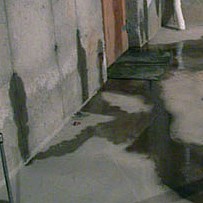 It’s raining so I couldn’t resist this blog. Solving wet-basement problems is one of the most important things you can do to protect the value of your home and health of your family. Additionally, a dry basement is a huge plus to home buyers if your house is on the market now or if you are considering selling. A finished basement is an even bigger plus!
Some wet basements are easy to cure simply by clearing gutters and by diverting gutter water away from the foundation. But if the problem comes from other sources—water flowing toward the house on the surface, seeping in from underground, or backing up through municipal storm drains—you must take more aggressive action.
Here are eight strategies to keep water out of your basement.
If downspouts are dumping water less than 5 feet away from your house, you can guide water farther out by adding plastic or metal gutter extensions.
But extensions aren’t the neatest or most effective long-term solution, especially if you’re likely to trip over them or run over them with a lawn mower. Permanent, underground drain pipe is invisible and capable of moving large quantities of gutter runoff much farther from your house.
For about $10 a foot, a landscaper or waterproofing contractor will dig a sloping trench and install pipe to carry the water safely away.
If you see water dribbling into the basement through cracks or gaps around plumbing pipes, you can plug the openings yourself with hydraulic cement or polyurethane caulk for less than $20.
Plugs work when the problem is simply a hole that water oozes through, either from surface runoff or from wet soil. But if the water is coming up through the floor, or at the joint where floor and walls meet, the problem is groundwater, and plugs won’t do the trick.
If the gutters are working and you’ve plugged obvious holes, but water still dribbles into your basement or crawl space from high on foundation walls, then surface water isn’t draining away from the house as it should.
Your house should sit on a “crown” of soil that slopes at least 6 inches over the first 10 feet in all directions.
Over time, the soil around the foundation settles. You can build it back with a shovel and dirt. One cubic yard of a water-shedding clay-loam mix from a landscape supply house costs around $30 (plus delivery) and is enough for a 2-foot-wide, 3-inch-deep layer along 57 feet of foundation.
Since your home’s siding slightly overlaps its foundation, building up the crown could bring soil–and rot and termites–too close to siding for comfort: 6 inches is the minimum safe distance. In that case, create a berm (a mound of dirt) or a swale (a wide, shallow ditch), landscape features that redirect water long before it reaches your house.
In small areas, berms are easy; a landscape contractor can build one for a few hundred dollars. On bigger projects, berms make less sense because you’ll have to truck in too much soil. In that case, dig a swale (about $1,000). Once landscaping grows in, berms and swales can be attractive features in your yard.
If water is leaking into your basement low on the walls or at the seams where walls meet the floor, your problem is hydrostatic pressure pushing water up from the ground.
First, check whether you have footing drains, underground pipes installed when the house was built to carry water away from the foundation. (Look for a manhole or drain in the basement floor or a cleanout pipe capped a few inches above the floor.)
If the drains are clogged, open the cleanout and flush the pipes with a garden hose. If that doesn’t work, a plumber with an augur can do the job for about $600.
If you don’t have working footing drains, install a curtain drain to divert water that’s traveling underground toward your house.
A type of French drain, a curtain drain is a shallow trench–2 feet deep and 1.5 feet across–filled with gravel and perforated piping that intercepts water uphill of your house and carries it down the slope a safe distance away.
If the drain passes through an area with trees or shrubs, consider switching to solid pipe to reduce the risk of roots growing into the piping and clogging it. Cost: $10 to $16 per linear foot.
If you can’t keep subsurface water out, you’ll have to channel it from the inside.
To create an interior drain system, saw a channel around the perimeter of the floor, chip out the concrete, and lay perforated pipe in the hole. The pipe drains to a collection tank at the basement’s low spot, where a sump pump shoots it out the house.
Starting at about $3,000, an interior system is the best and least disruptive option in an unfinished basement with easy access. It’s also a good choice if your yard is filled with mature landscaping that digging an exterior drainage system would destroy.
Installing an interior drainage system gets the water out but doesn’t waterproof the walls. For that, you need an exterior system: a French drain to relieve hydrostatic pressure and exterior waterproofing to protect the foundation.
It’s a big job that requires excavating around the house, but it may be the best solution if you have a foundation with numerous gaps. It also keeps the mess and water outside, which may be the best choice if you don’t want to tear up a finished basement.
The downside, besides a price tag that can reach $20,000, is that your yard takes a beating, and you may need to remove decks or walkways.
I have done several of these in order to obtain a “mostly” dry basement. I am very happy I did!
 Today feels warm and balmy but you know this time of year – it can turn on you in an instant! A do-it-yourself energy audit can teach you how to be more energy efficient and make you a more-educated consumer should you decide to hire an expert.
By following up on problems, you can lower energy bills by 5% to 30% annually, according to the U.S. Department of Energy’s office of Energy Efficiency and Renewable Energy. With annual energy bills averaging $2,200, according to Energy Star, investing in fixes or energy-efficient replacement products could save you up to $660 within a year.
And self-audits can cost virtually nothing if you already own a flashlight, ladder, measuring stick, candles, eye protection, work clothes, dust mask, and a screwdriver—or roughly $150 if you’re starting from scratch. As for time commitment, expect to spend two to four hours to investigate home systems, refer to utility bills, and conduct research about local norms for products, such as insulation, say experts.
Since there are a variety of ways to conduct a do-it-yourself audit, you’ll need to know your tolerance for the tasks involved.
Some require you play home inspector, climbing into attics and crawlspaces on fact-finding missions and delving into unfinished portions of your home to look at duct work. Questionnaire-based audits rely the assumption that you can answer such questions as how many gallons of water your toilet tank holds to the R-value (thickness) of insulation in your home.
If you don’t have time to familiarize yourself with your home’s systems or confidence about diagnosing problems, are disabled, are squeamish on ladders and in crawlspaces, or are already planning to invest in a major remodel, you may benefit from hiring a pro.
Even homeowners who complete a self-audit often hire a professional to double-check their diagnoses. A self-audit may reveal drafts but not their exact source, such as ducts or insulation, for instance. Because the costs to address a draft can range from minor to major, investing in a paid audit may be justifiable.
All the home systems and appliances that contribute to energy costs. Here’s the breakdown of a typical home’s energy usage that Energy Star references:
While the pros use special equipment to focus on hard-to-research aspects of a home’s building envelope and indoor air circulation, DIY audits can teach you—based on the questions they ask—to identify and address the numerous small ways in which your home wastes energy.
Since lighting, electronics, and appliances collectively account for nearly 30% of the average home’s energy costs, you can make an impact on your bills by replacing old appliances with energy-efficient replacements and simple fixes—plugging appliances into power strips versus wall outlets, making sure refrigerator doors are properly sealed and don’t leak air, and opting for a programmable thermostat.
1. Check your home’s exterior envelope—the windows, doors, walls, and roof exposed to outdoor air. Hold a candle or stick of incense near windows, doors, electrical outlets, range hoods, plumbing and ceiling fixtures, attic hatches, and ceiling fans in bathrooms. When smoke blows, you’ve got a draft from a source that may need caulking, sealant, weather stripping, or insulation.
2. Check insulation R-value or thickness. Where insulation is exposed (in an attic, unfinished basement, or around ducts, water heaters, and appliances), use a ruler to measure, recommends the DOE. Compare your results against those suggested for your region via an insulation calculator.
Although examining in-wall insulation is difficult, you can remove electrical outlet covers, turn off electricity, and probe inside the wall, the DOE notes in its DIY audit guide. However, only a professional’s thermographic scan can reveal if insulation coverage is consistent within a wall. Insulation can settle or may not be uniformly installed.
3. Look for stains on insulation. These often indicate air leaks from a hole behind the insulation, such as a duct hole or crack in an exterior wall.
4. Inspect exposed ducts. They may not work efficiently if they’re dirty, have small holes, or if they pass through unfinished portions of the home and aren’t insulated. Look for obvious holes and whether intersections of duct pipe are joined correctly. Since ducts are typically made out of thin metal that easily conducts heat, uninsulated or poorly insulated ducts in unconditioned spaces can lose 10% to 30% of the energy used to heat and cool your home, says DOE.
The DOE recommends calling a contractor before insulating ducts in basements or crawlspaces, as doing so will make these spaces cooler and could impact other home systems, such as water pipes. Plus, these ducts might release noxious air. DOE also recommends you hire professionals to clean ducts periodically. If you’ve noticed that some rooms get disproportionately hot or cold, bring that to a pro’s attention. It could be duct related.
In addition, some DIY audits—like the City of Seattle’s free online audit guide, suggest hiring a pro if you suspect asbestos materials have been used in insulation or around pipes, ducts, or heating equipment. Airborne or crumbling asbestos particles are a health hazard. And a pro might be the right choice when dealing with insulation around or near electrical or examining electrical systems with bare wires.
A self-audit, like a paid audit, serves as a jumping-off point to help you set priorities for making your home more efficient. Whether or not you choose to make repairs yourself, one thing’s for sure: You’ll come away knowing more about your home’s strengths and weaknesses than you did before.
 Salvaged building materials allow you to improve your home inexpensively—but might require an extra investment of time and energy.
If you’re looking to improve your home on the cheap, consider using salvaged building materials. Besides being less expensive than new materials, secondhand features can add character, quality, and value to your home. But note that the savings in dollars may require a greater investment in time and effort.
Remodeling with secondhand building materials has many fans. Some are owners of historic houses who improve their homes by adding period elements. Others follow green building practices and appreciate conserving resources and keeping materials out of landfills. And still others are looking for quirky elements that will break their homes out of cookie-cutter molds.
According to the Building Materials Reuse Association, recycling is becoming more common in the construction industry. That means reclaimed building elements like doors, windows, plumbing fixtures, and wood flooring are increasingly easy to find.
Habitat for Humanity’s nationwide chain of ReStores sells recycled items, and many cities have architectural salvage yards. Online, neighbors advertise unwanted items on community bulletin boards, such as Craigslist, and national directories of recycled materials, such as EcoBusinessLinks, can be great sources for hard-to-find elements. And the price is right: reused pieces can be 50% to 75% cheaper than their new counterparts.
Sounds terrific, right? But it’s not that simple. Using recycled building elements is like shopping at a thrift store: You can’t be certain you’ll find exactly what you’re looking for. Anyone interested in a good deal to spruce up their home—an ornate wood mantelpiece or a set of Victorian doors, for example—has to be willing to compromise on some of the details and commit some time to the endeavor.
If you live in or near a city and have access to a salvage yard, you’re in luck. Many receive multiple new shipments daily, and some, such as Seattle’s Second Use, post their offerings online.
But in most cases, there’s no substitute for regularly showing up in person to check out what’s available. If you’ve got something particular in mind, plan on spending a few afternoons at the salvage yard trying to track down what you’re looking for. The same is true if you’re exploring online: locating the right piece may take longer than you’d expected.
Before beginning your search, make sure you’ve got measurements in hand. It’s useful if you can allow for some wiggle room: unlike big home improvement stores, the items on sale are usually one-of-a-kind pieces. So while a recent truckload might have dropped off a beautiful old mantelpiece, the size might not be an exact fit; know in advance if you can manage with a slightly larger or smaller size.
Some old items need to be treated with serious care. Ruthie Mundell of Community Forklift, a salvage yard in Edmonston, Md., says that the staff tries to flag items that appear to be lead paint hazards—that is, anything painted prior to 1978, when the Consumer Product Safety Commission (CPSC) banned lead in paints.
Nevertheless, buyers of old painted items need to be aware of the potential hazards. Older paint doesn’t mean the pieces are unusable, but the paint must be thoroughly removed or sealed—never scraped or sanded. The CPSC offers guidelines for treating lead paint in the household.
Some salvaged pieces are better deals than others. The best is often flooring: careful shoppers can find used floor boards from quality old wood that’s difficult to come by these days. Sat Jiwan Ikle-Khalsa, a green living consultant in Takoma Park, Md., scoured a local salvage yard and found maple, white oak, and rare heart pine flooring at a low price for his renovated 1940s-era home. He estimates he saved more than $2,000 over the cost of new flooring.
Other useful finds are doors, particularly those already on a frame, and plumbing elements. Antique light fixtures can be a great bargain, but check whether they’ve been recently rewired before you buy; otherwise, you may have to do it yourself, or pay an electrician for the service.
Windows are common, but many older widows are single-pane and not energy efficient. These are better used for interior walls to add light and air flow between rooms. Stained glass panels are relatively common at salvage yards and cost from $50 to $500.
Salvaged oak flooring: $1 to $3 per sq. ft.
New oak flooring: $4 to $10 per sq. ft.
Average savings for 12×16-foot room: $960
Salvaged interior solid panel door (basic): $20 to $50
New interior panel door: $100 to $200
Average savings: $115
Secondhand pedestal sink: $20 to $250
New pedestal sink: $100 to $800
Average savings: $315
Recycled crown molding: $.30 to $1 per lineal ft.
New crown molding: $.90 to $3 per lineal ft.
Average savings for 12×16-foot room: $72.80
Don’t forget to add in transportation costs. Not all salvage yards deliver, and those that do aren’t necessarily cheap: the cost of getting materials across town could be $100 or more. It might make more sense to borrow or rent a truck on your own.
Salvaged elements may not add to a home’s appraised value, according to Chicago appraiser Tim McCarthy, president of T.J. McCarthy and Associates. An appraiser probably won’t include a home’s reclaimed heart pine beams in the kitchen or the bathroom’s antique plumbing fixtures when calculating the house’s value.
But that doesn’t mean the seller can’t use those amenities as selling points and boost the asking price accordingly. “It’s very market-specific,” McCarthy says. In higher-end neighborhoods, homebuyers may be willing to pay more for authentic elements that give a house personality.
McCarthy recommends talking with a local realtor before making changes; they’ll have a good sense of the housing market’s current demands and should be able to tell you whether a vintage element will boost your home’s market value.
To effectively integrate salvaged items, Arne Mortensen, owner of Mortensen Design/Build in Seattle, recommends choosing a contractor who has a particular interest and experience in working with recycled building materials. Salvage yard staffs may be able to recommend someone; other sources for ‘green’ contractors include online sites like Angie’s List.
Nonetheless, the time-consuming legwork of finding good pieces generally falls to the homeowner. To make the process easier, spend time thinking about and researching online what you want before you begin to shop. And be prepared to be persistent; happy hunting takes patience.
Whoops! One went under contract today so slight change to the schedule for my listings in the National Open House Weekend. Not buying right now? Forward the link to someone who is!

I have so been neglecting my blog. It’s true. It’s shameful. In my defense it’s because I have been so focused on my clients. I am correcting that today and giving it the attention it needs!
Tis the season for home remodeling! I have been working with a new buyer client who is looking at homes in Worcester that will need some repair – as well as working with a seller whose home will need to be repaired when the buyer has the keys in hand. My parents are remodeling their kitchen and I am still picking away at the rehab on my own house.
It seems as if remodeling is happening everywhere! And IT IS! (Stay tuned for details on a home renovation event in May….ssshhhhhh…press release coming but it’s going to be HUGE!). I did stumble upon (I love that site) this quick guide to estimating the cost of home repairs / remodeling that Freddie Mac has published and I love it! It’s quick – easy to read and realistic.
Check it out and bookmark this page – it’s a great way to thumbnail the costs of new projects or to see what you would be getting into with a new home.
 |
 |
 |
||
| Kitchens | Roofing | Floors |
 I want rhubarb pie! It was in the 50’s yesterday and now I am looking forward to SPRING and SUMMER! That means fresh veggies! An edible garden featuring vegetables and herbs can save you a bundle if you keep it simple and raise plants that offer high yields.
A backyard edible garden will trim costs from your grocery bill while providing you and your family with the freshest produce possible. According to Bruce Butterfield, research director for the National Gardening Association, a well-maintained garden can produce a half-pound of fresh vegetables for every square foot of garden space. At average market prices, that means a garden returns about $1 per square foot.
Studies conducted by W. Atlee Burpee Co., a mail-order seed company, are even more optimistic. According to Burpee, the average cost-to-benefit ratio of home-grown produce for those who have established gardens is better than 1 to 25. That means every $1 spent on seeds and supplies yields at least $25 worth of vegetables.
Even first-time gardeners will benefit. George Ball, owner of Burpee Co., says that a $10 investment in seeds for tomatoes, beans, bell peppers, lettuce, peas, and carrots, plus $80 for soil, fertilizer, and the cost of building several raised beds, can yield more than $250 worth of veggies and herbs—a substantial portion of the approximately $3,465 the average U.S. family spends on a year’s worth of groceries.
For families that save the harvest, either by freezing, canning, or drying, the cost-benefit ratio climbs even higher. Martha Garway, who tends a 10×10 plot in a Providence, R.I., community garden, freezes much of her summer produce, such as okra, tomatoes, and peppers.
That summer harvest, which costs her $20 for the plot plus the cost of seeds (and she tends to save her own), enables her to “buy only meat and fish through winter—no vegetables,” she says.
For the average gardener in most regions of the country, here are some of the most cost-effective vegetables to grow, and an estimate of what you’ll save over store-bought produce. These figures reflect veggies harvested for fresh eating only; if you freeze or can produce to consume beyond the harvest season, your savings will multiply.
Slicing tomato
Seedling cost: $2.00/plant
Yield: 10-15 pounds tomatoes/plant
Savings: $15-$23/plant
Bell pepper
Seedling cost: $2.00/plant
Yield: 6-8 peppers/plant
Savings: $9-$12/plant
Cucumber
Seed cost: $2.95/packet of 240 seeds
Yield: 10-15 pounds of cucumbers per plant
Savings: $5-$7.50/plant
Bush green beans
Seed cost: $2.95/packet of seeds
Yield: 2.5-3 pounds/5-foot row
Savings: $3.75-$4.50/row
Pole green beans
Seed cost: $2.95/packet of seeds
Yield: 4-5 pounds/5-foot row
Savings: $6-$7.50/row
Leaf lettuce
Seed cost: $2.00/packet of mixed lettuces
Yield: 16 oz. of salad every 3-5 days after leaves mature
Savings: $4 per week
A few vining vegetables, like squash or Malabar spinach, produce abundant yields for the price of a packet of seeds ($2.95). Winter squash types in particular are easy to cure and store, lasting well into spring and offering savings of up to $10-$15 per vine.
Herbs offer amazing return. For $1.50, you can buy a 3-inch pot of parsley, chives, oregano, mint, or basil and harvest leaves all season long. With the perennial herbs, like oregano and mint, the harvest continues for years with little maintenance action required. Compare that to “fresh” herbs you’ll get at the grocery for $3 for a 3-ounce packet.
Some vegetables aren’t cost-effective in an edible garden. For instance, you could spend $20 for organic seed potatoes that will yield 15 pounds of spuds from a 20-foot row planting. Compare that with the average price of white potatoes in the supermarket at $1 per pound. Then again, you can’t find Russian Banana fingerlings or Purple Viking potatoes at the grocer, so if you want a specialty spud, grow your own.
Other veggies that don’t pay to grow are ones that are finicky, like celery or asparagus. Both are labor intensive. Onions are relatively cheap to purchase, and it can be difficult to get a large yield of good-size bulbs without a massive garden.
Try growing shallots instead, a gourmet-style onion family member that produces green tops you can harvest like chives and mild flavored bulbs that cost up to $4 a pound at the store.
The median size of an edible garden is about 100 sq. ft., according to the National Gardening Association. For a family of four, a growing space of 200 sq. ft. should keep the family in veggies all summer long. Plan to spend 4 hours a week tending your garden, with 8-12 hours for preparing the planting area in spring, shopping for seeds and seedlings, and sowing crops.
 It’s spring! Not only do we get outside to freshen up the gardens and lawns but we also take on larger home improvement projects. We can have the windows open, walls open and roofs re-done. Be careful! There are many “contractors” out there and some of them are not our friends. Follow these seven tips to make sure your contractor agreement works in your favor—not your builder’s.
Contractors use their own forms, which are drafted for their benefit, not yours. You’ll benefit from hiring an attorney to review your contractor agreement or draft one that’s you-friendly. Even though this may cost around $250 to $500, it can save thousands of dollars later if there’s a dispute.
Add a “choice of law” or “forum selection” provision, which says that disputes will be litigated on your turf. This provides protection against out-of-town contractors or suppliers—you don’t want to have to drag yourself across multiple state lines for a lawsuit.
Define when the contactor will deliver on his promises, and when he’ll get his money. Within the contractor agreement, create a payment schedule in your favor by holding money back until the work is fully completed and you’ve verified the final payments to subcontractors. Maintain control by holding the purse strings.
The most common problem you’ll encounter is a general contractor who gets paid, but doesn’t pay his subcontractors and suppliers—possibly leaving you on the hook, according to Craig Robelen, a home builder in Boca Raton, Fla.
Robelen advises protecting yourself upfront by requesting the names of all professionals your builder will work with. Verify that your contractor has paid his subcontractors by requesting conditional partial lien releases during the construction term, and a final lien release at completion. (Have the general contractor collect them and present them to you.) These are essentially formal acknowledgments from subcontractors that they are being paid for work done.
Also, see if your contractor has a “payment bond” that guarantees subcontractors will be paid.
Your contract should state that any changes that will affect the price of construction should be in writing and countersigned by both you and your contractor. This protects you from unauthorized charges.
Protect yourself from kickbacks—where contractors gets bonuses from their subs for referring business—by requesting that builders sign affidavits that they’re not getting any “fees” from subcontractors as a prerequisite for doing business with them. Keep costs well-defined by asking for a “bid summary,” which should show a minimum of three quotes in every cost category of your budget.
If you’d like to avoid going to court in case of a dispute, add a clause in the contractor agreement for binding arbitration. If there’s a problem, you and your contractor will plead your case in front of a non-biased arbitrator, whose decision will be final.
If your contractor balks on any contract point you feel strongly about, do some more research. Maybe what you’re asking isn’t typical for that kind of job. Talk with neighbors who have had similar work done and sound out other contractors regarding their policies on the disputed issue before you sign anything. This helps you determine what’s customary for your particular area.
 I know I said I was going to focus on appliance maintenance but this is so much more fun! Here is a list of downloadable iPhone and Android apps offer ways to maintain, improve, and save money on your home.
If you see a color at a friend’s house that would look great in your home, use Benjamin Moore’s Ben Color Capture or Sherwin-Williams’ ColorSnap, free mobile apps for iPhone, to conjure up a matching paint color and code in a jiffy. Take a photo with your phone, and the app matches the paint as closely as possible, and will display secondary and complementary colors. (ColorSnap is also available for BlackBerry.)
Good Housekeeping magazine has placed all their best stain-removal and cleaning advice into their free @Home app. It also includes decorating ideas and a searchable list of the 5,000-plus products that have earned a Good Housekeeping seal.
If you’re searching for a cheap replacement part, or looking for a deal on slightly-used appliances and materials, eBay’s free Mobile app lets you search the auction site’s entire marketplace from iPhone, Android, Windows Phone 7, and BlackBerry devices. You can also put any of your disused-but-functional household items up for sale and recoup some cash.
For listings close to home, search the popular Craigslist site through the free Craigsnotifica for Android or Craigspro for iPhone.
Finding lower prices on electronics and appliances used to mean driving from store to store or scanning Sunday circulars. With the free Price Check by Amazon, you can scan a product’s barcode at a store and compare the price against Amazon and other merchants. (Android and BlackBerry versions are also available.) PriceGrabber has a similar app for iPhone and Android.
For $1.99, the iHandy Carpenter app puts a ruler, protractor, bubble level, surface level, and plumb bob into your iPhone, allowing you to make measurements without lugging out the tool box. It’s perfect for simple jobs like hanging frames and mirrors.
Need just a level? There’s a free app for iPhone from iHandy and for Android from Johnson.
Before you approach a home improvement project, use the $1.99 Handy Man DIY to record dimensions of flooring, windows, walls, and more. It calculates how much material you’ll need and gives you a cost estimate.
If you’re in the middle of a home improvement job and need supplies, use the $4.99 Work Shop app to order them from your iPhone. It’s also a great tool for keep track of expenses or plan your budget for a future project.
With the iPhone’s bright display and the super-bright LED flash, you can use it in place of a traditional flashlight to illuminate crawl spaces, attics, cabinet recesses, and other dark spots. There are many apps for this purpose, but two favorites are the 99-cent Flashlight (and 99-cent Flashlight+.
Wonder why certain vegetation isn’t growing in your yard? Landscaper’s Companion provides a reference guide to more than 2,000 plants. You can search for a plant based on your garden’s sun exposure and garden zone, helping to ensure you won’t get any dead leaves after planting. The app costs $9.99.
Using your iPhone’s magnetometer, StudFinderPRO can help you locate studs by locating the magnetic fields emitted by metal objects like screws and nails. The app costs $2.99. A free Magnetic Stud Finder is available for Android devices.
Need decorating ideas for inspiration? Check out Home Interior Layout Designer–Mark On Call for $2.99. Created by an interior designer, the app can help you plan a space and determine if furnishings will fit. Also consider the $4.99 Living Room app for iPad and the 99-cent Dream Home app for iPhone.

 Real Estate and *stuff *