Real Estate and *stuff *
A real person helping real people with real estate
You can scroll the shelf using ← and → keys
You can scroll the shelf using ← and → keys
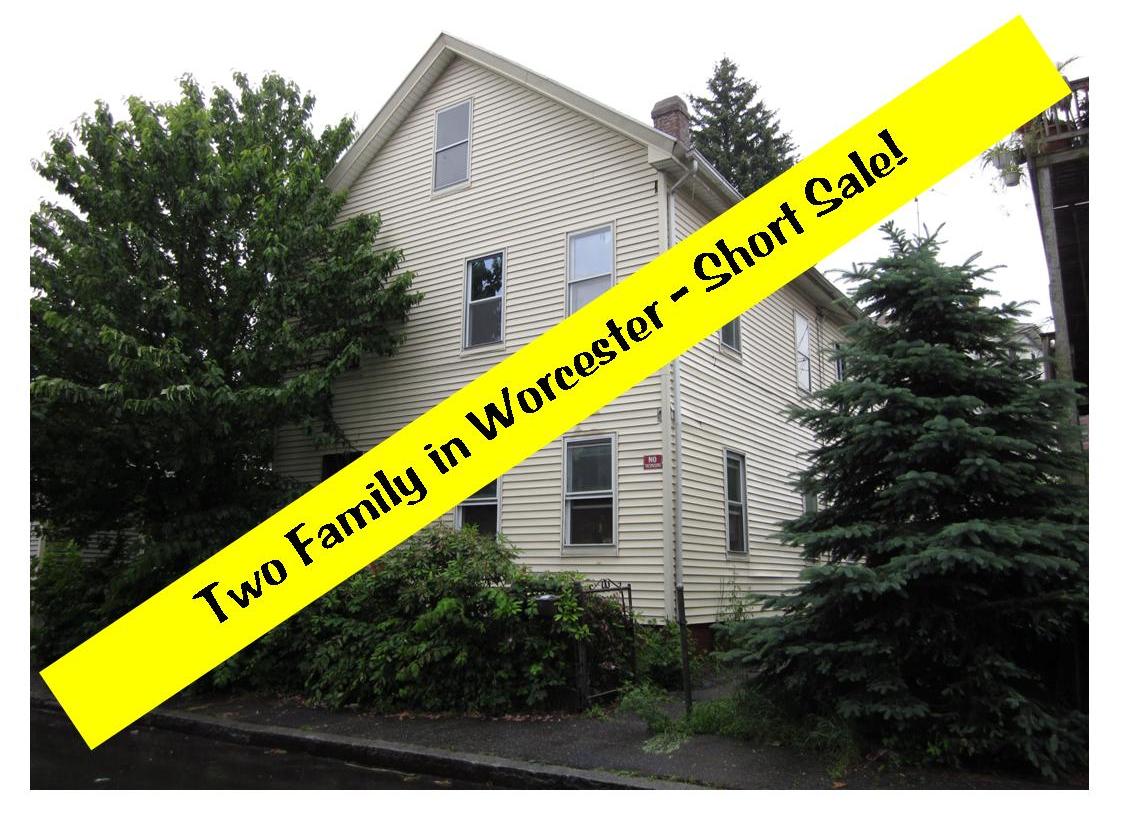
This 2 bed, 1 bath renovated cape in Marlborough is close to downtown with offstreet parking and a fenced in yard. Nice high ceilings, hardwood floors and so much charm! Short sale and coming on a GREAT PRICE!

 If you have tried every avenue and are still in a foreclosure situation, come out of it the best way you can. Make sure that you have the right team in place to minimize your loses and help pave the way for your future. It doesn’t benefit you to “just let it happen” – take control and make it work for you. That starts with knowing which experts provide foreclosure help–often at no cost to you–and how to find them.
Your first step to get foreclosure help should be contacting a foreclosure counseling agency approved by the U.S. Department of Housing and Urban Development.
“A foreclosure counselor should help you evaluate your current financial situation by looking at your bank statements, tax returns, and monthly expenses and income,” says Kimberly Allman, manager of homeownership preservation at the New York Mortgage Coalition in New York City. A foreclosure counselor also can help you understand the programs available through banks and government agencies and serve as an advocate to help you communicate with your bank.
And don’t worry about money–foreclosure counselors provide foreclosure help for free. Find one at NeighborWorks America or by calling HUD’s foreclosure counseling hotline at 800-569-4287 or its foreclosure prevention hotline at 888-995-HOPE (4673).
A REALTOR® can help you find out if a short sale, rather than a foreclosure, is the right path for you. Use this pro to discover if you can sell your house, how quickly, and at what price. In most cases a short sale is possible! RE/MAX Professional Associates has a short sale team that is ready to move on your home because time is of the essence in this situation. The sooner you get us started on this – the sooner you are in a more comfortable situation with less stress (and less phone calls from creditors).
If a short sale seems right for you, make sure your agent is experienced with these. If not, ask for a recommendation for one who is. Short sales are tough to navigate, and they’re further complicated by your loan type–FHA vs. Veterans Administration vs. conventional loans. Real estate agents who specialize in short sales will know the proper steps and order of the steps involved. They’ll also be able to navigate the many parties involved in the process and over-burdened loss mitigation departments.
Look especially for agents who have the Short Sales and Foreclosure Resource (SFR) Certification, which requires specialized training.
You’ll need a tax expert for foreclosure help if you do a short sale or deed in lieu of foreclosure. Consult with a qualified tax adviser since forgiven debt may be taxable income, says Nancy Polomis, chair of the real estate development department at the law firm of Hellmuth & Johnson in Eden Prairie, Minn. You’ll face myriad other foreclosure-related tax issues as well, which require professional advice.
Tax advisers’ hourly rates range from $150 to $250, depending on where you live. A good choice is a certified public accountant. Check with your local CPA society to see if its members offer free advice at volunteer events like those sponsored by the Illinois CPA Society. Find a list of state CPA associations at TaxSites.
Another qualified tax adviser is an enrolled agent. EAs, like CPAs, are licensed to represent clients at an IRS hearing. Find an EA at the National Association of Enrolled Agents.
If you’re having trouble getting a loan modification, a credit counselor can give you some foreclosure help. According to the National Foundation for Credit Counseling, a counselor can advise you on managing your money and help you develop a plan to help you avoid future financial difficulties. “Often people need credit counseling because the one thing that’s holding them back from getting an affordable loan modification is high credit card payments,” says Allman. Even if foreclosure is inevitable, credit score repair can help you get back into a home sooner.
Allman often refers foreclosure clients to the nonprofit Greenpath Debt Solutions, which operates in many states. You can find a list of government-approved credit counselors from the U.S. Trustee Program.
Once your lender has filed a foreclosure lawsuit, contact an attorney. A lawyer can review the lender’s foreclosure papers to determine if it actually owns your mortgage or whether your loan servicer has made mistakes in applying your payments or assessing fees, says Lisa A. Magill, an attorney at Becker & Poliakoff in Fort Lauderdale, Fla.
You may be able to avoid foreclosure, or even a short sale, if you just have more time to sell your home, acquire secondary financing, or get a new job. For example, a lawyer can usually make arrangements with the lender to give you more time by filing responses and motions in the lawsuit, says Magill.
Also consider consulting a bankruptcy attorney, who can help you discover whether bankruptcy is a viable option for avoiding foreclosure, says Polomis.
Lawyers charge $150 to $300 per hour or a flat fee of $1,000 to $2,500 to defend a foreclosure action or file a bankruptcy petition. Contact your local legal aid office, such as the Mid-Minnesota Legal Assistance, or your local bar association, like the Florida Bar, for a list of agencies that offer free legal representation. A list of state resources may be found at the National Legal Aid and Defender Association.
Before making your decision to short sale or foreclose – give me a call. We can work through this together and find the right course of action for you. Not every person and situation is the same and I’m ready to find out what is going to the best for you.
 The Making Home Affordable program offers at-risk homeowners a chance to modify mortgages to avoid foreclosure on their homes. This is just one of the possible solutions that are available to home owners who are in distress or are facing that possibility.
Making Home Affordable’s modification option is known as the Home Affordable Modification Program, or HAMP. It’s designed for homeowners who are likely to lose their homes because they can’t keep up with mortgage payments. Even if you aren’t behind on payments yet, you can qualify for help if you can demonstrate that you will fall behind soon.
To qualify for HAMP, the home must be your primary residence and you must owe $729,750 or less on a first mortgage that was originated on or before Jan. 1, 2009. Your monthly payment on your first mortgage must be greater than 31% of your monthly gross income. Second mortgages and home equity lines of credit don’t count. You must also demonstrate financial hardship such as a jump in mortgage payments or a drop in income.
A loan modification makes sense if you can’t afford your current mortgage payment but could manage to stay current if that monthly payment is lowered. Second homes, which include vacation homes and rentals, don’t qualify for the program. Homes of up to four units are eligible, with higher loan limits, as long as you occupy one of the units. HAMP is scheduled to expire at the end of 2012.
HAMP begins with a trial phase. Contact your lender to initiate the process, or call 1-888-995-HOPE to get free assistance from a housing counselor approved by the U.S. Department of Housing and Urban Development. The lender will calculate a lower monthly payment, which you must make on time for at least three months. After successfully completing the trial phase, your lender should make the loan modification permanent.
While lenders may accept some undocumented information up front to begin the process, eventually you’ll need to file detailed paperwork to earn a permanent modification. It’s better to get your documentation in order in advance. HAMP administrators say the leading reason trial modifications fail to be made permanent is missing paperwork.
Start by gathering information on your income (pay stubs), expenses (mortgage statements, tax and insurance bills, debt balances), and assets (bank and non-retirement savings statements). You’ll need that information to fill out the Request for Modification and Affidavit. Also complete IRS form 4506T-EZ, which allows your lender to review your income tax returns. File a Hardship Affidavit as well. If possible, send all of the documents at once by certified mail to your lender to lessen the likelihood of lost paperwork and delays, says Nicole Hall, editor of LendingTree.com.
A lender can modify a mortgage in several ways: lower your interest rate, reduce your principal, or extend the term of the loan. The basic goal is to use one or more of these approaches to get your monthly mortgage payment, including real estate taxes and homeowners insurance premiums, down to a more affordable 31% or less of gross (pre-tax) income. Lenders are allowed to cut your interest rate to as low as 2%, if necessary. The average HAMP modification has reduced monthly payments by $640.
To get a ballpark figure of how much a modification might lower you monthly payment, run the numbers for yourself. If, for example, your current mortgage payment is $2,000 and your monthly gross income is $4,000, then you’re paying 50% of your pre-tax income toward the home loan. A typical modification to bring that figure down to 31% would reduce the payment to $1,240, a savings of $760 a month.
Even if you’re facing foreclosure, HAMP is worth a shot. The foreclosure process is suspended while you’re in the trial phase of the modification. Foreclosure can be avoided altogether if you can demonstrate the ability to keep up with the new, lower payment and graduate to a permanent modification. Keep in mind that the foreclosure process can resume if you miss payments during the trial phase or fail to get approved for a permanent modification.
Some owners won’t be able to stay in their homes, even with a mortgage modification. To avoid foreclosure, look into the federal Home Affordable Foreclosure Alternatives program. HAFA offers lenders financial incentives to opt for a short sale or deed-in-lieu rather than a foreclosure. Although the program doesn’t officially go into effect until April 5, 2010, some lenders may initiate it early.
In a short sale, a borrower sells a home for less than the outstanding mortgage, and the lender takes the proceeds and considers the debt paid off. In a deed-in-lieu, the homeowner turns over the home to the lender, and the mortgage is closed. Although neither option is ideal, either can make sense if a loan modification isn’t attainable or sufficient.
To learn more about this option and to see what other options might be available to you, give me a call. RE/MAX Professional Associates recognizes the need for this type of information and already has a team ready to help you.
It’s nice to know that there are options for home ownership after a foreclosure but it’s even better to know that there are options prior to foreclosure. If you are facing foreclosure, contact a member of our Stop Foreclosure Team at RE/MAX Professional Associates. You might be able to avoid it all together. If you have already been through it, this article can give you some steps to becoming a home owner again. I can recommend a mortgage broker in your area and put you back on the path to becoming a home owner again.
 Foreclosure is just a one-time event–with discipline and perseverance, you can get a mortgage and become a homeowner again.
Did you fall into foreclosure because of the lack of a steady job? If you did, the first step toward homeownership after foreclosure is finding and holding one. And if you already have one–stick with it, unless you can move to a better one. Note that potential lenders will require stable employment before they’ll give you a new mortgage loan after a foreclosure. Even if it means taking a lower-paying job, it’s worth it.
Establish a safety net. Financial planners generally recommend three to six months of living expenses in a liquid account, but since you’re coming out of foreclosure, six is a minimum to show stability and that you’re able to pay your bills–including your mortgage–for an extended period if you lose your job.
This is the hardest and most time-consuming part. After foreclosure, your credit score, according to myFICO, probably dropped by about 150 points. You’ll need to raise it back up with perseverance.
Pay bills on time and keep your credit card balances below maximum levels. The foreclosure will stay on your credit report for seven years, but if you prove your money management skills have matured, it will become less of a red mark as years go by.
Tip: Consult a housing counselor. The U.S. Department of Housing and Urban Development offers free housing counseling for distressed homeowners with a foreclosure in their past. A counselor can help you with money management and budgeting. Counseling works–an evaluation of a program in Indianapolis discovered that credit scores greatly improved because of education and counseling, and increased average borrowing power by $4,500 per family.
Normally, you would have to wait seven years after foreclosure before you can apply for a new mortgage under Fannie Mae rules. (Fannie Mae changes rules frequently. You can check the latest rules at Fannie Mae’s site.)
However, you might wait only three years if you can show extenuating circumstances for your foreclosure, which are defined as “events that are beyond the borrower’s control that result in a sudden, significant, and prolonged reduction in income or a catastrophic increase in financial obligations.” These include:
There’s one last alternative if waiting isn’t your thing–you can obtain seller financing, essentially bypassing the traditional mortgage. If both parties are amenable, you can enter into a lease with an option to buy, or take a mortgage directly from the seller. You’ll most likely have to show some hefty reserve funds, but if you’ve turned around your financial situation quickly after your foreclosure, it’s worth a shot to deal directly with the seller.
Keep in mind that sellers may be motivated to agree to this if they need to sell and the potential buyers they’ve met with can’t obtain a conventional mortgage–perhaps because they’ve been through foreclosures, too.
Tip: Try a mortgage broker, who can work with a variety of lenders to find you a loan. When you work directly with a retail lender, like a bank, they have a limited pool of loans to offer you. But a good mortgage broker–one with a vast network of lenders has many options, and may be able to find a mortgage solution if the foreclosure in your past is creating challenges in obtaining one.
If you stay disciplined and positive, the American dream–obtaining a mortgage and owning a home of your own–can, indeed, be yours again. Even after foreclosure.
Barbara Eisner Bayer has written about mortgages and personal finance for the past 16 years for the Motley Fool, the Daily Plan-It, and Nursevillage.com, and has been the Managing Editor for CompleteGrowth.com, Mortgageloan.com, and Credit-land.com. She’s grateful that she now knows where to turn if she ever struggles to meet her mortgage payment.
Use this handy guide to figure out how quickly you can buy a home after a major financial setback when applying for a loan through FHA, Fannie Mae, or Freddie Mac.
The chart below outlines the criteria that government entities FHA, Fannie Mae, and Freddie Mac follow for major credit-busting events, including foreclosure. Although FHA, Fannie Mae, and Freddie Mac aren’t direct lenders, they wield a lot of behind-the-scenes influence by working with banks to guarantee loans and help lenders free up capital to provide more mortgages.
One of these entities may have made your loan possible without you even knowing it. Although for the most part banks make loans to whomever they want, they’ll likely find themselves following FHA, Fannie Mae, or Freddie Mac guidelines at a minimum in order to keep working with these useful partners.
Some lenders may have more stringent policies and others, willing to take greater risks, may work outside these entities and offer more liberal lending policies.
This chart offers summaries of what can be complex rules and regulations. So:
1. Look to professionals, such as a bankruptcy lawyer and a CPA specializing in bankruptcy provisions, before making major financial decisions.
2. For HUD-approved counselors, go to http://www.hud.gov/offices/hsg/sfh/hcc/fc/index.cfm. You can also call 1-888-995-HOPE for help from the Homeownership Preservation Foundation.
3. Understand what “extenuating circumstances” means in each case:
FHA: An event that was out of the borrower’s control that made a significant impact on the borrower’s finances and led to bankruptcy or foreclosure.
Fannie Mae: A nonrecurring event that’s beyond the borrower’s control that results in a sudden, significant, and prolonged reduction in income or a catastrophic increase in financial obligations.
Freddie Mac: A nonrecurring or isolated circumstance, or set of circumstances, that was beyond the borrower’s control and that significantly reduced income and/or increased expenses and rendered the borrower unable to repay obligations as agreed, resulting in significant adverse or derogatory credit information.
| FHA | Fannie Mae | Freddie Mac | |
| Foreclosure | •3-year wait. •Reduced wait if borrower has re-established good credit and can show extenuating circumstances. |
•7-year wait from the completed foreclosure sale date. •3-year wait if borrower can show extenuating circumstances (additional underwriting requirements apply for 4 years after 3-year waiting period). •7-year wait for a second home, investment opportunity, or cash-out refinancing. |
•5-year wait from the completed foreclosure sale date. •3-year wait if borrower can show extenuating circumstances. |
| Short Sale | •No wait if not in default. •3-year wait if in default at closing of short sale. •Reduced wait if borrower has re-established good credit and can show extenuating circumstances. |
•2-year wait if the borrower puts 20% or more down. •4-year wait if the borrower puts 10-20% down. •7-year wait if the borrower puts less than 10% down. •2-year wait time if borrower can show extenuating circumstances and puts 10% or more down. |
•4-year wait. •2-year wait if borrower can show extenuating circumstances. |
| Deed in lieu of foreclosure | •Same as FHA’s foreclosure policy. | •Same as Fannie’s short sale policy. | •Same as Freddie’s short sale policy. |
| Bankruptcy | Chapter 7 (liquidation): •2-year wait from the discharge date of the bankruptcy. •1-2 year wait if borrower can show extenuating circumstances. Chapter 13 (repayment plan): |
Chapter 7 or Chapter 11 (reorganization, usually involving corporations or partnerships): •4-year wait from the discharge or dismissal date of the bankruptcy. •2-year wait from the discharge or dismissal date may be accepted if borrower can show extenuating circumstances. Chapter 13: Multiple bankruptcies: |
Chapter 7 or Chapter 11: •Same as Fannie’s bankruptcy policy. Chapter 13: Multiple bankruptcies: |
Source: FHA Handbook, Fannie Mae Selling Guide, Freddie Mac Selling Guide
Please note that in most cases a short Sale is better than a foreclosure. If you or someone you know (a friend or family member) is currently faced with this situation, urge them to find out what their options are. RE/MAX Professional Associates has a short sale team that is ready to review their situation and help. Call (508-784-0504) or email me (amymullen@remax.net) to find out more information.

 Real Estate and *stuff *