Real Estate and *stuff *
A real person helping real people with real estate
You can scroll the shelf using ← and → keys
You can scroll the shelf using ← and → keys
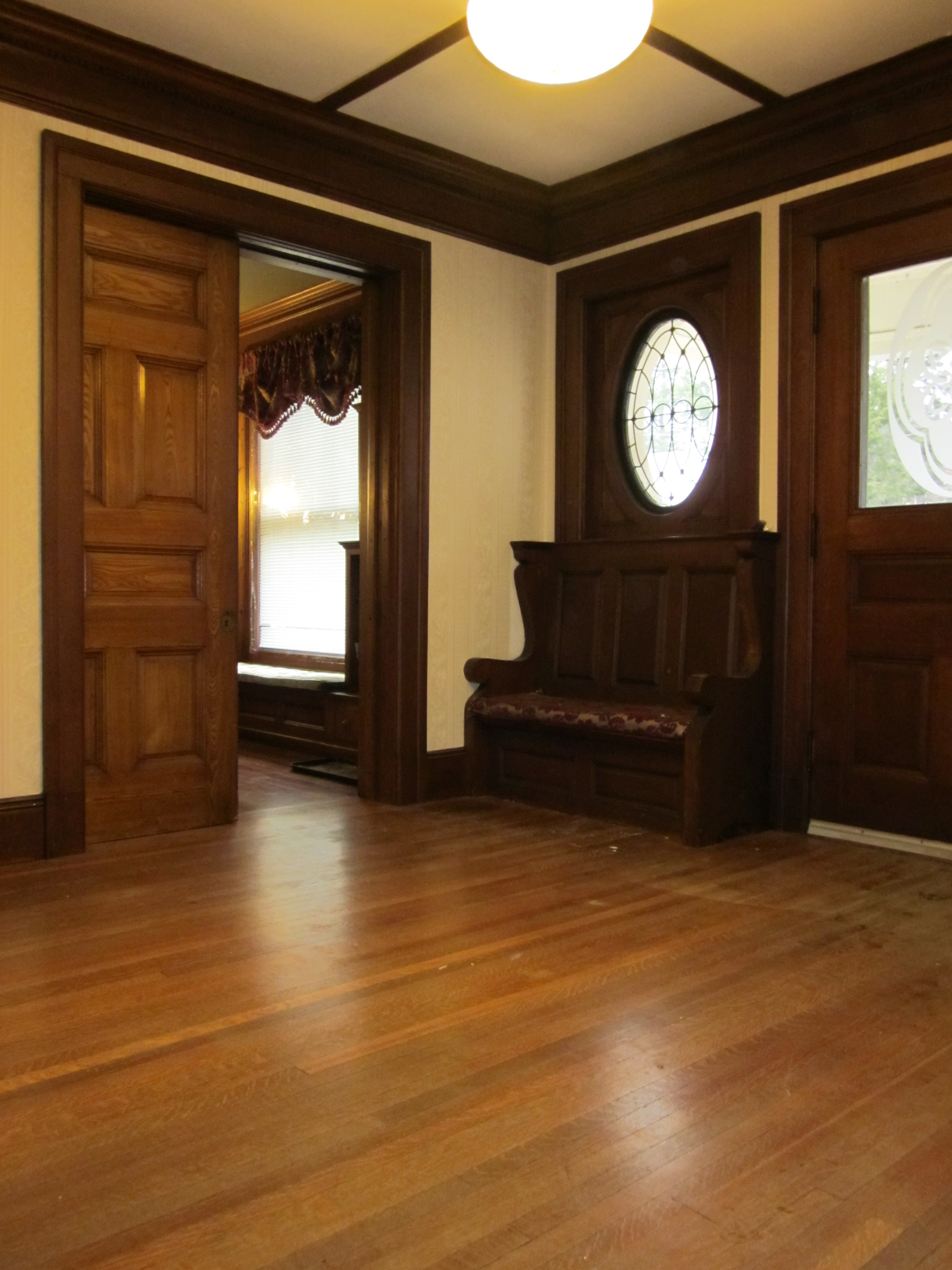 Come enjoy an evening of spirits and tales with the Ware Historical Society and RE/MAX Professional Associates as we combine an open house with Researchers Dale Platenik and Audra Zobriski Pierce.
Audra will be discussing the Victorian Spiritualist Movement and Victorian Spirit Photography. Dale will be discussing the reading of the tarot cards
Resources will be available for researching an antique home such as 12 Cottage Street which was built in 1855 and its history…is a mystery. Home will be available for viewing during the evening with a full tour at 6:45 pm as it is available for purchase.
It is a beautiful 11 room, 6 bedroom home with all the Victorian character still in place – grand entrance with wide wood stair case complete with a stained glass window at the landing, huge pocket doors, built in wood carved window seats, fireplace – but with all the updates of comfort – insulation, new furnace, pellet stove and modern kitchen. Property also has a two story barn with electricity, 2 car garage and pool.
Refreshments provided….hope to see you…or your spirit
October 19th, 6:30pm 12 Cottage Street Ware MLS: 71210792Leslie Houssan is a Pampered Chef extraordinaire in Worcester County. She is up to date on the latest and greatest for all things in your kitchen! Give Leslie a call and she’ll fill you in. You can reach her at 774-276-0205, ljhpchef@yahoo.com or http://www.pamperedchef.biz/4lesliehoussan.
Here is a sample of what she can share with you:
“Greasy, expensive takeout food will be a thing of the past when you invest in these kitchen workhorses! Prepare easy, delicious recipes at only $2 a serving* your family will love.”
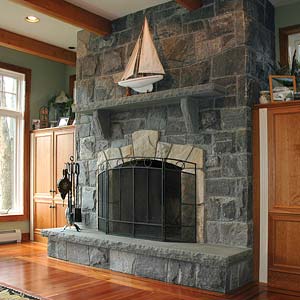 Everyone loves a fireplace…especially as we start the winter season here in New England but there is cost. Luckily there is still a tax credit too! Installing a wood-burning, gas-burning, gel-fuel, or electric fireplace to your house costs $400 to $10,000, depending on the type of fireplace you select.
If your budget is really tight, a free-standing gel-fuel or electric fireplace eliminates installation costs. But be aware that some bare-bones alternatives don’t completely succeed in mimicking a real wood fire.
Check local building codes for possible restrictions on the types of fireplaces that can be installed in your area.
Costs of a wood-burning fireplace
An open-hearth, wood-burning fireplace—like the ones you see in mountain resort hotels—requires the help of a skilled, professional mason and a budget approaching (and often exceeding) $10,000.
For an existing home, considerable renovation work is required, including a foundation to carry the weight of the firebox and chimney, and the cost of the chimney itself.
Expect to pay $7,000 to $10,000 or more.
Costs of a gas-burning fireplace
A fireplace unit that burns natural gas or propane runs about $2,000 for the basic materials package. Installation and finishing typically add $2,500.
Your least-expensive option
A gel-fuel fireplace or an electric fireplace starts under $400. With a portable unit, that’s the total cost since the fireplace is ready to use once you remove the packaging.
Because there’s no flue or chimney, it’s easy to install TVs or other electronic gear directly above an electric fireplace. If you include a mantle package, expect to pay $800 to $1,600. One perk available: sound effects that mimic the crackle and pop of a real fire.
Ongoing costs
Estimate your energy costs by using a fuel cost comparison calculator. Gel fuel, not included in the calculator, costs $3 per 13-ounce can, enough for three hours.
For a wood-burning fireplace, figure on $100 to $200 a year for chimney cleaning. Gas fireplaces need an annual service check ($100 to $150) plus a chimney inspection. Gel-fuel and electric fireplaces don’t need regular maintenance.
Tax credits for fireplace inserts
Through Dec. 31, 2011, you may qualify for a federal tax credit for up to $300 in costs, if you install a biomass (wood- or pellet-burning) fireplace insert that’s at least 75% fuel-efficient.
 Here are a few surprising and simple ways to cut your energy bill this season since the temps have dropped so low the last few nights…we are getting our first taste of the winter season. I found this list and thought it was a nice quick way to save some energy without having to reconstruct the house. I am a fan of the last one!
Put lamps in the corners: Did you know you can switch to a lower wattage bulb in a lamp or lower its dimmer switch and not lose a noticeable amount of light? It’s all about placement. When a lamp is placed in a corner, the light reflects off the adjoining walls, which makes the room lighter and brighter.
Switch to a laptop: If you’re reading this article on a laptop, you’re using 1/3 less energy than if you’re reading this on a desktop.
Choose an LCD TV: If you’re among those considering a flat-screen upgrade from your conventional, CRT TV, choose an LCD screen for the biggest energy save.
Give your water heater a blanket: Just like you pile on extra layers in the winter, your hot water heater can use some extra insulation too. A fiberglass insulation blanket is a simple addition that can cut heat loss and save 4% to 9% on the average water-heating bill.
Turn off the burner before you’re done cooking: When you turn off an electric burner, it doesn’t cool off immediately. Use that to your advantage by turning it off early and using the residual heat to finish up your dish.
Add motion sensors: You might be diligent about shutting off unnecessary lights, but your kids? Not so much. Adding motion sensors to playrooms and bedrooms cost only $15 to $50 per light, and ensures you don’t pay for energy that you’re not using.
Spin laundry faster: The faster your washing machine can spin excess water out of your laundry, the less you’ll need to use your dryer. Many newer washers spin clothes so effectively, they cut drying time and energy consumption in half—which results in an equal drop in your dryer’s energy bill.
Use an ice tray: Stop using your automatic ice maker. It increases your fridge’s energy consumption by 14% to 20%. Ice trays, on the other hand, don’t increase your energy costs one iota.
Use the dishwasher: If you think doing your dishes by hand is greener than powering up the dishwasher, you’re wrong. Dishwashers use about 1/3 as much hot water and relieve that much strain from your energy-taxing water heater. Added bonus: you don’t have to wash any dishes.
 Amazing short sale buying opportunity on the north side of Framingham with a $15k price drop today!
This is a great location with top shelf renovations *mostly* done. Check out the pictures and the video and then let me know when you want to see it in person.
The hand tiled master bath is a great picture to look at…don’t pass by the inlay tile in the master bedroom either 🙂

Come Share Your Spirit with RE/MAX and the Ware Historical Society
 It’s raining so I couldn’t resist this blog. Solving wet-basement problems is one of the most important things you can do to protect the value of your home and health of your family. Additionally, a dry basement is a huge plus to home buyers if your house is on the market now or if you are considering selling. A finished basement is an even bigger plus!
Some wet basements are easy to cure simply by clearing gutters and by diverting gutter water away from the foundation. But if the problem comes from other sources—water flowing toward the house on the surface, seeping in from underground, or backing up through municipal storm drains—you must take more aggressive action.
Here are eight strategies to keep water out of your basement.
If downspouts are dumping water less than 5 feet away from your house, you can guide water farther out by adding plastic or metal gutter extensions.
But extensions aren’t the neatest or most effective long-term solution, especially if you’re likely to trip over them or run over them with a lawn mower. Permanent, underground drain pipe is invisible and capable of moving large quantities of gutter runoff much farther from your house.
For about $10 a foot, a landscaper or waterproofing contractor will dig a sloping trench and install pipe to carry the water safely away.
If you see water dribbling into the basement through cracks or gaps around plumbing pipes, you can plug the openings yourself with hydraulic cement or polyurethane caulk for less than $20.
Plugs work when the problem is simply a hole that water oozes through, either from surface runoff or from wet soil. But if the water is coming up through the floor, or at the joint where floor and walls meet, the problem is groundwater, and plugs won’t do the trick.
If the gutters are working and you’ve plugged obvious holes, but water still dribbles into your basement or crawl space from high on foundation walls, then surface water isn’t draining away from the house as it should.
Your house should sit on a “crown” of soil that slopes at least 6 inches over the first 10 feet in all directions.
Over time, the soil around the foundation settles. You can build it back with a shovel and dirt. One cubic yard of a water-shedding clay-loam mix from a landscape supply house costs around $30 (plus delivery) and is enough for a 2-foot-wide, 3-inch-deep layer along 57 feet of foundation.
Since your home’s siding slightly overlaps its foundation, building up the crown could bring soil–and rot and termites–too close to siding for comfort: 6 inches is the minimum safe distance. In that case, create a berm (a mound of dirt) or a swale (a wide, shallow ditch), landscape features that redirect water long before it reaches your house.
In small areas, berms are easy; a landscape contractor can build one for a few hundred dollars. On bigger projects, berms make less sense because you’ll have to truck in too much soil. In that case, dig a swale (about $1,000). Once landscaping grows in, berms and swales can be attractive features in your yard.
If water is leaking into your basement low on the walls or at the seams where walls meet the floor, your problem is hydrostatic pressure pushing water up from the ground.
First, check whether you have footing drains, underground pipes installed when the house was built to carry water away from the foundation. (Look for a manhole or drain in the basement floor or a cleanout pipe capped a few inches above the floor.)
If the drains are clogged, open the cleanout and flush the pipes with a garden hose. If that doesn’t work, a plumber with an augur can do the job for about $600.
If you don’t have working footing drains, install a curtain drain to divert water that’s traveling underground toward your house.
A type of French drain, a curtain drain is a shallow trench–2 feet deep and 1.5 feet across–filled with gravel and perforated piping that intercepts water uphill of your house and carries it down the slope a safe distance away.
If the drain passes through an area with trees or shrubs, consider switching to solid pipe to reduce the risk of roots growing into the piping and clogging it. Cost: $10 to $16 per linear foot.
If you can’t keep subsurface water out, you’ll have to channel it from the inside.
To create an interior drain system, saw a channel around the perimeter of the floor, chip out the concrete, and lay perforated pipe in the hole. The pipe drains to a collection tank at the basement’s low spot, where a sump pump shoots it out the house.
Starting at about $3,000, an interior system is the best and least disruptive option in an unfinished basement with easy access. It’s also a good choice if your yard is filled with mature landscaping that digging an exterior drainage system would destroy.
Installing an interior drainage system gets the water out but doesn’t waterproof the walls. For that, you need an exterior system: a French drain to relieve hydrostatic pressure and exterior waterproofing to protect the foundation.
It’s a big job that requires excavating around the house, but it may be the best solution if you have a foundation with numerous gaps. It also keeps the mess and water outside, which may be the best choice if you don’t want to tear up a finished basement.
The downside, besides a price tag that can reach $20,000, is that your yard takes a beating, and you may need to remove decks or walkways.
I have done several of these in order to obtain a “mostly” dry basement. I am very happy I did!
 YES! I NEED a buyer’s agent to join me at RE/MAX Professional Associates in serving the borough / 495 area. I have listings that need open houses and buyer appointments and I am out of time! I am constantly passing leads and several effective advertising campaigns in place. Looking for a tech savy, motivated, open communication, smart and energetic Realtor who can grab things and run with them. Virtual is perfect! RE/MAX Professional Associates has fantastic support, on-going free training and three offices that are filled with great people.
Call or email me for more information – amymullen@remax.net 508-784-0504
Check out my website, fb page, trulia etc: http://www.amymullenrealestate.com, http://www.trulia.com/profile/amymullenrealtor/, http://www.facebook.com/#!/amymullenremax, http://activerain.com/blogs/amymullen


 Real Estate and *stuff *