Real Estate and *stuff *
A real person helping real people with real estate
You can scroll the shelf using ← and → keys
You can scroll the shelf using ← and → keys

Stop foreclosure! There are a variety of options for distressed home owners such as loan modifications, deed-in-lieu or a short sale. Find out which option helps you the best!
New news and new avenue for distressed home owners! Please see the Boston Herald article reprinted below. There is a new hotline in Massachusetts for residents facing foreclosure. If you are facing foreclosure, there are a variety of options available to you. Call or email to me to find out what they are. You can also visit www.dontforeclosenow.com to review them.
“In an effort to stem the tide of foreclosures, a key legislative committee on Wednesday advanced a bill that would require banks to make loan modifications available to homeowners when financially feasible to prevent families from unnecessarily losing their homes.
The Joint Committee on Financial Services unanimously recommended passage of the bill (H 1219) on Wednesday, with 10 of the 17 committee members voting in favor of the legislation, which has been a priority for Attorney General Martha Coakley.
“This is a fair and balanced approach that brings both the bank and the borrower to the table to look at the mortgage,” said Rep. Michael Costello, a Newburyport Democrat and co-chair of the Financial Services Committee.
The bill, filed by Rep. Steven Walsh (D-Lynn), would require banks and other lenders to assess a borrower’s ability to pay and the value of a loan modification compared to the cost of foreclosure before entering into foreclosure proceedings. If a modified loan is worth more than the amount the bank expects to recover through foreclosure, the lender must offer a modified loan to the borrower, according to the bill.
The legislation also addresses two recent Supreme Judicial Court decisions by requiring that lenders produce proper documentation showing they are the legal holders of the mortgage before foreclosing.
Coakley, who says foreclosures are a major obstacle to a full economic recovery, applauded the advancement of the bill on Wednesday. Coakley has said that in addition to pushing families out of their homes, unnecessary foreclosures have led to more abandoned property in cities and towns.
“Addressing the foreclosure crisis is a critical step toward moving our economy forward. This bill would promote reasonable loan modifications that keep people in their homes, keep properties on the tax rolls, and without requiring banks to sacrifice the bottom line,” Coakley said in a statement.
Among those who cast votes, the bill received unanimous support in the Financial Services Committee. Ten members voted in favor, four did not vote and three Republicans reserved their rights. Sen. Michael Knapik and Reps. Nicholas Boldyga and Marc Lombardo reserved their rights, while Sen. Brian Joyce and Reps. Kevin Murphy, Lori Ehrlich and James Cantwell did not vote.
According to Costello’s office, more than 45,000 Massachusetts residents have lost their homes due to foreclosure since the start of 2007. In February, there were almost 1,400 new foreclosures started, more than double the amount from a year ago and showing that the problem has not gone away even as the economy has rebounded.
The Warren Group recently reported completed foreclosures in Massachusetts dropped more than 30 percent last year, compared to 2010, but analysts believe the drop was partly due to lenders slowing the process down.
With $44.5 million paid to Massachusetts as part of a national settlement over illegal foreclosures and loan servicing with Bank of America, JP Morgan Chase, Wells Fargo, Citigroup and GMAC/Ally, Coakley two weeks ago launched a HomeCorps program featuring the hotline (617-573-5333), which makes loan modification experts available to advise residents.
Coakley said last week that the hotline had been inundated with calls from more than 1,000 homeowners calling in the first week, averaging 200 to 300 calls a day.
“We are going to try to help everybody we can to stay in their homes,” Coakley told Fox 25. “For a lot of people this can be real relief.”
Under the national settlement, the banks are also ordered to provide about $14.6 million in cash payments to Bay State borrowers and $257 million worth of mortgage relief across Massachusetts, money that Coakley said can be used for refinancing or principal reduction.
By Matt Murphy / State House News Service
Bring your imagination and your hammer! This is an opportunity to own in Shrewsbury!
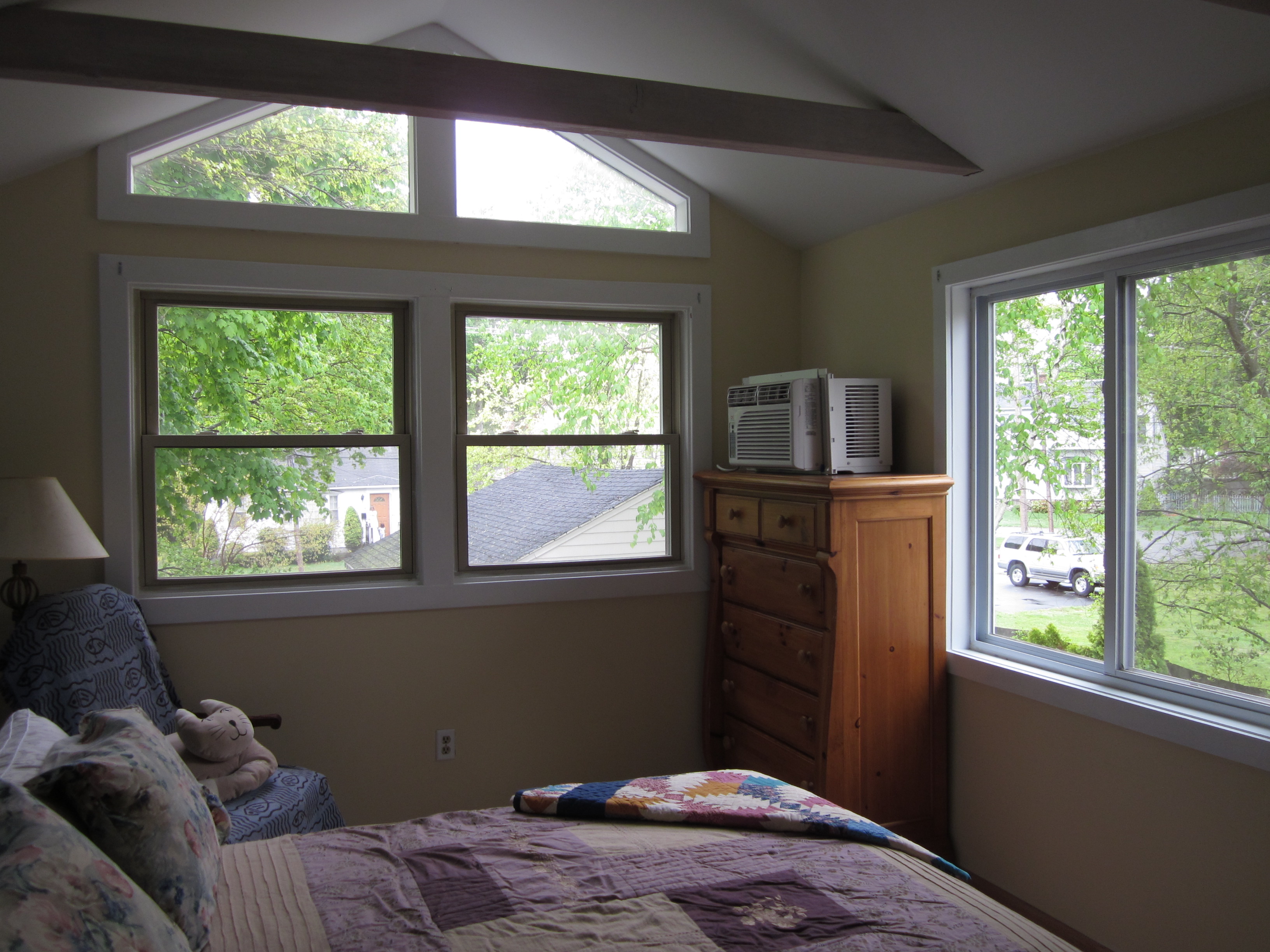
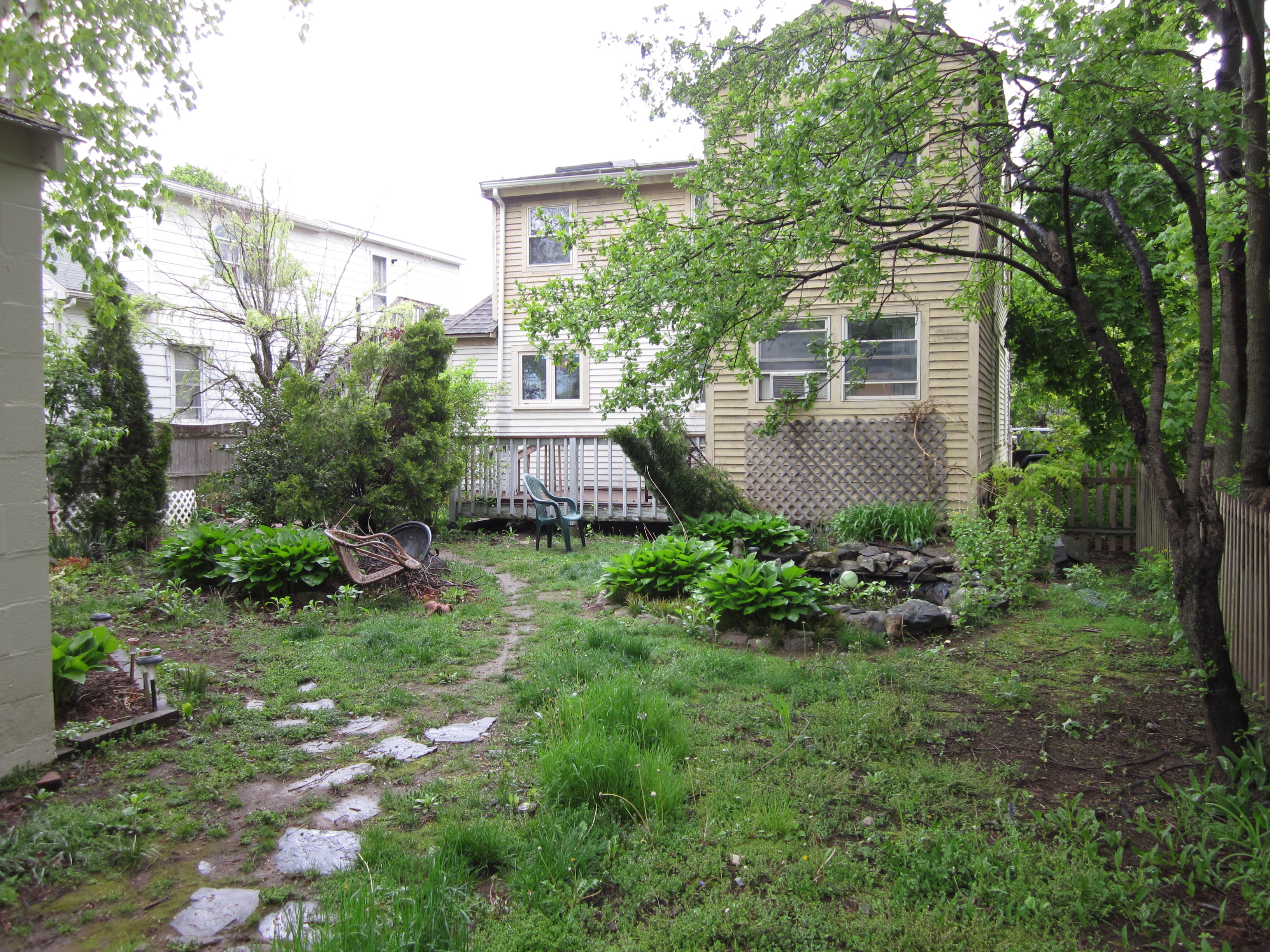
“Arts and Crafts” style home with newer roof and newer furnace needs your finishing touches to bring out its best! Seven roof gables, pass through lot with 2 car garage to Fairlawn Circle, easy highway access with a wooded private yard at the end of the day. First floor master, hardwoods, 2 full baths, tons of natural light and tons of character!
Short sale approval is already in process – here’s your chance!
Open today – May 12th – 1 to 4pm
16 Rofle Ave, Shrewsbury


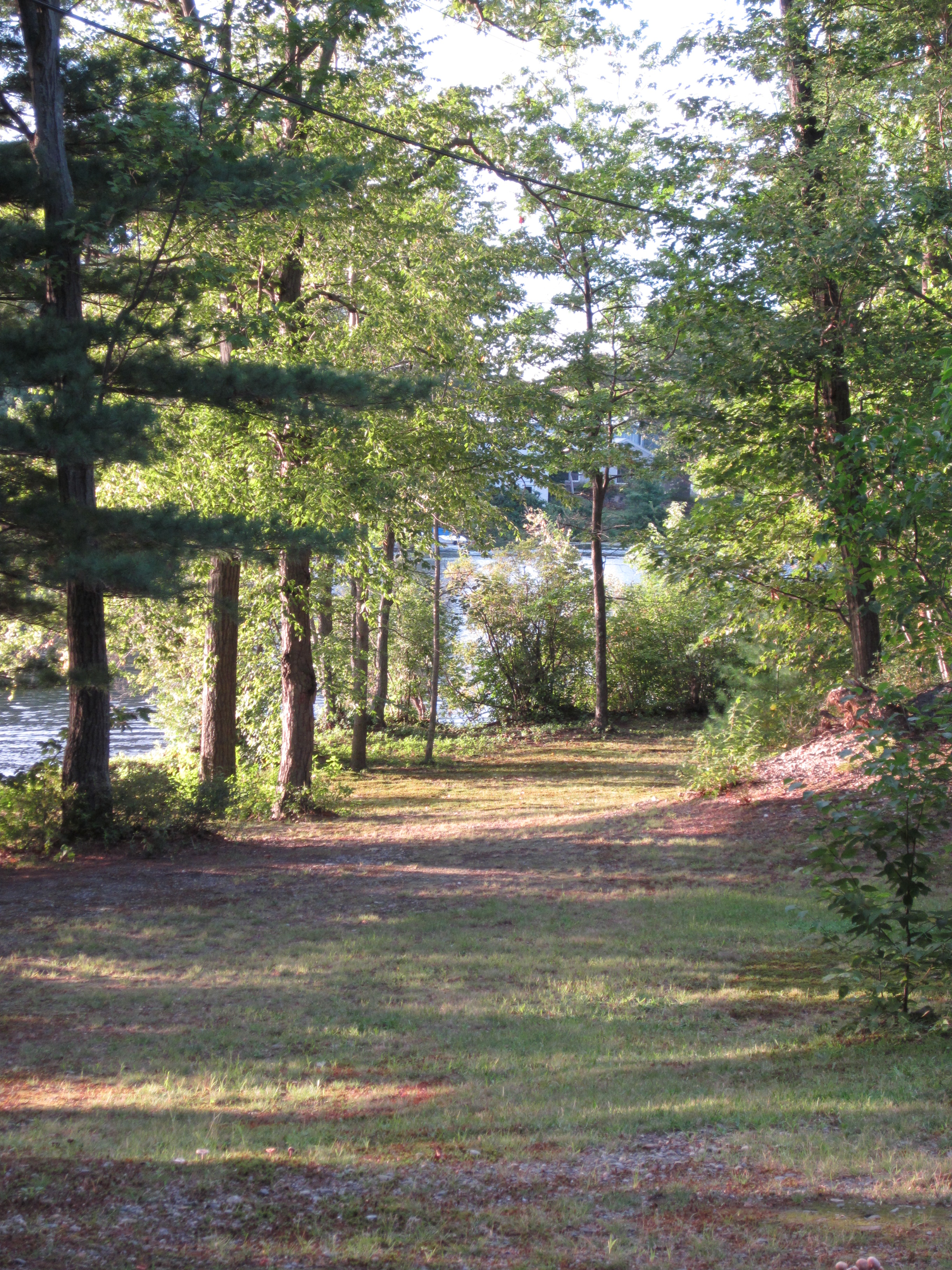
 Open on Thursday, April 26th at 11:30am to 1:30pm this unique and stunning property can be viewed! Come visit 1 Sargents’ Island in Shrewsbury! Did you know Shrewsbury had an island?
This 4.27 acre island in Flint Pond is accessed by a dedicated year-round causeway and features nearly 2000 feet of shoreline. Stunning lake views, wildlife, privacy and freedom! Currently zoned residential with a single family home in the center this property offers so many possibilities. Close to major commuting routes but yet seemingly far away from the busy day. Imagine ending your highway commute and minutes later grabbing your fishing pole and stepping on to your boat. It’s a vacation at the end of every weekday.
Stop in – tell your friends – think of the possibilities with this unique piece of property! How many islands are for sale in Shrewsbury? Just ONE!

MapQuest or navigator: Use “104 Creeper Hill Rd North Grafton”. Directly across the street will be the gated causeway entrance. Drive is 3/4 mile. Thursday, April 26th 11:30am to 1:30pm – lunch included 1 Sargents’ Island Shrewsbury, MA 01545 MLS: 71362794
 Martha Stewart spring cleans like a pro — because she is a pro. But the rest of us seek an easier way. Welcome to The Anti-Martha Stewart Spring Cleaning Guide.
For the record, I love Martha Stewart. She has elevated housekeeping to high art, which protects home values. Martha’s taught us the devil is in the details, and that even mundane chores can be tackled with grace, diligence, and elbow-high rubber gloves.
That said, spring is here, and cleaning is required. But who’s got the time or energy to rip apart every square inch of the house? When I saw a Martha blog that suggested cleaning our kitchen range in only 22 steps, we threw in the towel and shouted, “Get real!”
Then, I found Anti-Martha Stewart Spring Cleaning Guide, acknowledging that top-to-bottom cleaning is a good idea, but nobody’s idea of a good time.
But days have only 24 hours, and work, family, and the tyranny of getting in 10,000 steps makes spring cleaning Martha-style merely a fantasy for most of us. So, I found a “get-real” guide.
This guide is all about time-savers and corner-cutters. Top highlights:
But seriously, folks. Here’s a little preview of the guide.
Hey, we’ve got a million of these. Martha, I’m sure, is shaking her head in dismay. But I’m sure this guide will help you get clean in spring and still have time to enjoy the season. THE GUIDE
And that’s a good thing.
 Lawn Work Ranks Low on Americans’ Hit Parade of Chores! When it comes to lawn chores, we’d rather open wide and say “ahhhh” than mow and weed.
Americans would rather see their dentist or visit their in-laws than spend time with their lawns.
In fact, we would rather do just about anything than mow, fertilize, and perform other lawn care chores, according to a Consumer Reports survey of 1,000 adults nationwide.
When asked about which tedious chore they would like to do, only 7% said lawn care. Here are the activities that ranked higher:
What chores would you pick over lawn care? Any chores that rank lower?
 If you want a yard that demands less time money and water consider low-maintenance grasses in lieu of the traditional lawn.
We love our lawns. Turf grass covers nearly 47 million acres in the U.S., according to the Lawn Institute. But that’s not very green. The average household dumps 60 gallons of water per day on conventional lawns. Toxic lawn herbicides and pesticides run off into lakes and streams. Gas-powered mowers spew pollution. And then there’s the watering, weeding, seeding, sodding, thatching, and mulching commitment.
If you’re looking for an alternative, consider replacing some or all of your high-maintenance turf with innovative grasses that require little or no water or mowing once established, or ground covers that form walkable “carpets.”
In turn, you’ll reduce the need for irrigation, stop washing harmful chemicals into the watershed, add depth and texture to your landscape, and spend your spare time enjoying your yard instead of manicuring it.
Low-maintenance turf grasses
If you need grass for kids or pets, consider new “miracle” cultivars or blends. UC Verde Buffalo Grass, for example, delivers lush, silky blades that require little or no water once established, rarely need mowing, and need no fertilizer or pesticides. The secret to these grasses are long (but noninvasive) roots and thin blades. Make sure you get the right fescue, or grass, blend for your soil type and growing zone.
“No Mow Lawn Mix” is great for open, sunny swaths where native prairie grasses once grew, such as the cooler, medium-rainfall areas of the upper Midwest, Northeast, and Pacific Northwest. And hardy Eco-Lawn thrives even in difficult spots, such as under spreading trees or in clay soils.
The cost of growing these blends from seed is comparable to that of conventional grass seed. No Mow Lawn Mix, for example, costs $3.75 to $5.95 per pound; you need 5 pounds per 1,000 square feet, which translates to about $0.02 per square foot. Planting grass from plugs is more expensive; you’ll need at least 1 or 2 plugs per square foot, at a cost of about 50 cents per plug.
Sedge: One of the most exciting breakthroughs in turf concepts in recent years has been the development of sedge lawns. Sedges look a lot like conventional turf but have more in common with native grasses that existed in America before sod-busting development and agriculture. The great thing about them is that they require little or no mowing, fertilizing, or chemicals. Some require less water than many conventional turf grasses. Others tolerate wet, moist areas, and many thrive in shade.
Ornamental grasses: This term covers both grasses and grass-like plants, such as sedges. For our purposes, we’re talking low-water, native grasses. Low to medium-height species can be used en masse as meadows. Tall ones function as vertical elements in a landscape. Check with your local extension service to find out which kinds are native to your area. What might be native to one region, such as pampas grass, may well be invasive in another.
Synthetic grass: Synthetic grass is starting to get some respect, thanks in part to increasingly urgent water restrictions in parts of the country, and because new versions are so amazingly lifelike. Synthetic turf requires zero water or mowing, which does wonders for your carbon footprint. The grass looks perfect—and perfectly real—and is suitable for either an expansive play area or a little jewel box of a garden nook, particularly where nothing else will grow.
On the downside, lawns made of petrochemical plastics can feel stifling in hot weather and offer no habitat for birds or insects. Some communities have protested the use of synthetic turf in institutional landscaping like school soccer fields, amid health concerns that the recycled-tire crumbs used as infill to provide drainage and keep blades from matting contain high levels of toxins.
Looking to add a little magic to your rooms? Call in the magician — crown moulding can make rooms seem taller, shorter, and fancier. It’ll disappear the seam where walls meet ceilings, put an exclamation point on cabinets and built-ins, and camouflage your remodeling secrets. Check out these 10 great crown moulding tricks and ideas.
 The Crowning Touch
Crown moulding is a visual treat that adds a touch of elegance. Crown mouldings made of wood come in hundreds of profiles and can be stained, painted, or left natural. Because wood tends to expand and contract with changes in humidity, use flexible caulk at joints and seams. Cost: $1.50 to $45 per foot.
 Coolest Crown
Not all crown mouldings look like they came from ancient Greece; these jazzed-up plaster mouldings are completely contemporary. In rooms with ceilings 8 feet high or less, the upper portion of your crown moulding (along the ceiling) should be longer than the bottom (along the wall). Custom plaster mouldings and trims cost $25-$50 per running foot; installation requires experience.
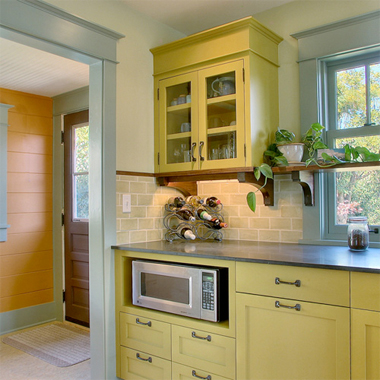 The Triple Crown
The three-piece crown moulding on this upper kitchen cabinet matches the classic Shaker-style motif of the door casing. It’s an easy DIY project featuring a slim piece of simple trim and a plain flat board topped with a 2-inch-wide piece of fluted crown. You’ll spend about $15 per cabinet.
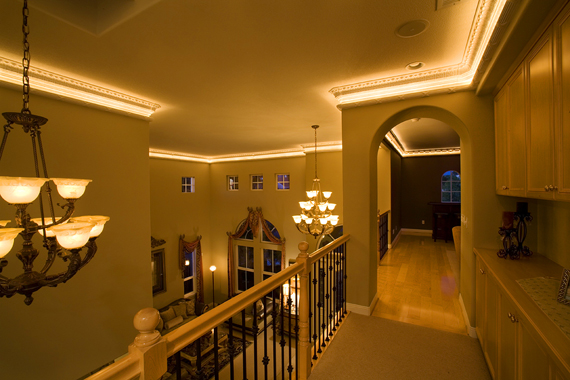 The Light Fantastic
Lighted crown mouldings add a soft, ambient glow and are sure-fire conversation starters. The two-piece system has lights in the lower moulding that project upward, illuminating the upper piece. Cost for a 12-by-12-foot room is about $800, installed.
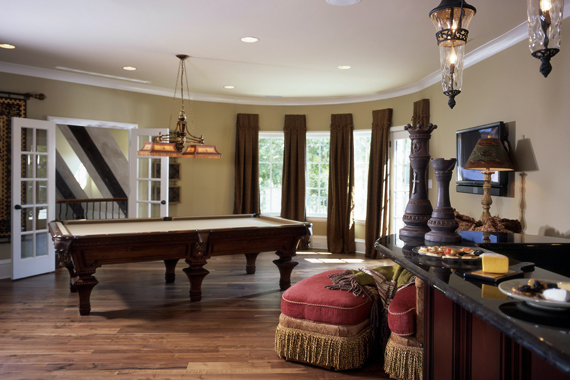 A Turn for the Better
Got a room with a curve? That’s no problem for flexible polyurethane crown moulding that’ll conform to just about any shape. It’s lightweight, and accepts paints and stains. An 8-foot-long piece is $15-$30.
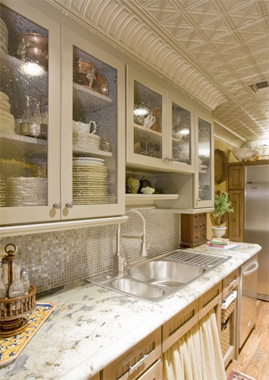 Not-So-Heavy Metal
Made for use with stamped metal ceiling panels, crown moulding made of tin or aluminum is lightweight and easy to cut. Pre-formed corners eliminate the need for complex miters, so a handy DIYer can tackle installation. Metal crown moulding comes pre-finished, or can be primed and painted to match your decor. Cost: $1-$5 per lineal foot.
 Not Just Another Pretty Facade
Want to run new wiring in your house but balk at the thought of ripping out drywall? Let crown moulding come to the rescue. Hollow PVC crown moulding is an inexpensive way to hide cable, audio, and communication wires in any room. An 8-foot-section with a 4-inch profile is $10-$20.
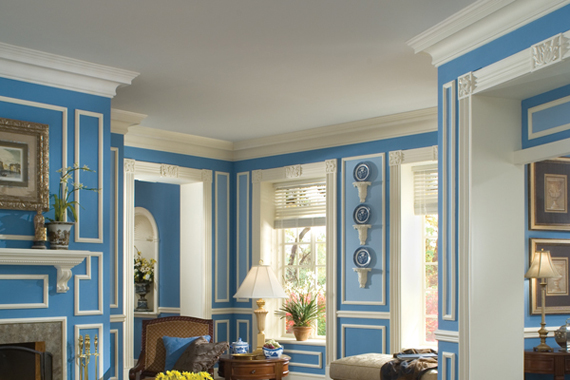 The Power of Poly
Lightweight polyurethane crown mouldings are easy to install. You can cut and nail them like wood, but they won’t split or crack. Most come with a factory-applied primer finish and are ready to paint. A 4-inch-wide piece of polyurethane crown moulding that’s 12 feet long is $60-$90.
 Crown Moulding Goes Green
If you like making eco-conscious choices for your home, try crown moulding made from reclaimed timbers. Using salvaged materials means no new timber is harvested, and keeps old building products out of landfills. Beautiful heart pine molding with 5.5-inch profile is about $8.75 per lineal foot.
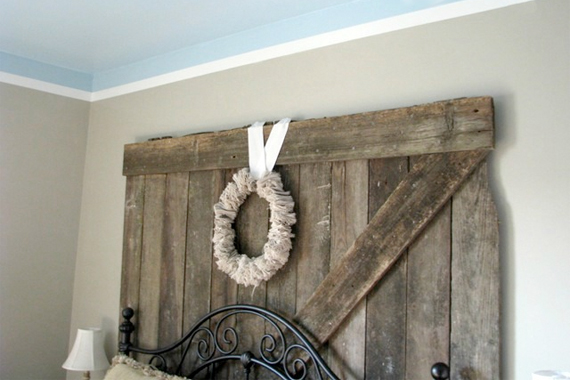 More Uses for Duct Tape
White duct tape covers the line where the blue ceiling paint meets the beige wall color, creating an inexpensive multi-layered crown moulding effect. Bringing ceiling paint color down along the walls helps make tall walls look shorter.
Which one are you going to try?
Space heaters used to be clunky plugins that squatted on the floor and scared the fluff off your cat. No more — these 5 space heaters are totally cool.
 This radiant heat panel — the mirror and towel bar on the left — is so integrated into this bathroom that you may not even notice it. Image: Warmly Yours
You’ve probably heard of radiant heating for floors, created by snaking heating tubes or cables under floors. But that’s not the only application for this efficient, quiet method of heating. Manufacturers now produce radiant panels for walls, ceilings, and other locations.
Radiant heat, also known as infrared radiant heat, is especially efficient, heating solid objects such as chairs and people without heating the air. The warming effect of radiant heat is practically instantaneous, and solid objects store the heat and stay warm even after the system switches off.
(Forced-air heating does the opposite, heating the air first, which then eventually warms people and surfaces. When a forced-air system shuts off, temperatures fall rapidly.)
Radiant panels come in many sizes, from a couple of square feet to 30 square feet and larger. Because no heat is lost in air ducts (there aren’t any), radiant panels are especially energy efficient, and the use of supplemental radiant panels to selectively heat rooms helps reduce annual energy costs by 10% to 30%.
 Finding the best heating solution for a specific situation is a fine art — sometimes literally. A thin-film, infrared radiant panel made by Prestyl USA hangs on a wall and looks just like artwork, custom-printed with a design or photo you submit.
“We just need a digital high-pixel image that you have the rights to,” says the president, Thom Morrow. “So no Seattle Seahawks logos. But a portrait of the family, fine. Or dog or horse or the old family farm.”
These plug-in art panels project out from the wall just 1½ inches. Inside is a carbon-based material that absorbs energy when current passes through. The panel then releases the energy as infrared light waves.
An artistic panel isn’t cheap, but you can take into account what you might spend on equivalent artwork. Prestyl’s plain 2-by-2-foot panel, suitable for an 8-by-10-foot room, costs $352, plus $180 if you want an image, or a total of $6.65 per square foot of living space.
 If you heat with electricity and live where electrical rates are lower at off-peak hours, an electrical thermal storage heater could save you money.
This kind of heater consists of a well-insulated shell filled with ceramic bricks that efficiently absorb and store heat. The bricks heat up during hours when power rates are low, then release the heat, using a blower, when the rate rises, potentially saving you hundreds of dollars a year.
Al Takle, national sales manager for Steffes Corp., says the units only make sense where rates dip for part of the day. Where’s that? He listed:
Thermal storage heaters sit on the floor and are about 12 inches deep, 24 inches high, and 30 to 60 inches long. They require only a little clearance on sides and the top, so you can easily build them into bookcases or window seats. Costs range from $1,200 (for a small bedroom or office) to $2,200 (for a 1,000-square-foot, open living room and kitchen space), or $2-$12 per square foot of living area.
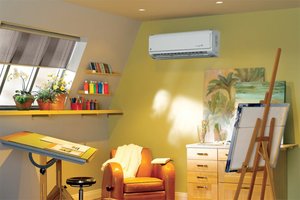 If you’re looking to retrofit an older home that doesn’t have ductwork, or you’re adding on and tying into your existing HVAC system is problematic, a ductless heat pump could be the answer.
Developed in Japan 30 years ago, many heating contractors in the U.S. are just now learning about this option, also known as a mini-split. There are only two main components: an outdoor compressor unit and an indoor air handler, which is typically installed high on an outside wall.
A small tube delivers conditioned air directly to the room. Because there’s no long expanse of ductwork, ductless heat pumps operate up to 50% more efficiently than traditional forced-air systems.
The installed price is around $5,000 for equipment that handles 1,100 square feet, or $5.45 per square foot of living space. Many power companies offer rebate incentives, sometimes for as much as $1,500, to customers who switch from other kinds of electrical heating.
 For a floor-model space heater that’s out of this world, look to Dyson — the company that seems to delight in reinventing ordinary household items.
The Dyson Hot fan heater looks like a space creature that never got around to developing a face. It generates heat like any other electrical-resistance heater, but there’s no visible whirling fan, so you don’t have to worry about whether a curious kid will stick in a finger to see what happens.
Even though you don’t see a fan, the heater does blow out a steady stream of warm air. The heater pushes air over its curved surfaces to increase output, much the same way an airplane wing accelerates air flow. The fan head oscillates, and you can tilt the device to direct the air flow.
The Hot fan costs $400 and is suitable for small to medium-size rooms, or about $4 per square foot of living space for a 10-by-10-foot room.
We’ve added MORE homes to the list! Check out some of these great houses this Sunday in Holden as we’re holdin’ open Holden! Need more information…let me know!
46 Acorn Drive
4 Birch Hill (1:30 to 3)
238 Fisher Rd
89 Fox Hill
2 Greenbriar Lane (12 to 2)
37 Heather Circle
225 Highland Street
84 Homestead (11:30 to 1)
67 Laurel Lane
823 Main Street (11am to 1pm)
1565 Main Street
476 Manning Street
769 Mason Rd
12 Tanya Drive

 Real Estate and *stuff *