Real Estate and *stuff *
A real person helping real people with real estate
You can scroll the shelf using ← and → keys
You can scroll the shelf using ← and → keys
 Foreclosure may seem like someone else’s problem, but when it happens in your neighborhood, it’s going to cost you money, too.
Each foreclosure within 660 feet (1/8th mile) of your house can drop your home’s value by a factor of almost 0.75%, according to the Center for Responsible Lending, a consumer watchdog group.
The closer a foreclosure is to your house, the bigger the impact. A university of Connecticut study suggests one foreclosure within 300 feet of your home will lower your property value by 1%.
If you live in a neighborhood with few vacant homes and a foreclosure occurs within 250 feet, a University of California, Berkeley study suggests you could lose 2.2% of your home value.
Some people think the homeowners facing foreclosure got themselves into trouble because they bought more house than they could afford with toxic mortgages for which they never should have been approved. At least one study of the 2007 and 2008 foreclosure crisis suggests that was indeed the case.
Even if you don’t feel compassion for those facing foreclosure, you might feel sorry for yourself. Homebuyers and mortgage lenders use foreclosures as comparable properties to value your home when you sell or refinance. And the discount at which foreclosures sell is a hefty 27% on average.
Although most appraisers adjust the value of your home upward compared with a foreclosure, a homebuyer may consider the foreclosure equally valuable to your home and base his offer on that instead of your property’s real worth. If that happens, your real estate agent can argue that non-distress sale comparables and better condition make your property worth more.
Drops in property values brought on by foreclosures don’t just hurt your property value; they also cut away at the whole property tax base, the source of revenue for local government. Elected officials then have to either charge you higher taxes or cut services to make up for the shortfall.
To limit foreclosure damage in your community, ask local officials to pass laws forcing lenders to maintain the properties they now own and to pay the taxes and homeowners association dues on them.
If the town isn’t forcing lenders to maintain a foreclosure in your neighborhood, organize a volunteer effort to cut and trim the shrubs at vacant houses on a round-robin basis, and report vandals or squatters to the police. A well-kept foreclosed home will attract more buyers than one with a weed-filled yard. Take trespassing laws into account as you organize your effort.
If you’re selling or refinancing and the appraiser uses foreclosures as comparable sales to determine the value of your property, ask your real estate agent to make sure the appraiser accounts for the distressed nature of those sales and the condition of the properties as they compare to yours. Ask your agent to seek out other comparable sales the appraiser might have missed, which show your home in a much better light.
Use this handy guide to figure out how quickly you can buy a home after a major financial setback when applying for a loan through FHA, Fannie Mae, or Freddie Mac.
The chart below outlines the criteria that government entities FHA, Fannie Mae, and Freddie Mac follow for major credit-busting events, including foreclosure. Although FHA, Fannie Mae, and Freddie Mac aren’t direct lenders, they wield a lot of behind-the-scenes influence by working with banks to guarantee loans and help lenders free up capital to provide more mortgages.
One of these entities may have made your loan possible without you even knowing it. Although for the most part banks make loans to whomever they want, they’ll likely find themselves following FHA, Fannie Mae, or Freddie Mac guidelines at a minimum in order to keep working with these useful partners.
Some lenders may have more stringent policies and others, willing to take greater risks, may work outside these entities and offer more liberal lending policies.
This chart offers summaries of what can be complex rules and regulations. So:
1. Look to professionals, such as a bankruptcy lawyer and a CPA specializing in bankruptcy provisions, before making major financial decisions.
2. For HUD-approved counselors, go to http://www.hud.gov/offices/hsg/sfh/hcc/fc/index.cfm. You can also call 1-888-995-HOPE for help from the Homeownership Preservation Foundation.
3. Understand what “extenuating circumstances” means in each case:
FHA: An event that was out of the borrower’s control that made a significant impact on the borrower’s finances and led to bankruptcy or foreclosure.
Fannie Mae: A nonrecurring event that’s beyond the borrower’s control that results in a sudden, significant, and prolonged reduction in income or a catastrophic increase in financial obligations.
Freddie Mac: A nonrecurring or isolated circumstance, or set of circumstances, that was beyond the borrower’s control and that significantly reduced income and/or increased expenses and rendered the borrower unable to repay obligations as agreed, resulting in significant adverse or derogatory credit information.
| FHA | Fannie Mae | Freddie Mac | |
| Foreclosure | •3-year wait. •Reduced wait if borrower has re-established good credit and can show extenuating circumstances. |
•7-year wait from the completed foreclosure sale date. •3-year wait if borrower can show extenuating circumstances (additional underwriting requirements apply for 4 years after 3-year waiting period). •7-year wait for a second home, investment opportunity, or cash-out refinancing. |
•5-year wait from the completed foreclosure sale date. •3-year wait if borrower can show extenuating circumstances. |
| Short Sale | •No wait if not in default. •3-year wait if in default at closing of short sale. •Reduced wait if borrower has re-established good credit and can show extenuating circumstances. |
•2-year wait if the borrower puts 20% or more down. •4-year wait if the borrower puts 10-20% down. •7-year wait if the borrower puts less than 10% down. •2-year wait time if borrower can show extenuating circumstances and puts 10% or more down. |
•4-year wait. •2-year wait if borrower can show extenuating circumstances. |
| Deed in lieu of foreclosure | •Same as FHA’s foreclosure policy. | •Same as Fannie’s short sale policy. | •Same as Freddie’s short sale policy. |
| Bankruptcy | Chapter 7 (liquidation): •2-year wait from the discharge date of the bankruptcy. •1-2 year wait if borrower can show extenuating circumstances. Chapter 13 (repayment plan): |
Chapter 7 or Chapter 11 (reorganization, usually involving corporations or partnerships): •4-year wait from the discharge or dismissal date of the bankruptcy. •2-year wait from the discharge or dismissal date may be accepted if borrower can show extenuating circumstances. Chapter 13: Multiple bankruptcies: |
Chapter 7 or Chapter 11: •Same as Fannie’s bankruptcy policy. Chapter 13: Multiple bankruptcies: |
Source: FHA Handbook, Fannie Mae Selling Guide, Freddie Mac Selling Guide
Please note that in most cases a short Sale is better than a foreclosure. If you or someone you know (a friend or family member) is currently faced with this situation, urge them to find out what their options are. RE/MAX Professional Associates has a short sale team that is ready to review their situation and help. Call (508-784-0504) or email me (amymullen@remax.net) to find out more information.
I really enjoyed this post that was on MSN Real Estate. It captures what so many home buyers and apartment hunters face every day while they are looking at their next new possible home. Sometimes they can be funny – but not when you’ve spent the time to make the appointment and view the home. Want to have some fun with it though? Go here and do some random searches to see how many of these buzzwords you can find. Check out the pictures and see if they relate to the article.
 Nothing is ever what it seems, especially real estate.
Chances are that anyone who has looked to rent an apartment or buy a home has at some point been disappointed to find that the property barely resembled what was advertised in the real-estate listing. Perhaps the third bedroom turned out to be a closet or the kitchen that was supposed to be fit for a gourmet chef barely fit a microwave and a fold-up chair.
While real-estate agents may not like to admit it, much of this stems from their deliberate attempt to put a positive spin on the property in real-estate listings, even if that means stretching the truth.
“It’s a numbers game. For those who do it, the goal is to get people to the property and hope they’ll buy it,” says Paul Campano, senior sales associate at Keller Williams Realty in Massachusetts.
As Campano acknowledges, however, he’s unsure how sound the logic behind this method is because prospective tenants will likely just see the place and walk away.
“I’d much rather underpromise and overdeliver,” he says.
As it turns out, there is another big motivation that drives agents to put out dubious listings.
“You have to keep in mind that the agents report to the homeowner or the landlord,” says Tara-Nicholle Nelson, consumer educator for Trulia.com, an online real-estate search engine, and a former real-estate agent herself. “These days, they audit all of the agent’s online marketing, and they want to make sure that the agent is doing their job to market the home in its very best light. So the agent, in turn, is also concerned that they are marketing the property well enough for their client.”
The result is a slew of real-estate listings that exaggerate the good parts of a property and either omit the flaws or couch them in buzzwords and phrases that might have multiple misleading meanings. And according to those familiar with the real-estate industry, these sorts of deceptive listings have become more common during these difficult economic times as agents and landlords have grown more desperate to attract buyers.
We spoke with several real-estate experts to find out the real meaning behind these buzzwords and phrases so that you know what to look out for and how to read between the lines of a listing.
It may seem like a harmless word, but it spells trouble when used as an adjective in a real-estate listing, says Paul Campano of Keller Williams Realty.
“Cozy is always a potentially dangerous word. It’s really not describing any physical characteristic. Instead, it’s likely a signal of a very tight space,” he says.
So, for example, if you see the word “cozy” next to bedroom, Campano says it probably means it’s time to consider a twin or full-size bed, rather than something larger.
Other buzzwords that tend to mean the same thing include “cottage” and “intimate.”
Every home and apartment needs some fixing up after it has been lived in for a while, but the question is how much.
“My general rule of thumb is that homes are generally in a little worse condition than the listing’s language would indicate,” says Tara-Nicholle Nelson of Trulia.com. “If it says it needs TLC, it’s probably more of a handyman’s special; if it says it’s a handyman’s special, it probably needs contractor work. And when agents express in a listing that a home needs a whole lot of work, then it probably needs a whole lot of work.”
Moreover, as Nelson points out, buyers and renters should never expect that a property that “needs some work” requires only a small touch-up job.
“If that’s all it needed, a lot of homeowners and agents would do that themselves to make the property more competitive on the market,” she says.
On the other hand, many listings will highlight just how much work has been done to fix up a place over the years, using buzzwords such as “modern,” “updated” and “remodeled.” It’s important to put these words into perspective.
“People take a lot of liberty with the degree of renovation they’ve done,” says Paul Campano of Keller Williams Realty. “I guess when you’re talking about homes that are 100 years old, a kitchen renovated in the 1970s is modern by comparison, but I think that word lends itself to a great degree of interpretation.”
Tara-Nicholle Nelson of Trulia.com echoes this point: “It’s very common to see these words on homes that have ’40s construction or older that were remodeled in the 1980s. But they are not really up-to-date, so you are still pretty much going to have to redo the home.”
Many people dream of living in a penthouse of their own, but just because a listing says penthouse doesn’t mean it’s exactly that, Paul Campano says.
“There are rooms where, yes, it’s the top unit, so it’s technically a penthouse, but the room itself has no view,” he says. “So it’s a very grandiose way to describe what is just the top floor.”
In this sense, it’s not untrue, but rather misleading.
Similarly, apartment hunters should be wary when they see the phrase “tree-top view” in a listing.
“If the apartment is on a high floor or has a great view, the listing will mention it,” says Diane Saatchi, senior vice president with Saunders & Associates Realty in Bridgehampton, N.Y. “But a tree-top view usually means you have a view from the second or third floor, which could be nicer than looking at a shaft, but what you want is to be above the trees.”
Anyone who has ever looked for real estate in New York City is likely familiar with the phrase “steps from…” as in, this apartment is “steps from Columbia University” when it is really 70 blocks away in Washington Heights. The same is true in other cities and locations.
“Neighborhood proximity is a big red flag,” says Paul Campano, who markets real estate in Boston. “I’ve seen places listed as being in Davis Square because it’s become a very trendy place. And yeah, they’re close, if you consider a mile and a half close.”
When in doubt, the best thing to do is get the address of the property in question and plug it into an online mapping service to find out exactly where it is and what is nearby.
 ‘Charming’
It’s a nice word, but according to Diane Saatchi, senior vice president with Saunders & Associates Realty, it usually means only one thing: The house is old. Very old.
Who doesn’t want a bit of peacefulness in their home? Unfortunately, even tranquility comes with a downside.
“Tranquil may mean that it’s just not near anything that you care about, that it’s kind of far away from any amenities or public transportation and stuff like that,” Tara-Nicholle Nelson says. By the same token, when a listing says the property is in a “convenient” location, that may mean it’s too close to those things and therefore too noisy.
Nelson says, however, that this is one example where buyers and renters have to exercise some common sense.
“I’ve worked with people who want a quiet place that takes them only 10 minutes to get to work,” she says. “But you can’t have it both ways. There are definitely trade-offs.”
Real-estate listings are often full of jargon and abbreviations, but one that should cause house hunters to think twice is FSBO, meaning for sale by owner.
“People tend to think there’s an opportunity to save money because there’s no agent involved, but actually FSBO should be a little bit of a red flag,” Trulia.com’s Tara-Nicholle Nelson says. That’s because homeowners looking to sell their property often have “very unrealistic expectations about pricing and other things.” These expectations are usually tempered by the real-estate agent working with them, but without an agent there, you may have to deal directly with the owner’s outsized expectations.
Ultimately, the biggest red flags in real-estate listings may be the descriptions that the seller leaves out.
“If it’s better for a home to be downtown and the listing doesn’t say that, then you know the home is far away from there,” says Diane Saatchi of Saunders & Associates Realty. “If a house doesn’t have much light, then the listing won’t mention light-filled rooms. And if the property is on the ground floor, the listing probably won’t mention it.”
Aside from the misleading words, it’s also important to be mindful of the potentially misleading photographs that accompany real-estate listings.
“Photographs can be very deceiving. There are wide-angle lenses that can make spaces seem bigger than they are,” Paul Campano says.
On top of that, he notes there are “virtual staging” companies that will “virtually impose furniture into a photo of the space,” in order to make it look more filled-in, even if those pieces of furniture might not fit into the room in real life.
Looking for your next great home? Go here!
 Versatile pegboard provides easy and inexpensive storage solutions for virtually any room and under-utilized wall space.
Pegboard comes as either tempered hardboard panels or metal sheets.
Hardboard panels are ¼-inch thick and feature ¼-inch diameter holes, evenly spaced 1 inch apart across the face of the entire sheet. Hardboard pegboard panels are easy to cut into custom shapes for fitting odd-shaped areas.
Hardboard pegboard comes in standard sizes (2×4-foot, 4×4-foot, and 4×8-foot sizes); commonly available colors are natural, black, and white. Latex paint color can also be rolled on.
Hardboard panels are lightweight and affordably priced; expect to pay $8 to $50 for a 4×8-foot panel.
Metal sheets come in several types of metals and weights. Some feature slots, rather than holes, to accommodate specialized accessories, such as bins and shelves. Metal pegboard sheets are durable and the perforations never lose their shape. Properly installed heavy-duty versions support up to a ton of items.
Metal pegboard sheets come in a variety of patterned and smooth finishes, and a variety of anodized colors. Standard sheet sizes are the same as hardboard, plus 16×32-inches and 4×10-foot panels. Cost: $33 to $400.
Accessories: Standardized perforations accept a wide range of hooks, clips, shelves, bins, racks, jars, and other storage accessories that you can arrange and rearrange to suit your changing needs. Use them to organize any combination of household tools, supplies and belongings. Cost: 30 cents to $15 each.
It is the weekend and there are only a few more prime open house days left….why not make the most of it! This weekend, my open houses will include a special visitor, Barry Little from Omega Mortgage Corporation (www.massloaninfo.com).
Barry will be on-site to speak with our attendees about the mortgage process and has offered to do free pre-qualifications for people who are not already pre-qualified.
Stop in…chat about your home search and find out what’s new in the mortgage world while checking-out our great homes for sale. Have you heard of USDA 100%? I hadn’t either until today and Sunday’s open house at 298 New Boston Road in Sturbridge qualifies!
Saturday: Noon to 2pm 26-2 Maple Street in Auburn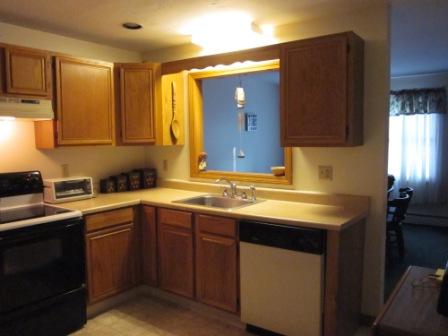 This is SPACE! This townhouse is a colonial in disguise! Three floors of living with three bedrooms and a possible fourth bedroom in the basement. Well taken care of with low HOA fees. Extremely commuter friendly location yet PRIVATE and QUIET. Seriously…you’ll be surprised!
Sunday: Noon to 2pm 298 New Boston Road Sturbridge
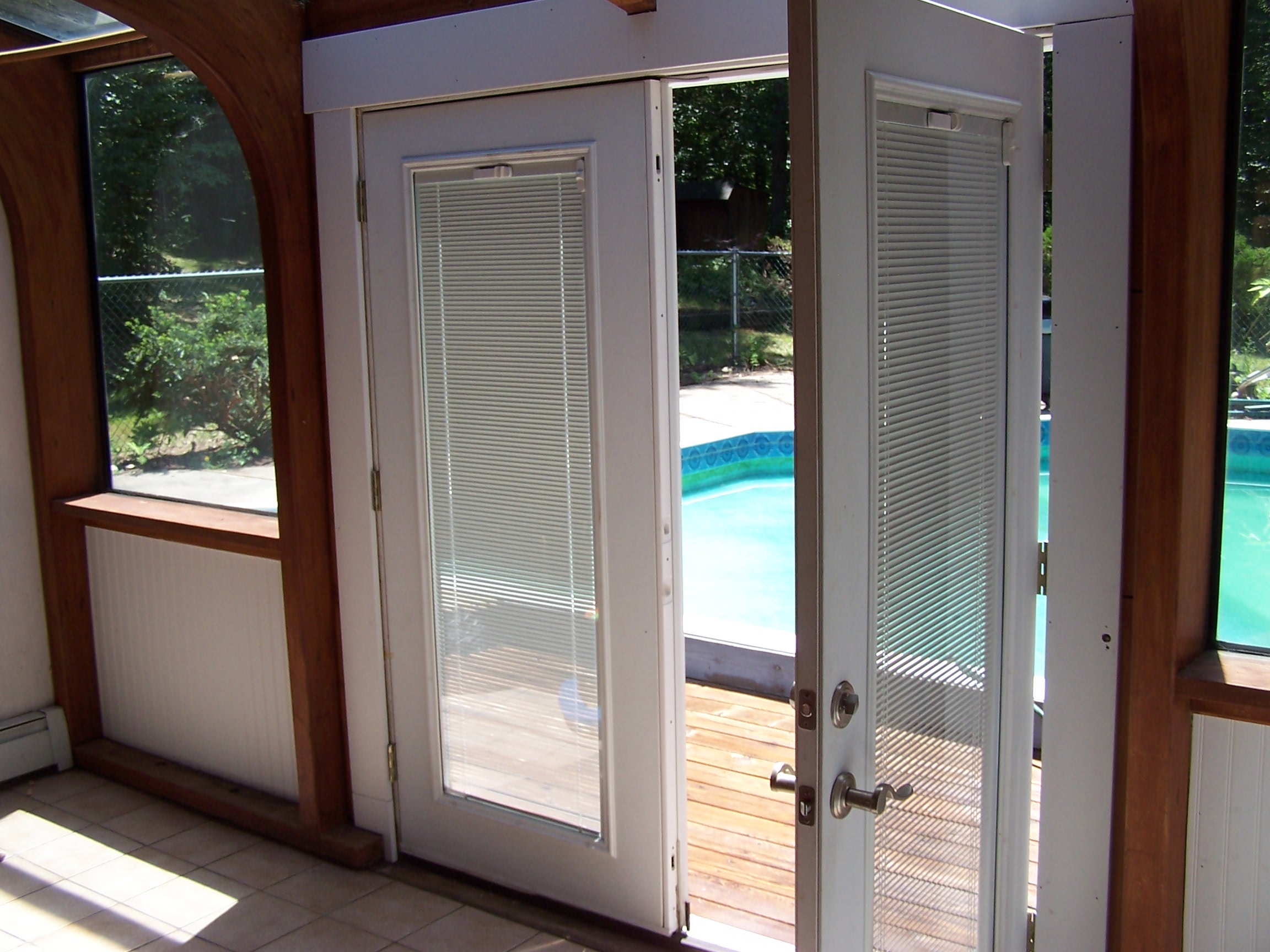 Yes! Again! People LOVE to come and see this very unique house! Log cabin on nearly five acres of land that borders Wells State Park. You have to see how nice the sun room is off the back deck in the afternoon. This home has an open floor plan and so many possibilities. The sellers are MOTIVATED and waiting for the perfect offer!
We hope to see you there!
I really liked this article because I have limited storage space in my own house and often think about “built-ins” as a solution. Now…I need a stud finder…
 Recessed, between-the-studs shelving and storage niches help you de-clutter and stay organized without sacrificing valuable square footage.
You’ll need moderate DIY skills and a basic knowledge of framing to build your own recessed wall niche. Once you’ve located studs with a stud finder and made sure the wall cavity is void of wires, plumbing, or air ducts, frame the opening and finish it with drywall or other materials, such as beaded board, then add shelving. Cost: $17 to $35, for a 14×36-inch niche.
Various sizes of prebuilt recessed wall niches are available in wood as well as less expensive polyurethane units. These units are customized to perform a range of storage tasks, including serve as a medicine cabinet, a home bar and as a shower niche. Cost: $90 to $500.
With four home renovations to her credit, Jan Soults Walker is a devotee of improvements, products, and trends for the home and garden. For 25 years she’s written for a number of national home shelter publications, and has authored 18 books on home improvement and decorating.
By: Jan Soults Walker Published: October 1, 2010 Looking for your own DIY project home? Check out the available properties here and then give me a call. Okay, I have an ENTIRE pot of coffee in me to get ready for today’s showings and I am amped! There are only a few weekends left before the snow flies so this is the time to check-out some of the available homes for sale in your area. Yes…I know the Patriots are playing on Sunday…it’s okay…everyone has a DVR now, right?
298 New Boston Road in Sturbridge – Sunday 1pm to 2pm
 This house is truly unique. Open concept floor plan with loft area and sun room. Nearly 5 private acres abutting Wells State Park but yet minutes from the turnpike. Price reduction and rental available. Rent-to-own is also being considered. Make this home your next home and enjoy! For more pictures and information click here
26 Maple Street in Auburn – Sunday 11am to Noon
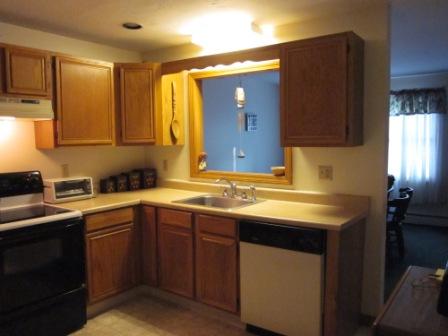 3 floors of living space with 3/4 bedrooms and 2 1/2 baths make this townhouse a steal at its current price. Close to all the major routes in Auburn (20, 12, 290, 90) but yet on a side street and private. Garage, deck, fireplace and SPACE! Low HOA fees and a motivated seller. This is a great starter home for a young family or a fantastic place for an established family with boomerang adult children. All offers considered. To see more, click here.
Not sure what you want – let me know. We can find it and you can start with a free property organizer.
 While intangible benefits such as comfort and ambience may make a fireplace addition worth the cost for you, consumer attitudes toward fireplaces are changing.
Here are the facts:
When you estimate how much a fireplace might add to the value of your house, consider your home’s overall value. A $10,000 fireplace holds its value in a $1 million house because buyers expect this feature in an upscale home. But a $10,000 fireplace might not be such a crucial component of a $100,000 house, especially if features that potential buyers consider more important are lacking.
Rich Binsacca is the author of 12 books on various home-related topics and is currently a contributing editor for Builder and EcoHome magazines. He has written articles for Remodeling, Home, and Architectural Record, among several others. He intermittently uses the wood-burning fireplace and the gas-fueled freestanding stove that came with his current home.
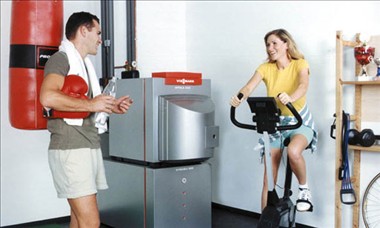 No longer exiled to dank basements, high-efficiency — and high-design — heating and cooling equipment has become something homeowners show off.
By Gwendolyn Bounds of The Wall Street Journal
In June, Peter and Sara Starr gave dinner guests a tour of their new Bayside, Calif., home. There’s the designer kitchen fitted with free-standing ergonomic furniture, and the valley views, complete with majestic redwoods. But the pièce de résistance sits just off the living room: a 100-square-foot nook otherwise known as the boiler room.
Inside hums the heart of about $70,000 in state-of-the-art heating and electrical equipment. Rooftop solar panels feed a sleek hot-water tank and an array of batteries storing electricity and feeding excess power back to the grid. Hanging nearby, a petite black boiler provides radiant heat while hundreds of feet of copper piping snake outward, delivering warmth and water to the 1,800-square-foot house.
“It looks like the ‘Star Trek’ Enterprise,” says Peter Starr, 61. “It’s really a little focal point and a sign of pride.”
 Say goodbye to the scary room, that dank, dark spot where boilers and water heaters work among the spiders, with human visits taking place only when something — “Honey, there’s no hot water!” — goes wrong. As homeowners begin to in renewable energy and other high-efficiency equipment, some are spiffing up the mechanical room and, in some cases, trying to make the air conditioner a showpiece. (Bing: Federal tax credits for energy efficiency)
Producers of this stuff are touting style. Take the LG Electronics Co. Art Cool duct-free air-conditioning units, which hang directly on interior walls and can frame works of art. Last year, Nortek Inc. launched a line of Maytag gas furnaces with “fingerprintless” faux stainless doors. General Electric Co. recently rolled out its futuristic, $1,600 GeoSpring hot-water heater, which looks like it might share DNA with the Jetsons’ cartoon robot maid, Rosie.
Slide show: Inside the high-fashion boiler room
Such gadgets are the latest means for leaving the Joneses in the dust.
“The mechanical room is now like the wine room or the library,” says Stephen Bohner, owner of Alchemy Construction Inc. in Arcata, Calif.
Bohner installed some of the Starrs’ equipment. He says all of his new construction projects include renewable-energy equipment, such as solar panels.
“If you are spending money on that stuff, you want to show it off,” he says.
Vince Kimbel recently installed a GeoSpring water heater in his Louisville, Ky., home. The unit combines energy-efficient heat-pump technology with an electric heating element, pulling warmth from surrounding air and transferring it into the tank. Says Kimbel, a builder: “The look translates into people saying, ‘This is different.’ If it was a traditional water heater, they wouldn’t give it a second look.”
The mechanical makeovers come as the residential heating and cooling industry battles back from lean years. Home-improvement spending is expected to climb nearly 5% this year, the first increase since 2006, according to Harvard’s Joint Center for Housing Studies. Helping sales are federal tax credits and rebates that offset outlays on certain energy-efficient equipment.
 Of course, as with any trend, there are downsides to jumping on the bandwagon. Appliance styles can fall out of fashion, and updates cost money. Sears Holdings Corp. has phased out its “Pacific Blue” and “Sedona” orange-hued washers and dryers, replacing them with more au courant colors called “Ginger” and “Chili Pepper.”
And like a stunning pair of stiletto heels, what’s fashionable might not be all that practical. Three years ago, Dirt Devil launched two cordless vacuum models called Kurv and Kone. Now those models, resembling a scepter and small megaphone, are being discontinued.
Slide show: Inside the high-fashion boiler room
“They were great-looking, but from a utilitarian standpoint, they didn’t meet customers’ expectations,” says Dave Chaney, Dirt Devil general manager.
Slide show: 13 amazing facts about green roofs
Payback time on investments such as solar panels can be 10 to 15 years in some cases, and as in electronics, something new and better is always on the horizon. While 70% of future homebuyers said they’d be inclined to buy a “green” house in a down market, according to a McGraw-Hill Construction survey, the struggling housing market means sellers might not recoup what they’ve put into mechanical upgrades.
Some designers are trying to tap into the mania for the design flourishes of Apple’s iPhones and iPods. American Hometec Inc. of Wilmington, Del., in May introduced the Everun tankless water heater, which heats water only as needed. The units, which cost $200 to $1,200, resemble brushed chrome-and-white wine coolers and have slide-touch controls and an optional shelf to hide wires (or hold a vase of flowers).
“It’s designed to be like the iPod of water heaters,” says Dave Millilo, American Hometec’s vice president of marketing.
Others seek their muse in high art. Sears recently launched an in-room air cleaner called the Kenmore PlasmaWave, which takes inspiration from a Richard Serra minimalist sculpture.
“People don’t want to look at things that are unpleasant,” says Ellen Glassman, a Sears vice president overseeing design.
It’s unclear how the interest in pricey, energy-efficient appliances will hold up once certain tax credits and rebates begin to dry up at the end of this year. Earlier this year, Sean and Grace Cunnane of Rock Tavern, N.Y., installed a Viessmann boiler and new royal blue Buderus hot-water tank. The project, which cost $17,000, was partially offset by a $1,500 federal tax credit for the boiler.
“It helped,” says Sean Cunnane, 45.
The retired police officer has been showing off his new stuff to family and neighbors, but he says there’s more behind his latest splurge than bragging rights. With the weak housing market, he says he expects that he and his wife will be in the house living with — and looking at — their purchases “for a while.”
 Real Estate and *stuff *