Real Estate and *stuff *
A real person helping real people with real estate
You can scroll the shelf using ← and → keys
You can scroll the shelf using ← and → keys
 Regular home maintenance is key to preserving the value of your house and property. Looking forward to the spring market in 2011 – this play an important role if you thinking about listing your home. In general, it’s important to maintaining your investment and your quality of life.
“It’s the little things that tend to trip up people,” says Frank Lesh, former president of the American Society of Home Inspectors and owner of Home Sweet Home Inspection Co. in Chicago. “Some cracked caulk around the windows, or maybe a furnace filter that hasn’t been changed in awhile. It may not seem like much, but behind that caulk, water could get into your sheathing, causing mold and rot. Before you know it, you’re looking at a $5,000 repair that could have been prevented by a $4 tube of caulk and a half hour of your time.”
Outright damage to your house is just one of the consequences of neglected maintenance. Without regular upkeep, overall property values are affected.
“If a house is in worn condition and shows a lack of preventative maintenance, the property could easily lose 10% of its appraised value,” says Mack Strickland, a professional appraiser and real estate agent in Chester, Va. “That could translate into a $15,000 or $20,000 adjustment.”
In addition, a house with chipped, fading paint, sagging gutters, and worn carpeting faces an uphill battle when it comes time to sell. Not only is it at a disadvantage in comparison with other similar homes that might be for sale in the neighborhood, but a shaggy appearance is bound to turn off prospective buyers and depress the selling price.
“It’s simple marketing principles,” says Strickland. “First impressions mean a lot to price support.”
To a professional appraiser, diligent maintenance doesn’t translate into higher property valuations the way that improvements, upgrades, and appreciation all increase a home’s worth. But good maintenance does affect an appraiser’s estimate of a property’s economic age—the number of years that a house is expected to survive.
Economic age is a key factor in helping appraisers determine depreciation—the rate at which a house is losing value. A well-maintained house with a long, healthy economic age depreciates at a much slower rate than a poorly maintained house, helping to preserve value.
Although professional appraisers don’t assign a positive value to home maintenance, there are indications that maintenance is not just about preventing little problems from becoming larger. A study by researchers at the University of Connecticut and Syracuse University suggests that maintenance actually increases the value of a house by about 1% each year, meaning that getting off the couch and heading outside with a caulking gun is more than simply a chore—it actually makes money.
“It’s like going to the gym,” says Dr. John P. Harding, Professor of Finance & Real Estate at UConn’s School of Business and an author of the study. “You have to put in the effort to see the results. In that respect, people and houses are somewhat similar—the older (they are), the more work is needed.”
Harding notes that the 1% gain in valuation usually is offset by the ongoing cost of maintenance. “Simply put,” he says, “maintenance costs money, so it’s probably best to say that the net effect of regular maintenance is to slow the rate of depreciation.”
How much money is required for annual maintenance varies. Some years, routine tasks, such as cleaning gutters and changing furnace filters, are all that’s needed, and your total expenditures may be a few hundred dollars. Other years may include major replacements, such as a new roof, at a cost of $10,000 or more.
Over time, annual maintenance costs average more than $3,300, according to data from the U.S. Census. Various lending institutions, such as Directors Credit Union and LendingTree.com, agree, placing maintenance costs at 1% to 3% of initial house price. That means owners of a $200,000 house should plan to budget $2,000 to $6,000 per year for ongoing upkeep and replacements.
Knowing these average costs can help homeowners be prepared, says Melanie McLane, a professional appraiser and real estate agent in Williamsport, Pa. “It’s called reserve for replacements,” says McLane. “Commercial real estate investors use it to make sure they have enough cash on hand for replacing systems and materials.”
McLane suggests a similar strategy for homeowners, setting aside a cash reserve that’s used strictly for home repair and maintenance. That way, routine upkeep is a snap and any significant replacements won’t blindside the family budget. McLane’s other strategies include:
Play offense, not defense. Proactive maintenance is key to preventing small problems from becoming big issues. Take the initiative with regular inspections. Create and faithfully follow a maintenance schedule. If you’re unsure of what needs to be done, a $200 to $300 visit from a professional inspector can be invaluable in pointing out quick fixes and potential problems.
Plan a room-per-year redo. “Pick a different room every year and go through it, fixing and improving as you go,” says McLane. “That helps keep maintenance fun and interesting.”
Keep track. “Having a notebook of all your maintenance and upgrades, along with receipts, is a powerful tool when it comes to sell your home,” advises McLane. “It gets rid of any doubts for the buyer, and it says you are a meticulous, caring homeowner.” A maintenance record also proves repairs and replacements for systems, such as wiring and plumbing, which might not be readily apparent.
You can also track your projects at houselogic.com. Houselogic.com is a free site sponsored by the National Association of Realtors and is easy to use and fun. Directly corresponds with your Facebook and provides step-by-step instructions for your home projects including shopping lists and diagrams.
If you want a check-in on what your home is currently worth today, just let me know. I would be happy to provide you with a free market analysis and help you get started on increasing the value of your home.
 New year, new list of remodeling projects to start around the house. At least that’s what remodelers and contractors are hoping.
So, what remodeling projects are on top of everyone’s list?
The National Association of the Remodeling Industry (NARI) conducted an exclusive poll of their top builders and developers for us and found that while most people are not starting major renovation projects due to the economy, now is the time to take care of the smaller jobs around your home.
Call it the over-arching remodeling trend for 2011: Tackling small projects while you wait to do the really big remodeling project that’s on your list.
1. Save Money: Remodel Your Bathroom. Old tile getting a little grungy? It looks like 2011 is the year for a bathroom update. Dennis D. Gehman, president of Gehman Custom Remodeling says, “Bathrooms are the hottest project, we think it’s due to the economy. Baths cost less than a kitchen or addition and most houses have more than one bath, so there are more available to be remodeled.”
2. Must-Do Remodeling Projects. Rather than going through major renovations, next year people will continue to only complete the projects that need to be done, like repairs to siding or roof leaks. Mitch Speck of Specktacular Home Remodeling says he is seeing a trend of people doing “‘have-to’ projects instead of ‘want-to’ projects.”
3. Warming Up The House. Warmer tiles and colors are coming back. People tend to be moving away from minimalist, white designs in favor of cozier, earth tones. The trend, however, is not rustic. Instead, it’ss a mash-up of earthiness and modern design. Judy Mozen, president of Handcrafted Homes, Inc., says she is seeing people favor rooms that are more contemporary and calming, but are “still not totally contemporary.”
4. Getting Decked Out. George Christiansen of Pequot Remodeling Corporation says his clients are building outdoor spaces for themselves. “It appears that people want to sit outside again and are staying at home more frequently. Many pools are also being built in the neighborhood.”
5. Hiring A Great Contractor. Darius Baker of D & J Kitchens and Baths, Inc. says that “consumer diligence” is on the rise. “Folks are finally getting the message that it is important to look closer at the companies they are considering for their project. They are asking the questions we have been telling them to ask for years.”
6. Paying in Cash. Rather than taking out loans for renovation projects, homeowners are using cash for projects. Steve Klitsch of Creative Concepts Remodeling, Inc. says homeowners are giving themselves a budget and picking and choosing what projects they can do with the money. One way to save money is by updating features, like cabinets, but not remodel an entire room.
7. Opening Up Rooms: “Open floor plans are in, so we’re removing interior walls and opening up the spaces in older houses to modernize them,” says Gehman. Open floor plans help families be more flexible with the square footage they already have.
8. Bronze Age. Along the with warmer tones in homes are warmer tones in metallic features. Kathy Adams of J&C Adams Co., Inc. says “oil rubbed bronze, aged bronze, or distressed hardware” will be big in the coming year.
9. Going Green. Bamboo floors, grass thatched roofs, and bark siding may sound like something from “Jungle Book,” but they are just a few of the newest green home products. In addition, people are getting energy efficiency upgrades. Adams says upgrades on glass will be continue to be big, and adds that “people are even asking for tri-pane (windows)!”
10. Industrial Flair. Exposed beams will continue to be popular, but so will “stainless steel cable and architectural products,” says Michell Milestone, director of sales and marketing at JG Development, Inc. With so many people working from home, home will take on more of an industrial or commercial look to enforce business credability.
11. Creating Relaxation Space: With home values still falling in many areas and a new prediction of three more lousy years of real estate, homeowners are more stressed than ever. So it’s no surprise that when they are developing new spaces, tranquility comes to mind. Mozen says people are asking for “zen-like” bathrooms. “The bathrooms don’t have to be big-but they have to be relaxing and soothing. They seem to prefer showers with the works-steam, seats, body sprays, etc.”
12. Planning ahead: “We are seeing many clients thinking about their retirement years,” says Jillian Renner of Golden Rule Remodeling & Architecture, Inc. Her clients-even those far from retirement-are putting in easy-opening cabinetry, hand-held showers, and more accessible kitchens and baths. Renner adds, “Even though the clients don’t need those things right now, they are planning for when they might find them needed.”
Are you planning a remodeling project this year? How much are you planning to spend?
 Renting and thinking about buying? Start with a solid budget plan that includes strong credit and savings.
Living from one paycheck to the next may be the norm for many people. But homebuyers need a better strategy.
“If buying a home is your goal, then it needs to be your priority,” says Tim Kirchner, vice president of MetLife Bank in Irving, Texas. “Most people need to sacrifice a little and stick to a budget in order to save for a home.”
A good budget plan begins one or two years before a buyer makes an offer. Here are four tips for renters who plan to become homeowners.
1. Build strong credit
When it comes to securing a loan at the best mortgage rate, credit is king.
“The most important focus for all potential buyers should be improving their credit score,” says Jean Badciong, chief operating officer of Inlanta Mortgage in Waukesha, Wis. “A low score can prevent someone from buying a home or at least from qualifying for an affordable mortgage rate.”Greg Holmes is national director of sales and marketing for Credit Plus, a company in Salisbury, Md., that provides credit reports to mortgage lenders. He says potential buyers should request their free credit report at AnnualCreditReport.com.”Some people who think they have good credit don’t, while people who think their credit is bad may be surprised that it is actually OK,” Holmes says. “Everyone should check their report for accuracy and fix any mistakes. It can take months to correct errors.”
To improve their credit scores, buyers should pay off past-due bills, pay every bill on time and reduce their balances on every account to less than 30% of the credit limit, Holmes says. Also, it is best to have three to five credit accounts, such as a car loan, student loan or credit card, for one year or longer.
Holmes says he does not recommend switching credit cards frequently to get the best rate, though.
“Lenders do not want to see a lot of credit inquiries or too many new accounts because this could indicate someone who is about to take on a lot of extra debt,” Holmes says.
Kirchner says people often do not realize the consequences of paying bills late or missing a payment, which can affect your credit report for a long time.
Some young people assume they can improve their credit scores as an authorized user on a parent’s card. But Badciong says this will have no impact on their score.
2. Save cash
Christine Howard, a senior loan officer with Inlanta Mortgage, says future homebuyers should make “virtual” mortgage payments today to build up savings and learn to budget for actual mortgage payments down the road.
“Renters can estimate a mortgage payment and set aside the difference between that payment and their rent each month,” Howard says. “If they are paying $800 in rent and estimate their mortgage will be $1,100, they can put $300 per month in a special savings account.
“Not only does this help them save for a down payment, but it demonstrates to a lender their ability to afford that higher housing payment.”
Kirchner says he recommends that future buyers create a simple budget and set a savings goal.
“If they find they can save $300 a month, then they will have $3,600 at the end of the year,” Kirchner says. “Lenders want to see that pattern of savings, and buyers will need at least 3.5% for a down payment on a (Federal Housing Administration) loan or at least 10% for a conventional loan.”
Kirchner recommends setting up an automatic transfer of funds into a savings account through your employer or your bank.
3. Reduce debt
While buyers increase their savings, they should also reduce their debt.
“Paying off debt tops saving in terms of priorities because of the interest payments on the debt, which exceeds the amount of interest they can earn on their savings,” Kirchner says. “Lenders want to see that you are managing your debt and keeping your credit-card balances low.”
Howard says debt-to-income ratios are an important element in a loan approval. This ratio compares minimum monthly debt payments to gross monthly income.
“If your debt-to-income ratio is over 50%, you need to pay off your debt before even thinking of buying a home,” Howard says. “Some companies will relax their standards for borrowers with a strong credit score or substantial cash reserves, but in general, FHA will only go up to 43% and conventional lenders will only go to 41% for the overall debt-to-income ratio.”
4. Get educated
Although it might be premature to visit a lender two years before a home purchase, it can be valuable for consumers to know if they qualify for a mortgage, Kirchner says. He also recommends visiting open houses.”A lot of people have no idea what $100,000 or $200,000 will buy,” he says, “so the more they look at places and neighborhoods, the better understanding they will have of the value in a home.”
Talk with your realtor – they can point in the right direction and will stay with you through the whole process!
In the home — as in life — it’s often the little things that matter. And it’s amazing how many small structural things can go wrong around your house.
Whether it’s the front-door lock that won’t let you into your own home or the cracked window that won’t keep the cold out, small household problems can have a big effect. For most of these, there’s no need to call for repairs; the solution lies in tapping your ingenuity and using a few common household materials in innovative ways.
Even when it seems that the roof is falling in or the floor is opening up beneath you, there are often simple ways to solve larger problems on your own. Here are some quick fixes for your floor troubles.
That wood table was heavier than you thought, and dragging it across the room has left a nice long abrasion in your pretty wood floor.
The quick fix
The fix depends on the type of floor, says Rusty Swindoll, assistant technical director with the National Wood Flooring Association.
“If the floor is finished with wax, fine surface scratches can be concealed with a liberal amount of wood-floor paste wax, rubbed in with the grain using a fine-grain steel-wool pad,” he says. “Remove the excess wax and buff the surface lightly with a cloth.”
But, he says, “If the floor is finished with a surface finish (either water- or oil-based), use the meat from a pecan or walnut that has been crushed, rubbing it over the surface scratches to camouflage the scratch.”

The last thing you need in a busy kitchen is another tripping hazard, which is exactly what that blister in your resilient flooring has become.
The quick fix
Puncture the blister with a sharp object, such as a small nail, and use a glue syringe to shoot flooring adhesive under the surface of the blister. Cover the blister with several heavy bricks or other weights and leave for 24 hours or until the epoxy is fully cured.
You just learned the hard way that dragging a heavy metal garbage pail can ruin a vinyl kitchen tile.
The quick fix
Ideally, you thought ahead when the floor was installed and put aside a few extra tiles. If not, you can scavenge a replacement tile from underneath the refrigerator or stove. This will be harder if the tiles are light-colored because the floor will be more faded than the replacement tile.
Remove the old tile by heating it with an iron set on low until you can pry it up with a putty knife. Remove the warm adhesive, apply new adhesive, and lay down the replacement tile. Weight it down with bricks or other heavy objects until the adhesive cures.

Every home seems to have that one area of wood floor that squeaks, and yours is driving you to distraction.
The quick fix
Squeaks almost always occur in the subfloor, not the wood floor itself, says Ed Korczak, executive director of the National Wood Flooring Association.
“The best solution is to secure the subfloor from below by driving screws into the subfloor of the area that is squeaking,” he says. “Be sure the screws are short enough so that they don’t break the surface of the face of the wood floor.”
Your resilient flooring isn’t resilient to small scratches and scuffs.
The quick fix
Rub the scratch with the edge of a quarter. If the blemish is still apparent, rub a tiny amount of paste wax on the surface and buff it with a clean soft cloth.

So now you know: Dropping a cast-iron pan really will crack a ceramic tile.
The quick fix
Remove the grout around the tile carefully using a grout saw — this is not a mechanical saw but a simple abrasive tool that you run along grout lines. Then chip out the tile with a small cold chisel.
Once you’ve removed all the tile pieces, try to remove as much of the adhesive as possible. Lay down a bed of new adhesive and press the new tile in place. Grout around the tile and let it sit for 24 hours before walking on it.

Uncle Bill finally went home, taking his stinking stogie with him, but he left behind a nice burn mark in your carpet.
The quick fix
First, discreetly clip away damaged fibers with a sharp pair of scissors; then, lightly scrub with a scouring pad to remove the darkened tips of the carpet fibers. Vacuum to remove the singed particles.
For deeper or more serious burns, you’ll need to patch the carpet. Unless you have a remnant from when the carpet was installed, this will mean finding an area of carpet that is rarely seen, such as in a closet or underneath a piece of furniture, and removing a patch.
Use a utility knife and jar lid to cut a neat circle around the burn mark, and cut an identical circle out of the donor carpet section. Use double-edged tape or carpet adhesive to set the patch firmly in place.
I found most of this content in an article in Popular Mechanics online and then adapted it for blog form. I really enjoyed the article and wanted to share it because floors take such a beating in our homes and if they don’t look good then the whole rooms suffers.
Although I work from home most of the time (and when I say “home” I mean either my kitchen table, upstairs office, front seat of my Jeep, local wi-fi spot and smart phone) I really DO have an office. That office has had some recent renovations and is looking FANTASTIC!
We are having a holiday open house to proudly display the changes and welcome our clients and community on December 22 that includes a canned food drive.
Please stop in and say HI!

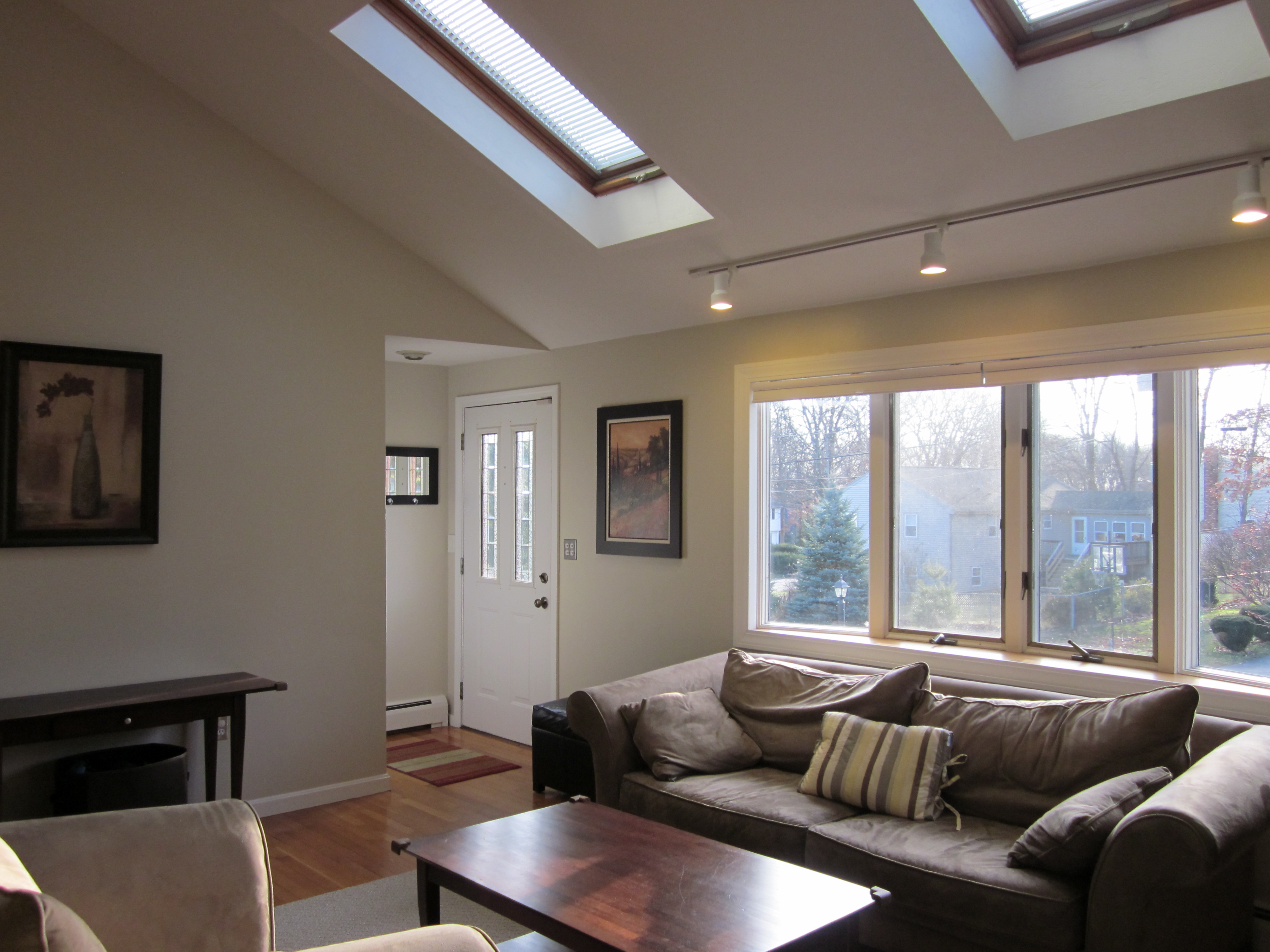 Amazing space in this multi-level with over 2k sq ft of living space and a possible in-law in the finished basement. Family room and open concept living/dining/kitchen on the main level with a beautiful screened-in porch. Amazing space in this multi-level with over 2k sq ft of living space and a possible in-law in the finished basement. Family room and open concept living/dining/kitchen on the main level with a beautiful screened-in porch.
This is a great space for your family with easy access to 495 and EMC. The street only has four houses on it so there is almost no traffic. The four bedrooms and possible in-law allow for a growing family and with the many recent improvements (roof, windows, insulated garage, exterior paint) you’ll have nothing to do but ENJOY your weekends with them! You should see this house! It’s priced right and is a great find! To see a video tour on my youtube site go here: http://www.youtube.com/watch?v=ZYiLWwiTsa8 |
|||||||||||||||||||||
 |
|||||||||||||||||||||
| Features List | |||||||||||||||||||||
|
|||||||||||||||||||||
|
|||||||||||||||||||||
 Who doesn’t like the perfect shower? Especially on a cold morning like this!
Programmable showers feature easy-to-use digital controls that let each member of the family pre-set their ideal water temperature, pressure, and even the type of spray—from a steady stream to pulsating jets. The waterproof control panel mounts right on the shower wall where you can alter any setting at the touch of a button.
Luxurious, programmable showers suit nearly every budget, too, ranging from about $290 for a basic unit to $3,500 and up for one with lots of features and special finishes. Installation costs for a programmable shower will vary widely, depending on your region and whether you’re remodeling or building new.
For the optimum custom shower experience, plan to install a water heater that’s dedicated to your shower. A 50-gallon tank supplies 8 minutes of hot water to a shower with four shower heads. For more showering time and additional outlets, purchase a 100-gallon water tank.
This is the most affordable unit I found with a great name: MOEN T9031 but this model is more stylish (in my opinion) MOEN Vestige. Does anyone have one of these? I would be interested in hearing what the practical application is!
 Step back in time with this historic house in downtown Palmer. Former home of John Brown, Town Clerk, this 5 bed, 2 bath home is just waiting for you to come in and make it shine!
Bring your imagination as you stroll on the hardwood floors and imagine what it could be! Many updates done already but this home needs skilled labor of love to bring it back to it’s original pride. Stained glass windows, intricate ceiling moldings, hardwood floors and a feel for yester-year will get your mind racing with possibilities. Wrap around Farmer’s Porch adds to the charm of this historic house.
There is an income producing in-law apartment upstairs complete with kitchen and full bath. Keep it as extra income or convert back into the house!
In a fantastic location for a home office with easy highway access and a large parking area. Directly across the street from the post office and around the corner from the school. This is an ideal location for a busy family and this house has the space for it! It qualifies for USDA 100% financing!
To see a full description click here and call or email for more information or a showing. Stay tuned for another listing on Tuesday!
 Wow! I want THESE cabinets in my kitchen! Oh yeah…and the magic food preparation that the Jetson had!
Cabinets in motion obey hand signals to open doors, and touch-sensitive drawers glide out with the brush of a fingertip.
Custom cabinet company Anvil Cabinet and Mill offers a creative approach with Anvil Motion, a luxury custom line with ultra-modern automated features that you can dress in any style.
So who is getting me these for Christmas?
 That’s it…I am decorating with every light strand I can find! Here is some great information on the energy costs (or lack of energy costs) associated with LED Christmas lights and a holiday lighting contest! Realtor.com has a contest on their Facebook page with a $250 gift card prize! (see links at the end of the blog)
Newer decorations that use LED lights are especially light on the pocketbook. Even if you take your holiday decorations to the extreme, you might see little change in your utility bill if you use LED lights. )If you’re reluctant to deck your halls for the holidays because of your own or others’ economic hardships, you may be happy to hear that lighting up for the festivities doesn’t cost nearly as much as it used to.
According to MarketWatch, advancements in energy efficiency have led to big savings for consumers, who now can expect to spend just $1.26 a month to light, for five hours a night, a 70-watt decoration such as an inflatable snow globe that uses LED lighting.
You might not be so lucky if you go the route of the Griswolds from “National Lampoon’s Christmas Vacation,” since the older, bigger bulbs tend to suck up quite a bit more energy. But if all you need is one strand of 50 minilights on for five hours a night, that’ll put you back 40 cents a month. And if you indulge in the LED strand, it’ll cost just 7 cents a month, MarketWatch reports.
Maybe that’s helping convince more people that it’s time to buy some new holiday decor.
MarketWatch also writes that according to a survey from the National Retail Federation, fewer people, at 31.5%, plan to use the same decorations they used last year, compared with 34% from a similar poll in 2009. Online and brick-and-mortar retailers have seen similar signs of a growth in holiday decor sales.
 So if you plan on taking your holiday decorations to the next level this year, why not see if they’re among the nation’s best?
Realtor.com is asking homeowners to upload images of their holiday decorations to its Facebook page, and will award the two homes with the best decorations each a $250 gift card for Bed Bath & Beyond.
Think your home has what it takes to win? Or do you plan to pass on the decorations this year because of utility costs or other reasons?
Don’t want to upload your pictures or join their Facebook page…just email me your pictures with your name and I will make sure it gets in – amymullen@remax.net
 Real Estate and *stuff *