Real Estate and *stuff *
A real person helping real people with real estate
You can scroll the shelf using ← and → keys
You can scroll the shelf using ← and → keys
 On average, a garage addition recoups about 60% of the investment, with the highest rates of return on a basic rather than an upscale job. It’s been my experience that in our area because of the snowy winters – houses with garages have a much higher appeal to buyers. I have several that won’t even look at a house without a garage.
A garage addition makes especially good economic sense in the south-central portion of the country, where home owners can expect to get back almost 66% of the cost of a midrange project, while spending about 13% less than the national average. Returns tend to be lowest in the country’s midsection. In Cleveland, for example, the same garage recoups less than half its cost.
As a general rule, you’re likely to recover a higher percentage of your investment if you build a relatively basic garage–one with open walls, an unfinished concrete floor, and shelves for storage–rather than one with interior drywall and trim, an epoxy floor coating, and designer storage solutions. Such an upscale project runs a national average of more than $90,000 and returns around $48,300, or about 53.6%, of its cost.
But there are financial considerations to adding a garage that go beyond resale value. Protected from the elements, your vehicles will stay in top shape, which could make them more valuable when you sell them. If you include workshop space, you’ll be able to do many home repairs yourself, saving on the cost of pros. And if you outfit the garage so that it’s easy to access stored items, you can save leftover materials, reducing the cost of future projects.
National average cost, 26 x 26 ft. midrange garage addition:
Job cost: $60,600
Resale value: $35,900
Cost recoup: 59.2%
National average cost, 26 x 26 ft. upscale garage addition:
Job cost: $90,100
Resale value: $48,300
Cost recoup: 53.6%
 I am part of 7 Hills BNI – the largest global business networking organization in existence. The purpose of the organization is to build relationships between professionals in order to pass business through referrals. It’s a great concept, works very well and is fun! This year to date, my chapter has passed $117,000 in business referrals and we’re still going!
It works because each profession is only allowed one person to represent it. Currently we have several open spots in our Chapter for the following professions:
General contractor
Chiropractor
Massage Therapist
Payroll Company
Computer Repair
Architect
Event Planner
Exterminator/Pest Control
Home Inspector
Home Appraiser
Florist
Auto Repair
Auto Body
Travel Agent
Landscaper
Carpenter
Mason
If you are in one of these professions or know someone who is and would like to increase your business – let me know. We would like to invite you to visit our group in West Boylston and see what’s it’s all about. You can also visit the website: http://www.bni.com and be sure to check out the “Why Join?” section. This group has not only grown my business but it’s added new friends to my world!
I am ON TOP of things this week and scheduling my opens!
 SUNDAY 1pm to 2pm – 10 Dighton Street Worcester: WHOA WHAT A YARD!!! Imagine being in Worcester…you’re with me right?…at the end of a dead end street…still with me?…with almost a FULL ACRE OF LAND!!! YES! This very well kept house comes with a total of three lots that make up almost a full acre of land. The kids can ride their bikes, play baseball, volleyball or just run around! The house is MOVE-IN ready with 2 bedrooms and one bath. Another room on the first floor could be your third bedroom. Upstairs features a half bath ready to be hooked up and MORE SPACE! Full basement is DRY! GREAT PRICE at $140,000! SEE IT HERE
 FRIDAY 4:30pm to 6pm – 1058 Park Street Palmer: Whoa! Where did this come from??? The Brimfield Flea Market is in town and if you are out shopping for antiques then stop in this antique home in Palmer on your way by. Commercial zoned with parking spaces – this could be your new home office. Or keep it as a single family! Rental income? Oh yes – it has an apartment upstairs. Location qualifies for USDA and rehab loans. Come see this beautiful antique home with it’s charm still in place – stain glass windows, wide hardwood stair case and elborate crown molding. SEE IT HERE
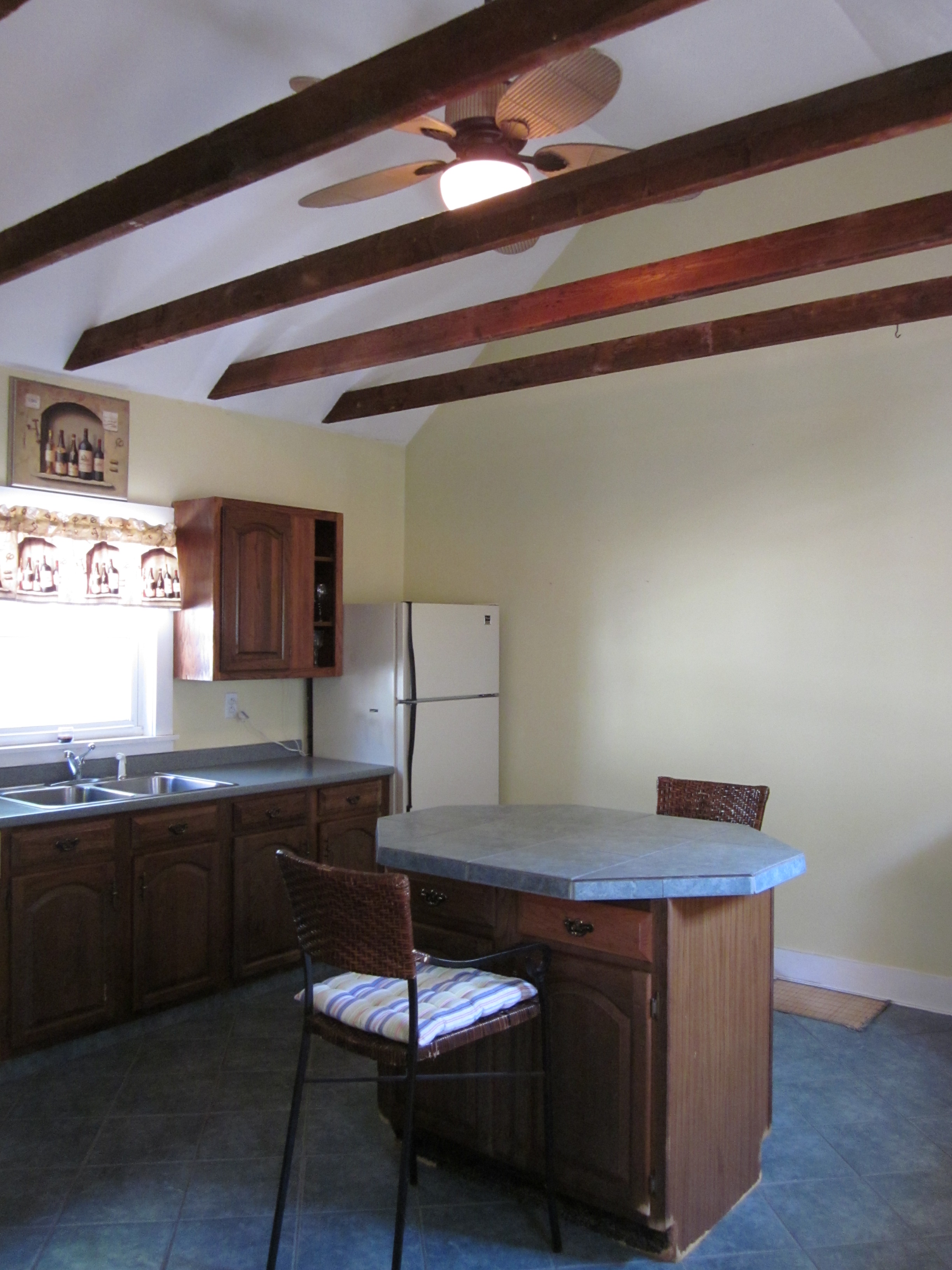 SUNDAY 12pm to 1pm – 98 Howe Street Marlborough: Adorable and affordable 2 bedroom cape near downtown Marlborough. Walking distance to main street and all the fine foods and shops. Minutes to 495 for the morning commute. Renovated kitchen, newer bath, new plumbing and new furnace. Hoping to get a puppy? This comes with a fenced-in yard and off street parking. Great house at a great price! SEE IT HERE
This 2 bed, 1 bath renovated cape in Marlborough is close to downtown with offstreet parking and a fenced in yard. Nice high ceilings, hardwood floors and so much charm! Short sale and coming on a GREAT PRICE!

 I know I said I was going to focus on appliance maintenance but this is so much more fun! Here is a list of downloadable iPhone and Android apps offer ways to maintain, improve, and save money on your home.
If you see a color at a friend’s house that would look great in your home, use Benjamin Moore’s Ben Color Capture or Sherwin-Williams’ ColorSnap, free mobile apps for iPhone, to conjure up a matching paint color and code in a jiffy. Take a photo with your phone, and the app matches the paint as closely as possible, and will display secondary and complementary colors. (ColorSnap is also available for BlackBerry.)
Good Housekeeping magazine has placed all their best stain-removal and cleaning advice into their free @Home app. It also includes decorating ideas and a searchable list of the 5,000-plus products that have earned a Good Housekeeping seal.
If you’re searching for a cheap replacement part, or looking for a deal on slightly-used appliances and materials, eBay’s free Mobile app lets you search the auction site’s entire marketplace from iPhone, Android, Windows Phone 7, and BlackBerry devices. You can also put any of your disused-but-functional household items up for sale and recoup some cash.
For listings close to home, search the popular Craigslist site through the free Craigsnotifica for Android or Craigspro for iPhone.
Finding lower prices on electronics and appliances used to mean driving from store to store or scanning Sunday circulars. With the free Price Check by Amazon, you can scan a product’s barcode at a store and compare the price against Amazon and other merchants. (Android and BlackBerry versions are also available.) PriceGrabber has a similar app for iPhone and Android.
For $1.99, the iHandy Carpenter app puts a ruler, protractor, bubble level, surface level, and plumb bob into your iPhone, allowing you to make measurements without lugging out the tool box. It’s perfect for simple jobs like hanging frames and mirrors.
Need just a level? There’s a free app for iPhone from iHandy and for Android from Johnson.
Before you approach a home improvement project, use the $1.99 Handy Man DIY to record dimensions of flooring, windows, walls, and more. It calculates how much material you’ll need and gives you a cost estimate.
If you’re in the middle of a home improvement job and need supplies, use the $4.99 Work Shop app to order them from your iPhone. It’s also a great tool for keep track of expenses or plan your budget for a future project.
With the iPhone’s bright display and the super-bright LED flash, you can use it in place of a traditional flashlight to illuminate crawl spaces, attics, cabinet recesses, and other dark spots. There are many apps for this purpose, but two favorites are the 99-cent Flashlight (and 99-cent Flashlight+.
Wonder why certain vegetation isn’t growing in your yard? Landscaper’s Companion provides a reference guide to more than 2,000 plants. You can search for a plant based on your garden’s sun exposure and garden zone, helping to ensure you won’t get any dead leaves after planting. The app costs $9.99.
Using your iPhone’s magnetometer, StudFinderPRO can help you locate studs by locating the magnetic fields emitted by metal objects like screws and nails. The app costs $2.99. A free Magnetic Stud Finder is available for Android devices.
Need decorating ideas for inspiration? Check out Home Interior Layout Designer–Mark On Call for $2.99. Created by an interior designer, the app can help you plan a space and determine if furnishings will fit. Also consider the $4.99 Living Room app for iPad and the 99-cent Dream Home app for iPhone.
 Who is noticing a theme here? Yes, we are looking at the routine maintenance that keeps the things IN your home running well. Avoid those “disaster days” when you wake up late, the news is promising a nasty commute and you forgot to pick up coffee the night before.
Keep your water heater running efficiently and reliably with this simple maintenance routine.
Here’s a list of maintenance tips to keep your water heater running efficiently and reliably:
 As promised! More on taxes! I know, I know…it’s crazy to talk about such exciting stuff without a party hat on but an IRS audit or missed refund money is no party either! Here are the ten most common errors that home owners make on their tax returns. Don’t rouse the IRS or pay more taxes than necessary—know the score on each home tax deduction and credit.
You take a tax deduction for property taxes in the year you (or the holder of your escrow account) actually paid them. Some taxing authorities work a year behind—that is, you’re not billed for 2010 property taxes until 2011. But that’s irrelevant to the feds.
Enter on your federal forms whatever amount you actually paid in 2010, no matter what the date is on your tax bill. Dave Hampton, CPA, tax manager at the Cincinnati accounting firm of Burke & Schindler, has seen home owners confuse payments for different years and claim the incorrect amount.
If your lender escrows funds to pay your property taxes, don’t just deduct the amount escrowed, says Bob Meighan, CPA and vice president at TurboTax in San Diego. The regular amount you pay into your escrow account each month to cover property taxes is probably a little more or a little less than your property tax bill. Your lender will adjust the amount every year or so to realign the two.
For example, your tax bill might be $1,200, but your lender may have collected $1,100 or $1,300 in escrow over the year. Deduct only $1,200. Your lender will send you an official statement listing the actual taxes paid. Use that. Don’t just add up 12 months of escrow property tax payments.
Deduct points you paid your lender to secure your mortgage in full for the year you bought your home. However, when you refinance, says Meighan, you must deduct points over the life of your new loan. If you paid $2,000 in points to refinance into a 15-year mortgage, your tax deduction is $133 per year.
Lenders require home buyers with a downpayment of less than 20% to purchase private mortgage insurance (PMI). Avoid the common mistake of forgetting to deduct your PMI payments. However, note the deduction begins to phase out once your adjusted gross income reaches $100,000 and disappears entirely when your AGI surpasses $109,000.
This deduction may not be as good as it seems. It often doesn’t amount to much of a deduction, has to be recaptured if you turn a profit when you sell your home, and can pique the IRS’s interest in your return. Hampton’s advice: Claim it only if it’s worth those drawbacks.
If you met the midyear 2010 deadlines, don’t forget to take this tax credit into account when filing.
Even if you missed the 2010 deadlines, you still might be in luck: Congress extended the first-time home buyer credit for military families and other government workers on assignment outside the United States. If you meet the criteria, you have until June 30, 2011, to close on your first home and qualify for the tax credit of up to $8,000.
If the IRS comes a-knockin’, don’t be scrambling to compile your records. Many people forget to track home office and home maintenance and repair expenses, says Meighan. File away documents as you go. For example, save each manufacturer’s certification statement for energy tax credits, insurance company statements for PMI, and lender or government statements to confirm property taxes paid.
If you sold your main home last year, don’t forget to pay capital gains taxes on any profit. However, you can exclude $250,000 (or $500,000 if you’re a married couple) of any profits from taxes. So if you bought a home for $100,000 and sold it for $400,000, your capital gains are $300,000. If you’re single, you owe taxes on $50,000 of gains. However, there are minimum time limits for holding property to take advantage of the exclusions, and other details. Consult IRS Publication 523.
If you made any eligible improvement, fill out Form 5695. Part I, which covers the 30%/$1,500 credit for such items as insulation and windows, is fairly straightforward. But Part II, which covers the 30%/no-limit items such as geothermal heat pumps, can be incredibly complex and involves crosschecking with half a dozen other IRS forms. Read the instructions carefully. More on the energy tax credits to come!
You can deduct mortgage interest only up to $1 million of mortgage debt, says Meighan. If you have $1.2 million in mortgage debt, for example, deduct only the mortgage interest attributable to the first $1 million.
This article provides general information about tax laws and consequences, but is not intended to be relied upon by readers as tax or legal advice applicable to particular transactions or circumstances. Readers should consult a tax professional for such advice, and are reminded that tax laws may vary by jurisdiction.
 Yes it’s that time of year again! The snowbanks are getting higher and taking on a “brownish” tint – the joy of winter has passed with the holiday season and we’re all looking forward to spring – why not spend this time doing something fun! Like taxes! Woot! No really…it’s a chore but it’s necessary and as a taxpayer you are entitled to every deduction available to you. That’s right, the IRS WANTS you to have an accurate number for your total tax liability.
This week I will have a series of articles on “Don’t Miss Tax Breaks” for home owners. I have a financial background as a CPA prior to becoming a Realtor. This is great stuff and I welcome your comments.
Get an “A” on your Schedule A Form: Dodge these tax deduction pitfalls to save time, money, and an IRS investigation.
Your monthly mortgage payment often includes money for a tax escrow, from which the lender pays your local real estate taxes.
The money you send the bank may be more than what the bank pays for your taxes, says Julian Block, a tax attorney and author of Julian Block’s Home Seller’s Guide to Tax Savings. That will lead you to putting the wrong number on Schedule A.
Example:
Now do the math:
If you bought or sold a home in the middle of 2010, figuring out what to put on line 6 of your Schedule A Form is tricky.
Don’t simply enter the number from your property tax bill on line 6 as you would if you owned the house the whole year. If you bought or sold a house in midyear, you should instead use the property tax amount listed on your HUD-1 closing statement, says Phil Marti, a retired IRS official.
Here’s why: Generally, depending on the local tax cycle, either the seller gives the buyer money to pay the taxes when they come due or, if the seller has already paid taxes, the buyer reimburses the seller at closing. Those taxes are deductible that year, but won’t be reflected on your property tax bill.
You can deduct points paid on a refinance, but not all at once, says David Sands, a CPA with Buchbinder Tunick & Co LLP. Rather, you deduct them over the life of your loan. So if you paid $1,000 in points for a 10-year refinance, you’re entitled to deduct only $100 per year on your Schedule A Form.
If you took out a home equity line of credit (HELOC), you can generally deduct the interest on it only up to $100,000 of debt each year, says Matthew Lender, a CPA with EisnerLubin LLP.
For example, if you have a HELOC for $200,000, the bank will send you Form 1098 for interest paid on $200,000. But you can deduct only the interest paid on $100,000. If you just pull the number off Form 1098, you’ll deduct more than you’re entitled to.
You can deduct PMI on your Schedule A Form, as long as you started paying the insurance after Dec. 31, 2006. (Also, this is also a good time to review your PMI: You might be able to cancel your PMI altogether because you’ve had a change in loan-to-value status.)
You can deduct part or all of losses caused by theft, vandalism, fire, or similar causes, as well as corrosive drywall, but the process isn’t always obvious or simple:
Bottom line on line 20: If you’ve got extensive losses, it’s best to consult a tax pro. “I wouldn’t do it myself, and I’ve been dealing with taxes for 40 years,” says former IRS official Marti.
I know…not very exciting but necessary!
 Low-cost kitchen storage strategies bring calm to your kitchen, banishing stress-inducing clutter and leaving the space calm and orderly. Good news for budget-minded cleaning compulsive: Getting organized in the kitchen won’t drain your piggy bank! Stash more cash and control the chaos with these low-cost kitchen storage solutions, all readily available at home centers, discount stores and online.
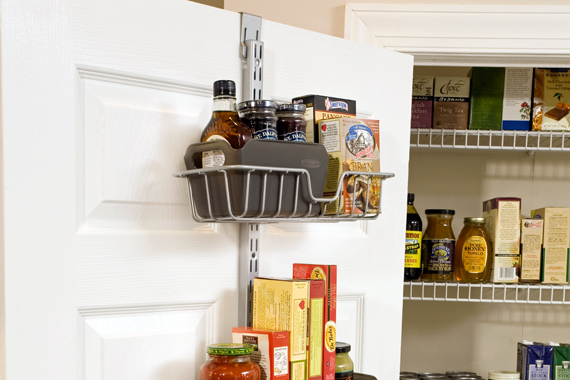 Rack attack: Store pots, everyday dishes, spices, and wine on racks that are freestanding, wall-hung, and ceiling-hung–and voila! Everything is in its own location, visible, and easily accessible!
Position the racks where they make sense: A pot rack above the cooktop; a dish rack close to the dishwasher for quick unloading; spices near the range or meal prep area; a wine rack near the wine glasses and dining table.
You’ll find racks in metal, wood, and other materials, starting as low as $10 to $15.
Shelf expression: You can size an open shelf to fit anywhere you need it and paint or stain it to match your décor. Use shelves for storing such kitchen necessities as cookbooks, attractive dishware, oils and vinegars, and spices.
Home improvement centers have storage sections where you can hunt, but don’t overlook the office supply and bathroom sections for even more low-cost shelves.
You’ll find cool shelves starting as low as $8.
 Great divide: Organize the contents of kitchen drawers and cabinets with wire or wood inserts. Drawer dividers keep utensils sorted and orderly. Vertical dividers inside cabinets create a spot for storing trays and cookie sheets. You’ll also find special inserts for storing knives and spices neatly inside drawers.
Available in wire, wood, or plastic, dividers start at about $3.
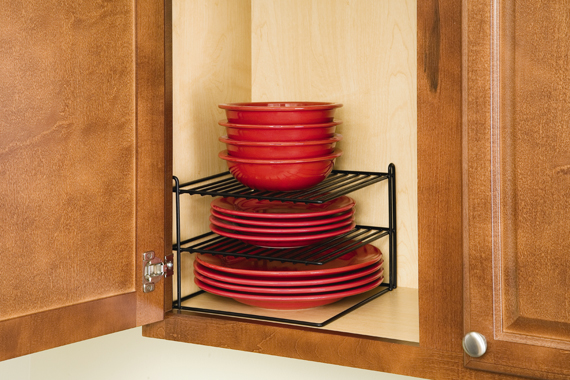 Elevated thinking: Wire stacking shelves have legs to elevate the storage surface. Set a stacking shelf on a countertop, existing shelf, or inside a cabinet to increase kitchen storage space. Use a stacking shelf for canned goods, dishware, spices, and more.
Prices start at about $6.
Hang ups: Install pegs or hooks along a backsplash, inside cabinets, or anywhere on a kitchen wall to create a place for cups, hot pads, cooking utensils, keys, and recipe clips. Hooks are available that fit over doors or come equipped with magnets that adhere to any metal surface.
Pegs and hooks start as low as $1.
Basket case: Baskets come in a variety of materials to complement your décor, from natural woven grasses to canvas to colorful plastic bins. Set baskets on open shelves, inside cupboards, and on the kitchen counter to round up small items, such as napkin rings and bamboo skewers.
Baskets are great for storing dish towels, cloth napkins, and coupons. Prices start as low as $1.

 Real Estate and *stuff *