Real Estate and *stuff *
A real person helping real people with real estate
You can scroll the shelf using ← and → keys
You can scroll the shelf using ← and → keys
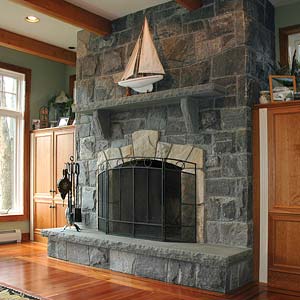 Everyone loves a fireplace…especially as we start the winter season here in New England but there is cost. Luckily there is still a tax credit too! Installing a wood-burning, gas-burning, gel-fuel, or electric fireplace to your house costs $400 to $10,000, depending on the type of fireplace you select.
If your budget is really tight, a free-standing gel-fuel or electric fireplace eliminates installation costs. But be aware that some bare-bones alternatives don’t completely succeed in mimicking a real wood fire.
Check local building codes for possible restrictions on the types of fireplaces that can be installed in your area.
Costs of a wood-burning fireplace
An open-hearth, wood-burning fireplace—like the ones you see in mountain resort hotels—requires the help of a skilled, professional mason and a budget approaching (and often exceeding) $10,000.
For an existing home, considerable renovation work is required, including a foundation to carry the weight of the firebox and chimney, and the cost of the chimney itself.
Expect to pay $7,000 to $10,000 or more.
Costs of a gas-burning fireplace
A fireplace unit that burns natural gas or propane runs about $2,000 for the basic materials package. Installation and finishing typically add $2,500.
Your least-expensive option
A gel-fuel fireplace or an electric fireplace starts under $400. With a portable unit, that’s the total cost since the fireplace is ready to use once you remove the packaging.
Because there’s no flue or chimney, it’s easy to install TVs or other electronic gear directly above an electric fireplace. If you include a mantle package, expect to pay $800 to $1,600. One perk available: sound effects that mimic the crackle and pop of a real fire.
Ongoing costs
Estimate your energy costs by using a fuel cost comparison calculator. Gel fuel, not included in the calculator, costs $3 per 13-ounce can, enough for three hours.
For a wood-burning fireplace, figure on $100 to $200 a year for chimney cleaning. Gas fireplaces need an annual service check ($100 to $150) plus a chimney inspection. Gel-fuel and electric fireplaces don’t need regular maintenance.
Tax credits for fireplace inserts
Through Dec. 31, 2011, you may qualify for a federal tax credit for up to $300 in costs, if you install a biomass (wood- or pellet-burning) fireplace insert that’s at least 75% fuel-efficient.
 Here are a few surprising and simple ways to cut your energy bill this season since the temps have dropped so low the last few nights…we are getting our first taste of the winter season. I found this list and thought it was a nice quick way to save some energy without having to reconstruct the house. I am a fan of the last one!
Put lamps in the corners: Did you know you can switch to a lower wattage bulb in a lamp or lower its dimmer switch and not lose a noticeable amount of light? It’s all about placement. When a lamp is placed in a corner, the light reflects off the adjoining walls, which makes the room lighter and brighter.
Switch to a laptop: If you’re reading this article on a laptop, you’re using 1/3 less energy than if you’re reading this on a desktop.
Choose an LCD TV: If you’re among those considering a flat-screen upgrade from your conventional, CRT TV, choose an LCD screen for the biggest energy save.
Give your water heater a blanket: Just like you pile on extra layers in the winter, your hot water heater can use some extra insulation too. A fiberglass insulation blanket is a simple addition that can cut heat loss and save 4% to 9% on the average water-heating bill.
Turn off the burner before you’re done cooking: When you turn off an electric burner, it doesn’t cool off immediately. Use that to your advantage by turning it off early and using the residual heat to finish up your dish.
Add motion sensors: You might be diligent about shutting off unnecessary lights, but your kids? Not so much. Adding motion sensors to playrooms and bedrooms cost only $15 to $50 per light, and ensures you don’t pay for energy that you’re not using.
Spin laundry faster: The faster your washing machine can spin excess water out of your laundry, the less you’ll need to use your dryer. Many newer washers spin clothes so effectively, they cut drying time and energy consumption in half—which results in an equal drop in your dryer’s energy bill.
Use an ice tray: Stop using your automatic ice maker. It increases your fridge’s energy consumption by 14% to 20%. Ice trays, on the other hand, don’t increase your energy costs one iota.
Use the dishwasher: If you think doing your dishes by hand is greener than powering up the dishwasher, you’re wrong. Dishwashers use about 1/3 as much hot water and relieve that much strain from your energy-taxing water heater. Added bonus: you don’t have to wash any dishes.

Come Share Your Spirit with RE/MAX and the Ware Historical Society
 This is such a great concept and Dr. Cindy McGinn D.V.M. does it with care and professionalism. Dr. McGinn is a traveling vet in the greater Worcester area to fill the need of pet owners who are unable to bring their animals into a traditional vet office. Dr. McGinn will come to your home to treat your animals – even on a Saturday! She serves the greater Worcester area and I hope you pass this link along to someone who needs her services.
She can be reached at 508-450-8727 or drcindylou8@aol.com. Video below – let’s hear it for Cindy!
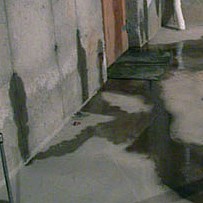 It’s raining so I couldn’t resist this blog. Solving wet-basement problems is one of the most important things you can do to protect the value of your home and health of your family. Additionally, a dry basement is a huge plus to home buyers if your house is on the market now or if you are considering selling. A finished basement is an even bigger plus!
Some wet basements are easy to cure simply by clearing gutters and by diverting gutter water away from the foundation. But if the problem comes from other sources—water flowing toward the house on the surface, seeping in from underground, or backing up through municipal storm drains—you must take more aggressive action.
Here are eight strategies to keep water out of your basement.
If downspouts are dumping water less than 5 feet away from your house, you can guide water farther out by adding plastic or metal gutter extensions.
But extensions aren’t the neatest or most effective long-term solution, especially if you’re likely to trip over them or run over them with a lawn mower. Permanent, underground drain pipe is invisible and capable of moving large quantities of gutter runoff much farther from your house.
For about $10 a foot, a landscaper or waterproofing contractor will dig a sloping trench and install pipe to carry the water safely away.
If you see water dribbling into the basement through cracks or gaps around plumbing pipes, you can plug the openings yourself with hydraulic cement or polyurethane caulk for less than $20.
Plugs work when the problem is simply a hole that water oozes through, either from surface runoff or from wet soil. But if the water is coming up through the floor, or at the joint where floor and walls meet, the problem is groundwater, and plugs won’t do the trick.
If the gutters are working and you’ve plugged obvious holes, but water still dribbles into your basement or crawl space from high on foundation walls, then surface water isn’t draining away from the house as it should.
Your house should sit on a “crown” of soil that slopes at least 6 inches over the first 10 feet in all directions.
Over time, the soil around the foundation settles. You can build it back with a shovel and dirt. One cubic yard of a water-shedding clay-loam mix from a landscape supply house costs around $30 (plus delivery) and is enough for a 2-foot-wide, 3-inch-deep layer along 57 feet of foundation.
Since your home’s siding slightly overlaps its foundation, building up the crown could bring soil–and rot and termites–too close to siding for comfort: 6 inches is the minimum safe distance. In that case, create a berm (a mound of dirt) or a swale (a wide, shallow ditch), landscape features that redirect water long before it reaches your house.
In small areas, berms are easy; a landscape contractor can build one for a few hundred dollars. On bigger projects, berms make less sense because you’ll have to truck in too much soil. In that case, dig a swale (about $1,000). Once landscaping grows in, berms and swales can be attractive features in your yard.
If water is leaking into your basement low on the walls or at the seams where walls meet the floor, your problem is hydrostatic pressure pushing water up from the ground.
First, check whether you have footing drains, underground pipes installed when the house was built to carry water away from the foundation. (Look for a manhole or drain in the basement floor or a cleanout pipe capped a few inches above the floor.)
If the drains are clogged, open the cleanout and flush the pipes with a garden hose. If that doesn’t work, a plumber with an augur can do the job for about $600.
If you don’t have working footing drains, install a curtain drain to divert water that’s traveling underground toward your house.
A type of French drain, a curtain drain is a shallow trench–2 feet deep and 1.5 feet across–filled with gravel and perforated piping that intercepts water uphill of your house and carries it down the slope a safe distance away.
If the drain passes through an area with trees or shrubs, consider switching to solid pipe to reduce the risk of roots growing into the piping and clogging it. Cost: $10 to $16 per linear foot.
If you can’t keep subsurface water out, you’ll have to channel it from the inside.
To create an interior drain system, saw a channel around the perimeter of the floor, chip out the concrete, and lay perforated pipe in the hole. The pipe drains to a collection tank at the basement’s low spot, where a sump pump shoots it out the house.
Starting at about $3,000, an interior system is the best and least disruptive option in an unfinished basement with easy access. It’s also a good choice if your yard is filled with mature landscaping that digging an exterior drainage system would destroy.
Installing an interior drainage system gets the water out but doesn’t waterproof the walls. For that, you need an exterior system: a French drain to relieve hydrostatic pressure and exterior waterproofing to protect the foundation.
It’s a big job that requires excavating around the house, but it may be the best solution if you have a foundation with numerous gaps. It also keeps the mess and water outside, which may be the best choice if you don’t want to tear up a finished basement.
The downside, besides a price tag that can reach $20,000, is that your yard takes a beating, and you may need to remove decks or walkways.
I have done several of these in order to obtain a “mostly” dry basement. I am very happy I did!
JEP Contracting won the spot for my first video blog of Small Business Sunday! I strongly believe that we need to invest in our local small and medium-sized businesses in order to have a health economy in our back yards. I met with the founder of JEP, Patrick Perkins, a few weeks ago and found that they do something I had never heard of – they offer a FIVE year customer service warranty on their work!
More recently – I saw Erica Gifford at the Millbury Block Party. Here she is talking about what JEP Contracting can do for YOU! Check them out at jepcontracting.com or call them 508-865-4063.
 Today feels warm and balmy but you know this time of year – it can turn on you in an instant! A do-it-yourself energy audit can teach you how to be more energy efficient and make you a more-educated consumer should you decide to hire an expert.
By following up on problems, you can lower energy bills by 5% to 30% annually, according to the U.S. Department of Energy’s office of Energy Efficiency and Renewable Energy. With annual energy bills averaging $2,200, according to Energy Star, investing in fixes or energy-efficient replacement products could save you up to $660 within a year.
And self-audits can cost virtually nothing if you already own a flashlight, ladder, measuring stick, candles, eye protection, work clothes, dust mask, and a screwdriver—or roughly $150 if you’re starting from scratch. As for time commitment, expect to spend two to four hours to investigate home systems, refer to utility bills, and conduct research about local norms for products, such as insulation, say experts.
Since there are a variety of ways to conduct a do-it-yourself audit, you’ll need to know your tolerance for the tasks involved.
Some require you play home inspector, climbing into attics and crawlspaces on fact-finding missions and delving into unfinished portions of your home to look at duct work. Questionnaire-based audits rely the assumption that you can answer such questions as how many gallons of water your toilet tank holds to the R-value (thickness) of insulation in your home.
If you don’t have time to familiarize yourself with your home’s systems or confidence about diagnosing problems, are disabled, are squeamish on ladders and in crawlspaces, or are already planning to invest in a major remodel, you may benefit from hiring a pro.
Even homeowners who complete a self-audit often hire a professional to double-check their diagnoses. A self-audit may reveal drafts but not their exact source, such as ducts or insulation, for instance. Because the costs to address a draft can range from minor to major, investing in a paid audit may be justifiable.
All the home systems and appliances that contribute to energy costs. Here’s the breakdown of a typical home’s energy usage that Energy Star references:
While the pros use special equipment to focus on hard-to-research aspects of a home’s building envelope and indoor air circulation, DIY audits can teach you—based on the questions they ask—to identify and address the numerous small ways in which your home wastes energy.
Since lighting, electronics, and appliances collectively account for nearly 30% of the average home’s energy costs, you can make an impact on your bills by replacing old appliances with energy-efficient replacements and simple fixes—plugging appliances into power strips versus wall outlets, making sure refrigerator doors are properly sealed and don’t leak air, and opting for a programmable thermostat.
1. Check your home’s exterior envelope—the windows, doors, walls, and roof exposed to outdoor air. Hold a candle or stick of incense near windows, doors, electrical outlets, range hoods, plumbing and ceiling fixtures, attic hatches, and ceiling fans in bathrooms. When smoke blows, you’ve got a draft from a source that may need caulking, sealant, weather stripping, or insulation.
2. Check insulation R-value or thickness. Where insulation is exposed (in an attic, unfinished basement, or around ducts, water heaters, and appliances), use a ruler to measure, recommends the DOE. Compare your results against those suggested for your region via an insulation calculator.
Although examining in-wall insulation is difficult, you can remove electrical outlet covers, turn off electricity, and probe inside the wall, the DOE notes in its DIY audit guide. However, only a professional’s thermographic scan can reveal if insulation coverage is consistent within a wall. Insulation can settle or may not be uniformly installed.
3. Look for stains on insulation. These often indicate air leaks from a hole behind the insulation, such as a duct hole or crack in an exterior wall.
4. Inspect exposed ducts. They may not work efficiently if they’re dirty, have small holes, or if they pass through unfinished portions of the home and aren’t insulated. Look for obvious holes and whether intersections of duct pipe are joined correctly. Since ducts are typically made out of thin metal that easily conducts heat, uninsulated or poorly insulated ducts in unconditioned spaces can lose 10% to 30% of the energy used to heat and cool your home, says DOE.
The DOE recommends calling a contractor before insulating ducts in basements or crawlspaces, as doing so will make these spaces cooler and could impact other home systems, such as water pipes. Plus, these ducts might release noxious air. DOE also recommends you hire professionals to clean ducts periodically. If you’ve noticed that some rooms get disproportionately hot or cold, bring that to a pro’s attention. It could be duct related.
In addition, some DIY audits—like the City of Seattle’s free online audit guide, suggest hiring a pro if you suspect asbestos materials have been used in insulation or around pipes, ducts, or heating equipment. Airborne or crumbling asbestos particles are a health hazard. And a pro might be the right choice when dealing with insulation around or near electrical or examining electrical systems with bare wires.
A self-audit, like a paid audit, serves as a jumping-off point to help you set priorities for making your home more efficient. Whether or not you choose to make repairs yourself, one thing’s for sure: You’ll come away knowing more about your home’s strengths and weaknesses than you did before.
 Salvaged building materials allow you to improve your home inexpensively—but might require an extra investment of time and energy.
If you’re looking to improve your home on the cheap, consider using salvaged building materials. Besides being less expensive than new materials, secondhand features can add character, quality, and value to your home. But note that the savings in dollars may require a greater investment in time and effort.
Remodeling with secondhand building materials has many fans. Some are owners of historic houses who improve their homes by adding period elements. Others follow green building practices and appreciate conserving resources and keeping materials out of landfills. And still others are looking for quirky elements that will break their homes out of cookie-cutter molds.
According to the Building Materials Reuse Association, recycling is becoming more common in the construction industry. That means reclaimed building elements like doors, windows, plumbing fixtures, and wood flooring are increasingly easy to find.
Habitat for Humanity’s nationwide chain of ReStores sells recycled items, and many cities have architectural salvage yards. Online, neighbors advertise unwanted items on community bulletin boards, such as Craigslist, and national directories of recycled materials, such as EcoBusinessLinks, can be great sources for hard-to-find elements. And the price is right: reused pieces can be 50% to 75% cheaper than their new counterparts.
Sounds terrific, right? But it’s not that simple. Using recycled building elements is like shopping at a thrift store: You can’t be certain you’ll find exactly what you’re looking for. Anyone interested in a good deal to spruce up their home—an ornate wood mantelpiece or a set of Victorian doors, for example—has to be willing to compromise on some of the details and commit some time to the endeavor.
If you live in or near a city and have access to a salvage yard, you’re in luck. Many receive multiple new shipments daily, and some, such as Seattle’s Second Use, post their offerings online.
But in most cases, there’s no substitute for regularly showing up in person to check out what’s available. If you’ve got something particular in mind, plan on spending a few afternoons at the salvage yard trying to track down what you’re looking for. The same is true if you’re exploring online: locating the right piece may take longer than you’d expected.
Before beginning your search, make sure you’ve got measurements in hand. It’s useful if you can allow for some wiggle room: unlike big home improvement stores, the items on sale are usually one-of-a-kind pieces. So while a recent truckload might have dropped off a beautiful old mantelpiece, the size might not be an exact fit; know in advance if you can manage with a slightly larger or smaller size.
Some old items need to be treated with serious care. Ruthie Mundell of Community Forklift, a salvage yard in Edmonston, Md., says that the staff tries to flag items that appear to be lead paint hazards—that is, anything painted prior to 1978, when the Consumer Product Safety Commission (CPSC) banned lead in paints.
Nevertheless, buyers of old painted items need to be aware of the potential hazards. Older paint doesn’t mean the pieces are unusable, but the paint must be thoroughly removed or sealed—never scraped or sanded. The CPSC offers guidelines for treating lead paint in the household.
Some salvaged pieces are better deals than others. The best is often flooring: careful shoppers can find used floor boards from quality old wood that’s difficult to come by these days. Sat Jiwan Ikle-Khalsa, a green living consultant in Takoma Park, Md., scoured a local salvage yard and found maple, white oak, and rare heart pine flooring at a low price for his renovated 1940s-era home. He estimates he saved more than $2,000 over the cost of new flooring.
Other useful finds are doors, particularly those already on a frame, and plumbing elements. Antique light fixtures can be a great bargain, but check whether they’ve been recently rewired before you buy; otherwise, you may have to do it yourself, or pay an electrician for the service.
Windows are common, but many older widows are single-pane and not energy efficient. These are better used for interior walls to add light and air flow between rooms. Stained glass panels are relatively common at salvage yards and cost from $50 to $500.
Salvaged oak flooring: $1 to $3 per sq. ft.
New oak flooring: $4 to $10 per sq. ft.
Average savings for 12×16-foot room: $960
Salvaged interior solid panel door (basic): $20 to $50
New interior panel door: $100 to $200
Average savings: $115
Secondhand pedestal sink: $20 to $250
New pedestal sink: $100 to $800
Average savings: $315
Recycled crown molding: $.30 to $1 per lineal ft.
New crown molding: $.90 to $3 per lineal ft.
Average savings for 12×16-foot room: $72.80
Don’t forget to add in transportation costs. Not all salvage yards deliver, and those that do aren’t necessarily cheap: the cost of getting materials across town could be $100 or more. It might make more sense to borrow or rent a truck on your own.
Salvaged elements may not add to a home’s appraised value, according to Chicago appraiser Tim McCarthy, president of T.J. McCarthy and Associates. An appraiser probably won’t include a home’s reclaimed heart pine beams in the kitchen or the bathroom’s antique plumbing fixtures when calculating the house’s value.
But that doesn’t mean the seller can’t use those amenities as selling points and boost the asking price accordingly. “It’s very market-specific,” McCarthy says. In higher-end neighborhoods, homebuyers may be willing to pay more for authentic elements that give a house personality.
McCarthy recommends talking with a local realtor before making changes; they’ll have a good sense of the housing market’s current demands and should be able to tell you whether a vintage element will boost your home’s market value.
To effectively integrate salvaged items, Arne Mortensen, owner of Mortensen Design/Build in Seattle, recommends choosing a contractor who has a particular interest and experience in working with recycled building materials. Salvage yard staffs may be able to recommend someone; other sources for ‘green’ contractors include online sites like Angie’s List.
Nonetheless, the time-consuming legwork of finding good pieces generally falls to the homeowner. To make the process easier, spend time thinking about and researching online what you want before you begin to shop. And be prepared to be persistent; happy hunting takes patience.
Okay this is really neat! This website (http://acme.com/planimeter/) allows you to plot points on a map – using Google Maps – and it gives you area measurements back. You can use it in “map” view so you can follow the streets, “satellite” so you can see the house you are looking at or “hybrid” and combine both.
Plot your points and the measurements appear underneath the map as you move the points. Here is RE/MAX Professional Associates office in Spencer:


 Real Estate and *stuff *