Real Estate and *stuff *
A real person helping real people with real estate
You can scroll the shelf using ← and → keys
You can scroll the shelf using ← and → keys
 Today feels warm and balmy but you know this time of year – it can turn on you in an instant! A do-it-yourself energy audit can teach you how to be more energy efficient and make you a more-educated consumer should you decide to hire an expert.
By following up on problems, you can lower energy bills by 5% to 30% annually, according to the U.S. Department of Energy’s office of Energy Efficiency and Renewable Energy. With annual energy bills averaging $2,200, according to Energy Star, investing in fixes or energy-efficient replacement products could save you up to $660 within a year.
And self-audits can cost virtually nothing if you already own a flashlight, ladder, measuring stick, candles, eye protection, work clothes, dust mask, and a screwdriver—or roughly $150 if you’re starting from scratch. As for time commitment, expect to spend two to four hours to investigate home systems, refer to utility bills, and conduct research about local norms for products, such as insulation, say experts.
Since there are a variety of ways to conduct a do-it-yourself audit, you’ll need to know your tolerance for the tasks involved.
Some require you play home inspector, climbing into attics and crawlspaces on fact-finding missions and delving into unfinished portions of your home to look at duct work. Questionnaire-based audits rely the assumption that you can answer such questions as how many gallons of water your toilet tank holds to the R-value (thickness) of insulation in your home.
If you don’t have time to familiarize yourself with your home’s systems or confidence about diagnosing problems, are disabled, are squeamish on ladders and in crawlspaces, or are already planning to invest in a major remodel, you may benefit from hiring a pro.
Even homeowners who complete a self-audit often hire a professional to double-check their diagnoses. A self-audit may reveal drafts but not their exact source, such as ducts or insulation, for instance. Because the costs to address a draft can range from minor to major, investing in a paid audit may be justifiable.
All the home systems and appliances that contribute to energy costs. Here’s the breakdown of a typical home’s energy usage that Energy Star references:
While the pros use special equipment to focus on hard-to-research aspects of a home’s building envelope and indoor air circulation, DIY audits can teach you—based on the questions they ask—to identify and address the numerous small ways in which your home wastes energy.
Since lighting, electronics, and appliances collectively account for nearly 30% of the average home’s energy costs, you can make an impact on your bills by replacing old appliances with energy-efficient replacements and simple fixes—plugging appliances into power strips versus wall outlets, making sure refrigerator doors are properly sealed and don’t leak air, and opting for a programmable thermostat.
1. Check your home’s exterior envelope—the windows, doors, walls, and roof exposed to outdoor air. Hold a candle or stick of incense near windows, doors, electrical outlets, range hoods, plumbing and ceiling fixtures, attic hatches, and ceiling fans in bathrooms. When smoke blows, you’ve got a draft from a source that may need caulking, sealant, weather stripping, or insulation.
2. Check insulation R-value or thickness. Where insulation is exposed (in an attic, unfinished basement, or around ducts, water heaters, and appliances), use a ruler to measure, recommends the DOE. Compare your results against those suggested for your region via an insulation calculator.
Although examining in-wall insulation is difficult, you can remove electrical outlet covers, turn off electricity, and probe inside the wall, the DOE notes in its DIY audit guide. However, only a professional’s thermographic scan can reveal if insulation coverage is consistent within a wall. Insulation can settle or may not be uniformly installed.
3. Look for stains on insulation. These often indicate air leaks from a hole behind the insulation, such as a duct hole or crack in an exterior wall.
4. Inspect exposed ducts. They may not work efficiently if they’re dirty, have small holes, or if they pass through unfinished portions of the home and aren’t insulated. Look for obvious holes and whether intersections of duct pipe are joined correctly. Since ducts are typically made out of thin metal that easily conducts heat, uninsulated or poorly insulated ducts in unconditioned spaces can lose 10% to 30% of the energy used to heat and cool your home, says DOE.
The DOE recommends calling a contractor before insulating ducts in basements or crawlspaces, as doing so will make these spaces cooler and could impact other home systems, such as water pipes. Plus, these ducts might release noxious air. DOE also recommends you hire professionals to clean ducts periodically. If you’ve noticed that some rooms get disproportionately hot or cold, bring that to a pro’s attention. It could be duct related.
In addition, some DIY audits—like the City of Seattle’s free online audit guide, suggest hiring a pro if you suspect asbestos materials have been used in insulation or around pipes, ducts, or heating equipment. Airborne or crumbling asbestos particles are a health hazard. And a pro might be the right choice when dealing with insulation around or near electrical or examining electrical systems with bare wires.
A self-audit, like a paid audit, serves as a jumping-off point to help you set priorities for making your home more efficient. Whether or not you choose to make repairs yourself, one thing’s for sure: You’ll come away knowing more about your home’s strengths and weaknesses than you did before.
 Salvaged building materials allow you to improve your home inexpensively—but might require an extra investment of time and energy.
If you’re looking to improve your home on the cheap, consider using salvaged building materials. Besides being less expensive than new materials, secondhand features can add character, quality, and value to your home. But note that the savings in dollars may require a greater investment in time and effort.
Remodeling with secondhand building materials has many fans. Some are owners of historic houses who improve their homes by adding period elements. Others follow green building practices and appreciate conserving resources and keeping materials out of landfills. And still others are looking for quirky elements that will break their homes out of cookie-cutter molds.
According to the Building Materials Reuse Association, recycling is becoming more common in the construction industry. That means reclaimed building elements like doors, windows, plumbing fixtures, and wood flooring are increasingly easy to find.
Habitat for Humanity’s nationwide chain of ReStores sells recycled items, and many cities have architectural salvage yards. Online, neighbors advertise unwanted items on community bulletin boards, such as Craigslist, and national directories of recycled materials, such as EcoBusinessLinks, can be great sources for hard-to-find elements. And the price is right: reused pieces can be 50% to 75% cheaper than their new counterparts.
Sounds terrific, right? But it’s not that simple. Using recycled building elements is like shopping at a thrift store: You can’t be certain you’ll find exactly what you’re looking for. Anyone interested in a good deal to spruce up their home—an ornate wood mantelpiece or a set of Victorian doors, for example—has to be willing to compromise on some of the details and commit some time to the endeavor.
If you live in or near a city and have access to a salvage yard, you’re in luck. Many receive multiple new shipments daily, and some, such as Seattle’s Second Use, post their offerings online.
But in most cases, there’s no substitute for regularly showing up in person to check out what’s available. If you’ve got something particular in mind, plan on spending a few afternoons at the salvage yard trying to track down what you’re looking for. The same is true if you’re exploring online: locating the right piece may take longer than you’d expected.
Before beginning your search, make sure you’ve got measurements in hand. It’s useful if you can allow for some wiggle room: unlike big home improvement stores, the items on sale are usually one-of-a-kind pieces. So while a recent truckload might have dropped off a beautiful old mantelpiece, the size might not be an exact fit; know in advance if you can manage with a slightly larger or smaller size.
Some old items need to be treated with serious care. Ruthie Mundell of Community Forklift, a salvage yard in Edmonston, Md., says that the staff tries to flag items that appear to be lead paint hazards—that is, anything painted prior to 1978, when the Consumer Product Safety Commission (CPSC) banned lead in paints.
Nevertheless, buyers of old painted items need to be aware of the potential hazards. Older paint doesn’t mean the pieces are unusable, but the paint must be thoroughly removed or sealed—never scraped or sanded. The CPSC offers guidelines for treating lead paint in the household.
Some salvaged pieces are better deals than others. The best is often flooring: careful shoppers can find used floor boards from quality old wood that’s difficult to come by these days. Sat Jiwan Ikle-Khalsa, a green living consultant in Takoma Park, Md., scoured a local salvage yard and found maple, white oak, and rare heart pine flooring at a low price for his renovated 1940s-era home. He estimates he saved more than $2,000 over the cost of new flooring.
Other useful finds are doors, particularly those already on a frame, and plumbing elements. Antique light fixtures can be a great bargain, but check whether they’ve been recently rewired before you buy; otherwise, you may have to do it yourself, or pay an electrician for the service.
Windows are common, but many older widows are single-pane and not energy efficient. These are better used for interior walls to add light and air flow between rooms. Stained glass panels are relatively common at salvage yards and cost from $50 to $500.
Salvaged oak flooring: $1 to $3 per sq. ft.
New oak flooring: $4 to $10 per sq. ft.
Average savings for 12×16-foot room: $960
Salvaged interior solid panel door (basic): $20 to $50
New interior panel door: $100 to $200
Average savings: $115
Secondhand pedestal sink: $20 to $250
New pedestal sink: $100 to $800
Average savings: $315
Recycled crown molding: $.30 to $1 per lineal ft.
New crown molding: $.90 to $3 per lineal ft.
Average savings for 12×16-foot room: $72.80
Don’t forget to add in transportation costs. Not all salvage yards deliver, and those that do aren’t necessarily cheap: the cost of getting materials across town could be $100 or more. It might make more sense to borrow or rent a truck on your own.
Salvaged elements may not add to a home’s appraised value, according to Chicago appraiser Tim McCarthy, president of T.J. McCarthy and Associates. An appraiser probably won’t include a home’s reclaimed heart pine beams in the kitchen or the bathroom’s antique plumbing fixtures when calculating the house’s value.
But that doesn’t mean the seller can’t use those amenities as selling points and boost the asking price accordingly. “It’s very market-specific,” McCarthy says. In higher-end neighborhoods, homebuyers may be willing to pay more for authentic elements that give a house personality.
McCarthy recommends talking with a local realtor before making changes; they’ll have a good sense of the housing market’s current demands and should be able to tell you whether a vintage element will boost your home’s market value.
To effectively integrate salvaged items, Arne Mortensen, owner of Mortensen Design/Build in Seattle, recommends choosing a contractor who has a particular interest and experience in working with recycled building materials. Salvage yard staffs may be able to recommend someone; other sources for ‘green’ contractors include online sites like Angie’s List.
Nonetheless, the time-consuming legwork of finding good pieces generally falls to the homeowner. To make the process easier, spend time thinking about and researching online what you want before you begin to shop. And be prepared to be persistent; happy hunting takes patience.
 On average, a garage addition recoups about 60% of the investment, with the highest rates of return on a basic rather than an upscale job. It’s been my experience that in our area because of the snowy winters – houses with garages have a much higher appeal to buyers. I have several that won’t even look at a house without a garage.
A garage addition makes especially good economic sense in the south-central portion of the country, where home owners can expect to get back almost 66% of the cost of a midrange project, while spending about 13% less than the national average. Returns tend to be lowest in the country’s midsection. In Cleveland, for example, the same garage recoups less than half its cost.
As a general rule, you’re likely to recover a higher percentage of your investment if you build a relatively basic garage–one with open walls, an unfinished concrete floor, and shelves for storage–rather than one with interior drywall and trim, an epoxy floor coating, and designer storage solutions. Such an upscale project runs a national average of more than $90,000 and returns around $48,300, or about 53.6%, of its cost.
But there are financial considerations to adding a garage that go beyond resale value. Protected from the elements, your vehicles will stay in top shape, which could make them more valuable when you sell them. If you include workshop space, you’ll be able to do many home repairs yourself, saving on the cost of pros. And if you outfit the garage so that it’s easy to access stored items, you can save leftover materials, reducing the cost of future projects.
National average cost, 26 x 26 ft. midrange garage addition:
Job cost: $60,600
Resale value: $35,900
Cost recoup: 59.2%
National average cost, 26 x 26 ft. upscale garage addition:
Job cost: $90,100
Resale value: $48,300
Cost recoup: 53.6%
 I am part of 7 Hills BNI – the largest global business networking organization in existence. The purpose of the organization is to build relationships between professionals in order to pass business through referrals. It’s a great concept, works very well and is fun! This year to date, my chapter has passed $117,000 in business referrals and we’re still going!
It works because each profession is only allowed one person to represent it. Currently we have several open spots in our Chapter for the following professions:
General contractor
Chiropractor
Massage Therapist
Payroll Company
Computer Repair
Architect
Event Planner
Exterminator/Pest Control
Home Inspector
Home Appraiser
Florist
Auto Repair
Auto Body
Travel Agent
Landscaper
Carpenter
Mason
If you are in one of these professions or know someone who is and would like to increase your business – let me know. We would like to invite you to visit our group in West Boylston and see what’s it’s all about. You can also visit the website: http://www.bni.com and be sure to check out the “Why Join?” section. This group has not only grown my business but it’s added new friends to my world!
I am ON TOP of things this week and scheduling my opens!
 SUNDAY 1pm to 2pm – 10 Dighton Street Worcester: WHOA WHAT A YARD!!! Imagine being in Worcester…you’re with me right?…at the end of a dead end street…still with me?…with almost a FULL ACRE OF LAND!!! YES! This very well kept house comes with a total of three lots that make up almost a full acre of land. The kids can ride their bikes, play baseball, volleyball or just run around! The house is MOVE-IN ready with 2 bedrooms and one bath. Another room on the first floor could be your third bedroom. Upstairs features a half bath ready to be hooked up and MORE SPACE! Full basement is DRY! GREAT PRICE at $140,000! SEE IT HERE
 FRIDAY 4:30pm to 6pm – 1058 Park Street Palmer: Whoa! Where did this come from??? The Brimfield Flea Market is in town and if you are out shopping for antiques then stop in this antique home in Palmer on your way by. Commercial zoned with parking spaces – this could be your new home office. Or keep it as a single family! Rental income? Oh yes – it has an apartment upstairs. Location qualifies for USDA and rehab loans. Come see this beautiful antique home with it’s charm still in place – stain glass windows, wide hardwood stair case and elborate crown molding. SEE IT HERE
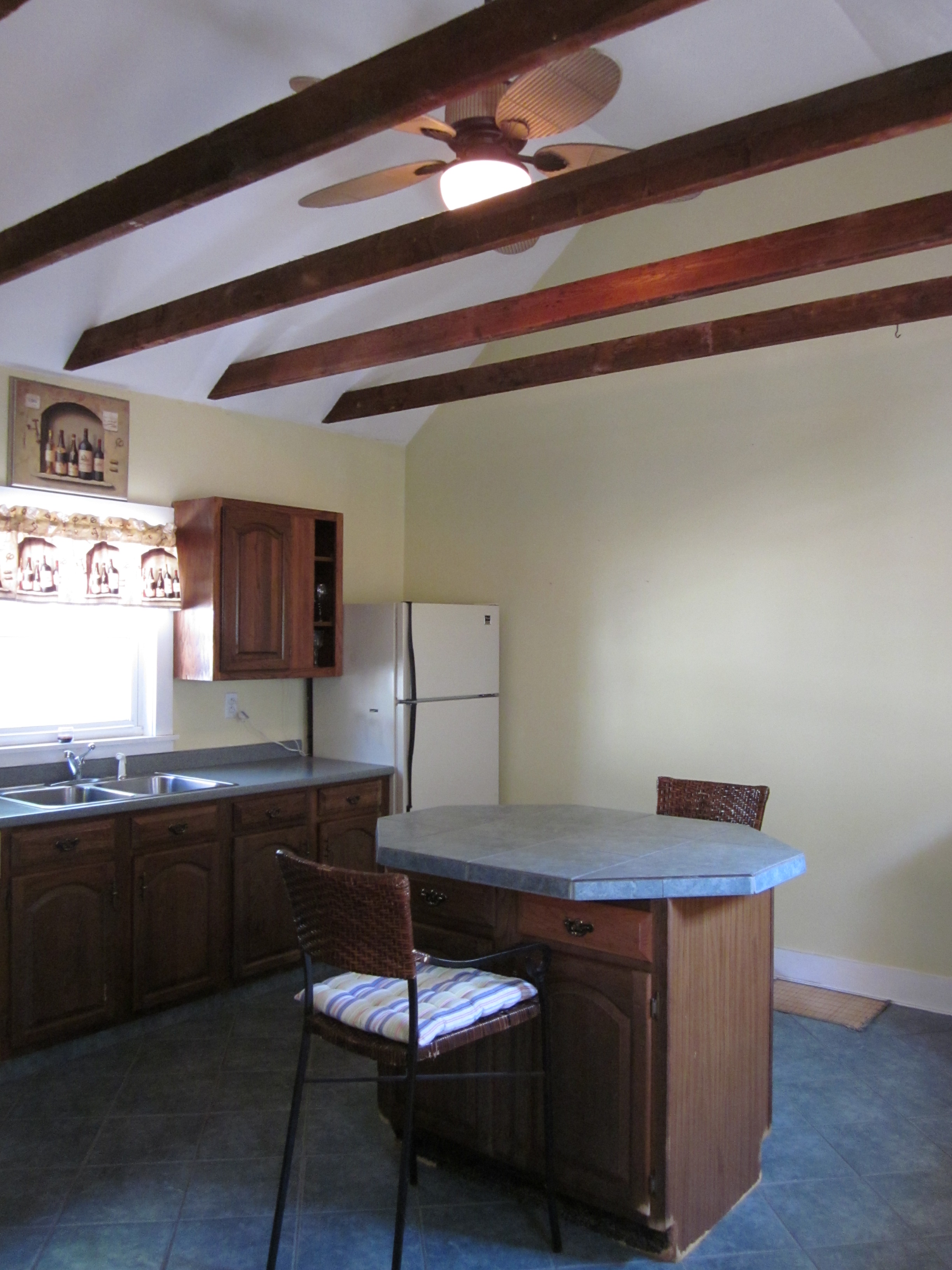 SUNDAY 12pm to 1pm – 98 Howe Street Marlborough: Adorable and affordable 2 bedroom cape near downtown Marlborough. Walking distance to main street and all the fine foods and shops. Minutes to 495 for the morning commute. Renovated kitchen, newer bath, new plumbing and new furnace. Hoping to get a puppy? This comes with a fenced-in yard and off street parking. Great house at a great price! SEE IT HERE
This 2 bed, 1 bath renovated cape in Marlborough is close to downtown with offstreet parking and a fenced in yard. Nice high ceilings, hardwood floors and so much charm! Short sale and coming on a GREAT PRICE!

Whoops! One went under contract today so slight change to the schedule for my listings in the National Open House Weekend. Not buying right now? Forward the link to someone who is!

 The spring market is upon us! It seems a tad early this year but with all the news articles about rising interest rates many buyers are making their choices now instead of waiting. As a seller or soon-to-be-seller, don’t wait! Get your home ready and on the market now to take full advantage of this early market.
This is the first in a small series of articles to help you get your home “sale ready”. The kitchen is often the first room that a buyer will go to during a viewing and is vitally important to the overall impression of your home.
You can repair kitchen counter mishaps with only a little time and money. Big boo-boos, however, will need professional help.
Even granite counters suffer kitchen wear and tear. But you can make them shine with a little time and know-how. After you fix them, don’t forget to reseal them.
Cracks, chips, scratches: Fill nicks in granite by building up layers of epoxy resin colored to match the stone. Clean the area first with acetone, which breaks down grease. Be sure to open a window for ventilation.
Stains: The type of stain–wine or ink, oil or bleach–determines the type of poultice you’ll need to suck it out. A paste of flour and hydrogen peroxide pulls out grease, oil, bleach, and ink stains; a mix of flour and bleach cleans wine stains. If you want to go commercial, check out Alpha, Aqua Mix, and StoneTech stone cleaners. Cost: $6 to $20.
Solid surface countertops, such as Corian, are man-made from resin, acrylic, and other materials. They’re tough but not impervious to scratches and stains. To repair minor scratches, rub a white polishing compound on the area with a wool pad, then apply a countertop wax.
For deeper scratches or cuts, call a professional. Figure labor costs at about $15 to $35 an hour. If you need to replace portions of the counter, figure at least $35 to $65 per square foot.
Fixing gouges or covering burns in laminate is tough for mortals, though repairing minor problems is doable.
Bigger problems will require replacing the damaged stretch. Laminate comes in a billion colors, but finding an exact match for an old counter could be difficult.
To get the look you want, replace the counter. Labor will cost $15 to $35 per hour; countertops range from $3/linear ft. for Plain Jane straight-edged laminates to $100/linear ft. for laminates with a beveled edge that look like granite.
If you’ve planned ahead and stockpiled old tiles, then grab a few and replace cracked or scratched areas. If you don’t have extra tile, then attempt the following first aid:
Stainless steel countertops become scratched, stained, and dull over time. While you’ll never completely remove scratches, you can buff them into a warm patina by massaging with vegetable oil.
Remove stains with a paste of baking soda and dish soap. A sprinkle of Barkeeper’s Friend will remove stains without scratching.
If you are getting ready to sell – call or email me. I would be happy to provide you with a free market analysis of your home. To get your home sold, you need a great marketing plan and accurate pricing. I can give you both!

 Real Estate and *stuff *