Real Estate and *stuff *
A real person helping real people with real estate
You can scroll the shelf using ← and → keys
You can scroll the shelf using ← and → keys
 With a few conscious choices, your merry Christmas can also be an eco-friendly Christmas. ‘Tis the season to consume and decorate, which can leave your bank statement and the planet a little beat up. Celebrate an eco-friendly Christmas and nip your seasonal costs in the bud:
1. Light up with LEDs. LED lights use at least 75% less energy than conventional holiday decorations, according to Energy Star. That saves the average family about $50 on energy bills during the holiday, says Avital Binshtock of the Sierra Club in San Francisco. Or douse the lights and use soy-based or beeswax candles; their emissions are cleaner than those from paraffin candles.
2. Make your own decorations. Save money and keep your kids busy by hand-crafting eco-friendly decor—strings of popcorn or pine cones—instead of buying mass-produced holiday flare.
3. Wrap with stuff you already have. Get creative with reusable shopping bags, magazines, and newspapers instead of using wrapping paper. Even gift bags that recipients can pass on make for a more eco-friendly Christmas, says Brian Clark Howard of The Daily Green.
4. Buy a real tree. Real Christmas trees, wreaths, and garlands are renewable and recyclable, Binshtock says. Real trees mean an annual cost, but that may be a wash if you tend to buy a faux tree several times a decade.
5. Say “no” to glossy paper decorations and wrapping. Shininess and color come from chemicals not easily recycled. Alternative: Decorations or wrapping papers that use soy inks or natural dyes.
6. Package it in cardboard. Plain, corrugated cardboard is good for packaging because it’s easy to recycle. If plastic factors into your holiday plans, look for No. 1 and No. 2 plastics, the easiest to recycle, says Ben Champion, director of sustainability for Kansas State University.
7. Create precious moments that don’t leave a trail of debris.
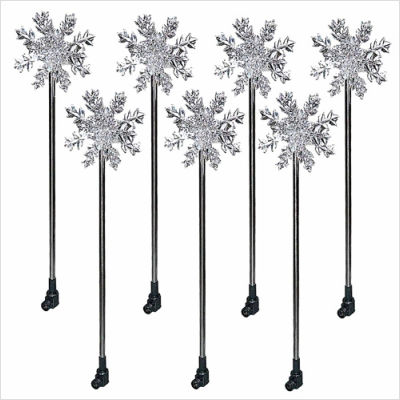 Solar Christmas lights don’t cost anything to operate, but the high purchase price might not add up to savings.
In the last few years, energy-efficient LED Christmas lights have largely replaced more wattage-thirsty incandescent strings, resulting in significant savings — LED lights use 70% less energy than their incandescent predecessors, and they last up to 10 times longer as well.
Now there’s a new kid in the string-light neighborhood: LED solar Christmas lights are appearing at retailers around the country, promising grid-free festive lighting for holiday-happy consumers.
Powering up solar Christmas lights
A string of solar Christmas lights uses a small solar panel for power; there are no extension cords that must be plugged into outlets. The panel — about the size of a hockey puck — powers rechargeable batteries that illuminate a 25- to 100-bulb string of LED lights.
Panels come with small stakes so you can put them in the ground, where they can take advantage of the sun. A fully-charged string of lights should glow for 6 to 8 hours after the sun goes down.
Solar lights vs. LED plug-in costs
Most consumers expect new technologies to cost more, but if saving energy and money is your main reason for considering solar-powered LED holiday lights, solar lights may not offer enough cost-saving to offset the higher initial purchase price.
Compare purchase prices:
Compare costs to operate:
Do the math, and you’ll see that it’ll take about 45 years for the energy savings from solar-power to equal the difference in purchase price between a plug-in string and a solar-powered string.
Advantages of solar lights
Disadvantages
 Real Estate and *stuff *