Real Estate and *stuff *
A real person helping real people with real estate
You can scroll the shelf using ← and → keys
You can scroll the shelf using ← and → keys
Outdoor solar lights are bright ideas for exterior illumination. Find out how these energy-saving lights work and the many types that can make your nights shine.
Outdoor solar lights were some of the first alternative-energy products to gain a mass-market foothold. Today, sunlight-powered fixtures are flooding the landscape and garden lighting market.
How solar lights work
Solar lights have three main components:
The upside of outdoor solar lights
The downside
Outdoor solar lights don’t really have a lot of downsides. However, if you live in a cloudy climate, or if you’ve just experienced a long haul of rainy and overcast weather, the brightness and longevity of the lighting may be affected.
Also, solar lights cost more at the outset because they’re complex and have expensive components.
Types of outdoor solar lighting
 String lights come in various lengths, such as 25 and 50 feet, and usually have 2-6 bulbs per foot, depending on the manufacturer. There are many styles, colors, and sizes of bulbs to choose. They’ve become popular as Christmas lights, but you can use them to light up your outdoor living spaces all year round.
You should know: Solar string lights don’t need regular household electrical current, but they’re attached by wire to a small solar panel — make sure the panel has access to as much sunlight as possible.
Cost:$20-$40 for a 25-foot strand.
 Border and driveway lights illuminate walkways and the edges of driveways for safety and convenience.
 Glowing globes are spherical sun-powered lamps that make chic architectural additions to your landscape lighting scheme. Stake them in your yard, float them in your pool or make them border beacons — no matter, you’ll enjoy the glowing-orb goodness.
You should know: Color-changing globe lights have three modes: off, “color mode” (which cycles through the spectrum), and “white mode” for simply glowing light.
Cost:Glowing globes, $29-$49; half-globe path lights, $7.99 each
Safety and security lights are ready to shine when the sun goes down.
You should know: A spate of sunless days could leave your motion-detecting security light off-line — a chance you take any time you go solar.
Cost: Security lights, $79.99 to $120; house numbers, $15 and up, depending on design.
You should know: Some solar table lamps do include an electrical plug-in option as well as a solar panel.
Cost: Solar table lamps are $20 and up, depending on size and materials; $600-$1,000 for 9-foot high multi-fixture lamp post.
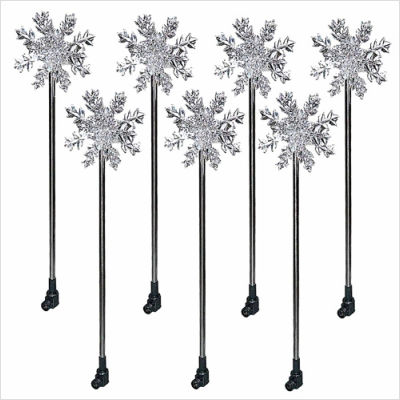 Solar Christmas lights don’t cost anything to operate, but the high purchase price might not add up to savings.
In the last few years, energy-efficient LED Christmas lights have largely replaced more wattage-thirsty incandescent strings, resulting in significant savings — LED lights use 70% less energy than their incandescent predecessors, and they last up to 10 times longer as well.
Now there’s a new kid in the string-light neighborhood: LED solar Christmas lights are appearing at retailers around the country, promising grid-free festive lighting for holiday-happy consumers.
Powering up solar Christmas lights
A string of solar Christmas lights uses a small solar panel for power; there are no extension cords that must be plugged into outlets. The panel — about the size of a hockey puck — powers rechargeable batteries that illuminate a 25- to 100-bulb string of LED lights.
Panels come with small stakes so you can put them in the ground, where they can take advantage of the sun. A fully-charged string of lights should glow for 6 to 8 hours after the sun goes down.
Solar lights vs. LED plug-in costs
Most consumers expect new technologies to cost more, but if saving energy and money is your main reason for considering solar-powered LED holiday lights, solar lights may not offer enough cost-saving to offset the higher initial purchase price.
Compare purchase prices:
Compare costs to operate:
Do the math, and you’ll see that it’ll take about 45 years for the energy savings from solar-power to equal the difference in purchase price between a plug-in string and a solar-powered string.
Advantages of solar lights
Disadvantages
 Real Estate and *stuff *