Real Estate and *stuff *
A real person helping real people with real estate
You can scroll the shelf using ← and → keys
You can scroll the shelf using ← and → keys
This time, it’s going to be different. A brand new year, brimming with possibilities, and you’ve resolved to move through your house like a whirling tornado of can-do, fixing and painting and organizing. This year, nothing will stop you.
Welcome to your home improvement New Year’s Resolutions.
Based on the most-common top-ten resolutions gathered by “Time” magazine, USA.gov, and other sources, here is an inspiring list of home management goals.
Ready for 2012? Here it comes the first of the top 10 New Year’s Resolutions for your home:
1. Lose weight (cut energy use)
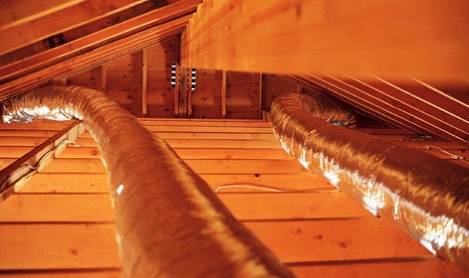 Your house is a glutton, gobbling energy like a starved elephant. Gain control by trimming energy use.
A good place to start is your HVAC ductwork. Ducts are notorious energy-wasters, leaking your heating and cooling air through holes and loose connections.
Sealing and insulating your ductwork can improve the efficiency of your heating and cooling system by as much as 20%, saving you $200 per year or more, according to Energy Star. You’ll make your home more comfortable, and a more-efficient system helps extend the life of your furnace, air conditioner, or heat pump.
Because ducts are usually hidden inside walls, ceilings, attics, and crawl spaces, sealing and insulating them may be a difficult and time-consuming DIY job. If you can’t reach all your ducts, concentrate on those that are accessible.
Use duct sealant — called mastic — or metal-backed tape to seal the seams, holes, and connections. Don’t use the confusingly named “duct tape,” which won’t provide a permanent solution. Be sure to seal connections at vents and floor registers — these are likely places for leaks to occur.
After sealing your ducts, wrap them in fiberglass insulation. Most hardware stores and home improvement centers have insulation wrap products made for ducts.
A professional heating and cooling contractor will charge $1,000 to $4,000 for the work, including materials, depending on the size of your home and accessibility to your ducts.
Insulating your ductwork may qualify for a rebate from your state or local municipality. Check the Database of State Incentives for Renewables & Efficiency.
 Washington is giving you less green for going green, as the feds reel back the 2011 energy tax credits from a lavish $1,500 to a paltry $500.
2011’s federal energy tax credits of up to $500 for various home improvements are a far cry from what they were last year. But if the limits and other fine print—which we’ll get to—doesn’t dissuade you and you really need to upgrade one or more of the following systems, take advantage of the energy tax credits.
The energy tax credits are small, but at least a credit is better than a deduction:
Other limits on energy tax credits besides $500 max
Certain systems capped below $500
No matter how much you spend on some approved items, you’ll never get the $500 credit—though you could combine some of these:
| System | Cap |
| New windows | $200 max (and no, not per window—overall) |
| Advanced main air-circulating fan | $50 max |
| Qualified natural gas, propane, or oil furnace or hot water boiler | $150 max |
| Approved electric and geothermal heat pumps; central air-conditioning systems; and natural gas, propane, or oil water heaters | $300 max |
And not all products are created equal in the feds’ eyes. Improvements have to meet IRS energy-efficiency standards to qualify for the tax credit. In the case of boilers and furnaces, they have to meet the 95 AFUE standard. EnergyStar.gov has the details.
Tax credits cover installation—sometimes
Rule of thumb: If installation is either particularly difficult or critical to safe functioning, the credit will cover labor. Otherwise, not. (Yes, you’d have to be pretty handy to install your own windows and roof, but the feds put these squarely in the “not covered” category.)
Installation covered for:
Installation not covered for:
How to claim the 2011 energy tax credit
 Real Estate and *stuff *