Real Estate and *stuff *
A real person helping real people with real estate
You can scroll the shelf using ← and → keys
You can scroll the shelf using ← and → keys
Fred and Ethel…the BNI Whales are just finishing up their week with RE/MAX. They aren’t quite ready to take on the blue R but they are close! Most of the day was not very exciting for them with price changes, property inspection reports, client files and short sale updating with the lenders. They declined pictures for the most part. I think Ethel is getting camera-shy.
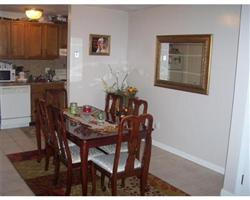
They spent some time with some new buyers looking at foreclosure condos in Marlborough and Grafton. They had a good time and it was nice to get to know some new people. Dan and Dan are just starting out with their search and we looked a few different areas so they could start to get a feel for what was available in their price range. Time well spent!
We did walk into a foreclosure on Hosmer Street. The complex is undergoing renovations but has been hit hard with short sales and foreclosures which makes it difficult for the association to maintain their budget. There is a 2 bedroom unit that I had shown when it was short sale and I’m not sure how we crossed paths but I found my business card on their living floor amiss the belongings they did not have time to take when they were foreclosed on. I wish they would have reached out – I might have been able to sell the condo short instead of them having to endure a foreclosure. It’s a huge difference – a short sale affects their credit for a much shorter time and future employers don’t ask if someone has short saled…but they do ask if they have had a foreclosure. Sad.
 The BNI Whales moved past this moment and marched on to an appointment with their new clients in Marlborough. Fred and Ethel helped list their condo on Friday and we received a full price offer on Sunday which we officially accepted this evening! They are SO EXCITED!!! We also signed their offer to purchase a new house in Southborough! YAY!!! Fingers and fins are crossed for them!
This is was the last day I will spend with the BNI Whales until the next time I win them. I hope that they enjoyed it as much as I did! I also hope that you reach out to find out more about the 7 Hills BNI Group! We do need more members and it has been a fantastic group to be a part of! If you want to be more successful in your business…it’s the place to be!
 Regular home maintenance is key to preserving the value of your house and property. Looking forward to the spring market in 2011 – this play an important role if you thinking about listing your home. In general, it’s important to maintaining your investment and your quality of life.
“It’s the little things that tend to trip up people,” says Frank Lesh, former president of the American Society of Home Inspectors and owner of Home Sweet Home Inspection Co. in Chicago. “Some cracked caulk around the windows, or maybe a furnace filter that hasn’t been changed in awhile. It may not seem like much, but behind that caulk, water could get into your sheathing, causing mold and rot. Before you know it, you’re looking at a $5,000 repair that could have been prevented by a $4 tube of caulk and a half hour of your time.”
Outright damage to your house is just one of the consequences of neglected maintenance. Without regular upkeep, overall property values are affected.
“If a house is in worn condition and shows a lack of preventative maintenance, the property could easily lose 10% of its appraised value,” says Mack Strickland, a professional appraiser and real estate agent in Chester, Va. “That could translate into a $15,000 or $20,000 adjustment.”
In addition, a house with chipped, fading paint, sagging gutters, and worn carpeting faces an uphill battle when it comes time to sell. Not only is it at a disadvantage in comparison with other similar homes that might be for sale in the neighborhood, but a shaggy appearance is bound to turn off prospective buyers and depress the selling price.
“It’s simple marketing principles,” says Strickland. “First impressions mean a lot to price support.”
To a professional appraiser, diligent maintenance doesn’t translate into higher property valuations the way that improvements, upgrades, and appreciation all increase a home’s worth. But good maintenance does affect an appraiser’s estimate of a property’s economic age—the number of years that a house is expected to survive.
Economic age is a key factor in helping appraisers determine depreciation—the rate at which a house is losing value. A well-maintained house with a long, healthy economic age depreciates at a much slower rate than a poorly maintained house, helping to preserve value.
Although professional appraisers don’t assign a positive value to home maintenance, there are indications that maintenance is not just about preventing little problems from becoming larger. A study by researchers at the University of Connecticut and Syracuse University suggests that maintenance actually increases the value of a house by about 1% each year, meaning that getting off the couch and heading outside with a caulking gun is more than simply a chore—it actually makes money.
“It’s like going to the gym,” says Dr. John P. Harding, Professor of Finance & Real Estate at UConn’s School of Business and an author of the study. “You have to put in the effort to see the results. In that respect, people and houses are somewhat similar—the older (they are), the more work is needed.”
Harding notes that the 1% gain in valuation usually is offset by the ongoing cost of maintenance. “Simply put,” he says, “maintenance costs money, so it’s probably best to say that the net effect of regular maintenance is to slow the rate of depreciation.”
How much money is required for annual maintenance varies. Some years, routine tasks, such as cleaning gutters and changing furnace filters, are all that’s needed, and your total expenditures may be a few hundred dollars. Other years may include major replacements, such as a new roof, at a cost of $10,000 or more.
Over time, annual maintenance costs average more than $3,300, according to data from the U.S. Census. Various lending institutions, such as Directors Credit Union and LendingTree.com, agree, placing maintenance costs at 1% to 3% of initial house price. That means owners of a $200,000 house should plan to budget $2,000 to $6,000 per year for ongoing upkeep and replacements.
Knowing these average costs can help homeowners be prepared, says Melanie McLane, a professional appraiser and real estate agent in Williamsport, Pa. “It’s called reserve for replacements,” says McLane. “Commercial real estate investors use it to make sure they have enough cash on hand for replacing systems and materials.”
McLane suggests a similar strategy for homeowners, setting aside a cash reserve that’s used strictly for home repair and maintenance. That way, routine upkeep is a snap and any significant replacements won’t blindside the family budget. McLane’s other strategies include:
Play offense, not defense. Proactive maintenance is key to preventing small problems from becoming big issues. Take the initiative with regular inspections. Create and faithfully follow a maintenance schedule. If you’re unsure of what needs to be done, a $200 to $300 visit from a professional inspector can be invaluable in pointing out quick fixes and potential problems.
Plan a room-per-year redo. “Pick a different room every year and go through it, fixing and improving as you go,” says McLane. “That helps keep maintenance fun and interesting.”
Keep track. “Having a notebook of all your maintenance and upgrades, along with receipts, is a powerful tool when it comes to sell your home,” advises McLane. “It gets rid of any doubts for the buyer, and it says you are a meticulous, caring homeowner.” A maintenance record also proves repairs and replacements for systems, such as wiring and plumbing, which might not be readily apparent.
You can also track your projects at houselogic.com. Houselogic.com is a free site sponsored by the National Association of Realtors and is easy to use and fun. Directly corresponds with your Facebook and provides step-by-step instructions for your home projects including shopping lists and diagrams.
If you want a check-in on what your home is currently worth today, just let me know. I would be happy to provide you with a free market analysis and help you get started on increasing the value of your home.
In the home — as in life — it’s often the little things that matter. And it’s amazing how many small structural things can go wrong around your house.
Whether it’s the front-door lock that won’t let you into your own home or the cracked window that won’t keep the cold out, small household problems can have a big effect. For most of these, there’s no need to call for repairs; the solution lies in tapping your ingenuity and using a few common household materials in innovative ways.
Even when it seems that the roof is falling in or the floor is opening up beneath you, there are often simple ways to solve larger problems on your own. Here are some quick fixes for your floor troubles.
That wood table was heavier than you thought, and dragging it across the room has left a nice long abrasion in your pretty wood floor.
The quick fix
The fix depends on the type of floor, says Rusty Swindoll, assistant technical director with the National Wood Flooring Association.
“If the floor is finished with wax, fine surface scratches can be concealed with a liberal amount of wood-floor paste wax, rubbed in with the grain using a fine-grain steel-wool pad,” he says. “Remove the excess wax and buff the surface lightly with a cloth.”
But, he says, “If the floor is finished with a surface finish (either water- or oil-based), use the meat from a pecan or walnut that has been crushed, rubbing it over the surface scratches to camouflage the scratch.”

The last thing you need in a busy kitchen is another tripping hazard, which is exactly what that blister in your resilient flooring has become.
The quick fix
Puncture the blister with a sharp object, such as a small nail, and use a glue syringe to shoot flooring adhesive under the surface of the blister. Cover the blister with several heavy bricks or other weights and leave for 24 hours or until the epoxy is fully cured.
You just learned the hard way that dragging a heavy metal garbage pail can ruin a vinyl kitchen tile.
The quick fix
Ideally, you thought ahead when the floor was installed and put aside a few extra tiles. If not, you can scavenge a replacement tile from underneath the refrigerator or stove. This will be harder if the tiles are light-colored because the floor will be more faded than the replacement tile.
Remove the old tile by heating it with an iron set on low until you can pry it up with a putty knife. Remove the warm adhesive, apply new adhesive, and lay down the replacement tile. Weight it down with bricks or other heavy objects until the adhesive cures.

Every home seems to have that one area of wood floor that squeaks, and yours is driving you to distraction.
The quick fix
Squeaks almost always occur in the subfloor, not the wood floor itself, says Ed Korczak, executive director of the National Wood Flooring Association.
“The best solution is to secure the subfloor from below by driving screws into the subfloor of the area that is squeaking,” he says. “Be sure the screws are short enough so that they don’t break the surface of the face of the wood floor.”
Your resilient flooring isn’t resilient to small scratches and scuffs.
The quick fix
Rub the scratch with the edge of a quarter. If the blemish is still apparent, rub a tiny amount of paste wax on the surface and buff it with a clean soft cloth.

So now you know: Dropping a cast-iron pan really will crack a ceramic tile.
The quick fix
Remove the grout around the tile carefully using a grout saw — this is not a mechanical saw but a simple abrasive tool that you run along grout lines. Then chip out the tile with a small cold chisel.
Once you’ve removed all the tile pieces, try to remove as much of the adhesive as possible. Lay down a bed of new adhesive and press the new tile in place. Grout around the tile and let it sit for 24 hours before walking on it.

Uncle Bill finally went home, taking his stinking stogie with him, but he left behind a nice burn mark in your carpet.
The quick fix
First, discreetly clip away damaged fibers with a sharp pair of scissors; then, lightly scrub with a scouring pad to remove the darkened tips of the carpet fibers. Vacuum to remove the singed particles.
For deeper or more serious burns, you’ll need to patch the carpet. Unless you have a remnant from when the carpet was installed, this will mean finding an area of carpet that is rarely seen, such as in a closet or underneath a piece of furniture, and removing a patch.
Use a utility knife and jar lid to cut a neat circle around the burn mark, and cut an identical circle out of the donor carpet section. Use double-edged tape or carpet adhesive to set the patch firmly in place.
I found most of this content in an article in Popular Mechanics online and then adapted it for blog form. I really enjoyed the article and wanted to share it because floors take such a beating in our homes and if they don’t look good then the whole rooms suffers.
 Real Estate and *stuff *