Real Estate and *stuff *
A real person helping real people with real estate
You can scroll the shelf using ← and → keys
You can scroll the shelf using ← and → keys
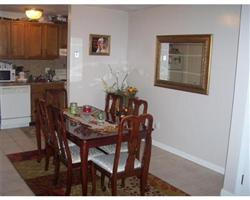
 Nestled into this quiet Indian Hill neighborhood is a charming antique colonial style cape with so much original charm! Quiet large backyard opens to a full deck off the dining room with slider doors. Lovely butcher block kitchen with stainless steel appliances is both quaint and functional with an open airy floor plan to highlight the high ceilings and original built ins. Expansive sun filled front living room with fireplace. Hardwoods throughout both living levels! 3 spacious bedrooms with closets and a full bath on the second level so everyone has plenty of space. All of your mechanicals are updated with new electric, plumbing, gas furnace and insulation (Mass Energy Audit done). Easy highway access but the feel of the country! Take a look at the pictures and consider the lower price (see MLS 71914973 ) w/out full bath on the main level. Showings on Wednesday 10/7 5pm to 7pm and Sunday 10/11 12pm to 2pm. All offers due Monday 10/12 by 8pm. Don’t miss out on this one!
|
|||||||
 Some refer to “zombie titles” as a little-known horror in the fallout of the foreclosure crisis. Thousands of home owners are discovering they may be legally liable for a home they thought they no longer owned.
In some of these cases, home owners receive a notice of a foreclosure sale and move out to give the home to the bank. But then the bank never completes the foreclosure.
“The banks are just deciding not to foreclose, even though the home owners never caught up with their payments,” Daren Blomquist, vice president at RealtyTrac, told Reuters.
According to housing experts, the problem of “zombie titles” is worsening, although no national databases track such titles.
“There are thousands of foreclosures in limbo, just hanging out there, just sitting, with nothing being done,” says Raymond Pianka, a Cleveland Housing Court. He says the problem is due to home owners who leave the home before an imminent foreclosure sale. Later, the home owners discover they’re legally responsible for the home. By that time, the house may have greatly deteriorated. And some home owners don’t even discover it until years later, such as when a municipality finally fines them for failing to keep the property.
Source: “‘Zombie Titles’ Haunt Victims of Foreclosure,” Reuters (January 2013)
The moral of this story is despite how difficult it is emotionally to face a foreclosure don’t just walk away! In the history of problem solving, ignoring a problem has never been a successful solution. There are options for dealing with the foreclosure that include short sale (many banks are offering incentives to do this and there are new short sale programs in place from Fannie Mae that include reduced paperwork, faster turn times and relocation funds for the seller) or deed-in-lieu. Foreclosure is not a fun time but make sure it stays where it belongs – in the past – so that you can move forward to brighter days.
Fred and Ethel…the BNI Whales are just finishing up their week with RE/MAX. They aren’t quite ready to take on the blue R but they are close! Most of the day was not very exciting for them with price changes, property inspection reports, client files and short sale updating with the lenders. They declined pictures for the most part. I think Ethel is getting camera-shy.
They spent some time with some new buyers looking at foreclosure condos in Marlborough and Grafton. They had a good time and it was nice to get to know some new people. Dan and Dan are just starting out with their search and we looked a few different areas so they could start to get a feel for what was available in their price range. Time well spent!
We did walk into a foreclosure on Hosmer Street. The complex is undergoing renovations but has been hit hard with short sales and foreclosures which makes it difficult for the association to maintain their budget. There is a 2 bedroom unit that I had shown when it was short sale and I’m not sure how we crossed paths but I found my business card on their living floor amiss the belongings they did not have time to take when they were foreclosed on. I wish they would have reached out – I might have been able to sell the condo short instead of them having to endure a foreclosure. It’s a huge difference – a short sale affects their credit for a much shorter time and future employers don’t ask if someone has short saled…but they do ask if they have had a foreclosure. Sad.
 The BNI Whales moved past this moment and marched on to an appointment with their new clients in Marlborough. Fred and Ethel helped list their condo on Friday and we received a full price offer on Sunday which we officially accepted this evening! They are SO EXCITED!!! We also signed their offer to purchase a new house in Southborough! YAY!!! Fingers and fins are crossed for them!
This is was the last day I will spend with the BNI Whales until the next time I win them. I hope that they enjoyed it as much as I did! I also hope that you reach out to find out more about the 7 Hills BNI Group! We do need more members and it has been a fantastic group to be a part of! If you want to be more successful in your business…it’s the place to be!
 On average, a garage addition recoups about 60% of the investment, with the highest rates of return on a basic rather than an upscale job. It’s been my experience that in our area because of the snowy winters – houses with garages have a much higher appeal to buyers. I have several that won’t even look at a house without a garage.
A garage addition makes especially good economic sense in the south-central portion of the country, where home owners can expect to get back almost 66% of the cost of a midrange project, while spending about 13% less than the national average. Returns tend to be lowest in the country’s midsection. In Cleveland, for example, the same garage recoups less than half its cost.
As a general rule, you’re likely to recover a higher percentage of your investment if you build a relatively basic garage–one with open walls, an unfinished concrete floor, and shelves for storage–rather than one with interior drywall and trim, an epoxy floor coating, and designer storage solutions. Such an upscale project runs a national average of more than $90,000 and returns around $48,300, or about 53.6%, of its cost.
But there are financial considerations to adding a garage that go beyond resale value. Protected from the elements, your vehicles will stay in top shape, which could make them more valuable when you sell them. If you include workshop space, you’ll be able to do many home repairs yourself, saving on the cost of pros. And if you outfit the garage so that it’s easy to access stored items, you can save leftover materials, reducing the cost of future projects.
National average cost, 26 x 26 ft. midrange garage addition:
Job cost: $60,600
Resale value: $35,900
Cost recoup: 59.2%
National average cost, 26 x 26 ft. upscale garage addition:
Job cost: $90,100
Resale value: $48,300
Cost recoup: 53.6%
 I am not big on New Year’s Resolutions but I am big on having a plan. This is a good time of year to make a plan because the calendar is fresh and clean (and half priced if you still like to use wall calendars). Your home is probably your biggest investment. To manage it, create a financial plan that takes into account repairs, upgrades, mortgages, insurance, and taxes.
Use our home financial plan budget worksheet, and start by writing a list of expenses, such as:
With this newfound grip on your home’s expenses, you can create a home financial plan that’ll help you there for years with maximum enjoyment and minimum anxiety.
Yup, you already shell out a lot for your mortgage, but can you pay more? Even a little extra each month can add up to an earlier payoff. Let’s say you have $200,000 in outstanding principal and a 20-year fixed-rate mortgage at 5%. Your monthly payment is $1,319.91. But if you can manage to pay another $100 a month, you’ll save $14,887 in interest.
Run the numbers yourself for your home financial plan.
Advantages of an early payoff, says Alan D. Kahn, a financial planner in Syosset, N.Y.:
Of course, if you’re still saving for retirement, put the 100 bucks elsewhere:
Your vegetable garden is pointless without a fence to keep out rabbits; likewise, your home financial plan will come to nothing without an insurance “fence”:
Homeowner’s insurance. Basic coverage for your home and everything in it. The average cost is $636 per year but this varies widely by state.
Liability coverage. Protects you from a lawsuit if someone gets hurt on your property, for example. Your best bet: An umbrella policy. For about $300 a year you can by a typical $1 million policy.
Various disaster insurance policies. Optional policies cover flood, earthquake, and hurricane damage. As part of your home financial plan, you have to research to see what disaster coverage, if any, you need in your area, and what your standard policy already covers. For $540 a year you can buy flood insurance, for example.
For your basic policy, get homeowners insurance with full replacement coverage in case your house burns to the ground.
That sounds simple, but heads up on calculation. Remember that you own a house as well as the land on which it sits. So even though you bought your home for $300,000, it may cost only $100,000 to rebuild it. Your policy limits should reflect this. This difference will vary widely by region.
Another heads up: Don’t make the common and potentially disastrous mistake of thinking that because your home has fallen in value you need less insurance. If you bought a $1.2 million townhouse in Florida during the boom, it’s true it now may only sell for $600,000. But the replacement cost of the townhouse hasn’t changed much, so you can’t improve your home financial plan by cutting insurance costs that way.
Other ways to cut your insurance budget:
You own a home, so you’ll be spending money on everything from a new faucet to—surprise!—a new roof. Freddie Mac and other authorities say as part of your home financial plan, you should be prepared to spend 1% to 3% of the market value of the home annually on maintenance. To be extra-prudent, open a savings account and make regular payments until your account reaches 1% to 3% of your home’s current value.
To help you budget:
Start with the inspection report you received when you bought the house. Did the inspector indicate that you would need a new roof in five years? A new furnace in 10?
Keep a log of your major appliances’ age so you can estimate when they’ll need replacing. Some estimated life spans:
Then get estimates on what replacements will cost and start saving.
Consider ongoing non-emergency maintenance, too. Do you live in New England? Price a snow blower and get bids from plow services.
Resist the siren call of the home equity loan to take care of everything. That just defeats your efforts to pay off the mortgage early.
Separate out what you want from what you need. A $50,000 kitchen remodel is nice, but you’ll recoup only 76% of the project cost your home’s resale, according to Remodeling magazine.
If you can afford to redo, go for it. Just don’t confuse your necessary repairs (new oil furnace—about $4,000) with your discretionary upgrades (Viking range—$6,000 and up).
Even if your lender handles your property taxes from an escrow account, you need to budget for them in your home financial plan. They creep up almost every year, it seems. Take responsibility for tracking the changes in your area: Look over past tax bills to get a sense of how quickly they’ve risen in the past.
Or if your lender handles escrow and you haven’t saved your bills, ask for an accounting. The median annual property tax payment is $2,198, but that hides the enormous range in medians from state to state:
You can generally deduct property taxes on your federal return. A tax pro can tell you how much of a tax break you’ll get, to help you fine tune your home financial plan.
You may be able to reduce your tax burden by getting a reassessment. Do your homework first: Are comparable houses taxed less than yours? Ask the local assessor what formula is used to set tax rates. You can challenge the assessed value and get yourself a rollback.
A plan is exactly that – a great way to pace yourself and keep working towards your financial goals. The unexpected will always happen and with a plan you are prepared for that. Now, who is going to spend their Friday Night writing out a financial plan for their home? 🙂
 Renting and thinking about buying? Start with a solid budget plan that includes strong credit and savings.
Living from one paycheck to the next may be the norm for many people. But homebuyers need a better strategy.
“If buying a home is your goal, then it needs to be your priority,” says Tim Kirchner, vice president of MetLife Bank in Irving, Texas. “Most people need to sacrifice a little and stick to a budget in order to save for a home.”
A good budget plan begins one or two years before a buyer makes an offer. Here are four tips for renters who plan to become homeowners.
1. Build strong credit
When it comes to securing a loan at the best mortgage rate, credit is king.
“The most important focus for all potential buyers should be improving their credit score,” says Jean Badciong, chief operating officer of Inlanta Mortgage in Waukesha, Wis. “A low score can prevent someone from buying a home or at least from qualifying for an affordable mortgage rate.”Greg Holmes is national director of sales and marketing for Credit Plus, a company in Salisbury, Md., that provides credit reports to mortgage lenders. He says potential buyers should request their free credit report at AnnualCreditReport.com.”Some people who think they have good credit don’t, while people who think their credit is bad may be surprised that it is actually OK,” Holmes says. “Everyone should check their report for accuracy and fix any mistakes. It can take months to correct errors.”
To improve their credit scores, buyers should pay off past-due bills, pay every bill on time and reduce their balances on every account to less than 30% of the credit limit, Holmes says. Also, it is best to have three to five credit accounts, such as a car loan, student loan or credit card, for one year or longer.
Holmes says he does not recommend switching credit cards frequently to get the best rate, though.
“Lenders do not want to see a lot of credit inquiries or too many new accounts because this could indicate someone who is about to take on a lot of extra debt,” Holmes says.
Kirchner says people often do not realize the consequences of paying bills late or missing a payment, which can affect your credit report for a long time.
Some young people assume they can improve their credit scores as an authorized user on a parent’s card. But Badciong says this will have no impact on their score.
2. Save cash
Christine Howard, a senior loan officer with Inlanta Mortgage, says future homebuyers should make “virtual” mortgage payments today to build up savings and learn to budget for actual mortgage payments down the road.
“Renters can estimate a mortgage payment and set aside the difference between that payment and their rent each month,” Howard says. “If they are paying $800 in rent and estimate their mortgage will be $1,100, they can put $300 per month in a special savings account.
“Not only does this help them save for a down payment, but it demonstrates to a lender their ability to afford that higher housing payment.”
Kirchner says he recommends that future buyers create a simple budget and set a savings goal.
“If they find they can save $300 a month, then they will have $3,600 at the end of the year,” Kirchner says. “Lenders want to see that pattern of savings, and buyers will need at least 3.5% for a down payment on a (Federal Housing Administration) loan or at least 10% for a conventional loan.”
Kirchner recommends setting up an automatic transfer of funds into a savings account through your employer or your bank.
3. Reduce debt
While buyers increase their savings, they should also reduce their debt.
“Paying off debt tops saving in terms of priorities because of the interest payments on the debt, which exceeds the amount of interest they can earn on their savings,” Kirchner says. “Lenders want to see that you are managing your debt and keeping your credit-card balances low.”
Howard says debt-to-income ratios are an important element in a loan approval. This ratio compares minimum monthly debt payments to gross monthly income.
“If your debt-to-income ratio is over 50%, you need to pay off your debt before even thinking of buying a home,” Howard says. “Some companies will relax their standards for borrowers with a strong credit score or substantial cash reserves, but in general, FHA will only go up to 43% and conventional lenders will only go to 41% for the overall debt-to-income ratio.”
4. Get educated
Although it might be premature to visit a lender two years before a home purchase, it can be valuable for consumers to know if they qualify for a mortgage, Kirchner says. He also recommends visiting open houses.”A lot of people have no idea what $100,000 or $200,000 will buy,” he says, “so the more they look at places and neighborhoods, the better understanding they will have of the value in a home.”
Talk with your realtor – they can point in the right direction and will stay with you through the whole process!
 Foreclosure may seem like someone else’s problem, but when it happens in your neighborhood, it’s going to cost you money, too.
Each foreclosure within 660 feet (1/8th mile) of your house can drop your home’s value by a factor of almost 0.75%, according to the Center for Responsible Lending, a consumer watchdog group.
The closer a foreclosure is to your house, the bigger the impact. A university of Connecticut study suggests one foreclosure within 300 feet of your home will lower your property value by 1%.
If you live in a neighborhood with few vacant homes and a foreclosure occurs within 250 feet, a University of California, Berkeley study suggests you could lose 2.2% of your home value.
Some people think the homeowners facing foreclosure got themselves into trouble because they bought more house than they could afford with toxic mortgages for which they never should have been approved. At least one study of the 2007 and 2008 foreclosure crisis suggests that was indeed the case.
Even if you don’t feel compassion for those facing foreclosure, you might feel sorry for yourself. Homebuyers and mortgage lenders use foreclosures as comparable properties to value your home when you sell or refinance. And the discount at which foreclosures sell is a hefty 27% on average.
Although most appraisers adjust the value of your home upward compared with a foreclosure, a homebuyer may consider the foreclosure equally valuable to your home and base his offer on that instead of your property’s real worth. If that happens, your real estate agent can argue that non-distress sale comparables and better condition make your property worth more.
Drops in property values brought on by foreclosures don’t just hurt your property value; they also cut away at the whole property tax base, the source of revenue for local government. Elected officials then have to either charge you higher taxes or cut services to make up for the shortfall.
To limit foreclosure damage in your community, ask local officials to pass laws forcing lenders to maintain the properties they now own and to pay the taxes and homeowners association dues on them.
If the town isn’t forcing lenders to maintain a foreclosure in your neighborhood, organize a volunteer effort to cut and trim the shrubs at vacant houses on a round-robin basis, and report vandals or squatters to the police. A well-kept foreclosed home will attract more buyers than one with a weed-filled yard. Take trespassing laws into account as you organize your effort.
If you’re selling or refinancing and the appraiser uses foreclosures as comparable sales to determine the value of your property, ask your real estate agent to make sure the appraiser accounts for the distressed nature of those sales and the condition of the properties as they compare to yours. Ask your agent to seek out other comparable sales the appraiser might have missed, which show your home in a much better light.
Use this handy guide to figure out how quickly you can buy a home after a major financial setback when applying for a loan through FHA, Fannie Mae, or Freddie Mac.
The chart below outlines the criteria that government entities FHA, Fannie Mae, and Freddie Mac follow for major credit-busting events, including foreclosure. Although FHA, Fannie Mae, and Freddie Mac aren’t direct lenders, they wield a lot of behind-the-scenes influence by working with banks to guarantee loans and help lenders free up capital to provide more mortgages.
One of these entities may have made your loan possible without you even knowing it. Although for the most part banks make loans to whomever they want, they’ll likely find themselves following FHA, Fannie Mae, or Freddie Mac guidelines at a minimum in order to keep working with these useful partners.
Some lenders may have more stringent policies and others, willing to take greater risks, may work outside these entities and offer more liberal lending policies.
This chart offers summaries of what can be complex rules and regulations. So:
1. Look to professionals, such as a bankruptcy lawyer and a CPA specializing in bankruptcy provisions, before making major financial decisions.
2. For HUD-approved counselors, go to http://www.hud.gov/offices/hsg/sfh/hcc/fc/index.cfm. You can also call 1-888-995-HOPE for help from the Homeownership Preservation Foundation.
3. Understand what “extenuating circumstances” means in each case:
FHA: An event that was out of the borrower’s control that made a significant impact on the borrower’s finances and led to bankruptcy or foreclosure.
Fannie Mae: A nonrecurring event that’s beyond the borrower’s control that results in a sudden, significant, and prolonged reduction in income or a catastrophic increase in financial obligations.
Freddie Mac: A nonrecurring or isolated circumstance, or set of circumstances, that was beyond the borrower’s control and that significantly reduced income and/or increased expenses and rendered the borrower unable to repay obligations as agreed, resulting in significant adverse or derogatory credit information.
| FHA | Fannie Mae | Freddie Mac | |
| Foreclosure | •3-year wait. •Reduced wait if borrower has re-established good credit and can show extenuating circumstances. |
•7-year wait from the completed foreclosure sale date. •3-year wait if borrower can show extenuating circumstances (additional underwriting requirements apply for 4 years after 3-year waiting period). •7-year wait for a second home, investment opportunity, or cash-out refinancing. |
•5-year wait from the completed foreclosure sale date. •3-year wait if borrower can show extenuating circumstances. |
| Short Sale | •No wait if not in default. •3-year wait if in default at closing of short sale. •Reduced wait if borrower has re-established good credit and can show extenuating circumstances. |
•2-year wait if the borrower puts 20% or more down. •4-year wait if the borrower puts 10-20% down. •7-year wait if the borrower puts less than 10% down. •2-year wait time if borrower can show extenuating circumstances and puts 10% or more down. |
•4-year wait. •2-year wait if borrower can show extenuating circumstances. |
| Deed in lieu of foreclosure | •Same as FHA’s foreclosure policy. | •Same as Fannie’s short sale policy. | •Same as Freddie’s short sale policy. |
| Bankruptcy | Chapter 7 (liquidation): •2-year wait from the discharge date of the bankruptcy. •1-2 year wait if borrower can show extenuating circumstances. Chapter 13 (repayment plan): |
Chapter 7 or Chapter 11 (reorganization, usually involving corporations or partnerships): •4-year wait from the discharge or dismissal date of the bankruptcy. •2-year wait from the discharge or dismissal date may be accepted if borrower can show extenuating circumstances. Chapter 13: Multiple bankruptcies: |
Chapter 7 or Chapter 11: •Same as Fannie’s bankruptcy policy. Chapter 13: Multiple bankruptcies: |
Source: FHA Handbook, Fannie Mae Selling Guide, Freddie Mac Selling Guide
Please note that in most cases a short Sale is better than a foreclosure. If you or someone you know (a friend or family member) is currently faced with this situation, urge them to find out what their options are. RE/MAX Professional Associates has a short sale team that is ready to review their situation and help. Call (508-784-0504) or email me (amymullen@remax.net) to find out more information.
I really enjoyed this post that was on MSN Real Estate. It captures what so many home buyers and apartment hunters face every day while they are looking at their next new possible home. Sometimes they can be funny – but not when you’ve spent the time to make the appointment and view the home. Want to have some fun with it though? Go here and do some random searches to see how many of these buzzwords you can find. Check out the pictures and see if they relate to the article.
 Nothing is ever what it seems, especially real estate.
Chances are that anyone who has looked to rent an apartment or buy a home has at some point been disappointed to find that the property barely resembled what was advertised in the real-estate listing. Perhaps the third bedroom turned out to be a closet or the kitchen that was supposed to be fit for a gourmet chef barely fit a microwave and a fold-up chair.
While real-estate agents may not like to admit it, much of this stems from their deliberate attempt to put a positive spin on the property in real-estate listings, even if that means stretching the truth.
“It’s a numbers game. For those who do it, the goal is to get people to the property and hope they’ll buy it,” says Paul Campano, senior sales associate at Keller Williams Realty in Massachusetts.
As Campano acknowledges, however, he’s unsure how sound the logic behind this method is because prospective tenants will likely just see the place and walk away.
“I’d much rather underpromise and overdeliver,” he says.
As it turns out, there is another big motivation that drives agents to put out dubious listings.
“You have to keep in mind that the agents report to the homeowner or the landlord,” says Tara-Nicholle Nelson, consumer educator for Trulia.com, an online real-estate search engine, and a former real-estate agent herself. “These days, they audit all of the agent’s online marketing, and they want to make sure that the agent is doing their job to market the home in its very best light. So the agent, in turn, is also concerned that they are marketing the property well enough for their client.”
The result is a slew of real-estate listings that exaggerate the good parts of a property and either omit the flaws or couch them in buzzwords and phrases that might have multiple misleading meanings. And according to those familiar with the real-estate industry, these sorts of deceptive listings have become more common during these difficult economic times as agents and landlords have grown more desperate to attract buyers.
We spoke with several real-estate experts to find out the real meaning behind these buzzwords and phrases so that you know what to look out for and how to read between the lines of a listing.
It may seem like a harmless word, but it spells trouble when used as an adjective in a real-estate listing, says Paul Campano of Keller Williams Realty.
“Cozy is always a potentially dangerous word. It’s really not describing any physical characteristic. Instead, it’s likely a signal of a very tight space,” he says.
So, for example, if you see the word “cozy” next to bedroom, Campano says it probably means it’s time to consider a twin or full-size bed, rather than something larger.
Other buzzwords that tend to mean the same thing include “cottage” and “intimate.”
Every home and apartment needs some fixing up after it has been lived in for a while, but the question is how much.
“My general rule of thumb is that homes are generally in a little worse condition than the listing’s language would indicate,” says Tara-Nicholle Nelson of Trulia.com. “If it says it needs TLC, it’s probably more of a handyman’s special; if it says it’s a handyman’s special, it probably needs contractor work. And when agents express in a listing that a home needs a whole lot of work, then it probably needs a whole lot of work.”
Moreover, as Nelson points out, buyers and renters should never expect that a property that “needs some work” requires only a small touch-up job.
“If that’s all it needed, a lot of homeowners and agents would do that themselves to make the property more competitive on the market,” she says.
On the other hand, many listings will highlight just how much work has been done to fix up a place over the years, using buzzwords such as “modern,” “updated” and “remodeled.” It’s important to put these words into perspective.
“People take a lot of liberty with the degree of renovation they’ve done,” says Paul Campano of Keller Williams Realty. “I guess when you’re talking about homes that are 100 years old, a kitchen renovated in the 1970s is modern by comparison, but I think that word lends itself to a great degree of interpretation.”
Tara-Nicholle Nelson of Trulia.com echoes this point: “It’s very common to see these words on homes that have ’40s construction or older that were remodeled in the 1980s. But they are not really up-to-date, so you are still pretty much going to have to redo the home.”
Many people dream of living in a penthouse of their own, but just because a listing says penthouse doesn’t mean it’s exactly that, Paul Campano says.
“There are rooms where, yes, it’s the top unit, so it’s technically a penthouse, but the room itself has no view,” he says. “So it’s a very grandiose way to describe what is just the top floor.”
In this sense, it’s not untrue, but rather misleading.
Similarly, apartment hunters should be wary when they see the phrase “tree-top view” in a listing.
“If the apartment is on a high floor or has a great view, the listing will mention it,” says Diane Saatchi, senior vice president with Saunders & Associates Realty in Bridgehampton, N.Y. “But a tree-top view usually means you have a view from the second or third floor, which could be nicer than looking at a shaft, but what you want is to be above the trees.”
Anyone who has ever looked for real estate in New York City is likely familiar with the phrase “steps from…” as in, this apartment is “steps from Columbia University” when it is really 70 blocks away in Washington Heights. The same is true in other cities and locations.
“Neighborhood proximity is a big red flag,” says Paul Campano, who markets real estate in Boston. “I’ve seen places listed as being in Davis Square because it’s become a very trendy place. And yeah, they’re close, if you consider a mile and a half close.”
When in doubt, the best thing to do is get the address of the property in question and plug it into an online mapping service to find out exactly where it is and what is nearby.
 ‘Charming’
It’s a nice word, but according to Diane Saatchi, senior vice president with Saunders & Associates Realty, it usually means only one thing: The house is old. Very old.
Who doesn’t want a bit of peacefulness in their home? Unfortunately, even tranquility comes with a downside.
“Tranquil may mean that it’s just not near anything that you care about, that it’s kind of far away from any amenities or public transportation and stuff like that,” Tara-Nicholle Nelson says. By the same token, when a listing says the property is in a “convenient” location, that may mean it’s too close to those things and therefore too noisy.
Nelson says, however, that this is one example where buyers and renters have to exercise some common sense.
“I’ve worked with people who want a quiet place that takes them only 10 minutes to get to work,” she says. “But you can’t have it both ways. There are definitely trade-offs.”
Real-estate listings are often full of jargon and abbreviations, but one that should cause house hunters to think twice is FSBO, meaning for sale by owner.
“People tend to think there’s an opportunity to save money because there’s no agent involved, but actually FSBO should be a little bit of a red flag,” Trulia.com’s Tara-Nicholle Nelson says. That’s because homeowners looking to sell their property often have “very unrealistic expectations about pricing and other things.” These expectations are usually tempered by the real-estate agent working with them, but without an agent there, you may have to deal directly with the owner’s outsized expectations.
Ultimately, the biggest red flags in real-estate listings may be the descriptions that the seller leaves out.
“If it’s better for a home to be downtown and the listing doesn’t say that, then you know the home is far away from there,” says Diane Saatchi of Saunders & Associates Realty. “If a house doesn’t have much light, then the listing won’t mention light-filled rooms. And if the property is on the ground floor, the listing probably won’t mention it.”
Aside from the misleading words, it’s also important to be mindful of the potentially misleading photographs that accompany real-estate listings.
“Photographs can be very deceiving. There are wide-angle lenses that can make spaces seem bigger than they are,” Paul Campano says.
On top of that, he notes there are “virtual staging” companies that will “virtually impose furniture into a photo of the space,” in order to make it look more filled-in, even if those pieces of furniture might not fit into the room in real life.
Looking for your next great home? Go here!
I really liked this article because I have limited storage space in my own house and often think about “built-ins” as a solution. Now…I need a stud finder…
 Recessed, between-the-studs shelving and storage niches help you de-clutter and stay organized without sacrificing valuable square footage.
You’ll need moderate DIY skills and a basic knowledge of framing to build your own recessed wall niche. Once you’ve located studs with a stud finder and made sure the wall cavity is void of wires, plumbing, or air ducts, frame the opening and finish it with drywall or other materials, such as beaded board, then add shelving. Cost: $17 to $35, for a 14×36-inch niche.
Various sizes of prebuilt recessed wall niches are available in wood as well as less expensive polyurethane units. These units are customized to perform a range of storage tasks, including serve as a medicine cabinet, a home bar and as a shower niche. Cost: $90 to $500.
With four home renovations to her credit, Jan Soults Walker is a devotee of improvements, products, and trends for the home and garden. For 25 years she’s written for a number of national home shelter publications, and has authored 18 books on home improvement and decorating.
By: Jan Soults Walker Published: October 1, 2010 Looking for your own DIY project home? Check out the available properties here and then give me a call. Real Estate and *stuff *