Real Estate and *stuff *
A real person helping real people with real estate
You can scroll the shelf using ← and → keys
You can scroll the shelf using ← and → keys
 We have all been told that we “can make a difference” and here are some great examples of how we can do that in our own neighborhoods and have fun doing it! Make friends and influence your property values by creating neighborhood holiday traditions that build community spirit.
Wish you lived in a neighborhood where people connected over holiday events? You can, by organizing holiday parties, events, and gatherings. In turn, you’ll help foster higher property values, strong schools, and lower crime rates in your neighborhood, according to studies by Dennis Rosenbaum, director of the Center for Research in Law and Justice at the University of Illinois at Chicago.
Start strengthening your neighborhood with these seven holiday events:
Home owners in the Clinton Hill neighborhood near Brooklyn, N.Y., have been caroling together since 1967. They only missed the event once for a pretty good excuse: It was below freezing.
Their advice for a successful neighborhood holiday event? Identify neighborhood streets heavy with holiday decorations. Festive residents will likely be most receptive to carolers. Ask volunteers to print song lyric sheets, post fliers announcing the event in advance, and bring a thermos or two of hot cocoa.
Residents have come to look forward to the neighborhood holiday song fest. “Sometimes we’re invited in, and some people even plan their parties so we’re the entertainment,” says resident Marge Othrow.
2. Holiday parties with a purpose
New Orleans’ historic Strachan House is the site of the Coliseum Square Association’s annual Christmas party, where the highlight is an award ceremony honoring emergency first responders who’ve made a difference in the city’s Lower Garden District neighborhood.
The CSA spends about $1,000 for the food and the several-hundred-dollar cash awards for the first responders, says CSA President Matt Ryan. The holiday event not only thanks first responders, but builds neighborhood spirit, he says.
 3. Swap holiday food
With a holiday cookie or dessert exchange, no single neighbor bears the burden of providing food for the entire neighborhood. Audra Krell of Scottsdale, Ariz., uses Evite and Facebook to manage her annual holiday dessert exchange where friends each bring one tray of any kind of dessert.
Managing the neighborhood event takes Krell less than 10 hours, but the good feelings the event generates last all year long.
Families compete in a neighborhood-wide holiday scavenger hunt in Maineville, Ohio. Tracie Watkins, who runs this fun event, comes up with a list of holiday items, like tinsel and candy canes, and gives everybody a half hour to collect them.
The family that comes back first with everything, or has found the most items when the game ends, gets a $50 gift card. She’s had as many as 15 to 20 neighborhood families join in the fun.
5. Share holiday giving
6. Feed your friendly neighbors
Hold a progressive holiday dinner party at neighbors’ houses. On the Sunday before Christmas, Margee Herring of Wilmington, N.C., and her neighbors eat their way through three host homes. Each home owner foots the food bill for about 100 guests, but you can share the cost by asking neighbors to sign up for a potluck dish.
Create a twist: Announce a different theme each year, or ask home owners to prepare the holiday cuisine of a different country.
Many neighborhoods come together to line their streets with candles on Christmas Eve. And this effort doesn’t have to be fancy or expensive. Save milk and water jugs throughout the year, and put 12-hour votive candles inside the jugs.
Setup and removal take 30 to 45 minutes. An alternative to luminaries is a neighborhood holiday lighting contest in which neighbors vote on the home with the best holiday display.
Neighborhoods with a strong sense of community and family DO have higher selling prices! Plus you’ll make stronger friendships, learn new things and have fun!
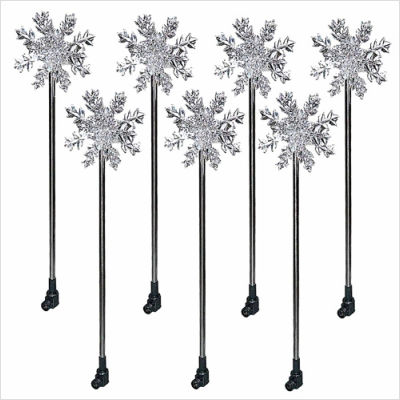 Solar Christmas lights don’t cost anything to operate, but the high purchase price might not add up to savings.
In the last few years, energy-efficient LED Christmas lights have largely replaced more wattage-thirsty incandescent strings, resulting in significant savings — LED lights use 70% less energy than their incandescent predecessors, and they last up to 10 times longer as well.
Now there’s a new kid in the string-light neighborhood: LED solar Christmas lights are appearing at retailers around the country, promising grid-free festive lighting for holiday-happy consumers.
Powering up solar Christmas lights
A string of solar Christmas lights uses a small solar panel for power; there are no extension cords that must be plugged into outlets. The panel — about the size of a hockey puck — powers rechargeable batteries that illuminate a 25- to 100-bulb string of LED lights.
Panels come with small stakes so you can put them in the ground, where they can take advantage of the sun. A fully-charged string of lights should glow for 6 to 8 hours after the sun goes down.
Solar lights vs. LED plug-in costs
Most consumers expect new technologies to cost more, but if saving energy and money is your main reason for considering solar-powered LED holiday lights, solar lights may not offer enough cost-saving to offset the higher initial purchase price.
Compare purchase prices:
Compare costs to operate:
Do the math, and you’ll see that it’ll take about 45 years for the energy savings from solar-power to equal the difference in purchase price between a plug-in string and a solar-powered string.
Advantages of solar lights
Disadvantages
 The lights, candles and open fires in the wood stove are all fun things to do around the holidays. The holiday season is one of the most dangerous times of the year for household fires, so take note of these tips to reduce your risk.
To keep your household from becoming a holiday fire statistic, here are some safety tips to follow.
Cooking is the top cause of holiday fires, according to the USFA. The most common culprit is food that’s left unattended. It’s easy to get distracted; take a pot holder with you when you leave the kitchen as a reminder that you have something on the stove. Make sure to keep a kitchen fire extinguisher that’s rated for all types of fires, and check that smoke detectors are working.
If you’re planning to deep-fry your holiday turkey, do it outside, on a flat, level surface at least 10 feet from the house. And if you are planning on deep-frying a turkey – call me. It is so yummy!
The incidence of candle fires is four times higher during December than during other months. According to the National Fire Protection Association, four of the five most dangerous days of the year for residential candle fires are Christmas/Christmas Eve and New Year’s/New Year’s Eve. (The fifth is Halloween.)
To reduce the danger, maintain about a foot of space between the candle and anything that can burn. Set candles on sturdy bases or cover with hurricane globes. Never leave flames unattended. Before bed, walk through each room to make sure candles are blown out. For atmosphere without worry, consider flameless LED candles.
It takes less than 30 seconds for a dry tree to engulf a room in flames, according to the Building and Fire Research Laboratory of the National Institute for Standards and Technology. “They make turpentine out of pine trees,” notes Tom Olshanski, spokesman for the U.S. Fire Administration. “A Christmas tree is almost explosive when it goes.”
To minimize risk, buy a fresh tree with intact needles, get a fresh cut on the trunk, and water it every day. A well-watered tree is almost impossible to ignite. Keep the tree away from heat sources, such as a fireplace or radiator, and out of traffic patterns. If you’re using live garlands and other greenery, keep them at least three feet away from heating sources.
No matter how well the tree is watered, it will start to dry out after about four weeks, Olshanski says, so take it down after the holidays. Artificial trees don’t pose much of a fire hazard; just make sure yours is flame-retardant.
Inspect light strings, and throw out any with frayed or cracked wires or broken sockets. When decorating, don’t run more than three strings of lights end to end. “Stacking the plugs is much safer when you’re using a large quantity of lights,” explains Brian L. Vogt, director of education for holiday lighting firm Christmas Décor. Extension cords should be in good condition and UL-rated for indoor or outdoor use. Check outdoor receptacles to make sure the ground fault interrupters don’t trip. If they trip repeatedly, Vogt says, that’s a sign that they need to be replaced.
When hanging lights outside, avoid using nails or staples, which can damage the wiring and increase the risk of a fire. Instead, use UL-rated clips or hangers. And take lights down within 90 days, says John Drengenberg, director of consumer safety for Underwriters Laboratories. “If you leave them up all year round, squirrels chew on them and they get damaged by weather.”
The number of blazes–and, tragically, the number of deaths–caused by children playing with fire goes up significantly during the holidays. From January through March, 13% of fire deaths are the result of children playing with fire, the USFA reports; in December, that percentage doubles. So keep matches and lighters out of kids’ reach. “We tend to underestimate the power of these tools,” says Meri-K Appy, president of the nonprofit Home Safety Council. “A match or lighter could be more deadly than a loaded gun in the hands of a small child.”
Soot can harden on chimney walls as flammable creosote, so before the fireplace season begins, have your chimney inspected to see if it needs cleaning. Screen the fireplace to prevent embers from popping out onto the floor or carpet, and never use flammable liquids to start a fire in the fireplace. Only burn seasoned wood–no wrapping paper.
When cleaning out the fireplace, put embers in a metal container and set them outside to cool for 24 hours before disposal.
 Real Estate and *stuff *