Real Estate and *stuff *
A real person helping real people with real estate
You can scroll the shelf using ← and → keys
You can scroll the shelf using ← and → keys
 Fall is a great time to grow veggies that thrive in cooler weather, like broccoli, turnips, and radishes. Here’s how to get your fall vegetable garden growing.
Summer is ending, but your vegetable garden doesn’t have to. Fall vegetable gardens can produce throughout autumn and, in some areas, well into winter. Here’s how to extend the life of your garden and produce greens long after you thought possible.
Before planting a second crop, turn and loosen soil to about 6 inches down, and remove all weeds.
If you’ve fertilized your garden all along, your soil is ready for a fall crop. If not, add a generous helping of compost from your pile, or sprinkle roughly 1 to 2 pounds of all-purpose fertilizer for each 100 sq. ft. of growing space (check label for exact amount).
Choose seeds over seedlings
In late summer, it’s better to sow seeds rather than plant seedlings. Seeds will take a week or two to germinate and are less likely to bake in the sun. However, you must keep them moist, so plan to water daily until they sprout.
Time and temperatureTo time your fall garden:
1. Understand how many days it takes for seeds to mature (“days to harvest” on the seed packet).
2. Then find the average date of your area’s first frost. The Farmer’s Almanac’s Average Frost Date Map shows you when to expect your first fall frost.
3. Subtract the harvest days from the frost date and you’ll know the last time you can plant to expect a reasonable harvest. For example: Turnips need 55 days to harvest, and Charlottesville, Va.’s, first fall frost is around Oct. 31. So the last safe time to plant will be Sept. 7, give or take a week.
Take your plant’s temperature
Of course, not all plants die with the first frost. Some can even live under snow. So, mix tender and hardy vegetable varieties in your fall garden to ensure produce until spring.
Tender veggies that die in a light frost include:
Semi-hardy vegetables can live through several hard frosts and include:
Hardy vegetables can live until temperatures drop below 20 degrees F and include:
You can goose Mother Nature’s growing season by covering or shielding fall vegetables when temperatures begin to drop.
Bonus: Organic mulch will degrade during the fall and winter and add soil nutrients that will give your spring garden a good start.
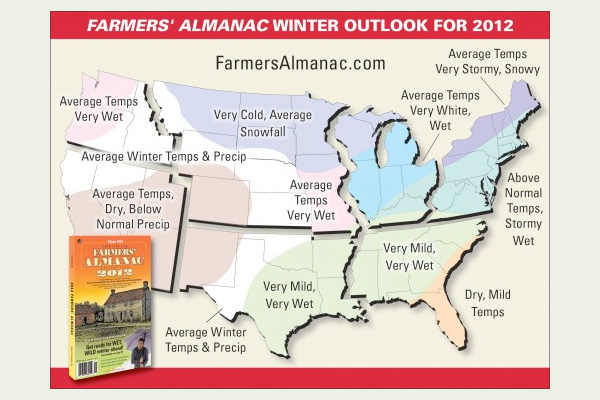 The Farmers’ Almanac is expecting some “clime and punishment” this winter, much like the October surprise snow storm that’s knocked out power to 3 million homes. Here’s how to prepare for the next big weather hit.
Last week’s surprise snowstorm, which left 3 million people without power from Maryland through Maine, is just the beginning of what the Farmers’ Almanac is predicting to be an unusually cold and stormy winter.
That could mean many days without power. So if you haven’t already bought a portable generator, now’s the time to purchase one at your local home center. And if you own a generator, gas it up, because you never know when the next snow dump will knock out electricity.
Also, investigate whether a whole house generator is right for your home. They can be pricey — on average $14,700 — but going a week or more without electricity costs you, too.
Finally, don’t forget to make a home emergency preparedness kit with everything from water and food to flashlights and cash.
Did you lose power in the weekend storm? How did you get by?
 Real Estate and *stuff *