Real Estate and *stuff *
A real person helping real people with real estate
You can scroll the shelf using ← and → keys
You can scroll the shelf using ← and → keys
Project #1: Install Rigid Flower Bed Edging
 The setup: A crisp edge where the lawn meets the flower beds looks great and eases mowing. Opt for rigid edging — the flexible plastic stuff looks amateurish from day one.
Use a charged garden hose to lay out a smooth curve.
Tip: A “charged” garden hose full of water makes for a smoother, kink-free curve; charge up by turning on the spigot but leaving the sprayer off.
With the hose as your guide, use a lawn edger or spade to cut away excess sod and make an incision for the edging. Tap in the edging with a rubber mallet and add the stakes. Trim the edging with a hacksaw, using a speed square to mark for cuts.
Specs and cost: Steel — $1.25 per lineal foot; aluminum — $2.25 plf; rigid plastic or fiberglass — $1.65 plf.
Tools: Garden hose, flour or powdered chalk, lawn edger or spade, shovel, speed square, hacksaw, rubber mallet, hammer.
Project #2: Add an Earth Berm
 The setup: Create an eye-catching front yard feature by shaping a few cubic yards of topsoil into an undulating berm. Topped off with mulch, groundcover, and bushes, a berm adds interest and buffers street noise.
Use a charged hose to outline the berm. Remove sod a couple of feet in from the perimeter. Add a few mounds, but max out at 3 feet high.
Specs and cost: Three cubic yards of soil is enough for a good-sized berm. Expect to pay $15-$20 per cubic yard and $15–$60 for delivery — a total of $60-$120.
Tip: Don’t be tempted by those bags of topsoil at the home center: At $2.50 per cubic foot, a cubic yard (27 cubic feet) will end up costing you $67.50.
Have a cubic yard of mulch dropped off as well ($15–$20). A dozen periwinkle starts, plus a few boxwood bushes and evergreens, will set you back another $140.
Total for an 18-foot-long berm: $215–$280.
Tools: Wheelbarrow, spade, shovel, garden rake, trowel.
Time: A day to form the berm, another half-day for planting and mulching.
 The setup: A stacked flagstone wall for your raised beds has an old-world look that mellows any landscape. Best of all, you don’t have to be stonemason to build one.
Begin by laying out the wall with stakes and mason’s line. Tamp a level bed of sand for the first course. As you add courses, stagger joints at least 3 inches. Set each course back ¼-inch so the wall leans backward slightly. Once finished, back the wall with landscaping fabric before filling with topsoil.
Specs and cost: Choose a stone of consistent thickness. Flagstone might be limestone, sandstone, shale — any rock that splits into slabs. A ton of 2-inch-thick stone is enough for a wall 10 feet long and 12 inches high.
Cost: About $300 for stones and sand.
Tip: Permanent retaining walls should be backed by pea gravel for drainage. In some locations, walls taller than 3 feet high require a building permit.
Tools: Stakes and mason’s line, spade, shovel, a 2-by-4 that’s 8 feet long, a 4-foot level, garden rake, tamper.
Time: 1 day for a 10-foot-long wall that’s 12 inches high.
Project #4: Install a Flagstone Path
 The setup: For a welcoming addition to your yard, add a flagstone pathway. Use a charged garden hose to mark a meandering path about 3 feet wide. Arrange flagstones within the path so they are 2–4 inches apart and mark their location with sprinkled flour.
Tip: Sprinkling flour over the stones creates a “shadow” outline on the ground. When you remove the stones, you’ll have perfect outlines for cutting away the sod.
Cut away 3–4 inches of sod beneath each stone, add a layer of sand, and level the flagstones as you place them.
Specs and cost: For a 40-foot path about 3 feet wide, plan on 2 tons of flagstones and about a cubic yard of coarse sand. Cost: About $550.
Tools: Garden hose, flour, spade, trowel, level.
Time: 1 day for a 40-foot path.
 The setup: Installing a masonry surround for a tree eases mowing and looks great. All it takes is digging a circular trench, adding some sand, and installing brick or stone.
Tip: To create a nice, even circle around the base of your tree, tie a big loop of rope around your tree. Adjust the length of the loop so when you pull it taut, the free end is right where you’d like the outer edge of the surround to be. Set your spade inside the loop with the handle plumb — straight up and down. Now, as you move around the tree, the loop of rope keeps the spade exactly the same distance from the base of the tree, creating a nice circle.
Use the spade to cut into the sod all the way around the tree. Remove the rope, and dig out a circular trench about 8 inches deep and 6 inches wide. Add a layer of sand. Set bricks at an angle for a pleasing saw-tooth effect or lay them end-to-end. Fill the surround with 2–4 inches of mulch.
Curious what trees to plant? Our popular slideshow tells you which trees you should never plant in your yard.
Specs and cost: This is an instance where buying small quantities of materials at the home center makes sense. Brick pavers cost $.50-$1 each — figure about 20 per tree. A bag of mulch, enough for one tree, costs $2.50.
Tools: Rope, spade, trowel.
Time: 3 hours per tree.
Holiday gingerbread houses need maintenance and improvement, too. Here are some fix-up tips from chefs who bake fantastic gingerbread houses for a living.
If you’ve ever built a gingerbread house, you know that walls crack, icing flakes, and roofs sag — if they don’t collapse altogether. And once you’ve got your gingerbread house up, you’ve got to maintain and protect it against sticky humidity and sticky fingers.
In the spirit of the holidays, a handful of chefs who spend at least a couple of months each year constructing gingerbread houses — even cities — for private and corporate clients are sharing their secrets!
Here are their tips on how to improve and maintain the value of your gingerbread home.
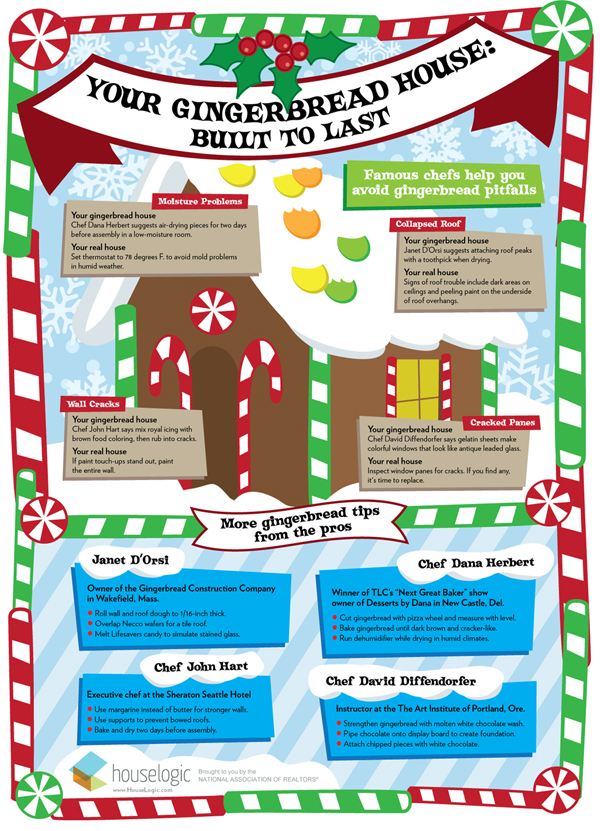
Chef Dana Herbert, winner of TLC’s “Next Great Baker” show, owner of Desserts by Dana in New Castle, Del.
Chef Herbert, who has created gingerbread homes 6 feet tall, reveals the secrets of producing sturdy and straight gingerbread walls that can hold up to candy and pounds of icing.
Chef John Hart, executive chef at the Sheraton Seattle Hotel
With the help of architectural firms around Seattle, Chef John Hart creates structurally sound gingerbread houses that have weighed up to 500 pounds. Mostly, Chef Hart uses gingerbread as siding on his wood or foam board houses. Here are some of his gingerbread house tips.
Janet D’Orsi, owner of the Gingerbread Construction Company in Wakefield, Mass.
Janet D’Orsi’s Gingerbread Construction Company ships more than 10,000 gingerbread houses around the country each year. The trick to building a sturdy house? “Let it dry completely between stages.”
Here are more tricks of the gingerbread trade.
Chef David Diffendorfer, instructor at the The Art Institute of Portland, Ore.
Chef Diffendorfer has constructed medieval gingerbread cities consisting of a castle and 16 buildings. The gingerbread acts as framing, which he covers with marzipan.
Diffendorfer offers other gingerbread construction tips.
My own gingerbread house creations feature molten sugar windows that save imaginary energy, gingerbread spruces for curb appeal, and even Twizzler rain gutters to handle runoff.
Do you have a picture of a gingerbread house you baked?
Tired of pinching pennies? Weary of the recession? Dream along and pretend we can afford these top-shelf home improvements. But don’t worry if these budget-stretchers are out of reach — we’ve got you covered with smart advice for alternative products and systems that will make you feel luxurious without draining your bank account.
 Throw the switch on your very own wind turbine and you’ll get a 50% to 90% reduction on your electrical energy bills. The price of all this efficiency is about $40,000 for a 10-kilowatt turbine, a steel tower, and professional installation. If that’s not in your budget right now, a little regular maintenance will keep the HVAC system you have running at peak efficiency. Credit: Bergey Windpower Company
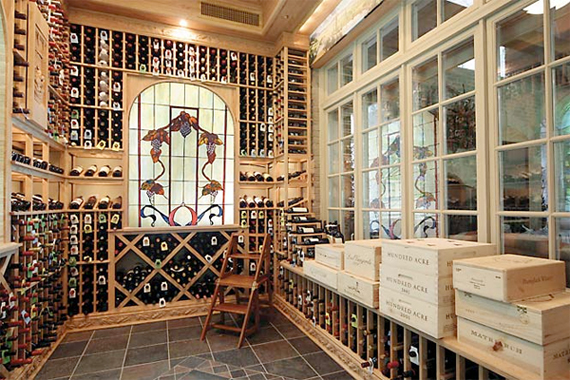 Wine connoisseurs know that the beverage itself is only part of the fun — a glass-front, temperature-controlled wine cellar adds to the delight. For wine aficionados who collect as well as sip, storage is a must — the wine cellar shown here holds 1,346 bottles. Ceramic tile floors, hand-carved trim, stained glass, and lighted racks add up to a $70,000 taster’s haven. If your storage needs are more modest, check out under-stairs storage solutions that gobble up clutter. Credit: Wood wine racks by Wine Cellar Innovations
 Stoves from La Cornue are known as some of the world’s most elegant cooking appliances. Each is handmade, and can be ordered as gas, electric, or a combination of both. Choose from 25 enameled finishes and 12 metallic trims. The GrandPalais 180 model features dual ovens and retails around $45,000. For that, you could buy a dozen top-of-the-line, double wall ovens with options that include convection heat, temperature probes, and variable broiling. Credit: Culinary Architecture by La Cornue
 With an insulated glass panel that lets you check contents before opening the door, the stylish Sub-Zero Pro48 is billed as one of the most expensive — and best — refrigerators on the market. Listed at a cool $15,540, the Pro48 features an LCD touch-pad that controls two compressors and three evaporators. Be sure to green clean the inside of your Pro48 so that it’s nice and tidy if guest should peer through the window. Credit: Sub-Zero
 Nothing quite says “welcome” like a pair of custom-designed, hand-carved entry doors made of pine, mahogany, or oak. Expect to pay $5,000 to $25,000 for a matched set of custom-made, double-opening exterior wood doors, installed. The price may be worth it: A good-looking exterior door is a big contributor to curb appeal, and helps preserve the value of your home. Credit: Pinecrest, Inc.
 If your little slice of heaven is racking up heating and cooling costs, consider a geothermal heat system. A geothermal heat pump system extracts heat and cooling from deep underground to keep your interiors on an even keel, reducing energy usage. The price for a geothermal system can be steep — typically $20,000 for a 3,000-sq.-ft. house. The good news: A system placed in service between Jan. 1, 2009, and Dec. 31, 2016, is eligible for a 30% federal tax credit. Credit: Colorado Geothermal Drilling
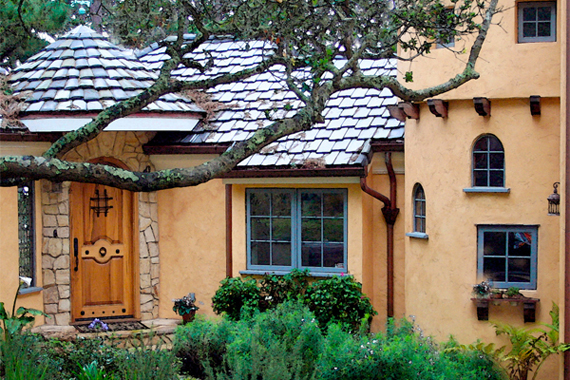 Slate shingles were once common, but modern roofing, such as asphalt shingles, have become so much more cost-effective that slate is increasingly rare — and expensive. According to Remodeling Magazine’s Cost vs. Value Report, covering a 3,000-sq.-ft. roof with top-quality asphalt shingles costs about $21,000. A comparable slate roof costs $100,000 to $150,000. Nevertheless, if you want a roof that’s classy, fireproof, and will last 100 years or more, slate is hard to beat. Credit: Linda Hartong
Now dream of sugar plums…it’s Christmas time after all!
 Real Estate and *stuff *