Real Estate and *stuff *
A real person helping real people with real estate
You can scroll the shelf using ← and → keys
You can scroll the shelf using ← and → keys
Last year we started a conversation about the energy costs of Christmas lights displays. We think it’s worth pursuing this year: What’s your take? Are they a waste of energy or something that shouldn’t have a price tag attached?
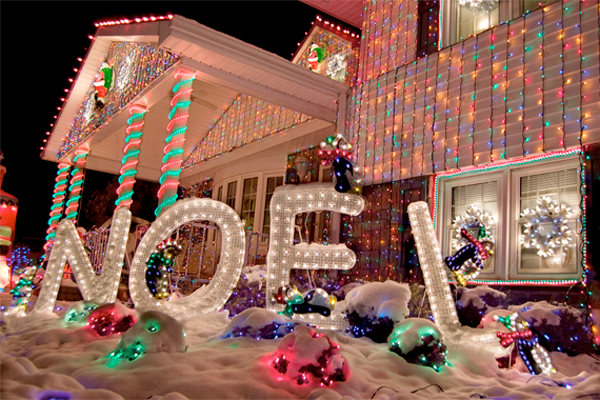 Last Christmastime, we were so blown away by the Faucher family’s million-bulb holiday light show in Delaware that we did what could only be done — calculate how much the dazzler costs to power up for a month: $82,320!
At least according to an online calculator we found.
Well, the post went viral and caused a quite a hubbub.
Some commenters called the Fauchers planet killers: “OMG does this guy not realize that there is something called GLOBAL WARMING that is threatening to destroy the planet and that all of these useless and ugly lights are making this problem so much worse!”
Some called dissenters the Grinches who stole Christmas lights: “I think it’ s great, something bright and happy to look at in these days of doom and gloom.”
And some just disputed our math and called the numbers “bogus.”
Our favorite comment came from “Santa Claus, New Castle, Delaware” (but we’re pretty sure someone in the Faucher family wrote it.)
The writer called the article “informative and very well written” — thanks Santa! — but said that his energy bill isn’t anywhere near $82,000.
We tried to reach Wilmington’s Santa for an update, but this is his busy season and he didn’t call us back. Instead, we talked the Smith family in North Delaware, who told us all about their 400,000-bulb light display. (What is it with Delaware and over-the-top holiday lights? Anyway, I’ll be posting some tips from the Smiths tomorrow.
But mainly, we’re curious about your reaction, since saving energy is pocketbook-smart — but holiday cheer, after all, is priceless.
So, do you vote for “pocketbook” or “priceless”? Why?
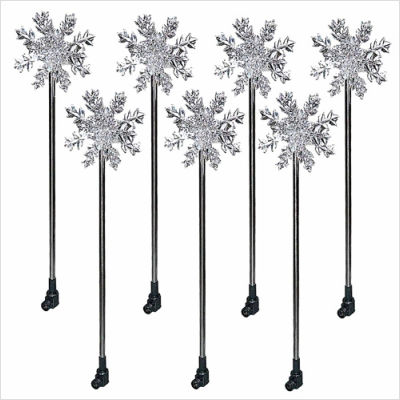 Solar Christmas lights don’t cost anything to operate, but the high purchase price might not add up to savings.
In the last few years, energy-efficient LED Christmas lights have largely replaced more wattage-thirsty incandescent strings, resulting in significant savings — LED lights use 70% less energy than their incandescent predecessors, and they last up to 10 times longer as well.
Now there’s a new kid in the string-light neighborhood: LED solar Christmas lights are appearing at retailers around the country, promising grid-free festive lighting for holiday-happy consumers.
Powering up solar Christmas lights
A string of solar Christmas lights uses a small solar panel for power; there are no extension cords that must be plugged into outlets. The panel — about the size of a hockey puck — powers rechargeable batteries that illuminate a 25- to 100-bulb string of LED lights.
Panels come with small stakes so you can put them in the ground, where they can take advantage of the sun. A fully-charged string of lights should glow for 6 to 8 hours after the sun goes down.
Solar lights vs. LED plug-in costs
Most consumers expect new technologies to cost more, but if saving energy and money is your main reason for considering solar-powered LED holiday lights, solar lights may not offer enough cost-saving to offset the higher initial purchase price.
Compare purchase prices:
Compare costs to operate:
Do the math, and you’ll see that it’ll take about 45 years for the energy savings from solar-power to equal the difference in purchase price between a plug-in string and a solar-powered string.
Advantages of solar lights
Disadvantages
 Real Estate and *stuff *