Real Estate and *stuff *
A real person helping real people with real estate
You can scroll the shelf using ← and → keys
You can scroll the shelf using ← and → keys
 Yes, taxes continued. I know, I know…how could we make Friday any more exciting?
The Energy Credit has been a great way to save net money on your home improvements. Looking ahead to this time next year, make sure you are choosing the right places to invest your green money. Washington is giving you less green for going green, as the feds reel back the 2011 energy tax credits from a lavish $1,500 to a paltry $500. Keep your receipts and be ready this time next year.
No matter how much you spend on some approved items, you’ll never get the $500 credit–though you could combine some of these:
| System | Cap |
| New windows | $200 max (and no, not per window—overall) |
| Advanced main air-circulating fan | $50 max |
| Qualified natural gas, propane, or oil furnace or hot water boiler | $150 max |
| Approved electric and geothermal heat pumps; central air-conditioning systems; and natural gas, propane, or oil water heaters | $300 max |
And not all products are created equal in the feds’ eyes. Improvements have to meet IRS energy-efficiency standards to qualify for the tax credit. In the case of boilers and furnaces, they have to meet the 95 AFUE standard. EnergyStar.gov has the details.
Rule of thumb: If installation is either particularly difficult or critical to safe functioning, the credit will cover labor. Otherwise, not. (Yes, you’d have to be pretty handy to install your own windows and roof, but the feds put these squarely in the “not covered” category.)
Installation covered for:
Installation not covered for:
This article provides general information about tax laws and consequences, but isn’t intended to be relied upon as tax or legal advice applicable to particular transactions or circumstances. Consult a tax professional for such advice, and remember that tax laws may vary by jurisdiction.
 What is a Form 5695?? Your energy tax credit! This is a great tax credit that encourages energy upgrades in our homes. Sidestep snares in the complex IRS Form 5695 to get all the 2010 energy tax credits you’ve got coming.
What type of system did you install? If it’s one of the following, complete Part 1 for Nonbusiness Energy Tax Credits.
Max credit: 30% of the cost of the improvement, up to $1,500.
If you installed one of these souped-up systems, complete Part 2 for Residential Energy Efficient Property Credit.
Max credit: 30% of the cost, with no limit except for a kilowatt limit on fuel cells.
For Part I, it’s pretty simple: Just enter the total of all this part’s credits (as shown on line 11) on Form 1040, line 52.
For Part II, it can get complicated because other credits, claimed on other forms, can affect the amount of your Part II credit.
If you need to fill out any of the following forms, have all the information needed to complete those at hand, because Form 5695, line 25, coordinates with all of them. (In fact, you’ll find it simplest to prepare all these forms more or less simultaneously.)
One form that’s irrelevant to completing 5695: Schedule A. That’s only for deductions, not credits. And you don’t even need to itemize to claim energy tax credits.
You’ll find many places you can go wrong in both parts of the form:
Adding ineligible amounts into the form. Just because a product has an Energy Star label doesn’t mean it’s eligible for a credit. Check the details of what’s eligible for the credit and what’s not at Energy Star and make sure the product comes with a manufacturer’s certification.
Failing to keep track of this year’s energy tax credits for future years. Hang on to your tax credit paperwork (including receipts, certifications, and a copy of your completed Form 5695), because if you sell your house you’ll need to record the tax credit amount for tax purposes.
Failing to file this form at all—or only partially. If you’re eligible for a lot of different tax credits, you can conceivably reduce your tax liability to zero. If that’s the case and you want to tack on the 2010 energy tax credit, you’re out of luck. The feds consider it nonrefundable. If it were a refundable tax credit, the IRS would write you a check.
Forgetting certain credits that affect Part II—and vice-versa. Pay special attention to line 25: Certain other credits may ultimately affect your ability to fully claim Part II credits—just as Part II credits may affect other credits. Follow the line-by-line instructions in each form carefully. It’s easy to forget a number here.
If you find Form 5695 exasperating, you may be eligible for free tax preparation help from the:
Major tax preparation software, such as TurboTax, include this form in their packages.
 As promised! More on taxes! I know, I know…it’s crazy to talk about such exciting stuff without a party hat on but an IRS audit or missed refund money is no party either! Here are the ten most common errors that home owners make on their tax returns. Don’t rouse the IRS or pay more taxes than necessary—know the score on each home tax deduction and credit.
You take a tax deduction for property taxes in the year you (or the holder of your escrow account) actually paid them. Some taxing authorities work a year behind—that is, you’re not billed for 2010 property taxes until 2011. But that’s irrelevant to the feds.
Enter on your federal forms whatever amount you actually paid in 2010, no matter what the date is on your tax bill. Dave Hampton, CPA, tax manager at the Cincinnati accounting firm of Burke & Schindler, has seen home owners confuse payments for different years and claim the incorrect amount.
If your lender escrows funds to pay your property taxes, don’t just deduct the amount escrowed, says Bob Meighan, CPA and vice president at TurboTax in San Diego. The regular amount you pay into your escrow account each month to cover property taxes is probably a little more or a little less than your property tax bill. Your lender will adjust the amount every year or so to realign the two.
For example, your tax bill might be $1,200, but your lender may have collected $1,100 or $1,300 in escrow over the year. Deduct only $1,200. Your lender will send you an official statement listing the actual taxes paid. Use that. Don’t just add up 12 months of escrow property tax payments.
Deduct points you paid your lender to secure your mortgage in full for the year you bought your home. However, when you refinance, says Meighan, you must deduct points over the life of your new loan. If you paid $2,000 in points to refinance into a 15-year mortgage, your tax deduction is $133 per year.
Lenders require home buyers with a downpayment of less than 20% to purchase private mortgage insurance (PMI). Avoid the common mistake of forgetting to deduct your PMI payments. However, note the deduction begins to phase out once your adjusted gross income reaches $100,000 and disappears entirely when your AGI surpasses $109,000.
This deduction may not be as good as it seems. It often doesn’t amount to much of a deduction, has to be recaptured if you turn a profit when you sell your home, and can pique the IRS’s interest in your return. Hampton’s advice: Claim it only if it’s worth those drawbacks.
If you met the midyear 2010 deadlines, don’t forget to take this tax credit into account when filing.
Even if you missed the 2010 deadlines, you still might be in luck: Congress extended the first-time home buyer credit for military families and other government workers on assignment outside the United States. If you meet the criteria, you have until June 30, 2011, to close on your first home and qualify for the tax credit of up to $8,000.
If the IRS comes a-knockin’, don’t be scrambling to compile your records. Many people forget to track home office and home maintenance and repair expenses, says Meighan. File away documents as you go. For example, save each manufacturer’s certification statement for energy tax credits, insurance company statements for PMI, and lender or government statements to confirm property taxes paid.
If you sold your main home last year, don’t forget to pay capital gains taxes on any profit. However, you can exclude $250,000 (or $500,000 if you’re a married couple) of any profits from taxes. So if you bought a home for $100,000 and sold it for $400,000, your capital gains are $300,000. If you’re single, you owe taxes on $50,000 of gains. However, there are minimum time limits for holding property to take advantage of the exclusions, and other details. Consult IRS Publication 523.
If you made any eligible improvement, fill out Form 5695. Part I, which covers the 30%/$1,500 credit for such items as insulation and windows, is fairly straightforward. But Part II, which covers the 30%/no-limit items such as geothermal heat pumps, can be incredibly complex and involves crosschecking with half a dozen other IRS forms. Read the instructions carefully. More on the energy tax credits to come!
You can deduct mortgage interest only up to $1 million of mortgage debt, says Meighan. If you have $1.2 million in mortgage debt, for example, deduct only the mortgage interest attributable to the first $1 million.
This article provides general information about tax laws and consequences, but is not intended to be relied upon by readers as tax or legal advice applicable to particular transactions or circumstances. Readers should consult a tax professional for such advice, and are reminded that tax laws may vary by jurisdiction.
 Yes it’s that time of year again! The snowbanks are getting higher and taking on a “brownish” tint – the joy of winter has passed with the holiday season and we’re all looking forward to spring – why not spend this time doing something fun! Like taxes! Woot! No really…it’s a chore but it’s necessary and as a taxpayer you are entitled to every deduction available to you. That’s right, the IRS WANTS you to have an accurate number for your total tax liability.
This week I will have a series of articles on “Don’t Miss Tax Breaks” for home owners. I have a financial background as a CPA prior to becoming a Realtor. This is great stuff and I welcome your comments.
Get an “A” on your Schedule A Form: Dodge these tax deduction pitfalls to save time, money, and an IRS investigation.
Your monthly mortgage payment often includes money for a tax escrow, from which the lender pays your local real estate taxes.
The money you send the bank may be more than what the bank pays for your taxes, says Julian Block, a tax attorney and author of Julian Block’s Home Seller’s Guide to Tax Savings. That will lead you to putting the wrong number on Schedule A.
Example:
Now do the math:
If you bought or sold a home in the middle of 2010, figuring out what to put on line 6 of your Schedule A Form is tricky.
Don’t simply enter the number from your property tax bill on line 6 as you would if you owned the house the whole year. If you bought or sold a house in midyear, you should instead use the property tax amount listed on your HUD-1 closing statement, says Phil Marti, a retired IRS official.
Here’s why: Generally, depending on the local tax cycle, either the seller gives the buyer money to pay the taxes when they come due or, if the seller has already paid taxes, the buyer reimburses the seller at closing. Those taxes are deductible that year, but won’t be reflected on your property tax bill.
You can deduct points paid on a refinance, but not all at once, says David Sands, a CPA with Buchbinder Tunick & Co LLP. Rather, you deduct them over the life of your loan. So if you paid $1,000 in points for a 10-year refinance, you’re entitled to deduct only $100 per year on your Schedule A Form.
If you took out a home equity line of credit (HELOC), you can generally deduct the interest on it only up to $100,000 of debt each year, says Matthew Lender, a CPA with EisnerLubin LLP.
For example, if you have a HELOC for $200,000, the bank will send you Form 1098 for interest paid on $200,000. But you can deduct only the interest paid on $100,000. If you just pull the number off Form 1098, you’ll deduct more than you’re entitled to.
You can deduct PMI on your Schedule A Form, as long as you started paying the insurance after Dec. 31, 2006. (Also, this is also a good time to review your PMI: You might be able to cancel your PMI altogether because you’ve had a change in loan-to-value status.)
You can deduct part or all of losses caused by theft, vandalism, fire, or similar causes, as well as corrosive drywall, but the process isn’t always obvious or simple:
Bottom line on line 20: If you’ve got extensive losses, it’s best to consult a tax pro. “I wouldn’t do it myself, and I’ve been dealing with taxes for 40 years,” says former IRS official Marti.
I know…not very exciting but necessary!
 It’s been an exciting week! I listed two new houses this week and have been discussing this topic so much that I thought it was time to make a post. It’s a fine line to walk when you are both living in your home and showing it to potential buyers. You don’t want to feel like you are living in a hotel but at the same time would like to ensure a quick home sale. There are a few things you can do to help the process and still maintain your life style In general, make your home warm and inviting to boost your home’s value and speed up the sale process.
Before you can worry about where to place furniture and which wall hanging should go where, each room in your home must be spotless. Do a thorough cleaning right down to the nitpicky details like wiping down light switch covers. Deep clean and deodorize carpets and window coverings.
It’s harder for buyers to picture themselves in your home when they’re looking at your family photos, collectibles, and knickknacks. Pack up all your personal decorations. However, don’t make spaces like mantles and coffee and end tables barren. Leave three items of varying heights on each surface, suggests Barb Schwarz of www.StagedHomes.com in Concord, Pa. For example, place a lamp, a small plant, and a book on an end table.
When a room is packed with furniture, it looks smaller, which will make buyers think your home is less valuable than it is. Make sure buyers appreciate the size of each room by removing one or two pieces of furniture. If you have an eat-in dining area, using a small table and chair set makes the area seem bigger.
Highlight the flow of your rooms by arranging the furniture to guide buyers from one room to another. In each room, create a focal point on the farthest wall from the doorway and arrange the other pieces of furniture in a triangle around the focal point, advises Schwarz. In the bedroom, the bed should be the focal point. In the living room, it may be the fireplace, and your couch and sofa can form the triangle in front of it.
Brush on a fresh coat of warm, neutral-color paint in each room. Ask your real estate agent for help choosing the right shade. Then accessorize. Adding a vibrant afghan, throw, or accent pillows for the couch will jazz up a muted living room, as will a healthy plant or a bright vase on your mantle. High-wattage bulbs in your light fixtures will also brighten up rooms and basements.
Lay logs in the fireplace, and set your dining room table with dishes and a centerpiece of fresh fruit or flowers. Create other vignettes throughout the home—such as a chess game in progress—to help buyers envision living there. Replace heavy curtains with sheer ones that let in more light.
Make your bathrooms feel luxurious by adding a new shower curtain, towels, and fancy guest soaps (after you put all your personal toiletry items are out of sight). Judiciously add subtle potpourri, scented candles, or boil water with a bit of vanilla mixed in. If you have pets, clean bedding frequently and spray an odor remover before each showing.
Mow your lawn and trim your hedges, and turn on the sprinklers for 30 minutes before showings to make your lawn sparkle. If flowers or plants don’t surround your home’s entrance, add a pot of bright flowers. Top it all off by buying a new doormat and adding a seasonal wreath to your front door.
All of this should come with a grain of salt and reasonableness. We can walk through your house and make small changes that will increase the appeal of your home while not changing your lifestyle or costing you extra money. Please give me a call if you would like to schedule an appointment to see what can be done to get your home sale ready.
In the meantime, please check out my two new listings that prompted this blog:
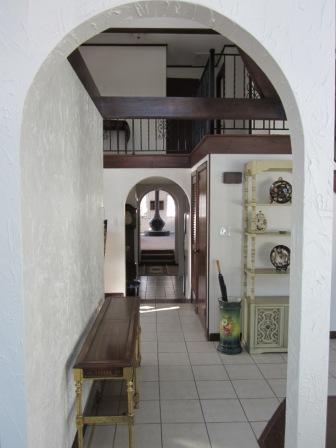 272 Oak Street in Shrewsbury – 4 bed, 2 bath, 3000 sqft, inlaw apartment – contemporary style and grace makes this home unmatched! You really have to walk through this house to appreciate it. So many updates (roof, siding, heating system, flooring, carpet) and a very aggressive sale price. http://272oakstreet.epropertysites.com/
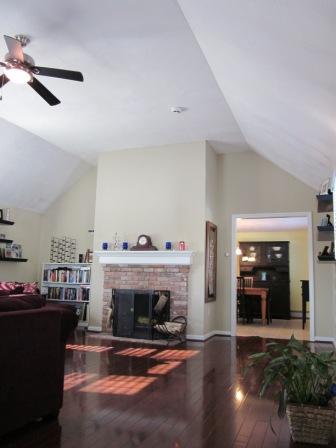 10 Overlook Ave Millbury – 3 bed, 2 bath newer home, better than new construction with the upgrades that the sellers have done such as the trex deck in back – nursery or office off the master bed that has a walk-in closet, very motivated sellers and the flat screen wall mount tv in the master bedroom stays! – http://10overlookave.epropertysites.com/
 Low-cost kitchen storage strategies bring calm to your kitchen, banishing stress-inducing clutter and leaving the space calm and orderly. Good news for budget-minded cleaning compulsive: Getting organized in the kitchen won’t drain your piggy bank! Stash more cash and control the chaos with these low-cost kitchen storage solutions, all readily available at home centers, discount stores and online.
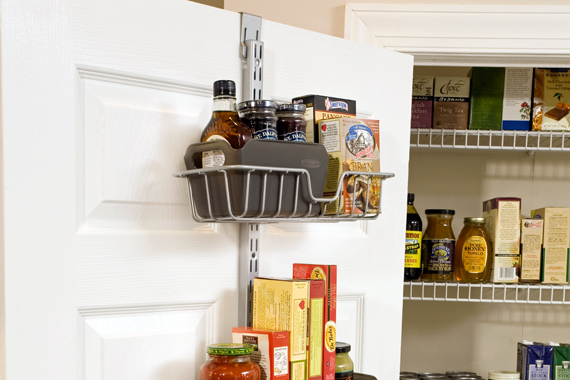 Rack attack: Store pots, everyday dishes, spices, and wine on racks that are freestanding, wall-hung, and ceiling-hung–and voila! Everything is in its own location, visible, and easily accessible!
Position the racks where they make sense: A pot rack above the cooktop; a dish rack close to the dishwasher for quick unloading; spices near the range or meal prep area; a wine rack near the wine glasses and dining table.
You’ll find racks in metal, wood, and other materials, starting as low as $10 to $15.
Shelf expression: You can size an open shelf to fit anywhere you need it and paint or stain it to match your décor. Use shelves for storing such kitchen necessities as cookbooks, attractive dishware, oils and vinegars, and spices.
Home improvement centers have storage sections where you can hunt, but don’t overlook the office supply and bathroom sections for even more low-cost shelves.
You’ll find cool shelves starting as low as $8.
 Great divide: Organize the contents of kitchen drawers and cabinets with wire or wood inserts. Drawer dividers keep utensils sorted and orderly. Vertical dividers inside cabinets create a spot for storing trays and cookie sheets. You’ll also find special inserts for storing knives and spices neatly inside drawers.
Available in wire, wood, or plastic, dividers start at about $3.
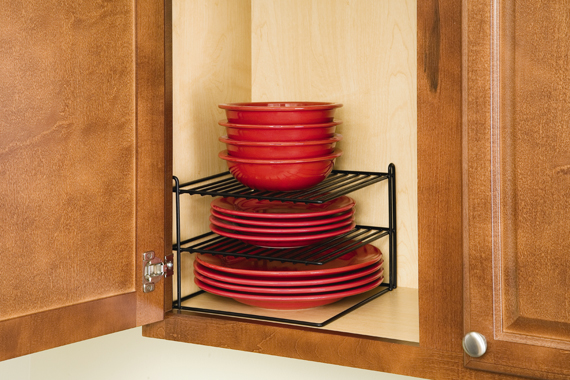 Elevated thinking: Wire stacking shelves have legs to elevate the storage surface. Set a stacking shelf on a countertop, existing shelf, or inside a cabinet to increase kitchen storage space. Use a stacking shelf for canned goods, dishware, spices, and more.
Prices start at about $6.
Hang ups: Install pegs or hooks along a backsplash, inside cabinets, or anywhere on a kitchen wall to create a place for cups, hot pads, cooking utensils, keys, and recipe clips. Hooks are available that fit over doors or come equipped with magnets that adhere to any metal surface.
Pegs and hooks start as low as $1.
Basket case: Baskets come in a variety of materials to complement your décor, from natural woven grasses to canvas to colorful plastic bins. Set baskets on open shelves, inside cupboards, and on the kitchen counter to round up small items, such as napkin rings and bamboo skewers.
Baskets are great for storing dish towels, cloth napkins, and coupons. Prices start as low as $1.
 With the storm fast approaching, I thought this would be a good topic for the blog. My first winter storm in my house I was enjoying a cup of hot steamy beverage on my couch when I heard (and felt) a large BANG on the wall behind me. The addition to my house, that I had closed off to conserve heat because it was only being used as a work room, had developed a massive ice dam – which I was unaware of. The ice dam, with the inches of snow piling up on it, slide off the roof of the single story addition and took the metal gutter with it. I then had a metal gutter blowing in the wind, banging on my house! It spared the window but damaged the side of the house, the gutter and the roof to the addition.
During the colder months, preventing ice dams should be a primary concern. Here’s how to protect your home from damage.
Over the five-year period leading up to 2007, water damage and freezing accounted for the second largest share of homeowner insurance claims, according to Claire Wilkinson of the Insurance Information Institute. The average homeowner claim for such damages was $5,531.
Ice dams are responsible for cracked plaster ceilings and walls, peeling paint, soaked carpets, and buckled wood floors. Less visible but no less destructive effects include drenched insulation, rotting joists, and the formation of mold. The most common form of ice dam-related damage is collapsed rain gutters, which can cost $100 to $300 per side to repair.
As heat rises from a home, it melts the accumulated snow on the roof. That melted snow travels down the roof in liquid form until it reaches the eave line and gutter, where it refreezes due to colder temps. This ice ridge continues to expand, blocking the flow of subsequent snow melt.
As water continues to melt higher up the roof, it collects behind the ice dam in the form of a puddle. Because that water sits over the warmer portion of the roof, it doesn’t freeze.
In order for ice dams to form, there needs to be roof snow buildup, home heat loss, and subfreezing temperatures. The more snow, the larger the heat loss, and the longer the subfreezing temperatures remain, the higher the likelihood that ice dams will materialize.
Homeowners can’t control the weather, but they can do something about heat loss. “The main goal is to keep heat from reaching the roof, thus preventing snow melt in the first place,” explains Doug Bruell, president of Cleveland’s 25-year-old North Coast Insulation. Proper insulation and ventilation of the attic space is intended to keep the roof surface at or near outdoor temperatures.
Typical steps include insulating the attic floor and installing soffit, gable and/or ridge vents to expel heat. Folding attic stairways and recessed light fixtures also need to be insulated. “All penetrations into the attic from the heated living space need to be addressed,” adds Bruell. Homeowners can expect to pay $800 to $1,500 to insulate the attic, plus another $300 to $600 for the installation of vents.
The process is a bit more involved for homes with finished attics, says Bruell. To facilitate sufficient cold air flow from soffit vent to ridge vent, baffles or tubes are installed between the ceiling insulation and the underside of the roof. This might involve opening up the ceiling.
According to the U.S. Department of Energy, adding insulation to an unheated attic will have a greater impact on energy consumption than placing it anywhere else in the house. A properly insulated and ventilated attic not only reduces winter heating bills, it will trim summer cooling bills by expelling heat buildup. You can expect to save 10% to 50% on your heating and cooling bills.
In addition, you may qualify for a federal tax credit of up to $1,500. Bruell estimates that in most cases, the procedure pays for itself in four to five years.
In theory, roof rakes, brooms, and other long-handled devices can be used to remove snow before it has a chance to melt. In practice, however, the scheme is difficult to pull off, considering that most homeowners can’t reach all areas of the roof.
Electrically-heated deicing cables, which install along eave lines to inhibit water freeze, are only moderately effective, says Bruell. “These heat cables often just back up the problem, forcing the dams to form higher up the roof.” In addition to the purchase price ($150 to $300), and installation ($300 to $500), these cables require electricity to run. They also can shorten the life of roof shingles.
Enjoy the snow everyone!
Homeowners suffering the effects of an ice dam–or those who fear a leak is imminent–can hire a roofing company to remove the ice buildup. Rather than employ hammers, chisels, and salt, which can damage the roof and gutters, technicians will steam away the ice and remove any remaining snow. Expect to pay around $500 or more for the service. It goes without saying that do-it-yourself removal can be dangerous when it involves ladders, heavy ice, and slippery roofs.
Enjoy the snow!
 Welcome to the Adams Street School House Condos! These are beyond what you usually see in Worcester and you really HAVE to see them! Renovated from an 1894 closed school-house and having top of the line amenities but still retaining the character of the past – these are amazing!
The Adams Street School is a Classical Revival / Victorian Eclectic brick building first constructed in 1896. The interior spaces – classrooms, corridors, and stairwells – share generous ceiling heights, quality finish materials, and a durability that have served the school well throughout its lifetime. The loft-style units in the former Adams Street School cover a range of unit types and sizes, from simple studios, to 1- and 2-bedroom units, to attic lofts with cathedral ceilings and open mezzanines. The particular historical details that remain, the adapted residential layout and the varying views from the ample windows create a unique environment in each unit.
The Crawford Realty Team of RE/MAX Professional Associates is proud to offer you NINE units to choose from. We are open Sundays 1pm to 4pm so that you can stop in and take a look. Come on by and pick out your new home – and have a blast while doing it!
The School House is located right off of Shrewsbury Street so you would be close to fantastic restaurants, Union Station, I290 and I190. Pets are allowed and there is off-street parking. The units feature Energy Star appliances, granite countertops and laundry hook-ups.
Here is a quick summary of the available units:
Unit 104: 1 bed, 1 bath $109,000
Unit 105: 1 bed, 1 bath $116,700
Unit 106: 1 bed, 1 bath $139,700
Unit 108: 1 bed, 1 bath, study $198,700
Unit 206: 1 bed, 1 bath, study $190,000
Unit 208: 2 bed, 2 bath $279,700
Unit 306: 1 bed, 1 bath, study $192,700
Unit 309: 2 bed, 2 bath $192,700
Unit 310: 1 bed, 1 bath, interior loft $288,700
We are open Sundays 1pm to 4pm and Thursdays 4pm to 6pm for January and February. If you would like more information or need to schedule a different time – just let me know! I am really excited about these units and can’t wait to talk to you about them!



 I am not big on New Year’s Resolutions but I am big on having a plan. This is a good time of year to make a plan because the calendar is fresh and clean (and half priced if you still like to use wall calendars). Your home is probably your biggest investment. To manage it, create a financial plan that takes into account repairs, upgrades, mortgages, insurance, and taxes.
Use our home financial plan budget worksheet, and start by writing a list of expenses, such as:
With this newfound grip on your home’s expenses, you can create a home financial plan that’ll help you there for years with maximum enjoyment and minimum anxiety.
Yup, you already shell out a lot for your mortgage, but can you pay more? Even a little extra each month can add up to an earlier payoff. Let’s say you have $200,000 in outstanding principal and a 20-year fixed-rate mortgage at 5%. Your monthly payment is $1,319.91. But if you can manage to pay another $100 a month, you’ll save $14,887 in interest.
Run the numbers yourself for your home financial plan.
Advantages of an early payoff, says Alan D. Kahn, a financial planner in Syosset, N.Y.:
Of course, if you’re still saving for retirement, put the 100 bucks elsewhere:
Your vegetable garden is pointless without a fence to keep out rabbits; likewise, your home financial plan will come to nothing without an insurance “fence”:
Homeowner’s insurance. Basic coverage for your home and everything in it. The average cost is $636 per year but this varies widely by state.
Liability coverage. Protects you from a lawsuit if someone gets hurt on your property, for example. Your best bet: An umbrella policy. For about $300 a year you can by a typical $1 million policy.
Various disaster insurance policies. Optional policies cover flood, earthquake, and hurricane damage. As part of your home financial plan, you have to research to see what disaster coverage, if any, you need in your area, and what your standard policy already covers. For $540 a year you can buy flood insurance, for example.
For your basic policy, get homeowners insurance with full replacement coverage in case your house burns to the ground.
That sounds simple, but heads up on calculation. Remember that you own a house as well as the land on which it sits. So even though you bought your home for $300,000, it may cost only $100,000 to rebuild it. Your policy limits should reflect this. This difference will vary widely by region.
Another heads up: Don’t make the common and potentially disastrous mistake of thinking that because your home has fallen in value you need less insurance. If you bought a $1.2 million townhouse in Florida during the boom, it’s true it now may only sell for $600,000. But the replacement cost of the townhouse hasn’t changed much, so you can’t improve your home financial plan by cutting insurance costs that way.
Other ways to cut your insurance budget:
You own a home, so you’ll be spending money on everything from a new faucet to—surprise!—a new roof. Freddie Mac and other authorities say as part of your home financial plan, you should be prepared to spend 1% to 3% of the market value of the home annually on maintenance. To be extra-prudent, open a savings account and make regular payments until your account reaches 1% to 3% of your home’s current value.
To help you budget:
Start with the inspection report you received when you bought the house. Did the inspector indicate that you would need a new roof in five years? A new furnace in 10?
Keep a log of your major appliances’ age so you can estimate when they’ll need replacing. Some estimated life spans:
Then get estimates on what replacements will cost and start saving.
Consider ongoing non-emergency maintenance, too. Do you live in New England? Price a snow blower and get bids from plow services.
Resist the siren call of the home equity loan to take care of everything. That just defeats your efforts to pay off the mortgage early.
Separate out what you want from what you need. A $50,000 kitchen remodel is nice, but you’ll recoup only 76% of the project cost your home’s resale, according to Remodeling magazine.
If you can afford to redo, go for it. Just don’t confuse your necessary repairs (new oil furnace—about $4,000) with your discretionary upgrades (Viking range—$6,000 and up).
Even if your lender handles your property taxes from an escrow account, you need to budget for them in your home financial plan. They creep up almost every year, it seems. Take responsibility for tracking the changes in your area: Look over past tax bills to get a sense of how quickly they’ve risen in the past.
Or if your lender handles escrow and you haven’t saved your bills, ask for an accounting. The median annual property tax payment is $2,198, but that hides the enormous range in medians from state to state:
You can generally deduct property taxes on your federal return. A tax pro can tell you how much of a tax break you’ll get, to help you fine tune your home financial plan.
You may be able to reduce your tax burden by getting a reassessment. Do your homework first: Are comparable houses taxed less than yours? Ask the local assessor what formula is used to set tax rates. You can challenge the assessed value and get yourself a rollback.
A plan is exactly that – a great way to pace yourself and keep working towards your financial goals. The unexpected will always happen and with a plan you are prepared for that. Now, who is going to spend their Friday Night writing out a financial plan for their home? 🙂

 Real Estate and *stuff *