Real Estate and *stuff *
A real person helping real people with real estate
You can scroll the shelf using ← and → keys
You can scroll the shelf using ← and → keys
 Foreclosure is a hard fact in the current market and I speak with someone daily about it…a new client, someone looking for information, a seller who has to short sale to avoid it or a buyer who is looking for one thinking it’s the next great deal. It’s a sad thing.
The latest estimate is that 2 in every 10 homes is facing foreclosure. Part of my work is to help home owners avoid foreclosure by facilitating a short sale that will put them on a path to financial recovery. It’s not the only solution though. I want to share some of the free resources that are currently available to home owners who are in financial distress. Feel free to share this with someone you know. It might help them start to get they help they need.
HOPENOW.COM
Research your options with this web form
Find your mortgage lender
Find a foreclosure counselor in your area
Focused on helping homeowners in crisis, this alliance helps you determine your options
FTC.GOV
Find a foreclosure counselor
Raise your own credit score
Fix mistakes on your credit report
The Federal Trade Commission has expert advice
FINDAFORECLOSURECOUNSELOR.ORG
Find a legitimate foreclosure counselor near you
This non-profit organization was created by Congress to provide financial support, technical assistance, and training for community-based revitalization efforts
MAKINGHOMEAFFORDABLE.GOV
Making Home Affordable
Making Home Affordable: short sale documents
Making Home Affordable: deed in lieu documents
The official government site for loan modifications and foreclosure alternatives
PORTAL.HUD.GOV
Find resources to avoid foreclosure in your state
Consult state and local resources
MYFICO.COM
Improve You Credit Score
Credit Q&A
Credit Basics
Understand credit and your credit scores
ANNUALCREDITREPORT.COM
See your credit report
Get all the details on late payments and other information, but not your actual credit score
RESPONSIBLELENDING.ORG
The Center for Responsible Lending
A non-profit organization that works to stop predatory lending practices
CREDITEDUCATION.ORG
Volunteer to be a credit counselor
Non-profit agency that works to provide financial literacy
LIVEUNITED.ORG
United Way
Donate or volunteer to decrease the number of families that are financially unstable
NCRC.ORG
Donate to the National Community Reinvestment Coalition
Send a donation to help NCRC “ensure that people in traditionally underserved communities are treated fairly and justly when applying for credit, opening a bank account, getting a mortgage, a loan, or other financial product or service.”
IRS.GOV
The Mortgage Forgiveness Debt Relief Act
Get the details about when you might owe taxes on any debt that is canceled through a short sale or deed in lieu of foreclosure
OCC.GOV
Download a PDF on identifying a loan modification scam
The Office of the Comptroller of the Currency provides detail about scams, including “10 Warning Signs of a Loan Modification Scam.”
If you are not finding the information you need or if you are interested in talking about a short sale to avoid foreclosure – just let me know. I would be happy to discuss the process with you to find out if it’s a good solution for you.
I am ON TOP of things this week and scheduling my opens!
 SUNDAY 1pm to 2pm – 10 Dighton Street Worcester: WHOA WHAT A YARD!!! Imagine being in Worcester…you’re with me right?…at the end of a dead end street…still with me?…with almost a FULL ACRE OF LAND!!! YES! This very well kept house comes with a total of three lots that make up almost a full acre of land. The kids can ride their bikes, play baseball, volleyball or just run around! The house is MOVE-IN ready with 2 bedrooms and one bath. Another room on the first floor could be your third bedroom. Upstairs features a half bath ready to be hooked up and MORE SPACE! Full basement is DRY! GREAT PRICE at $140,000! SEE IT HERE
 FRIDAY 4:30pm to 6pm – 1058 Park Street Palmer: Whoa! Where did this come from??? The Brimfield Flea Market is in town and if you are out shopping for antiques then stop in this antique home in Palmer on your way by. Commercial zoned with parking spaces – this could be your new home office. Or keep it as a single family! Rental income? Oh yes – it has an apartment upstairs. Location qualifies for USDA and rehab loans. Come see this beautiful antique home with it’s charm still in place – stain glass windows, wide hardwood stair case and elborate crown molding. SEE IT HERE
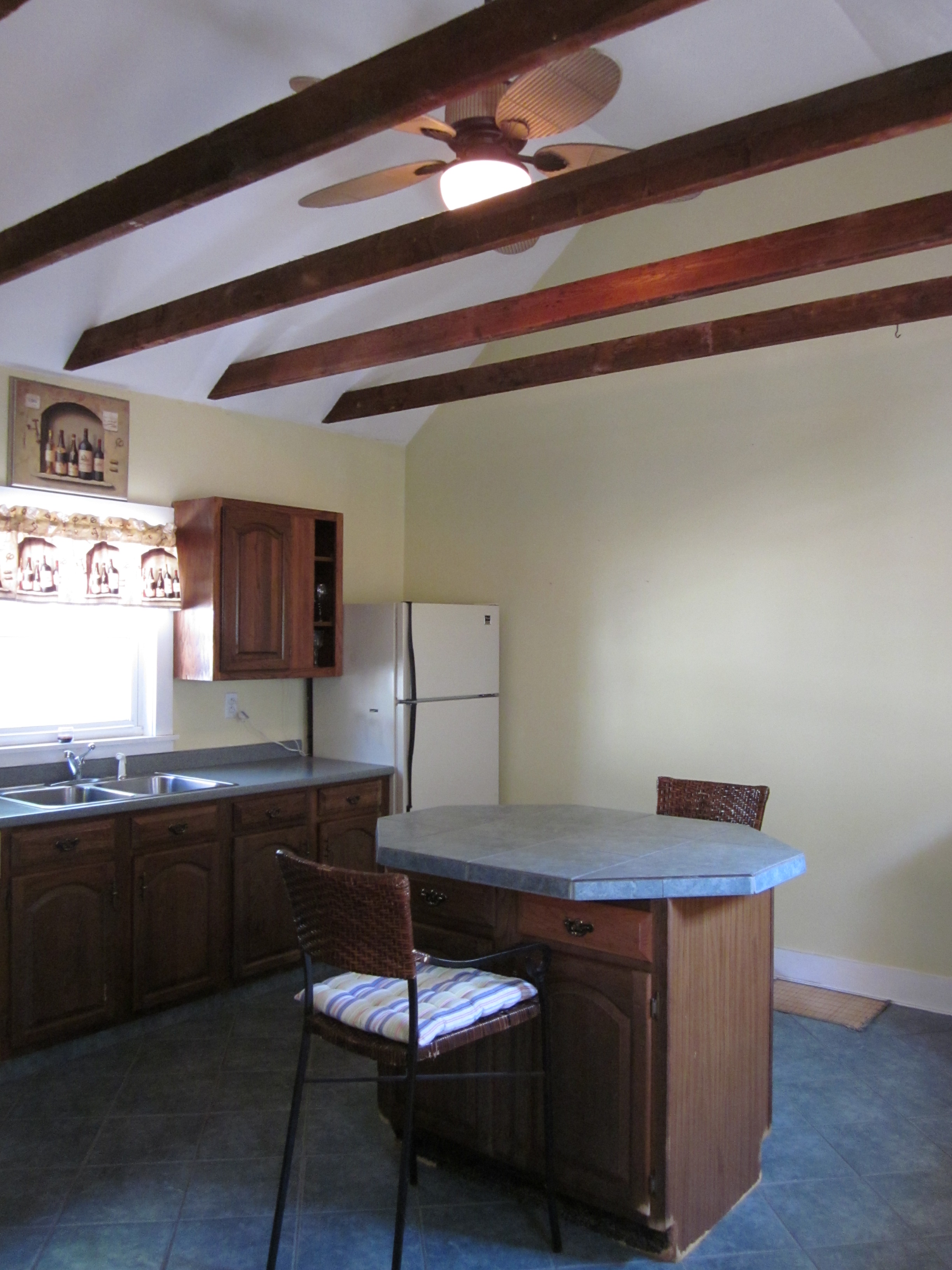 SUNDAY 12pm to 1pm – 98 Howe Street Marlborough: Adorable and affordable 2 bedroom cape near downtown Marlborough. Walking distance to main street and all the fine foods and shops. Minutes to 495 for the morning commute. Renovated kitchen, newer bath, new plumbing and new furnace. Hoping to get a puppy? This comes with a fenced-in yard and off street parking. Great house at a great price! SEE IT HERE
 It’s spring! Not only do we get outside to freshen up the gardens and lawns but we also take on larger home improvement projects. We can have the windows open, walls open and roofs re-done. Be careful! There are many “contractors” out there and some of them are not our friends. Follow these seven tips to make sure your contractor agreement works in your favor—not your builder’s.
Contractors use their own forms, which are drafted for their benefit, not yours. You’ll benefit from hiring an attorney to review your contractor agreement or draft one that’s you-friendly. Even though this may cost around $250 to $500, it can save thousands of dollars later if there’s a dispute.
Add a “choice of law” or “forum selection” provision, which says that disputes will be litigated on your turf. This provides protection against out-of-town contractors or suppliers—you don’t want to have to drag yourself across multiple state lines for a lawsuit.
Define when the contactor will deliver on his promises, and when he’ll get his money. Within the contractor agreement, create a payment schedule in your favor by holding money back until the work is fully completed and you’ve verified the final payments to subcontractors. Maintain control by holding the purse strings.
The most common problem you’ll encounter is a general contractor who gets paid, but doesn’t pay his subcontractors and suppliers—possibly leaving you on the hook, according to Craig Robelen, a home builder in Boca Raton, Fla.
Robelen advises protecting yourself upfront by requesting the names of all professionals your builder will work with. Verify that your contractor has paid his subcontractors by requesting conditional partial lien releases during the construction term, and a final lien release at completion. (Have the general contractor collect them and present them to you.) These are essentially formal acknowledgments from subcontractors that they are being paid for work done.
Also, see if your contractor has a “payment bond” that guarantees subcontractors will be paid.
Your contract should state that any changes that will affect the price of construction should be in writing and countersigned by both you and your contractor. This protects you from unauthorized charges.
Protect yourself from kickbacks—where contractors gets bonuses from their subs for referring business—by requesting that builders sign affidavits that they’re not getting any “fees” from subcontractors as a prerequisite for doing business with them. Keep costs well-defined by asking for a “bid summary,” which should show a minimum of three quotes in every cost category of your budget.
If you’d like to avoid going to court in case of a dispute, add a clause in the contractor agreement for binding arbitration. If there’s a problem, you and your contractor will plead your case in front of a non-biased arbitrator, whose decision will be final.
If your contractor balks on any contract point you feel strongly about, do some more research. Maybe what you’re asking isn’t typical for that kind of job. Talk with neighbors who have had similar work done and sound out other contractors regarding their policies on the disputed issue before you sign anything. This helps you determine what’s customary for your particular area.
 Yes, taxes continued. I know, I know…how could we make Friday any more exciting?
The Energy Credit has been a great way to save net money on your home improvements. Looking ahead to this time next year, make sure you are choosing the right places to invest your green money. Washington is giving you less green for going green, as the feds reel back the 2011 energy tax credits from a lavish $1,500 to a paltry $500. Keep your receipts and be ready this time next year.
No matter how much you spend on some approved items, you’ll never get the $500 credit–though you could combine some of these:
| System | Cap |
| New windows | $200 max (and no, not per window—overall) |
| Advanced main air-circulating fan | $50 max |
| Qualified natural gas, propane, or oil furnace or hot water boiler | $150 max |
| Approved electric and geothermal heat pumps; central air-conditioning systems; and natural gas, propane, or oil water heaters | $300 max |
And not all products are created equal in the feds’ eyes. Improvements have to meet IRS energy-efficiency standards to qualify for the tax credit. In the case of boilers and furnaces, they have to meet the 95 AFUE standard. EnergyStar.gov has the details.
Rule of thumb: If installation is either particularly difficult or critical to safe functioning, the credit will cover labor. Otherwise, not. (Yes, you’d have to be pretty handy to install your own windows and roof, but the feds put these squarely in the “not covered” category.)
Installation covered for:
Installation not covered for:
This article provides general information about tax laws and consequences, but isn’t intended to be relied upon as tax or legal advice applicable to particular transactions or circumstances. Consult a tax professional for such advice, and remember that tax laws may vary by jurisdiction.
 What is a Form 5695?? Your energy tax credit! This is a great tax credit that encourages energy upgrades in our homes. Sidestep snares in the complex IRS Form 5695 to get all the 2010 energy tax credits you’ve got coming.
What type of system did you install? If it’s one of the following, complete Part 1 for Nonbusiness Energy Tax Credits.
Max credit: 30% of the cost of the improvement, up to $1,500.
If you installed one of these souped-up systems, complete Part 2 for Residential Energy Efficient Property Credit.
Max credit: 30% of the cost, with no limit except for a kilowatt limit on fuel cells.
For Part I, it’s pretty simple: Just enter the total of all this part’s credits (as shown on line 11) on Form 1040, line 52.
For Part II, it can get complicated because other credits, claimed on other forms, can affect the amount of your Part II credit.
If you need to fill out any of the following forms, have all the information needed to complete those at hand, because Form 5695, line 25, coordinates with all of them. (In fact, you’ll find it simplest to prepare all these forms more or less simultaneously.)
One form that’s irrelevant to completing 5695: Schedule A. That’s only for deductions, not credits. And you don’t even need to itemize to claim energy tax credits.
You’ll find many places you can go wrong in both parts of the form:
Adding ineligible amounts into the form. Just because a product has an Energy Star label doesn’t mean it’s eligible for a credit. Check the details of what’s eligible for the credit and what’s not at Energy Star and make sure the product comes with a manufacturer’s certification.
Failing to keep track of this year’s energy tax credits for future years. Hang on to your tax credit paperwork (including receipts, certifications, and a copy of your completed Form 5695), because if you sell your house you’ll need to record the tax credit amount for tax purposes.
Failing to file this form at all—or only partially. If you’re eligible for a lot of different tax credits, you can conceivably reduce your tax liability to zero. If that’s the case and you want to tack on the 2010 energy tax credit, you’re out of luck. The feds consider it nonrefundable. If it were a refundable tax credit, the IRS would write you a check.
Forgetting certain credits that affect Part II—and vice-versa. Pay special attention to line 25: Certain other credits may ultimately affect your ability to fully claim Part II credits—just as Part II credits may affect other credits. Follow the line-by-line instructions in each form carefully. It’s easy to forget a number here.
If you find Form 5695 exasperating, you may be eligible for free tax preparation help from the:
Major tax preparation software, such as TurboTax, include this form in their packages.
 As promised! More on taxes! I know, I know…it’s crazy to talk about such exciting stuff without a party hat on but an IRS audit or missed refund money is no party either! Here are the ten most common errors that home owners make on their tax returns. Don’t rouse the IRS or pay more taxes than necessary—know the score on each home tax deduction and credit.
You take a tax deduction for property taxes in the year you (or the holder of your escrow account) actually paid them. Some taxing authorities work a year behind—that is, you’re not billed for 2010 property taxes until 2011. But that’s irrelevant to the feds.
Enter on your federal forms whatever amount you actually paid in 2010, no matter what the date is on your tax bill. Dave Hampton, CPA, tax manager at the Cincinnati accounting firm of Burke & Schindler, has seen home owners confuse payments for different years and claim the incorrect amount.
If your lender escrows funds to pay your property taxes, don’t just deduct the amount escrowed, says Bob Meighan, CPA and vice president at TurboTax in San Diego. The regular amount you pay into your escrow account each month to cover property taxes is probably a little more or a little less than your property tax bill. Your lender will adjust the amount every year or so to realign the two.
For example, your tax bill might be $1,200, but your lender may have collected $1,100 or $1,300 in escrow over the year. Deduct only $1,200. Your lender will send you an official statement listing the actual taxes paid. Use that. Don’t just add up 12 months of escrow property tax payments.
Deduct points you paid your lender to secure your mortgage in full for the year you bought your home. However, when you refinance, says Meighan, you must deduct points over the life of your new loan. If you paid $2,000 in points to refinance into a 15-year mortgage, your tax deduction is $133 per year.
Lenders require home buyers with a downpayment of less than 20% to purchase private mortgage insurance (PMI). Avoid the common mistake of forgetting to deduct your PMI payments. However, note the deduction begins to phase out once your adjusted gross income reaches $100,000 and disappears entirely when your AGI surpasses $109,000.
This deduction may not be as good as it seems. It often doesn’t amount to much of a deduction, has to be recaptured if you turn a profit when you sell your home, and can pique the IRS’s interest in your return. Hampton’s advice: Claim it only if it’s worth those drawbacks.
If you met the midyear 2010 deadlines, don’t forget to take this tax credit into account when filing.
Even if you missed the 2010 deadlines, you still might be in luck: Congress extended the first-time home buyer credit for military families and other government workers on assignment outside the United States. If you meet the criteria, you have until June 30, 2011, to close on your first home and qualify for the tax credit of up to $8,000.
If the IRS comes a-knockin’, don’t be scrambling to compile your records. Many people forget to track home office and home maintenance and repair expenses, says Meighan. File away documents as you go. For example, save each manufacturer’s certification statement for energy tax credits, insurance company statements for PMI, and lender or government statements to confirm property taxes paid.
If you sold your main home last year, don’t forget to pay capital gains taxes on any profit. However, you can exclude $250,000 (or $500,000 if you’re a married couple) of any profits from taxes. So if you bought a home for $100,000 and sold it for $400,000, your capital gains are $300,000. If you’re single, you owe taxes on $50,000 of gains. However, there are minimum time limits for holding property to take advantage of the exclusions, and other details. Consult IRS Publication 523.
If you made any eligible improvement, fill out Form 5695. Part I, which covers the 30%/$1,500 credit for such items as insulation and windows, is fairly straightforward. But Part II, which covers the 30%/no-limit items such as geothermal heat pumps, can be incredibly complex and involves crosschecking with half a dozen other IRS forms. Read the instructions carefully. More on the energy tax credits to come!
You can deduct mortgage interest only up to $1 million of mortgage debt, says Meighan. If you have $1.2 million in mortgage debt, for example, deduct only the mortgage interest attributable to the first $1 million.
This article provides general information about tax laws and consequences, but is not intended to be relied upon by readers as tax or legal advice applicable to particular transactions or circumstances. Readers should consult a tax professional for such advice, and are reminded that tax laws may vary by jurisdiction.
 This is a great contest sponsored by HouseLogic. HouseLogic is a free site for homeowners (houselogic.com) that is full of how-to articles, Facebook links and home ownership information.
Get 6 smart tips to save big on your game-day party–and share some of your own tips for a chance to win a Super Bowl bash on us.
Have fun watching the game with friends and family while supporting a good cause–and take a tax deduction, too. Here’s what to do:
Let a brand donate their food and drink to your party. Here’s how to get involved:
Some NFL stadiums have been taking measures to go green for years now, saving hundreds of thousands in energy costs and recycling everything from straws to cooking grease. Here’s how you can conserve at home:
There are tons of blogs and websites out there that have the scoop on the latest deals at hundreds of retailers. Save big on everything from food to supplies to electronics just by spending a few minutes doing an online search. Here’s what we found:
After all, it’s the company that really makes the party special. So rather than breaking your back (and the bank) trying to get everything done by yourself, include your guests and make it fun.
Let us know some of your own great money-saving tips for hosting a Super Bowl party on Facebook—and you’ll have the chance to win a $100 gift card from HouseLogic!
No purchase necessary to enter or win. Must be a U.S. resident and 18 years of age or older at time of entry. Void where prohibited or restricted by law. Winner will be chosen at 2 p.m. Eastern time on January 31.
 New year, new list of remodeling projects to start around the house. At least that’s what remodelers and contractors are hoping.
So, what remodeling projects are on top of everyone’s list?
The National Association of the Remodeling Industry (NARI) conducted an exclusive poll of their top builders and developers for us and found that while most people are not starting major renovation projects due to the economy, now is the time to take care of the smaller jobs around your home.
Call it the over-arching remodeling trend for 2011: Tackling small projects while you wait to do the really big remodeling project that’s on your list.
1. Save Money: Remodel Your Bathroom. Old tile getting a little grungy? It looks like 2011 is the year for a bathroom update. Dennis D. Gehman, president of Gehman Custom Remodeling says, “Bathrooms are the hottest project, we think it’s due to the economy. Baths cost less than a kitchen or addition and most houses have more than one bath, so there are more available to be remodeled.”
2. Must-Do Remodeling Projects. Rather than going through major renovations, next year people will continue to only complete the projects that need to be done, like repairs to siding or roof leaks. Mitch Speck of Specktacular Home Remodeling says he is seeing a trend of people doing “‘have-to’ projects instead of ‘want-to’ projects.”
3. Warming Up The House. Warmer tiles and colors are coming back. People tend to be moving away from minimalist, white designs in favor of cozier, earth tones. The trend, however, is not rustic. Instead, it’ss a mash-up of earthiness and modern design. Judy Mozen, president of Handcrafted Homes, Inc., says she is seeing people favor rooms that are more contemporary and calming, but are “still not totally contemporary.”
4. Getting Decked Out. George Christiansen of Pequot Remodeling Corporation says his clients are building outdoor spaces for themselves. “It appears that people want to sit outside again and are staying at home more frequently. Many pools are also being built in the neighborhood.”
5. Hiring A Great Contractor. Darius Baker of D & J Kitchens and Baths, Inc. says that “consumer diligence” is on the rise. “Folks are finally getting the message that it is important to look closer at the companies they are considering for their project. They are asking the questions we have been telling them to ask for years.”
6. Paying in Cash. Rather than taking out loans for renovation projects, homeowners are using cash for projects. Steve Klitsch of Creative Concepts Remodeling, Inc. says homeowners are giving themselves a budget and picking and choosing what projects they can do with the money. One way to save money is by updating features, like cabinets, but not remodel an entire room.
7. Opening Up Rooms: “Open floor plans are in, so we’re removing interior walls and opening up the spaces in older houses to modernize them,” says Gehman. Open floor plans help families be more flexible with the square footage they already have.
8. Bronze Age. Along the with warmer tones in homes are warmer tones in metallic features. Kathy Adams of J&C Adams Co., Inc. says “oil rubbed bronze, aged bronze, or distressed hardware” will be big in the coming year.
9. Going Green. Bamboo floors, grass thatched roofs, and bark siding may sound like something from “Jungle Book,” but they are just a few of the newest green home products. In addition, people are getting energy efficiency upgrades. Adams says upgrades on glass will be continue to be big, and adds that “people are even asking for tri-pane (windows)!”
10. Industrial Flair. Exposed beams will continue to be popular, but so will “stainless steel cable and architectural products,” says Michell Milestone, director of sales and marketing at JG Development, Inc. With so many people working from home, home will take on more of an industrial or commercial look to enforce business credability.
11. Creating Relaxation Space: With home values still falling in many areas and a new prediction of three more lousy years of real estate, homeowners are more stressed than ever. So it’s no surprise that when they are developing new spaces, tranquility comes to mind. Mozen says people are asking for “zen-like” bathrooms. “The bathrooms don’t have to be big-but they have to be relaxing and soothing. They seem to prefer showers with the works-steam, seats, body sprays, etc.”
12. Planning ahead: “We are seeing many clients thinking about their retirement years,” says Jillian Renner of Golden Rule Remodeling & Architecture, Inc. Her clients-even those far from retirement-are putting in easy-opening cabinetry, hand-held showers, and more accessible kitchens and baths. Renner adds, “Even though the clients don’t need those things right now, they are planning for when they might find them needed.”
Are you planning a remodeling project this year? How much are you planning to spend?
 Renting and thinking about buying? Start with a solid budget plan that includes strong credit and savings.
Living from one paycheck to the next may be the norm for many people. But homebuyers need a better strategy.
“If buying a home is your goal, then it needs to be your priority,” says Tim Kirchner, vice president of MetLife Bank in Irving, Texas. “Most people need to sacrifice a little and stick to a budget in order to save for a home.”
A good budget plan begins one or two years before a buyer makes an offer. Here are four tips for renters who plan to become homeowners.
1. Build strong credit
When it comes to securing a loan at the best mortgage rate, credit is king.
“The most important focus for all potential buyers should be improving their credit score,” says Jean Badciong, chief operating officer of Inlanta Mortgage in Waukesha, Wis. “A low score can prevent someone from buying a home or at least from qualifying for an affordable mortgage rate.”Greg Holmes is national director of sales and marketing for Credit Plus, a company in Salisbury, Md., that provides credit reports to mortgage lenders. He says potential buyers should request their free credit report at AnnualCreditReport.com.”Some people who think they have good credit don’t, while people who think their credit is bad may be surprised that it is actually OK,” Holmes says. “Everyone should check their report for accuracy and fix any mistakes. It can take months to correct errors.”
To improve their credit scores, buyers should pay off past-due bills, pay every bill on time and reduce their balances on every account to less than 30% of the credit limit, Holmes says. Also, it is best to have three to five credit accounts, such as a car loan, student loan or credit card, for one year or longer.
Holmes says he does not recommend switching credit cards frequently to get the best rate, though.
“Lenders do not want to see a lot of credit inquiries or too many new accounts because this could indicate someone who is about to take on a lot of extra debt,” Holmes says.
Kirchner says people often do not realize the consequences of paying bills late or missing a payment, which can affect your credit report for a long time.
Some young people assume they can improve their credit scores as an authorized user on a parent’s card. But Badciong says this will have no impact on their score.
2. Save cash
Christine Howard, a senior loan officer with Inlanta Mortgage, says future homebuyers should make “virtual” mortgage payments today to build up savings and learn to budget for actual mortgage payments down the road.
“Renters can estimate a mortgage payment and set aside the difference between that payment and their rent each month,” Howard says. “If they are paying $800 in rent and estimate their mortgage will be $1,100, they can put $300 per month in a special savings account.
“Not only does this help them save for a down payment, but it demonstrates to a lender their ability to afford that higher housing payment.”
Kirchner says he recommends that future buyers create a simple budget and set a savings goal.
“If they find they can save $300 a month, then they will have $3,600 at the end of the year,” Kirchner says. “Lenders want to see that pattern of savings, and buyers will need at least 3.5% for a down payment on a (Federal Housing Administration) loan or at least 10% for a conventional loan.”
Kirchner recommends setting up an automatic transfer of funds into a savings account through your employer or your bank.
3. Reduce debt
While buyers increase their savings, they should also reduce their debt.
“Paying off debt tops saving in terms of priorities because of the interest payments on the debt, which exceeds the amount of interest they can earn on their savings,” Kirchner says. “Lenders want to see that you are managing your debt and keeping your credit-card balances low.”
Howard says debt-to-income ratios are an important element in a loan approval. This ratio compares minimum monthly debt payments to gross monthly income.
“If your debt-to-income ratio is over 50%, you need to pay off your debt before even thinking of buying a home,” Howard says. “Some companies will relax their standards for borrowers with a strong credit score or substantial cash reserves, but in general, FHA will only go up to 43% and conventional lenders will only go to 41% for the overall debt-to-income ratio.”
4. Get educated
Although it might be premature to visit a lender two years before a home purchase, it can be valuable for consumers to know if they qualify for a mortgage, Kirchner says. He also recommends visiting open houses.”A lot of people have no idea what $100,000 or $200,000 will buy,” he says, “so the more they look at places and neighborhoods, the better understanding they will have of the value in a home.”
Talk with your realtor – they can point in the right direction and will stay with you through the whole process!

 Real Estate and *stuff *