Real Estate and *stuff *
A real person helping real people with real estate
You can scroll the shelf using ← and → keys
You can scroll the shelf using ← and → keys
 If you want healthy, vigorous plants in your garden, you need to get on intimate terms with your garden soil pH.
Soil isn’t sexy; for some, it’s dull as dirt. But for a brilliant and bountiful garden, you’ll have to test your soil’s pH. Here’s how you can help your garden soil be the best it can be.
Good soil gives plants energy
Just like people must digest nutrients from food to grow, plants must absorb nutrients from soil to thrive. Soil pH and soil texture influence the types of nutrients that are available for plants to scarf up and use for energy.
What’s with pH?
Soil pH measures its degree of alkalinity or acidity on a scale from 0 to 14. Most vegetables grow best in soil with a neutral pH of 7, which is more of a goal than reality.
Different nutrients are available at different pH levels. Luckily, plants have evolved to thrive in all kinds of soils. So whatever your soil’s pH level, there are plenty of plants that would like to call it home. For instance:
When you plant a garden, you have two options: Pick plants that thrive in the soil you’ve got (the easy way), or amend your soil to change its pH (more work).
The importance of texture
Soil texture determines how your soil retains water and nutrients. If nutrients leach out of soil, they won’t be around to feed your plants.
Clay and soil rich with organic matter hold water and nutrients better than sandy soils, even though some plants, like cosmos and blanket flowers, prefer a sandy home.
The best soil is a happy combination of sand, clay, silt, and organic matter from leaves or compost. This combo provides plenty of nutrients and encourages healthy root growth.
How to test your garden soil
Garden centers and hardware stores sell DIY soil test kits for $5-$7, which will give you a rough idea of your soil’s pH and nutrient levels. But the most accurate way to test your soil is to send a handful to your county or state soil-testing laboratory, which you can locate through your local extension agent. The report, which typically costs $10, will reveal your soil’s:
How to transform your soil
Adria Bordas, horticulture extension agent for Fairfax County, Va., says transforming soil is a “very slow process.” Figure a year to 18 months, she says. And the only way to know for sure that your soil has changed is to test it again.
 Open on Thursday, April 26th at 11:30am to 1:30pm this unique and stunning property can be viewed! Come visit 1 Sargents’ Island in Shrewsbury! Did you know Shrewsbury had an island?
This 4.27 acre island in Flint Pond is accessed by a dedicated year-round causeway and features nearly 2000 feet of shoreline. Stunning lake views, wildlife, privacy and freedom! Currently zoned residential with a single family home in the center this property offers so many possibilities. Close to major commuting routes but yet seemingly far away from the busy day. Imagine ending your highway commute and minutes later grabbing your fishing pole and stepping on to your boat. It’s a vacation at the end of every weekday.
Stop in – tell your friends – think of the possibilities with this unique piece of property! How many islands are for sale in Shrewsbury? Just ONE!


MapQuest or navigator: Use “104 Creeper Hill Rd North Grafton”. Directly across the street will be the gated causeway entrance. Drive is 3/4 mile. Thursday, April 26th 11:30am to 1:30pm – lunch included 1 Sargents’ Island Shrewsbury, MA 01545 MLS: 71362794
 Martha Stewart spring cleans like a pro — because she is a pro. But the rest of us seek an easier way. Welcome to The Anti-Martha Stewart Spring Cleaning Guide.
For the record, I love Martha Stewart. She has elevated housekeeping to high art, which protects home values. Martha’s taught us the devil is in the details, and that even mundane chores can be tackled with grace, diligence, and elbow-high rubber gloves.
That said, spring is here, and cleaning is required. But who’s got the time or energy to rip apart every square inch of the house? When I saw a Martha blog that suggested cleaning our kitchen range in only 22 steps, we threw in the towel and shouted, “Get real!”
Then, I found Anti-Martha Stewart Spring Cleaning Guide, acknowledging that top-to-bottom cleaning is a good idea, but nobody’s idea of a good time.
But days have only 24 hours, and work, family, and the tyranny of getting in 10,000 steps makes spring cleaning Martha-style merely a fantasy for most of us. So, I found a “get-real” guide.
This guide is all about time-savers and corner-cutters. Top highlights:
But seriously, folks. Here’s a little preview of the guide.
Hey, we’ve got a million of these. Martha, I’m sure, is shaking her head in dismay. But I’m sure this guide will help you get clean in spring and still have time to enjoy the season. THE GUIDE
And that’s a good thing.
 Lawn Work Ranks Low on Americans’ Hit Parade of Chores! When it comes to lawn chores, we’d rather open wide and say “ahhhh” than mow and weed.
Americans would rather see their dentist or visit their in-laws than spend time with their lawns.
In fact, we would rather do just about anything than mow, fertilize, and perform other lawn care chores, according to a Consumer Reports survey of 1,000 adults nationwide.
When asked about which tedious chore they would like to do, only 7% said lawn care. Here are the activities that ranked higher:
What chores would you pick over lawn care? Any chores that rank lower?
 If you want a yard that demands less time money and water consider low-maintenance grasses in lieu of the traditional lawn.
We love our lawns. Turf grass covers nearly 47 million acres in the U.S., according to the Lawn Institute. But that’s not very green. The average household dumps 60 gallons of water per day on conventional lawns. Toxic lawn herbicides and pesticides run off into lakes and streams. Gas-powered mowers spew pollution. And then there’s the watering, weeding, seeding, sodding, thatching, and mulching commitment.
If you’re looking for an alternative, consider replacing some or all of your high-maintenance turf with innovative grasses that require little or no water or mowing once established, or ground covers that form walkable “carpets.”
In turn, you’ll reduce the need for irrigation, stop washing harmful chemicals into the watershed, add depth and texture to your landscape, and spend your spare time enjoying your yard instead of manicuring it.
Low-maintenance turf grasses
If you need grass for kids or pets, consider new “miracle” cultivars or blends. UC Verde Buffalo Grass, for example, delivers lush, silky blades that require little or no water once established, rarely need mowing, and need no fertilizer or pesticides. The secret to these grasses are long (but noninvasive) roots and thin blades. Make sure you get the right fescue, or grass, blend for your soil type and growing zone.
“No Mow Lawn Mix” is great for open, sunny swaths where native prairie grasses once grew, such as the cooler, medium-rainfall areas of the upper Midwest, Northeast, and Pacific Northwest. And hardy Eco-Lawn thrives even in difficult spots, such as under spreading trees or in clay soils.
The cost of growing these blends from seed is comparable to that of conventional grass seed. No Mow Lawn Mix, for example, costs $3.75 to $5.95 per pound; you need 5 pounds per 1,000 square feet, which translates to about $0.02 per square foot. Planting grass from plugs is more expensive; you’ll need at least 1 or 2 plugs per square foot, at a cost of about 50 cents per plug.
Sedge: One of the most exciting breakthroughs in turf concepts in recent years has been the development of sedge lawns. Sedges look a lot like conventional turf but have more in common with native grasses that existed in America before sod-busting development and agriculture. The great thing about them is that they require little or no mowing, fertilizing, or chemicals. Some require less water than many conventional turf grasses. Others tolerate wet, moist areas, and many thrive in shade.
Ornamental grasses: This term covers both grasses and grass-like plants, such as sedges. For our purposes, we’re talking low-water, native grasses. Low to medium-height species can be used en masse as meadows. Tall ones function as vertical elements in a landscape. Check with your local extension service to find out which kinds are native to your area. What might be native to one region, such as pampas grass, may well be invasive in another.
Synthetic grass: Synthetic grass is starting to get some respect, thanks in part to increasingly urgent water restrictions in parts of the country, and because new versions are so amazingly lifelike. Synthetic turf requires zero water or mowing, which does wonders for your carbon footprint. The grass looks perfect—and perfectly real—and is suitable for either an expansive play area or a little jewel box of a garden nook, particularly where nothing else will grow.
On the downside, lawns made of petrochemical plastics can feel stifling in hot weather and offer no habitat for birds or insects. Some communities have protested the use of synthetic turf in institutional landscaping like school soccer fields, amid health concerns that the recycled-tire crumbs used as infill to provide drainage and keep blades from matting contain high levels of toxins.
 Your bathroom, one of the rooms you clean most, hides areas that rarely see a scrub brush. It’s time to tackle these 5 nasty spots you probably forgot.
If you can’t remember the last time you cleaned your bathroom, we don’t want to know what’s living in your tub. Probably, a host of staphylococcus, the skin infection bacteria that, a recent study showed, more frequently grows in tubs than in garbage cans.
But we presume you or someone else regularly swishes out the toilets, wipes out the tubs and sinks, and mops your bathroom flooring.
But you may be missing some critical areas. With the help of Kristi Mailloux, president of Molly Maid, here is a compiled a list of 5 bathroom spots home owners often forget to clean:
1. Showerheads: A warm white vinegar bath will get rid of mineral deposits, making your low-flow shower head flow even lower. Let the showerhead soak for about 20 minutes, then poke a paperclip into shower head holes still clogged. Scrub with an old toothbrush, then rinse and repeat if necessary.
2. Toilet bases: Mildew can grow on the caulking around the base of your toilet. Spray with white vinegar or disinfecting household cleaner, then scrub with a hard-bristled brush. Dry thoroughly.
3. Shower curtains: Clean soap scum and mildew from plastic shower curtains by tossing them into your washer on the gentle and cold (never hot!) water cycle, with detergent and ½ cup vinegar. If mildew is present, add ½ cup of bleach instead of vinegar. Toss a couple of large towels into the machine to act as scrubbers. Hang curtains back on your shower curtain rod, spread them out, and let them drip-dry. If you turn on the bathroom fan, they’ll dry faster.
4. Drains: We don’t usually pay much attention to drains until they’re clogged. But all year your hair, toothpaste, shampoo, and conditioner are building up in sink and tub drains. Remove the stopper — unscrew the shower drain — and clear away obvious gunk, like hair and soap. Soak the drain in vinegar to clear away mineral deposits. Then, pour boiling water, or a mixture of ½ cup white vinegar and ½ cup baking soda, down the drain, which will bubble away crud sticking to pipes.
5. Medicine cabinet: Throw out prescription and over-the-counter drugs you no longer need or want. But don’t dump them down the drain, where they become part of the watershed, or into the trash, where anyone can fetch them out. Instead, take them to a local collection site, often at police or fire stations. Or check U.S. Drug Enforcement Administration’s National Take Back Initiative’s website for dates and sites for their next collection.
 Attic bedrooms are very popular and I see them frequently. When a family grows or needs additional space, it’s an area they look to if the basement is already being used as a workshop or for storage. In terms of a remodeling project – this project has a high return on the investment:
 What I have seen that holds these spaces back from being attractive to the next buyer is if they were done correctly. When remodeling unused attic space into an attic bedroom, make sure your new retreat has adequate storage, sound insulation, and safety equipment.
Creating an attic bedroom from unclaimed space is an excellent way to add living area without adding onto your house. An attic bedroom also is a good investment. According to Remodeling Magazine’s annual Cost vs. Value Report, an attic bedroom returns more than 72% of the original cost. Here’s how to make sure your new attic bedroom is a pleasant, quiet retreat with adequate storage, sound insulation, and safety equipment.
Soundproofing your attic bedroom
Because attic bedrooms often are positioned above other bedrooms, you’ll need to “deaden” the sound between floors. Here are your options to quiet down a 15×15-foot attic bedroom floor:
Attic ideas for creating storage
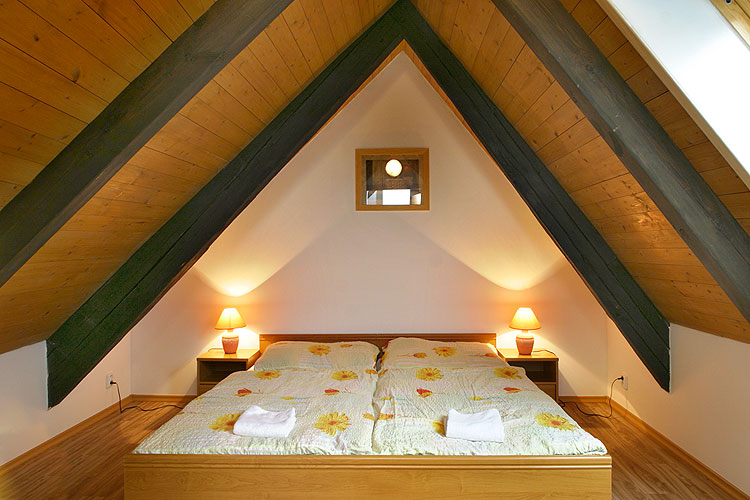 Sloped ceilings make creating storage in attic bedrooms more difficult than in other parts of the house. You can pick up some storage space by installing built-in cabinetry in knee walls and by building a flip-top window seat under a dormer window.
Be sure to insulate any cabinet walls or shelf backs that abut unfinished attic space.
Provide a safe way out
 Residential codes require two ways out of any bedroom in case of an emergency. In a remodeled attic, you’ll need an escape ladder, which you can hide in a built-in window seat.
Ladders for a third-story window can cost $70 to $100; expect to pay $300 for ladders with their own cabinets. Be sure to tell guests where the ladder is hiding.
Have you put in an attic bedrooms? If so – share your pictures!
Please stop in this beautiful colonial in Northbridge today between 1pm and 4pm to enjoy a special open house event with our very own Pampered Chef Consultant!
Leslie will be showing us how to truly enjoy a kitchen with our families with some of their newest recipes and cookware. This house has a HUGE kitchen with a wet bar and slider doors to the back deck that over look a very pretty yard!
Priced well and ready to go this is a private sale – not a short sale – so no messy bank paperwork and a quick close!
179 Rocky Road
Northbridge MA
1pm to 4pm



Looking to add a little magic to your rooms? Call in the magician — crown moulding can make rooms seem taller, shorter, and fancier. It’ll disappear the seam where walls meet ceilings, put an exclamation point on cabinets and built-ins, and camouflage your remodeling secrets. Check out these 10 great crown moulding tricks and ideas.
 The Crowning Touch
Crown moulding is a visual treat that adds a touch of elegance. Crown mouldings made of wood come in hundreds of profiles and can be stained, painted, or left natural. Because wood tends to expand and contract with changes in humidity, use flexible caulk at joints and seams. Cost: $1.50 to $45 per foot.
 Coolest Crown
Not all crown mouldings look like they came from ancient Greece; these jazzed-up plaster mouldings are completely contemporary. In rooms with ceilings 8 feet high or less, the upper portion of your crown moulding (along the ceiling) should be longer than the bottom (along the wall). Custom plaster mouldings and trims cost $25-$50 per running foot; installation requires experience.
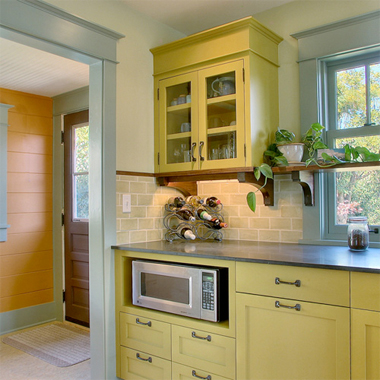 The Triple Crown
The three-piece crown moulding on this upper kitchen cabinet matches the classic Shaker-style motif of the door casing. It’s an easy DIY project featuring a slim piece of simple trim and a plain flat board topped with a 2-inch-wide piece of fluted crown. You’ll spend about $15 per cabinet.
 The Light Fantastic
Lighted crown mouldings add a soft, ambient glow and are sure-fire conversation starters. The two-piece system has lights in the lower moulding that project upward, illuminating the upper piece. Cost for a 12-by-12-foot room is about $800, installed.
 A Turn for the Better
Got a room with a curve? That’s no problem for flexible polyurethane crown moulding that’ll conform to just about any shape. It’s lightweight, and accepts paints and stains. An 8-foot-long piece is $15-$30.
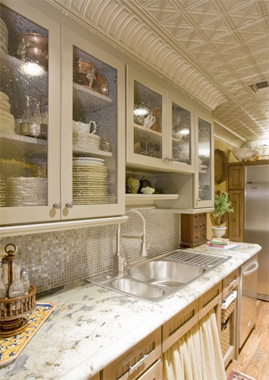 Not-So-Heavy Metal
Made for use with stamped metal ceiling panels, crown moulding made of tin or aluminum is lightweight and easy to cut. Pre-formed corners eliminate the need for complex miters, so a handy DIYer can tackle installation. Metal crown moulding comes pre-finished, or can be primed and painted to match your decor. Cost: $1-$5 per lineal foot.
 Not Just Another Pretty Facade
Want to run new wiring in your house but balk at the thought of ripping out drywall? Let crown moulding come to the rescue. Hollow PVC crown moulding is an inexpensive way to hide cable, audio, and communication wires in any room. An 8-foot-section with a 4-inch profile is $10-$20.
 The Power of Poly
Lightweight polyurethane crown mouldings are easy to install. You can cut and nail them like wood, but they won’t split or crack. Most come with a factory-applied primer finish and are ready to paint. A 4-inch-wide piece of polyurethane crown moulding that’s 12 feet long is $60-$90.
 Crown Moulding Goes Green
If you like making eco-conscious choices for your home, try crown moulding made from reclaimed timbers. Using salvaged materials means no new timber is harvested, and keeps old building products out of landfills. Beautiful heart pine molding with 5.5-inch profile is about $8.75 per lineal foot.
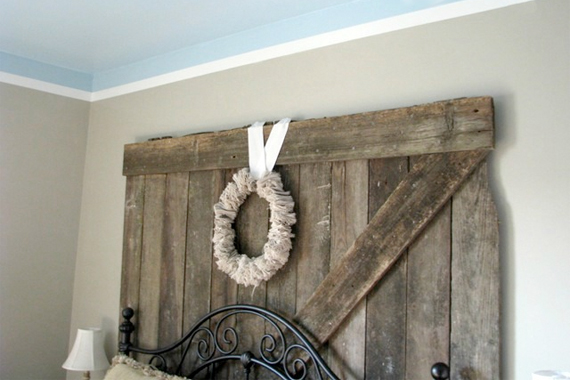 More Uses for Duct Tape
White duct tape covers the line where the blue ceiling paint meets the beige wall color, creating an inexpensive multi-layered crown moulding effect. Bringing ceiling paint color down along the walls helps make tall walls look shorter.
Which one are you going to try?
Pampered Open House Party!

Please join us for a special open house event in this beautiful colonial in Northbridge. On the market and ready to go this home offers a fabulous great room, expansive kitchen, hardwoods, fireplace, back deck and master suite. Leslie Houssan from Pampered Chef will be demonstrating some of her new products!

Leslie will be making Grilled Chicken Penne Al Fresco pasta, with a light tomato wine sauce topped with fresh Basil and Parmesan, in the Pampered Chef “Magic Pot” which is a quick and healthy family meal . She will show how easily this can be done—quick to make and quick to clean up so that you can enjoy more time with your family!
Recipes, demonstrations and an open house tour! What could be better? Bring a friend, stop in and enjoy!
Saturday, March 24th, 1 to 4 pm
179 Rocky Road Northbridge
 Real Estate and *stuff *