Real Estate and *stuff *
A real person helping real people with real estate
You can scroll the shelf using ← and → keys
You can scroll the shelf using ← and → keys
 Come join myself and Leslie Housan from Pampered Chef at 101 Temple Street in West Boylston this Sunday 11:30 to 1:30!
She’ll show us some tasty treats in the gourmet kitchen of this beautiful new construction. Top of the line appliances including double wall ovens and Jenn-Air range top. Granite and hardwoods already make this an inviting kitchen but with Leslie’s treats and tricks – we’ll all be standing there!
With 3 full levels of living space this is a perfect house for the coming holidays. 5 bedrooms total (2 master suites) and a full in-law with its own entrance allow for visiting family and friends to be comfortable while staying with you (and you’ll be comfortable too! Gas heat and the two fireplaces will keep everyone warm and toasty! No drafts in this house with the Anderson window and doors.
All situated on 2.9 acres that abuts the reservoir! Privacy – easy high access – incredible savings in the finished square foot price – superior materials for construction – fine finishings all add up to an incredible value in West Boylston! Stop in!


Outdoor solar lights are bright ideas for exterior illumination. Find out how these energy-saving lights work and the many types that can make your nights shine.
Outdoor solar lights were some of the first alternative-energy products to gain a mass-market foothold. Today, sunlight-powered fixtures are flooding the landscape and garden lighting market.
How solar lights work
Solar lights have three main components:
The upside of outdoor solar lights
The downside
Outdoor solar lights don’t really have a lot of downsides. However, if you live in a cloudy climate, or if you’ve just experienced a long haul of rainy and overcast weather, the brightness and longevity of the lighting may be affected.
Also, solar lights cost more at the outset because they’re complex and have expensive components.
Types of outdoor solar lighting
 String lights come in various lengths, such as 25 and 50 feet, and usually have 2-6 bulbs per foot, depending on the manufacturer. There are many styles, colors, and sizes of bulbs to choose. They’ve become popular as Christmas lights, but you can use them to light up your outdoor living spaces all year round.
You should know: Solar string lights don’t need regular household electrical current, but they’re attached by wire to a small solar panel — make sure the panel has access to as much sunlight as possible.
Cost:$20-$40 for a 25-foot strand.
 Border and driveway lights illuminate walkways and the edges of driveways for safety and convenience.
 Glowing globes are spherical sun-powered lamps that make chic architectural additions to your landscape lighting scheme. Stake them in your yard, float them in your pool or make them border beacons — no matter, you’ll enjoy the glowing-orb goodness.
You should know: Color-changing globe lights have three modes: off, “color mode” (which cycles through the spectrum), and “white mode” for simply glowing light.
Cost:Glowing globes, $29-$49; half-globe path lights, $7.99 each
Safety and security lights are ready to shine when the sun goes down.
You should know: A spate of sunless days could leave your motion-detecting security light off-line — a chance you take any time you go solar.
Cost: Security lights, $79.99 to $120; house numbers, $15 and up, depending on design.
You should know: Some solar table lamps do include an electrical plug-in option as well as a solar panel.
Cost: Solar table lamps are $20 and up, depending on size and materials; $600-$1,000 for 9-foot high multi-fixture lamp post.
 Tidy your garden for fall and winter before the first frost to keep it comely even after the growing ends.
Growing season is winding down, but your garden still needs your love. Spent vines, stubborn weeds, greens gone to seed are making your garden look sloppy and tired.
Here are some fall vegetable garden cleanup tips.
Bury the dead
Nothing looks sadder than leggy tomato vines, yellow zucchini leaves, and dried-up perennials that long ago displayed their last bloom. So pull and prune the dead or dying plants in your garden.
Bury spent plants in your compost pile; double-bag diseased and infested plants and place in the trash. (Empty mulch bags are great final resting places for these plants, so be sure to stockpile them in spring.)
If your tomato vines are still bearing fruit, keep staking and pruning them until the first hard frost, when they’ll likely die. And give the birds a break and leave some seed-bearing but spent blooms for them. They love sunflowers, cone flowers, berries, and black-eyed Susans.
Pull weeds
This is the last time this season to pull weeds. Pluck them before they flower and send seeds throughout your garden that will rest in winter and sprout in spring.
If you have a mulcher, chop the weeds and throw them on your compost pile. If you want to be extra sure that weed seeds are dead, bag weeds in black plastic and place in a sunny place for a couple of months. The heat will kill the seeds. Then throw the cooked weeds on your compost pile.
Harvest seeds
One way to cut garden expenses is to harvest and store seeds. One large sunflower, for instance, can provide seeds for hundreds of plants next spring. Here are some seed guidelines.
Stack and cover metal tomato cages. Bundle wooden or bamboo stakes, and store in a dry place so they don’t rot over winter. And retrieve panty-hose vine ties that you can re-use next spring.
Instead of throwing out broken cages and stakes, repurpose them. Snip off remaining cage legs to use for pepper supports. Broken tomato steaks will support smaller plants if you whittle one end into a point, so it easily slips into the ground.
 Very cool info-graphic posted on Trulia today…had to share! Click here for the link: http://trends.truliablog.com/vis/rentvsbuy-summer2012/
You can adjust by area and if you are already itemizing on your taxes or not. For example, Middlesex County (on average) has a savings of $1030 a month or a 45% savings WOW!!! To read the full report with more interactive statistics go here: http://trends.truliablog.com/2012/09/rent-vs-buy-summer-2012/
 Yes…38 acres, 2 barns, amazing views and a very unique unfinished addition. Come on in on Saturday and see the inner workings of a radiant floor heating system, 3 car garage and great room natural views! Financing details on hand so you can see how to finish what has been started with this very large addition.
The rough work is done – rough plumbing and electrical is in and passed inspection. All Anderson windows and roof in place. Purchase includes all the kitchen cabinets and hardwood flooring that is to be installed! Over $30k value in finished materials! Would make a great horse property with the barns!
Saturday, September 15th 12pm to 2pm 418 Spencer Road Oakham


 Yep! You can play a free hand of poker by stopping in any one of these great listings in Douglas on Thursday between 12:30 and 2pm! Stop in – get some playing cards and scratch tickets to place your bet with and WIN!
80 Old Farm Rd
67 Old Farm Rd
5 Pinnacle Way
I am marketing 80 Old Farm Road and it’s an unbelievable custom executive contemporary! With almost 5000 square feet of finished space on two acres it is a treat to show! Hardwoods, first floor office, master suite with a walk-in closet that is 11 x 29!!!! A three season porch that opens up to not one but TWO additional outdoor entertaining areas. Stunning cathedral ceilings, open floor plan with pass through gas fireplace, gourmet style granite and stainless steel kitchen with a wine chiller and a first floor office makes this the perfect home for a traveling executive or work from home consultant. Within an hour to Boston, Providence or Hartford and less than that to Worcester it is privacy in a tranquil natural setting at the end of the day!
Check out the virtual floor plan here to see the rooms and move about the floor plan.
Stop in Thursday or Sunday for the public open 1pm to 3pm (no poker on Sunday)


 Use your phone or tablet to improve and repair your piece of the world. Here’s a look at some of the top choices, their costs and which systems they fit.
Want to fix that fence or raise a prize-winning Big Boy tomato? There’s an app for that.
Whether you’re a backyard putterer or you want to replace a leaking toilet flapper, a slew of phone and tablet applications are available to help you do the job. They range from the basic — such as the $1.99 iHandyCarpenter, which turns your phone into a virtual plumb-bob, protractor and bubble level — to the pricey and detailed, such as the $19.99 Garden Plan Pro, for serious garden planners.
Don’t want to waste a lot of time hunting for the best mobile tools? Look no further. Download these eight great apps for gardeners and do-it-yourselfers. Your phone may soon earn a spot on the tool belt next to your hammer.
1. inchCalc and inchCalc+
Cost: $1.99; $4.99 for inchCalc+
Devices: iPhone, iPod Touch and iPad
An app doesn’t have to be complicated to be useful. With inchCalc, you’ll never again have to convert those tape-measure measurements in your noggin. Punch the dimensions into this app — inches or centimeters, whole numbers or fractions — and this app spits out the results. You can even input square feet and square inches.
The pricier advanced app, designed for architects and engineers as well as do-it-yourselfers, also lets you solve for right triangles. Input any two variables — including pitch, rise, run and diagonal — and the app calculates the other variables.
2. Home Depot
Cost: Free
Devices: iPhone, iPad, iPod Touch, Android and Windows Phone
Home Depot’s app does all the routine stuff you’d expect from a big-box retailer. It finds nearby stores, lets you check inventory on more than 350,000 items, scans bar codes in the store and provides user reviews. The app has in-store maps, too, so you don’t get lost in those huge warehouses.
But we like this pony for its other tricks: Place an unknown nut or bolt on the screen, for instance, and the app will help you identify its size — then save that info for your trip to the store. Another nice feature is the drywall calculator. Tell the app the wall dimensions, and the app will spit out the number of wall panels and screws and the amount of tape to purchase. It also has an insulation calculator, a flooring calculator and a paint calculator, so you get it right the first time and can cut out annoying return trips.
Finally, the app has hundreds of DIY videos on subjects from painting walls to installing toilets, so you can bring the instructions right under the sink with you. Warning: The videos vary in usefulness. One potentially annoying tic: You have to choose your local store before you can access the app’s functions.
3. Iris
Cost: Free for controller app; device price starts at $179
Devices: iPhone, iPad and Android
Want to run your house remotely? Now you can. Lowe’s’ Iris, introduced earlier this year, is a cloud-based system that the home-improvement chain is pitching as a lower-cost way to manage your home when you’re not there. The basic Safe & Secure Kit comes with a hub to connect to your home’s broadband router, plus a motion sensor and a few window sensors.
The Comfort & Control Kit, also $179, comes with the hub and a “smart” thermostat and smart plugs that control devices such as your living-room lamp through your router via a free app on your phone or tablet.
Iris is all DIY. You can add sensors and locks that work with Iris as you like.
The basic service is free. For $9.99 a month, you can pull off more complex things — set up a “night” mode, for example, that turns on your home’s alarm while turning off your motion sensors upstairs.
4. Landscaper’s Companion
Cost: $4.99
Devices: iPhone, iPad and Android
Gardeners are a tough, critical bunch who disagree about a lot of things, including the best gardening apps. One of the more thorough applications is Landscaper’s Companion.
The app’s encyclopedic database of plants and vegetables now contains more than 25,000 entries for North America, the United Kingdom and Australia, with about 15,000 pictures.
Wondering what to plant in that finicky patch of ground? Users can search plants by common or scientific name, sun exposure, hardiness zone, water requirements and bloom time. Search results usually turn up a picture, plus basics about the plant (is it thorny?) and information such as mature heights and widths.
Don’t see a plant? You can add it to your database and save your lists, too.
5. 3D Home Design by LiveCad
Cost: Free demo; $7.99 for full app
Devices: iPhone, iPad and iPod Touch
3D Home Design is a pared-down version of a software program that many home and interior designers use. If you’ve wondered about changing the color or layout of some rooms in your home, this app can help you envision it.
Here’s how it works: Drag your finger across the screen to create a room like the one in your home. Add furniture, windows and structural elements where they exist or where you’d like to see them; the app has about 150 different objects. You can change their size to match the room. With the press of a button, you can see the revamped room in 3-D and swap out materials such as wall color and flooring. These tasks may be easier and more satisfying on the larger screen of an iPad than on a mobile phone.
Users’ biggest complaint? The full complement of “atmospheres” — more furniture and other possible additions — costs several dollars more than the basic app. A free demo version of the app is available, if you want to take it for a spin before you buy.
A less well-received version, called Home Design 3D, is available for the Android. The demo is free; the app is $4.79.
6. SightLevel 3.0 and Pro 3.0
Cost: Free; Pro 3.0 (without ads) is $3.99
Devices: iPhone or iPad 2 or 3, with camera
Sight levels are useful for determining if walls, picture frames and other such things are straight, but they can also determine the slope of a road or landscape.
SightLevel is a “virtual laser level.” Of course, your phone doesn’t have a laser in it, but this app uses the device’s camera and internal accelerometer to gauge angles. Hold up the camera, tilt it until the bubble is centered and use the horizontal red line to determine the slope.
You can also overlay grids on the image, and you can use two fingers to find the slope of a portion of the image. There’s also a built-in flashlight for dark corners.
7. Houzz Interior Design Ideas
Cost: Free
Devices: iPhone, iPad and iPod Touch
Do you dream about decorating ideas? Houzz is your virtual scrapbook.
The app has more than 500,000 high-resolution images from more than 65,000 designers. You can search by room, style and location, then save the snapshots that strike you, so you can refer to them later. The app also recommends local stores, designers and architects.
There’s also a Houzz Kids’ Rooms app, searchable by age group.
8. Leafsnap
Cost: Free
Devices: iPhone and iPad
This is what mobile phones should do all the time: make life easier, by giving us info at our fingertips. Leafsnap is an electronic field guide. It uses visual-recognition software to identify tree species from photographs of their leaves.
Take a photo of a leaf on that weird tree in your backyard, and Leafsnap will show you whether it’s an Allegheny serviceberry or Yoshino cherry. It also will provide handsome, high-resolution images of the tree’s flowers, fruit, petioles, seeds and bark.
Leafsnap isn’t perfect. Its database of more than 130 trees covers only Washington, D.C., and parts of the Northeast, for now. Photos also must include a single leaf on a white background for the automatic algorithm to identify it. Still, it’s pretty cool.
The app was developed by researchers from Columbia University, the University of Maryland and the Smithsonian Institution.
This blog was so great that I had to post – thanks to By Christopher Solomon of MSN Real Estate for writing it!
 Fall is a great time to grow veggies that thrive in cooler weather, like broccoli, turnips, and radishes. Here’s how to get your fall vegetable garden growing.
Summer is ending, but your vegetable garden doesn’t have to. Fall vegetable gardens can produce throughout autumn and, in some areas, well into winter. Here’s how to extend the life of your garden and produce greens long after you thought possible.
Before planting a second crop, turn and loosen soil to about 6 inches down, and remove all weeds.
If you’ve fertilized your garden all along, your soil is ready for a fall crop. If not, add a generous helping of compost from your pile, or sprinkle roughly 1 to 2 pounds of all-purpose fertilizer for each 100 sq. ft. of growing space (check label for exact amount).
Choose seeds over seedlings
In late summer, it’s better to sow seeds rather than plant seedlings. Seeds will take a week or two to germinate and are less likely to bake in the sun. However, you must keep them moist, so plan to water daily until they sprout.
Time and temperatureTo time your fall garden:
1. Understand how many days it takes for seeds to mature (“days to harvest” on the seed packet).
2. Then find the average date of your area’s first frost. The Farmer’s Almanac’s Average Frost Date Map shows you when to expect your first fall frost.
3. Subtract the harvest days from the frost date and you’ll know the last time you can plant to expect a reasonable harvest. For example: Turnips need 55 days to harvest, and Charlottesville, Va.’s, first fall frost is around Oct. 31. So the last safe time to plant will be Sept. 7, give or take a week.
Take your plant’s temperature
Of course, not all plants die with the first frost. Some can even live under snow. So, mix tender and hardy vegetable varieties in your fall garden to ensure produce until spring.
Tender veggies that die in a light frost include:
Semi-hardy vegetables can live through several hard frosts and include:
Hardy vegetables can live until temperatures drop below 20 degrees F and include:
You can goose Mother Nature’s growing season by covering or shielding fall vegetables when temperatures begin to drop.
Bonus: Organic mulch will degrade during the fall and winter and add soil nutrients that will give your spring garden a good start.
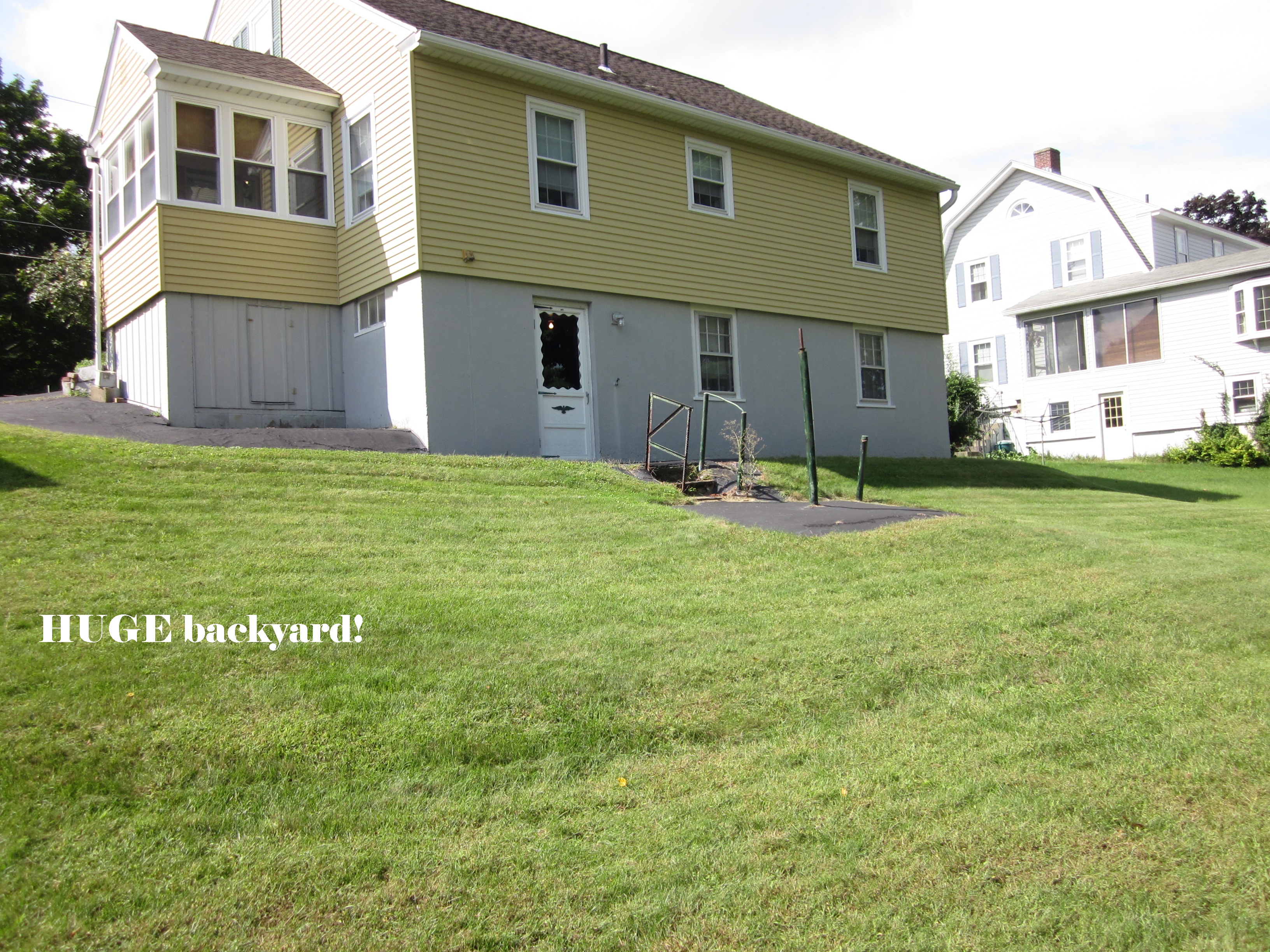
 SOLID spacious cape in Clinton is ON THE MARKET!
Hardwoods throughout with a first floor master. No need to refinish them – they are in mint condition! Large, DRY, high ceiling walk-out basement can be your workshop? Office? In-law? Play room? Media room? YOU decide! Two additional bedrooms upstairs with closets. The built-ins and side screened porch are adorable!
Gas heat, town water/sewer and a newer roof! Wonderfully maintained! NOT a short sale and NOT a foreclosure which means you can do a quick close and be well settled for the holidays.
For a private showing:
Amy Mullen, Realtor CPA CDPE MBA RE/MAX Professional Associates 508-784-0504 amymullen@remax.net


 This house is a true pleasure to list and talk about! Over the top newer custom colonial sits a top a corner wooded lot in a private cul-de-sac in Douglas. On just over two professional landscaped acres it is a gorgeous tribute to comfortable living by combining a great location to commute to Hartford, Providence or Boston and still maintaining a country feel. Built to owner’s specifications, each room offers a wonderful view.
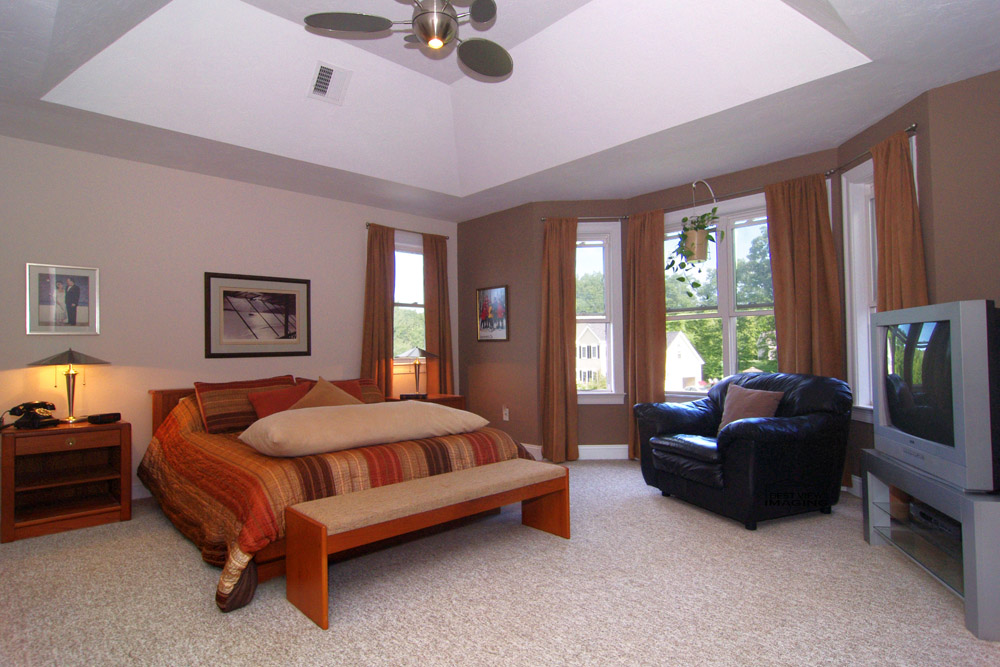
Great for someone who wants to work from home but still be available to get into the office.  It features a full office on the main level. Two car garage, full finished basement and four bedrooms with an expansive master suite with massive dressing room / walk in closet, private bath with double vanities and soaking tub, coffered ceiling and fireplace.
 Take a look at the video here to see how the open floor plan allows for togetherness and entertaining.
 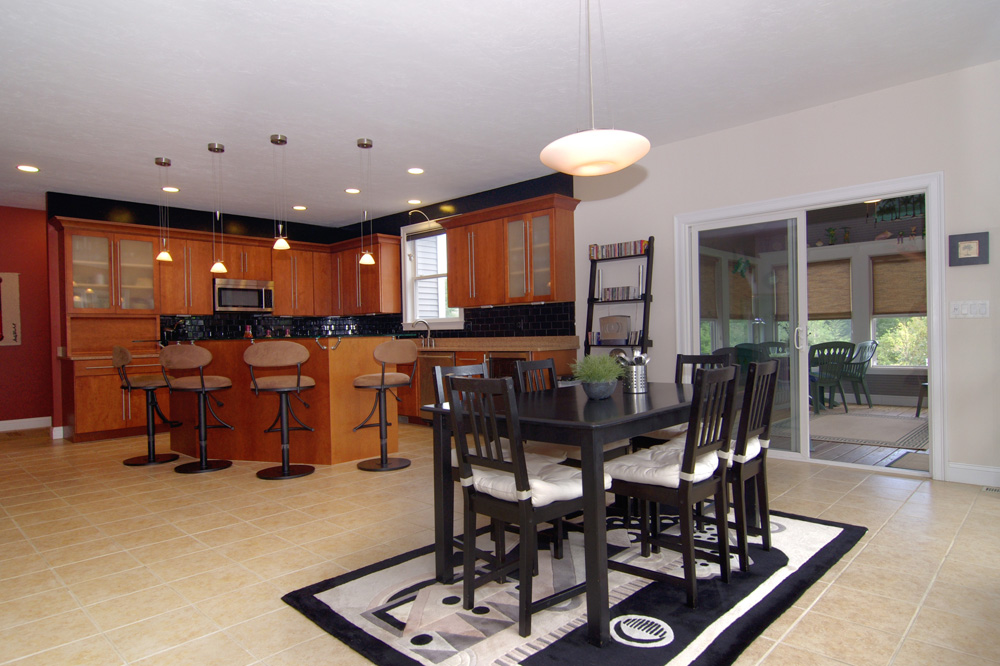 Full style gourmet kitchen has all the basics with granite, hardwoods and stainless steel appliances but also offers a pot filler, wine chiller, eat-in island and opens up to a dining area with access to the 3 season porch and the pass through gas fireplace.
 Multiple outdoor entertaining areas! Central air! 3 heat/cool zones! Hydro air heating system! This house can not be compared to and is available for the fall market! For a private showing of 80 Old Farm Rd in Douglas please contact:
Amy Mullen, Realtor CPA CPDE MBA
RE/MAX Professional Associates
508-784-0504
amymullen@remax.net
 Real Estate and *stuff *