Real Estate and *stuff *
A real person helping real people with real estate
You can scroll the shelf using ← and → keys
You can scroll the shelf using ← and → keys
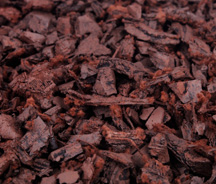 For the longest time, wood mulch dominated the mulching market. It’s still more popular than its rubber counterpart, but rubber mulch is making some waves. More and more common in playgrounds and paths, where its interaction with topsoil is less of an issue, rubber mulching is a source of controversy in gardening. To be sure, rubber mulch has its fair share of advantages and disadvantages. In the end, you may decide you want to stay with your traditional mulch, but you should at least take a look at what rubber mulch has to offer.
Where Rubber Mulch Comes from
Rubber mulch is made from recycled tires. Several hundred million tires are discarded every year and some of these are now being used in the production of rubber mulching. It takes approximately 80 old tires to create one square foot of rubber mulching. Not only does this mulching require no tree sacrifices, it reduces the waste that gets shipped off to your local landfill. The problem arises when the tiny wires in radial tires get mixed in with the mulch. Magnets are used but they are hardly 100 percent effective. These wires eventually rust out in a couple months and this causes concerns as to what chemicals are being leached into the ground. Wire-free mulching is available for an extra cost. This mulching is required for playground installation for obvious reasons.
Playgrounds and Other Areas
Rubber mulch is most common for playgrounds. Its superior shock absorption rating outperforms wood mulch, gravel, and sand. Wire-free, rubber mulch is the safest playground material available. For your kids’ backyard play area, it’s also a completely clean surface that won’t be tracked back into the house. While rubber mulch costs approximately twice as much as traditional mulch, it lasts considerably longer. High-end rubber mulch can last for the lifetime of your home. Rubber mulching can also be a great choice for horse arenas and general landscaping.
Gardens
The topic gets a little trickier when you start talking about using rubber mulch in your garden. Studies differ-as do the mulches themselves-but there’s a good chance that over time your rubber mulch will leak chemicals into your soil. What chemicals and how much can depend on several factors, but the most common is zinc. Zinc is found naturally in soil, and too much or too little will affect the quality of your topsoil. You test your soil if you’re considering rubber mulch, but the eastern United States tends to have plenty of zinc in the soil already, the western United States tends to have a zinc deficiency. One of the advantages of putting rubber mulching in your garden is that it doesn’t attract termites or carpenter ants and won’t wash away in a rainstorm. On the other hand, if your garden is full of delicate plants that require ideal conditions to grow, you might consider sticking with the wood mulch.
If you’re thinking about applying for a home mortgage, here’s some important news: Beginning June 1, your lender is likely to order a second full credit screening immediately before closing.
The last-minute credit report will be designed to find out whether you have obtained — or even shopped for — new debt between the date of your loan application and the closing. If you’ve made applications for credit of any type — for furnishings and appliances for the new house, a car, landscaping, a home equity line, a new credit card, you name it — the closing could be put on hold pending additional research by the lender.
If you’ve actually taken out new loans that are sizable enough to affect the debt-to-income ratio calculations used in your original mortgage approval, the whole deal could fall through. The added debt load could render you ineligible for the mortgage because you suddenly appear unable to handle the payments without a strain on your household budget.
The June 1 changes are part of a new effort by mortgage giant Fannie Mae to cut down on slipshod underwriting by lenders and fraud by borrowers. Fannie’s “loan quality initiative” will require lenders not only to pull two credit reports for each mortgage transaction but to perform additional verifications of borrower occupancy plans for the property, Social Security numbers and Individual Taxpayer Identification Numbers.
“There’s an almost irresistible urge” for many mortgage borrowers, said Don Unger, chief executive of Advantage Credit of Evergreen, Colo. “The lender says, ‘Okay, you’re approved for the loan,’ and you immediately think about shopping for all the things you need for the house. You go to Home Depot” or other major retailers, “and you put in an application.”
In the past, that might not have raised an eyebrow — or even been detected. But under the new double-check policy, when the Home Depot application shows up as a “hard,” or borrower-initiated, inquiry on a credit report, Unger said, the lender “is going to have to contact” the merchant and determine whether credit was extended, in what amount, and how this might affect the applicant’s home financing transaction.
Marc Savitt, president of the National Association of Independent Housing Professionals and a mortgage broker in Martinsburg, W.Va., said it’s not an uncommon scenario. “Most often the new debt involves furniture or other goods for the house,” Savitt said. “However, we have seen debt for new cars and other major purchases.”
Terry Clemans, executive director of the National Credit Reporting Association, recalls one case in which the home buyers “went out and gorged on $40,000 worth of new furniture and all types of stuff” after their loan approval — incurring monthly payments far beyond what they could possibly afford. Under the new policy, they would likely be shot down before closing.
Fannie Mae spokeswoman Janis Smith said lenders “will have to look for things like new credit accounts, increased credit lines, increased balances on existing accounts, undisclosed or newly recorded liens, second mortgages — anything that may have changed since initial application that might impact a borrower’s debt-to-income ratio.”
As a practical matter, some lenders are likely to ask their credit reporting vendors to perform the actual investigations when new debts or inquiries pop up on borrowers’ files. Fannie Mae’s instructions say that “lenders must determine that all debts of the borrower incurred or closed up to and concurrent with the closing” are considered in the final loan analysis.
Unger, however, said all this may not be as straightforward as it sounds. For example, if the credit report is pulled immediately before closing to comply with the “up to and concurrent” requirement, there may not be sufficient time to check out inquiries — especially those in which no actual drawdown of debt has been reported to the national credit bureaus. He also questioned whether entire loan packages might need to be re-underwritten — a time-consuming process — based on credit data discovered at the eleventh hour.
In that event, poof goes your closing.
How should home buyers and refinancers prepare for the new credit check procedures? Lenders and credit reporting company executives say everybody needs to follow just one basic rule: abstinence. Between your application for a mortgage and the date of closing — which might be a span of 45 to 60 days or more — resist the irresistible.
Don’t apply for new credit unless you discuss it in advance with your lender and get a green light.
Washington Post Kenneth R. Harney

It doesn’t take long after one of the neighbors springs for a new exterior paint job that everybody else can soon be se en standing out in front of their homes with paint brochures and color swatches. Why? The answer is simple. A good exterior paint job transforms the appearance of your residence. It’s like getting a new home almost overnight.
Why Is Home Painting So Important?
House painting is important for many reasons. Obviously, a good paint job beautifies and adds character and personality to your home. Just for that reason it’s important to take sufficient time planning which colors, shades, and paint styles you want to decorate your home with. But paint also serves as one of your home’s primary lines of defense against weather, insects, and other damage, so it’s an important aspect of home maintenance to keep up on as well.
When to Paint
There isn’t any set timeline when you should plan to repaint your home. It varies depending on climate, the quality of paint that was previously applied, how thoroughly your home was prepped beforehand, and whether you hired a good painter. A poor paint job can last as little as three years before it needs attention, and a good one can last for upwards of 20. The most important determining factor is the condition of the home’s current coat. Is the paint chipped, cracked, flaking, or peeling anywhere? Are there areas of exposed wood or is there sign of water damage to either your siding or the paint itself? Finally, how does your home look? If you see any of the signs mentioned above, a new paint job is probably in order, but even if you don’t, you might still be ready for a change.
Which Color to Choose
Once you’ve decided on a house painting project, you’ll need to choose your color. There’s no set rule here to guide you. The wide variety of colors to choose from, and the combinations that are available when it comes to trim, doors, and other extras, make this choice mostly a personal one. One of the best ways to get pointed in the right direction is to drive around your town and neighborhood looking for homes that catch your eye. Try to figure out what it is about them that turned your head. Maybe they did something you didn’t like (i.e. stay away from that color, style, look, etc.), maybe the color combinations really speak to you (a light body with dark trim or vice versa), and maybe it’s just how they accented certain parts of the house that you like. Make note of all these things so that you can keep them in mind as you get your own house painting project underway.
Testing, Testing 1-2-3
Another good rule of thumb is to test out colors on your home before you start. Once you’ve noted what others have done and have visited a paint supply retailer to get some more ideas, test out a few potential colors on a non-descript part of your home just to make sure it’s what you expect. Colors that look fantastic on a tiny brochure can strike you a lot differently when they’re covering an area of a couple square feet. Try out a few options so you can compare them, and give yourself a few days to mull over your impressions. Taking this advice can save you the dilemma of what to do with those 20-gallon buckets of “Green Myth” that you quickly realized looked more like split pea soup once you started slopping it on.
This has nothing to do with real estate at all! I came across this article and just love that we can still find a way to use floppy disks! Here are 40 ways that we still use floppy disks TODAY!
Here are 40 explanations for why floppy disks are still needed.
1. I regularly buy floppy disks. I own a pub with a retro theme and I use them as beer mats.
2. I am an artist from London and I use floppy disks to produce my paintings. I tile them up as canvases. The personal information on each disk is forever locked under the paint, but the labels are left as a clue. I use the circular hubs on the reverse for eyes!
3. In the aviation industry they are still used to update firmware on ticket printers.
4. Not as much a user as an owner of a great many floppies, I was planning to tile the roof of my shed with them (using the two existing corner holes to take the nails) until my wife forbade it.
5. I work for a national high-street based business. We still use floppies in many sites for back-ups. Believe it or not we are still running MS-DOS on most of our till systems. We get through hundreds if not into the thousands each year.
6. Have you seen the cost of clays for skeet shooting? Pull!
7. A huge number of CNC [computer numerical control] machines for metalworking and manufacture use floppies because their instruction sets are small enough to fit on the disks. In these areas a floppy is far hardier than a CD or even a USB pen-drive.
8. Drilling holes on four sides and interlocking them with industrial clips, I have created a retro futurist sliding curtain for a client’s loft. Monochromatic colour floppies with occasional accents of bright red and yellow give different moods on sunny days or ambient lighting by night. On them are stored formulas and theories of leading edge scientists…
9. Believe it or not, most if not all ATM (cashpoint) programming is installed direct to the machine from a floppy disk. With all of the ATMs available in just the UK with many additional copies made to support each machine in a region… this could amount to a huge stockpile of disks hanging around for each bank and/or private ATM manufacturer.
10. My band released our first single on a floppy as a gimmick last year. It took us quite a while to find somewhere that actually sold them anymore.
11. I buy these little beauties for a quite different reason. The floppy disk costs an average of £3.66 for 200, however they have a resale value of £5.50 at any good computer recycling centre, so I buy them in bulk and simply sell them directly at a profit. Take that, Bill Gates.
12. I still buy and use floppies for my electronic organ and some older synthesizers. Many professional keyboardists still own older synthesizers for their unique design and sheer power.
13. I put handles on them and sell them as spatulas. I sell thousands of them a year.
14. I work with a lot of printing companies here in the place that invented the “floppy,” and despite communicating with them via e-mail, they insist on having final document copies posted to them on a floppy. Why? Floppies are easy to mail, cheap and easily replaceable, and somehow give the impression of document security that e-mail attachments don’t.
15. I buy about 100,000 floppies per year as I have a business that makes them into drinks mats, fridge magnets and toast racks.
16. In the automotive industry in the US many plastic parts are made in machines that are 20-30 years old. I go through floppies fairly regularly because we’ll need to access a robot or punch press or milling machine or something else that has no other form of external media access.
17. I have a stack of old 3.5″ floppies I keep in a box. They work perfectly for adjusting a bookshelf or the like set up on carpet. If the bookshelf tilts, I just slide floppies under the appropriate corners until it’s upright.
18. I’ve always used an old floppy disk as an ice scraper for the car, just the right combination of rigidity and flexibility. Just don’t use the side with the metal sleeve on. They last about a year before they need replacing from my endless pile from the 1990s.
19. The government here still uses floppies to process employee and employer data every month. Just imagine you have to do this every month in a year for every company in my country and there you go: a million or so floppies.
20. As a blind computer technician and computer enthusiast I find floppy disks essential. I have developed a lot of small batch utilities and use floppy disks as I can more easily tell if the disk is loading up, for instance the click and hum of the drive is something I can hear and by its sounds, I know what is happening.
21. As a telecoms engineer, I have to add that there is still some test equipment out there that logs data only to floppy disks. The disks are such a pain to work with, but it’s not like you can throw out a $330,000 piece of test equipment because you don’t like the way it outputs its data.
22. There are thousands of DOS-based computers running machinery in the print industry and all the software updates are on floppy disks.
23. I’ll tell you who still uses them: schools in the US. I’ve needed one – just one – each year for my (now) third grader.
24. The social security administration of Panama requires that the “mechanised” version of their declarations, submitted by all contributors to the health care/retirement system every month, be written on a floppy.
25. An unusual use is sewing machines – there are top-end models that accept embroidery designs stored either on a special cartridge on floppy disk.
26. I use a multitude of coloured floppies as a fashion statement, as part of outfits I make. The pieces I create are for cyberpunk/goth outfits.
27. Romania’s fiscal agency still requests documents on floppy to process taxes. Mystery solved.
28. Floppy disks are ideal “floppy table” stabilisers, whether in the dining room or on the patio. They are also good for wedges filling in gaps where wood has to be cut. I have also embossed them in a cement pathway in a splendid “talked about feature” as they are of no use whatsoever for storage.
29. People like my father are the ones who buy floppies. No matter how hard you try you cannot get him to use CD or USB technology. He is “old school” and likes the idea that you can still label and catalogue floppies like paper based files.
30. I know for a fact National Milk Records (NMR) still use floppy disks for dairy recordings and many farmers use the plug-in USB disk drives to still use the floppy format with their system, including my old man.
31. I run a business that deals a lot with local and central government departments, and a lot of them still require documents on floppy, and won’t even take documents by e-mail. Quaint, but typically British – 20 years behind the times.
32. In Peru we have to declare our taxes through a special software; if you are an employer, you should pay the income tax and the employees’ taxes on separate “forms”, and this software only allows to save one form per disk (you take the disk to the bank and there you present it in the same way you present the telephone bill, for example, and pay). Floppies must be sold in the tens of thousands in my country for that sole reason.
33. The Ministry of Defence and all three armed services use them for HR purposes on each individual’s annual appraisal report.
34. These are still used within the rail industry for backing up data systems. Very handy for the job that they do.
35. Sad to say but there are a lot of ancient computers in church and school offices, and the old lady at the church or the school runs it the same as she did 20 years ago, so the floppy is her tool of choice. I donated a couple of newer used PCs to the church and had to take the floppy drives out of the old systems and put them in the new systems for her. Simply amazing.
36. Many aircraft use the floppy medium to transfer the monthly navigation database updates to the aircraft’s navigation systems. Also to update software on non-critical aircraft systems. There’s lots of aircraft out there and the floppy has to be a new one for each data transfer. So still a lot of demand.
37. Recently I decided to lay down some new concrete walkways at my home, and came upon the idea to grind up floppies (along with some other plastics) to mix in with the concrete. The addition of the fibres makes for a stronger concrete, and looks interesting as well.
38. Here in Mexico, IMSS (social security hospitals) requires every employer to send the files of new employees via floppy.
39. In the film industry, many telecine machines (for scanning film to tape) output meta-data onto a floppy disk. These machines are very expensive so they’re not something that’s upgraded on a frequent basis.
40. My company still uses floppy disks by the tonne load. We transfer the drawings files from PC onto them, and this is turn is loaded onto our K2 cutting machine that creates the wooden structures for houses. One floppy per customer adds up to a lot of disks.
“It’s one of the more common reasons that transactions fall apart these days,” says Tara-Nicholle Nelson, consumer educator for Trulia.com, a real-estate website, and a real-estate broker and attorney in the San Francisco area.
In a normal market, when an appraisal is lower than expected, it’s up to the buyer and seller to cooperate — whether that means the buyer needs to put more cash into the deal or the seller needs to lower the price, she says.
[Marketwatch] Lisa Haney
But “in today’s market, so many sellers are selling for so close to what they owe, there’s not a lot of leeway,” Ms. Nelson says. “It can have a completely deal-killing impact — more than in years past when there was wiggle room.”
Current conditions in many markets also make an appraiser’s job more challenging, says Leslie Sellers, president of the Appraisal Institute.
Market Problems
For one, fewer home sales means they have fewer comparable sales to consider when estimating market value, he says. Also, sales that involve properties with issues attached to them — short sales, for example — often will have a lower price than a traditional sale. Short sales are when a borrower owes more on a home than it’s currently worth, and the lender agrees to take less for the property.
Also, home prices in some areas are starting to stabilize or rise, while other areas are still struggling, so appraisers have to be aware of local conditions, says Eric Fox, vice president of statistical and economic modeling for Veros, a provider of automated valuations and predictive analytics for the mortgage industry.
“The market now, unlike two or three years ago, is sort of a dichotomy,” he says.
All of which is to say that the job of an appraiser is a difficult one, and they can easily make mistakes in estimating the value of a home. Consumers unhappy with an appraisal can request an appeal.
Whether you’re buying a home or refinancing a mortgage, take time to read the appraisal report. Make sure the appraiser made no mistakes that might have led to a lower valuation.
“The document should stand on its own and largely speak to an appropriate estimate of value,” says William Fall, chief executive of William Fall Group, a national appraisal company.
Also, the lender should be able to talk you through the report to ensure you understand it fully, says Griff Straw, president of Solidifi, an appraisal management company.
“Don’t be ashamed to ask questions,” Mr. Straw says. “It is an opinion of value, and I underscore ‘opinion.'”
Make sure facts about the home are correct, including the number of rooms and bathrooms, he says. Also look for omissions, such as a recent addition or significant improvement that should have increased the value of the home.
Check the comparable-sales data. “If they use the sale from across the street and you know it’s a short sale or there were motivations [to sell] over the typical seller, you need to bring that to the attention of the appraiser,” Mr. Sellers says.
Appraisal Challenges
If problems are identified, a lender may challenge the appraisal company’s report through a formal process.
“We’re not embarrassed to get our eraser out if we have to,” Mr. Fall says. Adjustments to appraisals aren’t commonplace, but they do happen, he says.
Within the past month or so, Ms. Nelson has heard of three or four cases of people successfully challenging an appraisal.
There are two main justifications for an appeal, Mr. Fall says: Either the appraiser neglected to consider similar, recently sold properties in the final value, or the appraiser made a significant error or omission in reporting characteristics of the property that could affect value.
But remember, to make the case that a home improvement should have been considered in the appraisal, it has to be shown to be a major capital improvement, such as a new kitchen. It’s a good idea to save records of these upgrades as proof.
“There’s a difference between regular upkeep and maintenance and improving the house,” Mr. Straw says. Redoing the kitchen with granite countertops and new cabinetry, or outfitting the bathroom with new fixtures, tiling and vanity is quite different than simply painting walls, he says.
Speak Up
Even before the appraisal is finished, provide any additional information you think might help the appraiser come to a proper valuation, Mr. Sellers says.
“Be proactive, rather than reactive,” Mr. Sellers says. “If you are aware of a foreclosure down the street that is similar to yours, or a divorce case that would cause a sale to be low for high-pressure reasons … make [the appraiser] aware of that.”
He also suggests requesting the lender use an experienced, certified residential appraiser from the same geographic area as the property being considered. But know that the lender isn’t obligated to grant your request.
The lender might ignore your wishes, but “it doesn’t hurt to try,” Mr. Sellers says.
Courtesy of Amy Hoak WSJ online
I DO have vinyl siding that needs to be repaired on my house. I was recently looking for ideas on how to make that happen and found this article. Has anyone done this before? Good idea? Bad idea? Here is what they had to say…and they say it’s “easy”!
“One of the most annoying things that can possibly happen to a home owner is to come home from work one day only to find that the beautiful vinyl siding that you just had installed is now damaged. While you can always hire some one else to do the repair work for you, it is invariably pretty expensive to do so. Instead, why not try repairing vinyl siding yourself.
Repairing vinyl siding while a time consuming task, is one that can easily be done by even the most novice of do-it-yourselfers. Be prepared though to spend up to five hours working on this project. When doing this project it is a good idea to have someone help you, if for no other reason than to speed things up.
1. Pop damaged panel. Use a siding tool to start popping the damaged panel from the wall. These tools can be purchased at any home improvement store
. Simply slide the tool along the seam, using a little pressure to pull out on the panel, while also pulling down at the same time. Do not pull too hard, or you may cause unintended damage.
2. Remove damaged section. Lift the panel above the damaged area to allow you to really remove the damaged section. Be careful that you lift the panel above the damaged section, but that you do not remove that section as well. The sections are flexible enough that you should be able to remove the nails holding the damaged section in place. If necessary, use a small prybar to help remove the nails.
3. Get replacement panel. Take the now free damaged section of vinyl siding to your local home improvement store, and get a match. Siding needs to match exactly, otherwise be prepared to have an eyesore. If you cannot find a match at your local home improvement store, take it a local siding dealer to find a replacement piece.
4. Insert new panel. Begin to install the new vinyl siding by working your way from the ground up. This basically means that you need to start with the lowest piece first, and then work upwards. Secure the pieces in place using the same kind of nails or other fasteners that were used previously. You may need to force the last panel into place using a prybar, but it can be done.
5. Check to make sure seals are good. Check to make sure that there are no exposed bare walls or seams for the vinyl siding. If you have any exposed walls or seams, then you are running the risk of incurring water damage to the walls themselves. Pull lightly on the panels to make sure that they do not come off either. If they do, refasten the pieces in place and check again.”
As the recession has caused everyone to rein in their spending on a variety of things, it has also caused a reduction in what people spend on their remodeling projects. According to the latest flow of data, there is a significant number of people who are “above water” in their mortgages but only by a very small amount. Home owners who have less than 25% equity in their home are essentially “stuck” due to the costs related to selling and buying another home (down payments, fees etc). The reality has sunk in and taken hold. These home owners are not moving.
This has caused a shift in how people view their remodeling projects. Gone are the days of $100,000 kitchen blow-outs and rebuilds or multi-car garage add-ons. Instead, home owners are now looking for ways to make their homes more comfortable for their current lifestyles. The most popular remodeling project has been to remove any existing walls between kitchen and dining areas to create a larger, more social space to entertain at home. This is followed by attic renovations to create another usable room in the home and maximize the livable square footage. Home owners have also been investing in “unseen” remodeling, such as new insulation and appliance upgrades to capitalize on the energy credits and finally get rid of the drafts.
Susan Susanka is an author and architect who believes in “build better, not bigger” and has a new book called the “Not-So-Big-Remodeling: Tailoring Your Home For the Way You Really Live”. Her suggestions are fantastic and will surely spur some home remodeling creativity! Check it out here on her website The Not So Big House.
And these are some amazing pictures…The Most Secluded Houses in the World
I have been asked many times if there is an advantage to buying a property in a short sale. The short answer is “YES” because often times you are purchasing the property below it’s market value. The longer answer is “only if you have the stomach for it and good realtor”. The banks are starting to realize that it’s a good thing if they are co-operative about the process but it’s still a grueling task. The Consumerist (a website I love and adore) had a fantastic personal account of what it’s like to go through a short sale. They are not all like this but it’s a good read.
http://consumerist.com/2010/05/what-its-like-to-buy-a-short-sale-house-hell-with-benefits.html
The first time and long-time home owners tax credit is extended an extra year for military personnel and other federal employees. Members of the uniformed services, members of the Foreign Service and employees of the intelligence community are eligible. It applies to any individual (and, if married, the individual’s spouse) who serves on qualified official extended duty service outside of the United States for at least 90 days during the period beginning after Dec. 31, 2008, and ending before May 1, 2010. http://www.irs.gov/newsroom/article/0,,id=215594,00.html

