Real Estate and *stuff *
A real person helping real people with real estate
You can scroll the shelf using ← and → keys
You can scroll the shelf using ← and → keys
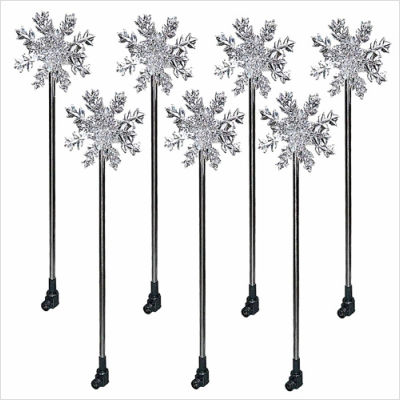 Solar Christmas lights don’t cost anything to operate, but the high purchase price might not add up to savings.
In the last few years, energy-efficient LED Christmas lights have largely replaced more wattage-thirsty incandescent strings, resulting in significant savings — LED lights use 70% less energy than their incandescent predecessors, and they last up to 10 times longer as well.
Now there’s a new kid in the string-light neighborhood: LED solar Christmas lights are appearing at retailers around the country, promising grid-free festive lighting for holiday-happy consumers.
Powering up solar Christmas lights
A string of solar Christmas lights uses a small solar panel for power; there are no extension cords that must be plugged into outlets. The panel — about the size of a hockey puck — powers rechargeable batteries that illuminate a 25- to 100-bulb string of LED lights.
Panels come with small stakes so you can put them in the ground, where they can take advantage of the sun. A fully-charged string of lights should glow for 6 to 8 hours after the sun goes down.
Solar lights vs. LED plug-in costs
Most consumers expect new technologies to cost more, but if saving energy and money is your main reason for considering solar-powered LED holiday lights, solar lights may not offer enough cost-saving to offset the higher initial purchase price.
Compare purchase prices:
Compare costs to operate:
Do the math, and you’ll see that it’ll take about 45 years for the energy savings from solar-power to equal the difference in purchase price between a plug-in string and a solar-powered string.
Advantages of solar lights
Disadvantages
 Fannie Mae and Freddie Mac won’t evict families from their homes during the holidays, but will continue to process foreclosures.
Lending giants Fannie Mae and Freddie Mac won’t evict foreclosed home owners between Dec. 19 and Jan. 2, the lenders said in releases Thursday,December 1st.
Notices of default, notices of auction sale, and foreclosure auctions will continue normally. But borrowers whose homes have been sold at auction or taken back by the government-owned mortgage agencies will be allowed to stay in their property through the holidays.
The two companies own about half of all mortgages, Fannie Mae spokesman Andrew Wilson said. Home owners in the midst of the foreclosure process can check to see whether Fannie or Freddie own their loans at fanniemae.com/loanlookup or freddiemac.com/mymortgage.
Home owners who have been foreclosed, but who still live in their houses, will receive notices from Fannie or Freddie if the lenders are involved.
This is good for home owners because it allows more time for a short sale. A short sale allows the home owner to end the process with dignity and possibly remove all of the remaining mortgage balance. I recently stopped a foreclosure auction on a Freddie Mac loan with a 13 day short sale approval. There is still time! Visit this page to review your options: avoid foreclosure.
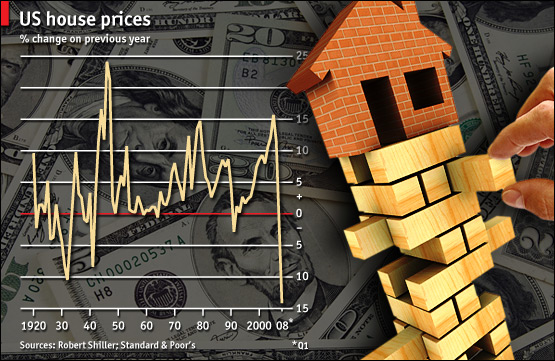 While shoppers were trampling each other to get the season’s hottest stuff, a glimmer of hope emerged for the economy. Does it have legs?
A woman pepper-spraying her fellow shoppers to better her chances of getting an Xbox. A crowd of people stepping over the body of a heart attack victim, worrying less about his fate and more about their Christmas purchases. Violence, mayhem, and chaos seemed to be the stories making headlines on Black Friday.
Despite this bad behavior, the traditional first day of holiday shopping was a big success for the nation’s retailers, and a sign of life in what has been a bleak year for the American economy. Black Friday sales increased 6.6% over the same day last year, according to ShopperTrak. That amounts to $11.40 billion in retail purchases and the biggest dollar amount ever spent during Black Friday.
Cyber Monday outshone last year’s numbers, too.
But will this seasonal boon for retailers continue beyond the New Year — and translate into a broader economic recovery that affects other industries, such as housing?
The Thomson Reuters/University of Michigan final index of consumer sentiment rose to 64.1 (out of 100) in November, the highest since June, from 60.9 in October. The Michigan survey’s index of current conditions, which reflects Americans’ perceptions of their financial situation and whether they consider it a good time to buy big-ticket items like cars, increased to 77.6 from 75.1 the prior month.
All of this seems to be good news. But we aren’t out of the woods. The housing sector remains a problem. Bloomberg News quotes analyst Michelle Meyer, a senior U.S. economist at Bank of America: “Demand for new construction remains weak … Builders are still competing with the significant overhang of existing homes for sale. Overall, the housing market remains out of balance, with much more supply than demand.”
A NATIONAL ASSOCIATION OF REALTORS® survey shows the unsettled and variable story of housing, with sales of previously owned homes rising 1.4%, but prices dropping 4.7% between September and October. Distressed properties, including foreclosures and short sales, made up 28% of those purchases.
What does this all mean?
Consumer confidence is inching its way back up, but housing is still a big drag on the economy’s future growth. Policy makers should take note, and avoid doing anything to make the housing market worse. Give consumers confidence that they can buy homes now (deals and rates are great!), and won’t face any change in the rules (especially the elimination or reduction in the mortgage interest deduction) in the future.
We’re seeing some signs of life in the economy. Let’s hope it continues and policymakers build on the momentum.
Do you think the Black Friday numbers indicate a general uptick in the economy, or is it a seasonal blip?
 Baby boomers want their kids to have the American Dream. And why shouldn’t they?
One in five baby boomers has helped their child or grandchild buy a home by loaning them money, giving them a down payment, or co-signing a mortgage, and more than two-thirds of baby boomers want to provide this type of support in the future, according to a survey sponsored by Better Homes and Gardens Real Estate.
The survey also found:
 This seems like big news! I was just reading this article from Orlando which is a very hard hit area of the country.
“Starting Thursday, home owners with “underwater” mortgages can apply for a new Fannie Mae and Freddie Mac refinance program geared for pretty much everyone who owes more on a home than it’s worth.
Matt Hamilton has dutifully paid the loan on his Maitland house and a Longwood rental condo, but until now he could not refinance them to obtain more affordable interest rates because the properties are financially underwater.
Starting Thursday, Hamilton and many of the other quarter-million Orlando-area residents with “underwater” mortgages can apply for a new Fannie Mae and Freddie Mac refinance program geared for pretty much everyone who owes more on a home than it’s worth — including landlords and second-home owners.
“It’s been difficult because I’m so far in the hole that no one wants to refinance me,” said Hamilton, a product developer for Longwood-based Onlinelabels.com. “But if you look at my payment history, I am a safe risk.”
The federal government’s previous foreclosure-prevention efforts, such as the Home Affordable Modification Program (HAMP), lowered the interest rates on mortgages of home owners at risk of foreclosure because they had lost income. But the new Home Affordable Refinance Program (HARP) is seen as a possible game changer even for home owners who are underwater but who have stayed employed and continue making their payments.
Home owners who have missed mortgage payments in the past six months need not apply. And not all the details — such as loan limits — have been disclosed yet. But this is one of the first refinance programs that doesn’t require an appraisal to determine the value of the house.
“It’s a reward for the responsible borrower who swallowed a bitter pill but still kept moving,” said Travis BeMent, mortgage-loan originator for Home Loans Today of Orlando. “There’re a lot of people out there ready to pounce on this.”
The HARP application process begins Thursday, just as new reports show that more than half of the mortgaged homes in Metro Orlando are saturated with more debt than they are worth. In all, 254,146 mortgaged homes in the four-county metro area are in that situation, according to a report released Tuesday by the mortgage-research company Corelogic.
Even though Orlando has a greater share of underwater homes than Florida overall or the nation as a whole, the percentage of “negative-equity” houses in the metro area actually decreased slightly during the third quarter: 51.6% of the mortgaged homes in Orange, Seminole, Osceola, and Lake counties were worth less than their loans in the July-through-September period, down from 53.1% in the second quarter.
About 44% of the mortgaged houses in Florida, and 22% of those in the nation, were underwater in the third quarter, according to Tuesday’s report.
Many of those mortgages were sold to home owners who purchased at the peak of the market in 2006-07, when sales prices were double what they are today and when interest rates ranged from 5.7% to 6.5%, according to the Orlando Regional REALTOR® Association. Today, interest rates on a 30-year mortgage are less than 4%.
One cautionary note about HARP: Interest rates could change by the time a qualified property owner’s refinancing application is processed, BeMent said. Fannie and Freddie are not expected to have the ability to process the new loans until as late as next March.
But HARP, he noted, also offers a break to home owners who want to refinance for 15 or 20 years instead of 30 years. To qualify, an owner must have a mortgage backed by Fannie Mae or Freddie Mac and will likely need a credit score of at least 620.
Orlando lawyer Jeremy Sloane hasn’t missed any payments on a rental home he owns in east Orange County’s Avalon community, but he still loses money on the property every month because the mortgage he took out in 2006 far exceeds the rent he collects, now that prices have collapsed. He said he has already talked to FBC Mortgage about the new federal refinancing program.
“At the end of the day, I don’t think it’s anyone’s responsibility but myself to make the payments, but the frustrating part was that other people have been able to get out of their situation and not take a loss,” Sloane said. “This program will hopefully make it a lot more palatable renting out that house and not taking a loss.”
Tired of pinching pennies? Weary of the recession? Dream along and pretend we can afford these top-shelf home improvements. But don’t worry if these budget-stretchers are out of reach — we’ve got you covered with smart advice for alternative products and systems that will make you feel luxurious without draining your bank account.
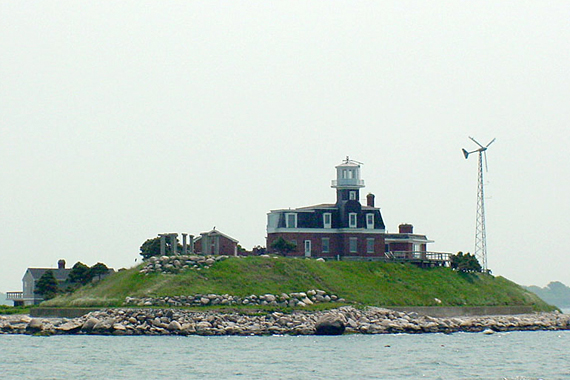 Throw the switch on your very own wind turbine and you’ll get a 50% to 90% reduction on your electrical energy bills. The price of all this efficiency is about $40,000 for a 10-kilowatt turbine, a steel tower, and professional installation. If that’s not in your budget right now, a little regular maintenance will keep the HVAC system you have running at peak efficiency. Credit: Bergey Windpower Company
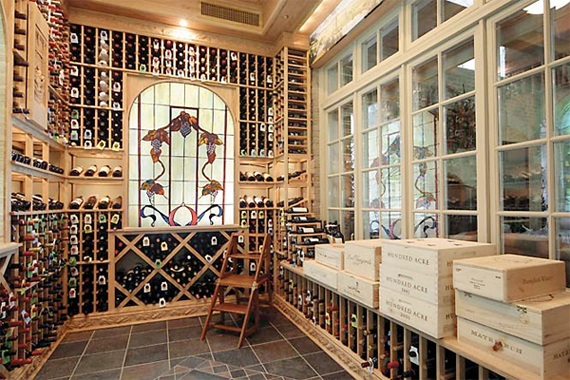 Wine connoisseurs know that the beverage itself is only part of the fun — a glass-front, temperature-controlled wine cellar adds to the delight. For wine aficionados who collect as well as sip, storage is a must — the wine cellar shown here holds 1,346 bottles. Ceramic tile floors, hand-carved trim, stained glass, and lighted racks add up to a $70,000 taster’s haven. If your storage needs are more modest, check out under-stairs storage solutions that gobble up clutter. Credit: Wood wine racks by Wine Cellar Innovations
 Stoves from La Cornue are known as some of the world’s most elegant cooking appliances. Each is handmade, and can be ordered as gas, electric, or a combination of both. Choose from 25 enameled finishes and 12 metallic trims. The GrandPalais 180 model features dual ovens and retails around $45,000. For that, you could buy a dozen top-of-the-line, double wall ovens with options that include convection heat, temperature probes, and variable broiling. Credit: Culinary Architecture by La Cornue
 With an insulated glass panel that lets you check contents before opening the door, the stylish Sub-Zero Pro48 is billed as one of the most expensive — and best — refrigerators on the market. Listed at a cool $15,540, the Pro48 features an LCD touch-pad that controls two compressors and three evaporators. Be sure to green clean the inside of your Pro48 so that it’s nice and tidy if guest should peer through the window. Credit: Sub-Zero
 Nothing quite says “welcome” like a pair of custom-designed, hand-carved entry doors made of pine, mahogany, or oak. Expect to pay $5,000 to $25,000 for a matched set of custom-made, double-opening exterior wood doors, installed. The price may be worth it: A good-looking exterior door is a big contributor to curb appeal, and helps preserve the value of your home. Credit: Pinecrest, Inc.
 If your little slice of heaven is racking up heating and cooling costs, consider a geothermal heat system. A geothermal heat pump system extracts heat and cooling from deep underground to keep your interiors on an even keel, reducing energy usage. The price for a geothermal system can be steep — typically $20,000 for a 3,000-sq.-ft. house. The good news: A system placed in service between Jan. 1, 2009, and Dec. 31, 2016, is eligible for a 30% federal tax credit. Credit: Colorado Geothermal Drilling
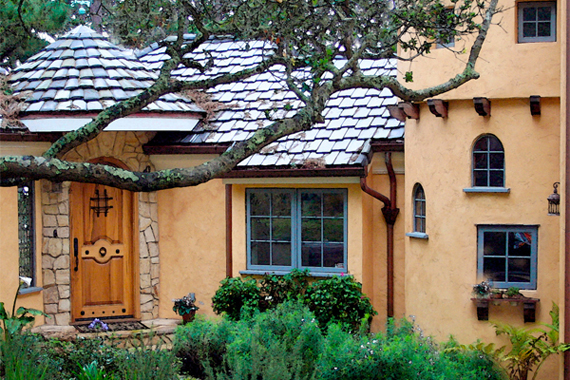 Slate shingles were once common, but modern roofing, such as asphalt shingles, have become so much more cost-effective that slate is increasingly rare — and expensive. According to Remodeling Magazine’s Cost vs. Value Report, covering a 3,000-sq.-ft. roof with top-quality asphalt shingles costs about $21,000. A comparable slate roof costs $100,000 to $150,000. Nevertheless, if you want a roof that’s classy, fireproof, and will last 100 years or more, slate is hard to beat. Credit: Linda Hartong
Now dream of sugar plums…it’s Christmas time after all!
 A History of Business Cards
The business card is often something placed at the back end of your wallet or in your pocket. Deemed as a small inconsequential piece of paper that is part of day to day meetings with people, the card is seldom considered more than its face value. However, these cards have a long history and an evolution many of us don’t appreciate.
Business cards began in the 17th century in Europe, where they were used to announce the impending arrival of prosperous or aristocratic people to their local town or even their home. They were shaped and sized in a similar way to a playing card and became a staple of the elite by the middle of the century. In time the cards became engrave with gold and exciting typefaces and by the 19th century the cards were a must have by anyone, who was anyone in the middle class circles of the day. Houses even had card trays, ornate in construction, made so those visiting your house could leave their card in.

Goldsmith and engraver trade card

Florist trading card

Playing Card Manufacturer trade card

Dentist Trade card
By the 18th and the 19th centuries these ‘social cards’ were taken from each lady upon her first visit to a house. People were offered the card tray upon the opening of the door to the door and had to place their card in it as a matter of etiquette. This card was then delivered to the lady of the household, who would examine it – in many ways it created the first impression of the person.

Grieg, Edvard (1843-1907) Norwegian composer

Gorki, Maxim (1868-1936) Russian Novelist and Short Story writer

Freud Visiting Card (1856-1939) Austrian Neurologist
When the other person waited for those they came to see in the hall, it would have been unheard of for them to look at the other cards. Cards with folded corners had been presented in person, cards folded in the middle indicated the call was meant for all family members. There was also often lettering on the card P/F for a congratulatory visit, P/C for a condolence call.
Unlike in polite society – these cards were also used in the UK for trade purposes. These cards were handed out before or after work was done and included maps to get in contact with the person. Originally produced with wood presses, they would have been created with lithography after its creation in 1830.
The effects of the industrial revolution created a lessening of formality in the world. Exchanging of contact information became essential and the visiting card and trade card were merged and handed out on less formal occasions. The upper class still suffered an aversion towards their use on informal occasions, however they became widespread in the USA. Their widespread use often created up turned noses when an US business man presented one at an upper class home in the UK.
Time has eroded much of the etiquette regarding business cards, however rules do persist. Cards should not be handed out by the left hand, should never be written on and should always be translated to the language of the specific country they are being handed out in on the rear of the card. They should never be carried loose and presented in the best condition.
These days cards should have the name of the card holder, their title, the company, their location, and relevant contact information such as address, email, telephone and anything else you feel the need to add. Cards are usually printed in black ink on white paper, though this varies by country.
Following this logical etiquette means you and your cards won’t have any issues and just think how much more hassle you’d have had handing them out 300 years ago.
A History of Business Cards
October 26th, 2011 by Mirko in Graphic design, Inspiration
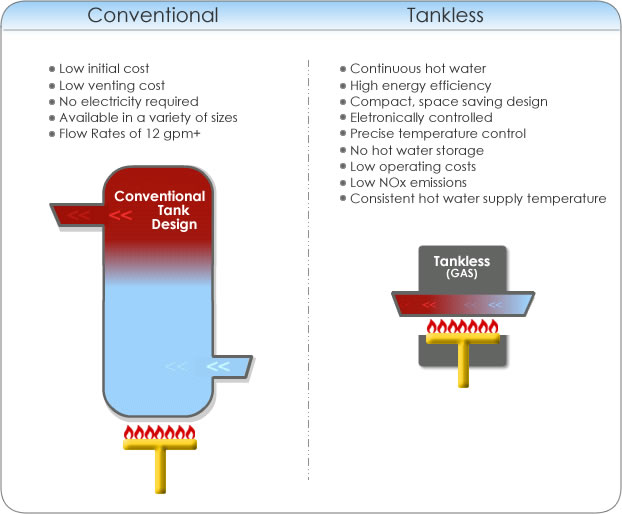 If you’re a hot water multitasker who washes clothes, dishes, and yourself at the same time, a low-capacity tankless water heater could serve you a “cold water sandwich” or leave you high and dry. But tankless water heaters, which heat water only on demand, are more energy-efficient than traditional water heaters, which warm water whether you need it or not. What’s the best way for you to get into hot water? Read on.
Traditional vs. tankless water heater
Traditional hot water heaters typically live in your basement and provide gallons of hot water at one time: an 80-gallon tank heats enough water to shower, run a dishwasher, and do a load of laundry simultaneously. But standby energy loss is significant with hot water heaters, and once you’ve exhausted the hot water supply, you’ll wait 20 to 60 minutes for the heater to cook up more.
A tankless water heater produces hot water only when you need it. When you turn on the faucet, water is heated on the spot as it flows through capillary-like pipes heated by either a powerful gas burner or electric coils. (There are no oil-fired on-demand water heaters on the market.)
Gush to a trickle
Although a tankless water heater can pump hot water all day, it can’t produce a large amount all at once. And it can snap you out of a hot shower bliss with the “cold water sandwich effect,” a sudden splash of cold water that results from turning the hot water faucet on and off repeatedly.
A traditional tank heater puts out 7.5 to 9.5 gallons of water per minute (GPM), enough to shower, run the dishwasher, and do a load of laundry all at the same time. The typical tankless water heater, however, puts out only 2.5 to 5 GPM, enough to handle only two uses at a time.
Be warned: Not all flow rates are calculated the same. Energy Star measures GPM based on a 77-degree increase in water temperature for the incoming supply, while some companies list their GPM flows at 35- and 45-degree rises. The more heat the water requires to reach the desired temperature, the slower the flow rate.
High upfront costs
A gas-fired tankless water heater system costs $1,500 to buy and install, nearly double the price of a conventional gas water heater, and $575 more than a high-efficiency tank model. In addition, while a conventional water heater typically uses a half-inch gas line, a tankless water heater requires three-quarter-inch pipe. That plumbing change costs from $25 to $40 a foot, potentially adding many hundreds to initial costs. On the bright side, your new energy-efficient unit may qualify for a federal tax credit of up to $300 on purchase and installation through 2011.
An electric tankless water heater costs as little as $400 installed. But it doesn’t qualify for a tax credit because it is less efficient than gas and is better suited for point-of-use applications, such as instant kitchen hot water, rather than a whole-house system.
Installing multiple units
One solution to the limited output problem is to install multiple on-demand units. Because it’s small—about the size of a carry-on suitcase—you can place a tankless water heater along any stretch of pipe—in the attic, basement, closet, or crawlspace. You can install two or three units to serve different parts of the house, or even dedicate a unit for a particular use, say a washing machine.
Multiple on-demand units increase overall energy efficiency. By bringing hot water close to where it’s needed, you reduce energy loss and increase efficiency by 50% over a conventional hot water tank system, about $165 in annual savings for an average household.
Energy and money savings
 Washington is giving you less green for going green, as the feds reel back the 2011 energy tax credits from a lavish $1,500 to a paltry $500.
2011’s federal energy tax credits of up to $500 for various home improvements are a far cry from what they were last year. But if the limits and other fine print—which we’ll get to—doesn’t dissuade you and you really need to upgrade one or more of the following systems, take advantage of the energy tax credits.
The energy tax credits are small, but at least a credit is better than a deduction:
Other limits on energy tax credits besides $500 max
Certain systems capped below $500
No matter how much you spend on some approved items, you’ll never get the $500 credit—though you could combine some of these:
| System | Cap |
| New windows | $200 max (and no, not per window—overall) |
| Advanced main air-circulating fan | $50 max |
| Qualified natural gas, propane, or oil furnace or hot water boiler | $150 max |
| Approved electric and geothermal heat pumps; central air-conditioning systems; and natural gas, propane, or oil water heaters | $300 max |
And not all products are created equal in the feds’ eyes. Improvements have to meet IRS energy-efficiency standards to qualify for the tax credit. In the case of boilers and furnaces, they have to meet the 95 AFUE standard. EnergyStar.gov has the details.
Tax credits cover installation—sometimes
Rule of thumb: If installation is either particularly difficult or critical to safe functioning, the credit will cover labor. Otherwise, not. (Yes, you’d have to be pretty handy to install your own windows and roof, but the feds put these squarely in the “not covered” category.)
Installation covered for:
Installation not covered for:
How to claim the 2011 energy tax credit
Housing is a significant driver of the national economy— it accounts for more than 15% of the gross domestic product. In addition, six of the last eight recessions have ended as a result of robust housing markets; war spending ended the other two recessions. Home ownership is strongly tied to jobs in this country. For every two homes sold, one job is created in this country. In addition, each home purchase generates as much as $60,000 in economic activity over time.
It Pays to Support Responsible Home Ownership
Understand the role that home ownership plays in our economy and the programs that help make it attainable and sustainable for responsible home owners.
Your Mortgage Deduction: Turn Tax Savings into Home Value
There’s savings to be had when you own a home and take the mortgage interest deduction each year. Here are some smart—and fun—ways to use your accumulated tax savings.
Benefits of Home Ownership
Being a home owner is more than just having a roof over your head. It offers important social benefits, like higher academic achievement, more cohesive communities, better connected families, improved health and safety, and a stronger economy. Thinking of buying home? Let me know!