Real Estate and *stuff *
A real person helping real people with real estate
You can scroll the shelf using ← and → keys
You can scroll the shelf using ← and → keys
By: Houselogic.com
Some trees are more trouble than they’re worth. Before you head to a nursery, see our slideshow. Then, see even more trees readers hate.
1. Silver maple (Acer saccharinum):
Big, fast-growing, and a dandy shade tree, silver maple is widespread in eastern states and the Midwest. Unfortunately, the speed at which the tree grows makes for weak, brittle wood that may break during severe storms. The shallow root system invades sewage pipes and drain fields, and is notorious for cracking driveways and walkways.
2. Ash (Fraxinus):
Sturdy and tough, the many varieties of ash that populate North America are some of our most beloved trees. Professional baseball bats are made from its wood — how American is that? But the venerable ash is threatened by the emerald ash borer, a tiny beetle that’s on track to wipe out the species. If you’re looking for a long-term tree for your yard, look elsewhere.
3. Quaking Aspen (Populus tremuloides):
The aspen is found in northern climes and higher elevations. Its white bark and gently vibrating leaves are attractive, but its root system is insidious, sending up dozens of suckers that relentlessly try to turn into new trees. Once established, it’s war. In fact, the largest living organism in the world is a Colorado aspen root system called Pando. It weighs 6,600 tons and is thought to be 80,000 years old. Try digging that out!
4. Lombardy Poplar (P. nigra ‘Italica’):
The Lombardy poplar was once a favorite landscaping tree known for its speedy growth (up to 6 feet a year) and distinctive columnar shape. However, they’re prone to a number of diseases and bugs that turn them into raggedy eyesores, and their running roots are invasive and difficult to eradicate.
5. Willow (Salix):
With its long, slender branches that hang down like Rapunzel’s tresses, the willow is one of the most recognizable of all trees. Beautiful on the outside, yes, but the willow has an aggressive, water-hungry root system that terrorizes drain fields, sewer lines, and irrigation pipes. The wood is weak and prone to cracking, and the tree is relatively short-lived, lasting only about 30 years.
6. Eucalyptus:
Imported from Australia and popularized for their speedy growth — some varieties will shoot up 10 feet in a year — the eucalyptus has a bad rap for suddenly and unexpectedly dropping big, heavy, resin-filled branches. In some areas of Australia, campers are warned not to pitch tents under eucalyptus trees. Its showy bark peels off annually and adds to seasonal maintenance chores.
7. Bradford pear (Pyrus calleryana):
The Bradford pear was imported to the U.S. from China in the early 1900s as replacement for orchard trees that were dying. With its compact shape and profusion of spring blossoms, the Bradford pear became a suburban favorite — until folks realized that it was highly prone to splitting and cracking when it reached maturity. And those blossoms? They’re on the stinky side of the fragrance scale.
8. Mountain cedar (Juniperus ashei):
Stay away from the mountain cedar in late winter. This bushy tree, native to the south central U.S., releases massive amounts of pollen during the cooler months, causing severe allergic reactions in many people. Even if you don’t have allergies, planting one in your yard may affect your neighbors.
9. Mulberry (Morus):
Big surface roots, lots of pollen, messy fruit, and shade so dense that grass refuses to grow underneath. What’s to like about the mulberry? If you’re a silkworm, the answer is: plenty! The mulberry is the silkworm’s only source of food. Silkworm farmers should plant away! Otherwise, you’ll be happier with a different kind of tree in your yard.
10. Black walnut (Juglans nigra):
Native to North America, this well-known shade tree produces prized cabinet- and furniture-making wood. It also produces pollen and plenty of fruit that’ll drive you, well, nuts when you have to clean it all up in the fall. It’s true sinister side, however, is that it secretes growth-inhibiting toxins that kill nearby plants, wreaking havoc on flower beds and vegetable gardens.
11. Leyland cypress (Cupressocyparis leylandii):
These fast-growing evergreen trees are favored for their ability to quickly create a living privacy screen. However, they require constant upkeep and trimming to keep them healthy, and as they get taller they’re increasingly likely to uproot during storms. The center of the tree forms a mass of dried twigs and branches that are considered such a fire hazard that many communities officially caution residents against planting them.
By: Lisa Kahn
The timeless beauty of versatile hues.
The kitchen is the heart of the household, a place where you prepare meals and make memories. So it only makes sense that your kitchen’s color scheme reflects your unique tastes and personality, right?
The answer to that is yes — and no.
Although there may be a special hue that gets your heart thumping, there are many reasons why it makes sense to opt for a neutral palette in your kitchen. Many design professionals agree that using shades like white, beige, or gray as the foundation for your kitchen not only open up a spectrum of colorful possibilities, but enhance the value of your home.
The Never-Regret Factor:
“Timeless colors are perfect, whether for resale or for your dream home,” says Jackie Jordan, Dallas-based director of color marketing for Sherwin-Williams. “Your kitchen won’t suffer from this-looks-like-it-was-done-in-the-90s comments if you opt for a neutral palette.”
“It’s a space where potential buyers envision themselves spending a lot of time,” agrees Sue Pelley, spokesperson for Decorating Den Interiors in Easton, Md. Thus, although you may believe your purple cabinets are divine, others may think they’re dreadful. And that, she says, can be a real barrier to a sale.
The Versatility of Neutrals:
But does going soft and natural mean you have to stifle your inner Van Gogh? Not a chance.
“A neutral kitchen is the perfect canvas to personalize as your tastes change,” says Jordan. “It gives you the opportunity to accessorize with fun rugs, dinnerware — even just a fresh vase of flowers to liven things up.”
“I love being able to change moods with colors, often inspired by the changing seasons,” says Wendy F. Johnson, a certified kitchen and bath designer based in Manchester Village, Vt. “Neutrals can provide the base for a huge range of related or contrasting colors to be used with them, from bright and saturated to peaceful, muted hues.”
Texture also adds enormous impact to a neutral kitchen. A combination of materials from rough to smooth and matte to high gloss creates visual contrast and reflects light differently throughout the day, says Johnson. “For example, you can mix barn wood walls and satin painted drywall, white oak cabinetry with glass insets, lustrous concrete countertops with a stone tile backsplash. These might all be in the same tones, but there is nothing boring here.”
Using Color to Complement Your Kitchen’s Size:
Your kitchen’s square footage is another important factor to consider when choosing a color palette. If the space is small, opt for paler hues for cabinets, walls, and countertops. Shades of white, bone, or cream reflect light and help a tiny kitchen feel brighter and more spacious.
Neutrals are also a great choice for kitchens that open up to other rooms, notes Pelley. “If your kitchen is part of a great room design, remember that any new paint will need to work with the color schemes in those rooms, too.”
Non-Permanent Ways to Add Pops of Color:
Rather than committing to a single color scheme, a neutral kitchen lets you sample the rainbow. One option is to choose coordinating window treatments and chair cushions to liven up the space, says Johnson. An eye-catching poster, multihued area rug, or a collection of pottery displayed on a shelf all add personality to your kitchen and are easy to change when you’re ready for something new.
Paint is another low-cost way to incorporate a pop or two of color into a neutral room. You can grab a brush and paint your kitchen chairs or counter stools, or add a bright hue to the interior of a glass cabinet. Ready for something bigger? Consider rolling a bold shade on a single wall to create lively contrast in an otherwise single-color space.
Top Neutral Color Schemes:
Neutrals may be timeless, but there are some combinations that look especially fresh. “I love warm grays and whites — always have,” says Johnson. “There are so many natural materials available in these tones that mix together beautifully, and all colors look gorgeous against this type of palette.”
Sherwin-Williams’ Jordan also favors white and light grays in a kitchen. “It’s a sleek and modern combination that works perfectly with the ever-popular stainless steel appliances and subway tile.”
When it comes to a big-ticket item like a kitchen, it makes sense to choose a palette that will endure for the long term, says Johnson. “Those of us who thrive in colorful surroundings will groan at this, but even we need some soft, peaceful environments sometimes.”
By: Houselogic.com
Passing the inspection advances you to the next level: closing the deal on your house.
Getting beyond the home inspection is sort of like advancing to the next level in a video game.
When you get past this step, you get to advance to a fresh, exciting place — your new home, to be exact.
In Every Inspection, There Are Stakes for Buyers and Sellers:
Once the buyer has made, and you’ve accepted, the offer, your home will get the once-over from the buyer’s home inspector. The inspection is usually a contingency of the offer, meaning the buyer can back out based on serious problems discovered. The lender also expects an inspection to make sure it’s making a good investment. Makes sense, right?
During the home inspection, an inspector will examine the property for flaws. Based on the inspector’s report the buyer will then give you a list of repair requests.
Your agent will work with you to negotiate those requests. Don’t want to be responsible for a repair? (Maybe it’s best if the buyer has the fix made by their own contractor anyway.) Your agent may be able to negotiate a price credit with the buyer instead.
By the way, inspections aren’t necessarily a big, scary deal. Your agent will help advise you about repairs you need to make before the inspection. In fact, she may have made those recommendations to you even before you put the home on the market. And if you’ve been maintaining your home all along (and you have, right?), your punch list may be minimal.
In addition, back when you put the home on the market, you were required to disclose to buyers the home’s “material defects” — anything you know about the home that can either have a significant impact on the market value of the property or impair the safety of the house for occupants. Material defects tend to be big underlying problems, like foundation cracks, roof leaks, basement flooding, or termite infestation.
What a Home Inspection Covers Depends on the Home:
Every home is different, so which items are checked during your property’s inspection may vary. But home inspectors typically look at the following areas during a basic inspection:
Depending on the sales contract, the purchase may also be contingent on a roof inspection, radon inspection, or termite inspection.
What a home inspection won’t cover is the unseen. Your inspector isn’t going to rip open walls or mountaineer on the roof. (Though that would be kind of exciting to watch.)
So What Do You Need to Fix?
A home inspection report is by no means a to-do list of things that you must address. Many home repairs, including cosmetic issues and normal wear and tear, are negotiable.
There are, however, three occasionally overlapping types of repairs that sellers are typically required to deal with after a home inspection:
Again, addressing these might take the form of a credit on the pirce, which in the case of structural issues could be sizeable.
Use This Checklist to Prepare for a Home Inspection:
So, are you ready for the inspection? If you take these steps (with your agent’s assistance) you will be:
It’s a Good Idea to Do Your Own Inspection Before the Inspection:
Some sellers choose to hire their own home inspector to check the property before their house is even listed. This is called a “pre-listing inspection,” and it has several advantages:
If you discover any material defects to the property in a pre-listing inspection, you are legally required to disclose them to buyers — even if you fix them. Also there’s no guarantee that the buyer’s own inspection won’t reveal things yours didn’t find. The choice to do a pre-listing inspection is yours, but it never hurts to get a head start on repairs.
Be Aware of These Tried-and-True Tactics for Negotiating Repairs:
When it comes to repairs, your agent will haggle with the buyer’s agent for you — though it’s ultimately your decision as to how you want to respond to the buyer’s home repair requests.
Here are four time-tested negotiating techniques that your agent may deploy to protect your best interests — without reducing the sales price:
Home inspection may sound like a burdensome process, especially when you’re so close to your goal. But when you cross it off your list, you’re readier than ever to jump to the next level — and into your life’s newest phase.

Nicely renovated large farm house style colonial on a tree lined country road is now ready for you! Large rooms and high ceilings provide a light and airy flow to this house. Great outdoor space with a wrap around farmer’s porch, flat yard and 3 bay garage. Updated kitchen includes granite counters, mud room/pantry, stainless steel appliances and propane cook stove. The living room has newly refinished parquet wood floor, a fireplace with gas insert, beamed wood ceiling and entrance to the deck. Dining room features newly refinished hardwoods, a pellet stove and is bright with multiple front windows! Master bedroom has a dedicated staircase and cathedral ceilings with decorative window. 2 additional bedrooms are also generously sized. NEW well! NEW septic! Great yard! Great commuter location! 3 bedrooms, large general living space and over 1700 sq feet! Now listed for just $299,999!
Check out the full listing HERE!
Check out the 3D tour HERE!

AVAILABLE! Don’t hesitate! Wonderful and bright two bedroom condo in the sought after Salem Place in Woburn is available! Open concept main living area with private balcony and stone gas fireplace. Spacious master bedroom with large walk-in closet and private bathroom. Additional bedroom and full bathroom for your guests! In unit laundry – additional storage – two deeded parking spaces – deeded garage parking– gas heat – central a/c! Residents of Salem Place can enjoy the club house (with full kitchen, fireplace and entertainment area), exercise room, movie theater and billiard room! Listed for $485k!
Check out the 3D tour HERE!
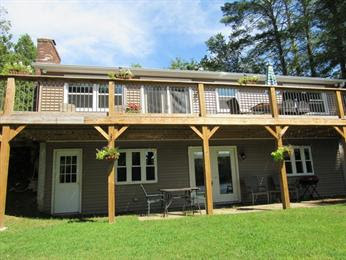
YES! We have your solution to get into Sturbridge! Newly renovated 4 bedroom, 2 bath home on Cedar Lake is available as a seasonal rental. If you need to have a beautiful energy efficient home for the winter while waiting to find your dream home then we have the answer! Approx 1700 sq feet of modern furnished rooms with lake cabin charm on a private road with easy highway access. Wood burning fireplace for those chilly winter nights! Beautiful views of Cedar Lake from the 40’ deck with 160 feet of water frontage. Lower level living space features a water view with the slider doors! As well as a full bath, family room, kitchenette and bedroom complete with an a/c unit! Available October 1st through April 30th. Rent includes furniture, occupancy and refuse removal. Tenant responsible for providing credit check and references. This is a great place to stay! Listed for $1,750/month!
Check out the full listing HERE!
By: Houselogic.com
What you need to know to get the best deal for you.
When it comes to evaluating offers, what’s good for the goose may not necessarily be good for the gander. One seller may be overjoyed with their offer, while another may be disappointed.
That means, in order to figure out whether an offer you receive is “good” —and whether you should negotiate — you’ll need to do two things:
So what do you, the seller, need to know before negotiate with a home buyer? We’ve got answers to some commonly asked questions.
What’s a Counteroffer?
When you receive an offer, you can accept it as-is, reject it outright, or make a counteroffer — a move that opens negotiations with the buyer.
Unless you’re being offered an amount equal to or above the full listing price, many buyers expect you to make a counteroffer — which is why a lot of people make an initial offer that’s lower than the asking price. And why a lot of buyers make an initial offer that’s lower than what they’re ultimately willing to pay.
What Should a Seller Prioritize?
Before you start negotiating, you’ll want to know what you’re hoping get from the buyer. Obviously, money is important. But it’s not everything. There are other factors to consider when crafting a counteroffer, particularly timing.
So, sit down with your agent and have an open discussion about your goals. Do you want more money? A faster closing period? Fewer contingencies? When you review these types of questions with your agent before you respond to an offer, and have a crystal-clear sense of your priorities, the negotiation process will go a lot more smoothly.
Who Has More Leverage?
Ready to play hardball? Hold up, slugger. First, you have to consider your position on the field. How much negotiating power do you really have? The answer depends on several factors.
A lot depends on your local market conditions. If you’re in a buyer’s market — meaning the supply of homes exceeds demand from buyers — you may have to make some concessions to secure an offer. If you’re in a sellers’ market — and homes are flying off the proverbial shelves, selling at or above list prices — you may be able to persuade a buyer to offer more money for the house, for instance, or to let go of some contingencies (aka provisions that must be met for the transaction to go through).
Your timetable will also impact whether you have the upper hand. If you’re not in a rush to sell, you may be free to negotiate more aggressively. If you’re in a time crunch because, say, you already bought your next home and don’t want to pay two mortgages at one time, your hands may be tied.
In any case: Confer with your agent. They can help you objectively assess your position and determine the right negotiating strategy.
How Long Can This Go On?
Don’t worry. It may only feel like forever.
When you make a counteroffer, the buyer can either accept the new offer, reject it, or make a new counteroffer. (Sound familiar?)
This volley can go back and forth, and potentially end in a stalemate — unless you or the buyer put an expiration date on your counteroffer. This can be a smart strategy for you as a seller because it puts pressure on the buyer to make a decision. It also gives you the ability to move on to the next bidder if the buyer tries to stall (chances are, they’ll do this so they can look at more homes without giving yours up).
It’s not unusual for the first offer to be best one — depending on market conditions, of course. And often, sellers see the most interest from buyers in the first month of the home being on the market.
If you get a good offer right off the bat, start negotiating. You may get a better offer. On the other hand, you may not.
Which Negotiation Tactics Are Most Useful?
The actual negotiation is the job of your agent, who will be experienced in real estate deal-making. That being said, you should still strategize with your agent before they make that counteroffer for you. Here are five ways you can nab a better deal:
1. Avoid making an emotional decision. It’s easy to get caught up by the emotional bond you’ve formed with your home. The backyard just might be where you got married. And that cozy office could be where your small business was born. But the important thing to remember is this: You have to detach yourself from your home. This is business — nothing more.
2. Know your bottom-line. Before moving forward, figure out what you need to get from the deal, at a minimum. That will give your agent a baseline when opening negotiations.
3. Negotiate a “clean” offer. You want an offer with as few contingencies as possible, since contingencies give the buyer the opportunity to back out of the deal. But some contingencies — such as an appraisal, an inspection, or a financing contingency — can’t be waived by home buyers who are obtaining mortgages because they’re typically required by a mortgage lender in order to approve the loan. Still, if you have multiple offers to choose from, you may be able to persuade a buyer to waive certain contingencies, such as a radon contingency or termite inspection contingency.
4. Offer a home warranty. In a buyers’ market, a low-cost way to make a deal more appealing to a buyer is to offer a home warranty — a plan that covers the cost of repairing home appliances and systems, like the air-conditioner or hot water heater, if they break down within a certain period of time (typically a year after closing). Home buyers love this extra security blanket, and the standard one-year basic home warranty will only set you back about $300 to $500.
5. Don’t overlook the closing date. Typically, the sale process — from accepting an offer to closing — takes about 30 to 45 days (sometimes a little longer). But in most cases, the faster you can close the better. Especially if you need cash to buy your next home. A quicker closing period has to be feasible for the buyer, however, and some types of home loans take longer to obtain than others.
Should I Start a Bidding War?
If you have more than one offer on the table, you might be tempted to pit buyers against each other and watch them duke it out for your home. (Anyone who’s seen The Bachelor knows that kind of drama can be fun, after all.) But think twice before you do: This strategy can backfire. Buyers may walk away in frustration.
Rather than starting a bidding war, ask all buyers to come back with their “best and final” offer by a certain deadline (say, within the next 24 hours), and then choose the one that’s right for you.
Remember: It’s Good to Give and Receive:
At the end of the day, receiving an offer is a good thing! It means you’re getting closer to a sale. But remember, you may have to give a little in the negotiations, too. Keep your head on your shoulders — don’t make an emotional decision — and you’ll be all the more likely to get what you want.
By: Houselogic.com
It’s not always about the money (except when it is).
The day will come — and it will be a wonderful, joyous, do-a-happy-dance day — when you receive an offer, or multiple offers, for your home.
And on that day, you’re going to face a question you may not have previously considered: How do you know if an offer is the best one for you?
Your listing agent will be a big help here. They will understand and help you suss out the merits and faults of an offer because — believe it or not — it’s not always about price.
One buyer’s beautifully high offer might not look so good anymore, for example, if you discover that it’s contingent upon you moving out a month earlier than planned. Or, conversely, you may prefer speed over price, particularly if you’re moving to a new city.
Your listing agent will have a sense of what you want financially and personally — and can help you determine whether the offer at hand satisfies those goals.
Before the first offer rolls in, here’s what you need to know about the offer evaluation process, including the main factors that should go into making a decision — accept or reject? — with your agent.
5 Important Things — Other Than Price — to Consider When Evaluating an Offer:
Want to fetch top dollar for your home and walk away with as much money in your pocket as possible? Of course you do.
You’ve gone through the time-consuming process of setting your asking price, staging your home, promoting your listing, and preparing for open houses — and should be rewarded for your efforts.
Your first instinct may be to just pick the highest bid on the table. But the offer price isn’t the only thing worth considering.
When vetting offers, evaluate these five areas in addition to price:
1. The earnest money deposit. One important consideration when weighing an offer is the size of the earnest money deposit. The EMD is the sum of cash the buyer is offering to fork over when the sales agreement is signed to show the person is serious (i.e., “earnest”) about buying your home. This money, which is typically held by a title company, will go toward the buyer’s down payment at closing.
A standard EMD is 1% to 3% of the cost of the home (so, that would be $2,000 to $6,000 on a $200,000 house). If a buyer tries to back out of an offer for no good reason, the seller typically keeps the EMD. Therefore, the higher the earnest money, the stronger the offer.
2. The contingencies. Most offers have contingencies — provisions that must be met for the transaction to go through, or the buyer is entitled to walk away from the deal with their earnest money. Contracts with fewer contingencies are more likely to reach closing, and in a timely fashion.
Here are five of the most common contingencies:
These contingencies are standard for most real estate sales contracts. There’s one exception: the sale of current home contingency, which tends to be used more often in strong buyer’s markets, when buyers have greater leverage over sellers.
That being said, contingencies are always negotiable. (The caveat: Mortgage lenders require borrowers to have appraisal financing contingencies, or they won’t approve the loan.) It’s up to you to decide what you’re comfortable agreeing to, and your agent can help you make that decision.
3. The down payment. Depending on the type of mortgage, the buyer must make a down payment on the house — and the size of that down payment can affect the strength of the offer. In most cases, a buyer’s down payment amount is related to the home loan they’re taking out. Your chief concern as a seller, of course, is for the transaction to close — and for that to happen, the buyer’s mortgage has be approved.
Generally, a larger down payment signals the buyer’s financial wherewithal to complete the sale. The average down payment, according to the NATIONAL ASSOCIATION OF REALTORS®, is 10%. Some mortgage products, such as FHA and VA loans, allow for even lower down payments.
If, by chance, the appraisal comes in higher than your contract’s sale price, the buyer with a higher down payment would more likely be able to cover the difference with the large amount of cash they have available.
4. The all-cash offer. The more cash the buyer plunks down, the more likely the lender is to approve their loan. That’s why an all-cash offer is ideal for both parties. The buyer doesn’t have to fulfill an appraisal contingency — whereby their lender has the home appraised to make sure the property value is large enough to cover the mortgage — or a financing contingency, which requires buyers to obtain mortgage approval within a certain number of days. As always, having a sales contract with fewer contingencies means there are fewer ways for the deal to fall through.
5. The closing date. Settlement, or “closing,” is the day when both parties sign the final paperwork and make the sale official. Typically, the whole process — from accepting an offer to closing — takes between 30 and 60 days; however, the average closing time is 42 days, according to a report from mortgage software company Ellie Mae.
Three days before closing, the buyer receives a closing disclosure from the lender, which he compares with the loan estimate he received when he applied for the loan. If there are material differences between the buyer’s loan estimate and closing disclosure, the closing can’t happen until those amounts are reviewed and approved. But this is rare.
Some transactions can take more time, depending on the buyer’s financing. For example, the average closing time for a Federal Housing Administration (FHA) loan is 43 days, according to Ellie Mae.
Whether you want a slow or quick settlement will depend on your circumstances. If you’ve already purchased your next home, for instance, you probably want to close as soon as possible. On the other hand, you may want a longer closing period — say, 60 days — if you need the proceeds from the sale to purchase your new home.
YES! We have your solution to get into Sturbridge! Newly renovated 4 bedroom, 2 bath home on Cedar Lake is available as a seasonal rental. If you need to have a beautiful energy efficient home for the winter while waiting to find your dream home then we have the answer! Approx 1700 sq feet of modern furnished rooms with lake cabin charm on a private road with easy highway access. Wood burning fireplace for those chilly winter nights! Beautiful views of Cedar Lake from the 40’ deck with 160 feet of water frontage. Lower level living space features a water view with the slider doors! As well as a full bath, family room, kitchenette and bedroom complete with an a/c unit! Available October 1st through April 30th. Rent includes furniture, occupancy and refuse removal. Tenant responsible for providing credit check and references. This is a great place to stay! Listed for $1,750/month!
By: Stacey Freed
A little shelf here, a big shelf there. You’d be surprised where they can fit.
Finally, you get to take that beach vacation in the dead of winter. But where is your beach towel?!? You know it’s somewhere in that linen closet, but (sigh) it’s so crammed you can’t find it.
One of these days, you’re going to have to figure out how to get more storage space so you can find this seasonal stuff faster. But the last thing you want to do is go out and buy more stuff to put more stuff in.
There’s a better way — shelves. Not the bookshelf kind (they only take up floor space), but shelves you can incorporate into your home’s architecture for an interesting, personalized look that also solves nagging storage issues.
Here are five unexpected places shelves can boost your home’s storage and personality:
#1 Over the Bathroom Door:
Seems like your bathroom can never have enough storage, especially for that recurring avalanche of towels in your itty-bitty linen closet. But if your ceiling is high enough, you’ve got enough space to tuck those extra towels you only need for overnight guests.
Opt for larger items that are easy to see and grab, such as towels, bedding, or bath tissue. “If this were filled with tiny boxes or soaps, it would look like you needed more storage and had to start building down from the rafters to hold stuff,” says Lorraine Bohonos, professional organizer and owner of HomeFree, in Rochester, N.Y. says. Plus, it’s impractical to store tiny things up high where you can’t see them.
#2 On Windows:
Gasp! Who would put shelves in windows and block the light?!
You would, if they’re glass shelves. Adding glass shelves in a sunny window for indoor plants is a great way to allow light and nature to filter into your home. Plus, glass shelves have such clean lines, Bohonos says, so they don’t overwhelm the room.
As with those pictured, keep the bottom shelves and floor space relatively open to let in plenty of light. “It gives an airiness and it’s inviting,” Bohonos says. You get some storage without having to give up privacy or natural light.
#3 Underneath Stairs:
The space under stairways has been used to stash everything from vacuum cleaners to boy wizards, but you can open up that space to be visually appealing as well as functional. “Doing this adds interest to a space that would be pretty boring without anything there,” Bohonos says, and makes a room feel larger.
“Shelves like this make a nice horizontal balance to the shape of the space. For storage, you can put containers on the floor underneath,” Bohonos says. But you don’t want to overdo it or you’ll ruin the spacious effect.
#4 In-Between Your Walls’ Studs:
There are all kinds of storage space around us if we just look. In most walls, especially in newer construction, studs are 16 inches apart. Knock out the drywall between those studs, and you’ve got a spot for built-in storage that gives your home that something special.
“These kinds of shelves have clean lines and add a bit of interest,” Bohonos says. But she cautions that things should be neatly placed and in good condition.
“If it’s well set up, it can look like a piece of art,” she says.
#5 All Over Your Kitchen Walls:
Now that you know about the secret spaces in your home’s walls, opening up your kitchen walls (especially all the way up to the ceiling) is a very doable idea to maximize every inch of a small space.
“This is functional beauty. It has to be pleasing to the eye — and look as if every item has a mindful spot,” Bohonos says.
She suggests that before committing to open shelves in your kitchen, ask yourself if you’re okay with what people will see there. If not, get back to your regularly scheduled weekend. Otherwise, curate what will live on your new open shelves (and, remember, you’ll have to dust more often than usual).
Focus on function and form. If you entertain often, don’t put your favorite serving plate on the top shelf — no matter how good it looks there. Put rarely used attractive items (that Le Creuset roaster you only use on Thanksgiving) up there instead.
 Real Estate and *stuff *