Real Estate and *stuff *
A real person helping real people with real estate
You can scroll the shelf using ← and → keys
You can scroll the shelf using ← and → keys
 What’s in a paint color name?
Whether it’s Harbor Fog, Just Peachy, or Van Buren Brown, an enticing paint color name has the power to excite, persuade, and ultimately close a sale.
But no matter how much Crème Brulee or Butterscotch Tempest may whet your appetite for freshly painted walls, your satisfaction is going to come down to good surface prep, and selecting a top-performing paint.
Do paint names come from thin air?
Creating paint names is more serendipity than science. And, it turns out, no two paint namers name alike.
“There’s no book on this; very few people do this, and we all do things differently,” says Mary Lawlor, manager of color marketing for Kelly-Moore Paints. In a typical year, a professional paint namer may be asked to come up with hundreds of new names — all checked against a master databank of paint names for originality.
Flowers, which stimulate scent and sight, are wellsprings of inspiration. Places, such as the French Riviera or Monte Carlo, evoke enviable lifestyles. And fabrics — satin, cashmere, even mohair — recall texture and feel.
But nothing stimulates the color imagination like food, which adds taste to the mix of memories.
No matter what it’s called, a paint by any other name is still a paint. To get results you love, buy quality paints and take the time to prepare surfaces properly.
Top-rated interior paints recommended by Consumer Reportsinclude:
For good surface prep, follow these guidelines:
If you could name a paint color, what would it be?
 Lawn Work Ranks Low on Americans’ Hit Parade of Chores! When it comes to lawn chores, we’d rather open wide and say “ahhhh” than mow and weed.
Americans would rather see their dentist or visit their in-laws than spend time with their lawns.
In fact, we would rather do just about anything than mow, fertilize, and perform other lawn care chores, according to a Consumer Reports survey of 1,000 adults nationwide.
When asked about which tedious chore they would like to do, only 7% said lawn care. Here are the activities that ranked higher:
What chores would you pick over lawn care? Any chores that rank lower?
 If you want a yard that demands less time money and water consider low-maintenance grasses in lieu of the traditional lawn.
We love our lawns. Turf grass covers nearly 47 million acres in the U.S., according to the Lawn Institute. But that’s not very green. The average household dumps 60 gallons of water per day on conventional lawns. Toxic lawn herbicides and pesticides run off into lakes and streams. Gas-powered mowers spew pollution. And then there’s the watering, weeding, seeding, sodding, thatching, and mulching commitment.
If you’re looking for an alternative, consider replacing some or all of your high-maintenance turf with innovative grasses that require little or no water or mowing once established, or ground covers that form walkable “carpets.”
In turn, you’ll reduce the need for irrigation, stop washing harmful chemicals into the watershed, add depth and texture to your landscape, and spend your spare time enjoying your yard instead of manicuring it.
Low-maintenance turf grasses
If you need grass for kids or pets, consider new “miracle” cultivars or blends. UC Verde Buffalo Grass, for example, delivers lush, silky blades that require little or no water once established, rarely need mowing, and need no fertilizer or pesticides. The secret to these grasses are long (but noninvasive) roots and thin blades. Make sure you get the right fescue, or grass, blend for your soil type and growing zone.
“No Mow Lawn Mix” is great for open, sunny swaths where native prairie grasses once grew, such as the cooler, medium-rainfall areas of the upper Midwest, Northeast, and Pacific Northwest. And hardy Eco-Lawn thrives even in difficult spots, such as under spreading trees or in clay soils.
The cost of growing these blends from seed is comparable to that of conventional grass seed. No Mow Lawn Mix, for example, costs $3.75 to $5.95 per pound; you need 5 pounds per 1,000 square feet, which translates to about $0.02 per square foot. Planting grass from plugs is more expensive; you’ll need at least 1 or 2 plugs per square foot, at a cost of about 50 cents per plug.
Sedge: One of the most exciting breakthroughs in turf concepts in recent years has been the development of sedge lawns. Sedges look a lot like conventional turf but have more in common with native grasses that existed in America before sod-busting development and agriculture. The great thing about them is that they require little or no mowing, fertilizing, or chemicals. Some require less water than many conventional turf grasses. Others tolerate wet, moist areas, and many thrive in shade.
Ornamental grasses: This term covers both grasses and grass-like plants, such as sedges. For our purposes, we’re talking low-water, native grasses. Low to medium-height species can be used en masse as meadows. Tall ones function as vertical elements in a landscape. Check with your local extension service to find out which kinds are native to your area. What might be native to one region, such as pampas grass, may well be invasive in another.
Synthetic grass: Synthetic grass is starting to get some respect, thanks in part to increasingly urgent water restrictions in parts of the country, and because new versions are so amazingly lifelike. Synthetic turf requires zero water or mowing, which does wonders for your carbon footprint. The grass looks perfect—and perfectly real—and is suitable for either an expansive play area or a little jewel box of a garden nook, particularly where nothing else will grow.
On the downside, lawns made of petrochemical plastics can feel stifling in hot weather and offer no habitat for birds or insects. Some communities have protested the use of synthetic turf in institutional landscaping like school soccer fields, amid health concerns that the recycled-tire crumbs used as infill to provide drainage and keep blades from matting contain high levels of toxins.
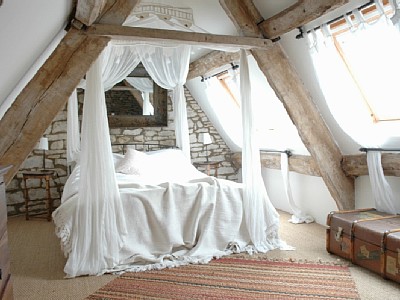 Attic bedrooms are very popular and I see them frequently. When a family grows or needs additional space, it’s an area they look to if the basement is already being used as a workshop or for storage. In terms of a remodeling project – this project has a high return on the investment:
 What I have seen that holds these spaces back from being attractive to the next buyer is if they were done correctly. When remodeling unused attic space into an attic bedroom, make sure your new retreat has adequate storage, sound insulation, and safety equipment.
Creating an attic bedroom from unclaimed space is an excellent way to add living area without adding onto your house. An attic bedroom also is a good investment. According to Remodeling Magazine’s annual Cost vs. Value Report, an attic bedroom returns more than 72% of the original cost. Here’s how to make sure your new attic bedroom is a pleasant, quiet retreat with adequate storage, sound insulation, and safety equipment.
Soundproofing your attic bedroom
Because attic bedrooms often are positioned above other bedrooms, you’ll need to “deaden” the sound between floors. Here are your options to quiet down a 15×15-foot attic bedroom floor:
Attic ideas for creating storage
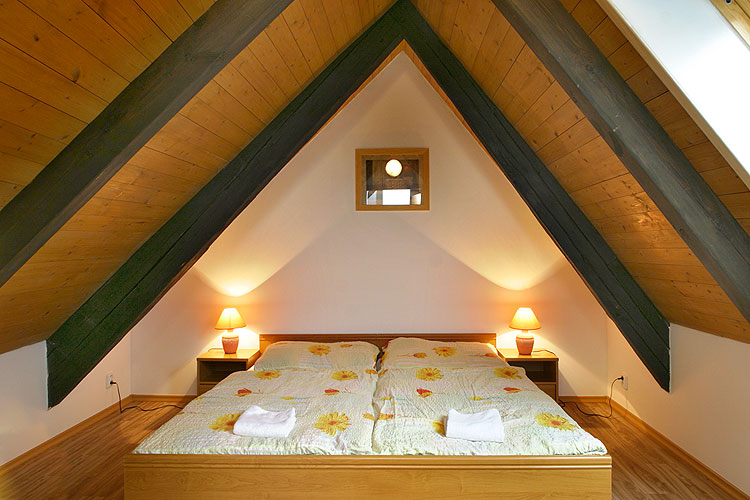 Sloped ceilings make creating storage in attic bedrooms more difficult than in other parts of the house. You can pick up some storage space by installing built-in cabinetry in knee walls and by building a flip-top window seat under a dormer window.
Be sure to insulate any cabinet walls or shelf backs that abut unfinished attic space.
Provide a safe way out
 Residential codes require two ways out of any bedroom in case of an emergency. In a remodeled attic, you’ll need an escape ladder, which you can hide in a built-in window seat.
Ladders for a third-story window can cost $70 to $100; expect to pay $300 for ladders with their own cabinets. Be sure to tell guests where the ladder is hiding.
Have you put in an attic bedrooms? If so – share your pictures!
Space heaters used to be clunky plugins that squatted on the floor and scared the fluff off your cat. No more — these 5 space heaters are totally cool.
 This radiant heat panel — the mirror and towel bar on the left — is so integrated into this bathroom that you may not even notice it. Image: Warmly Yours
You’ve probably heard of radiant heating for floors, created by snaking heating tubes or cables under floors. But that’s not the only application for this efficient, quiet method of heating. Manufacturers now produce radiant panels for walls, ceilings, and other locations.
Radiant heat, also known as infrared radiant heat, is especially efficient, heating solid objects such as chairs and people without heating the air. The warming effect of radiant heat is practically instantaneous, and solid objects store the heat and stay warm even after the system switches off.
(Forced-air heating does the opposite, heating the air first, which then eventually warms people and surfaces. When a forced-air system shuts off, temperatures fall rapidly.)
Radiant panels come in many sizes, from a couple of square feet to 30 square feet and larger. Because no heat is lost in air ducts (there aren’t any), radiant panels are especially energy efficient, and the use of supplemental radiant panels to selectively heat rooms helps reduce annual energy costs by 10% to 30%.
 Finding the best heating solution for a specific situation is a fine art — sometimes literally. A thin-film, infrared radiant panel made by Prestyl USA hangs on a wall and looks just like artwork, custom-printed with a design or photo you submit.
“We just need a digital high-pixel image that you have the rights to,” says the president, Thom Morrow. “So no Seattle Seahawks logos. But a portrait of the family, fine. Or dog or horse or the old family farm.”
These plug-in art panels project out from the wall just 1½ inches. Inside is a carbon-based material that absorbs energy when current passes through. The panel then releases the energy as infrared light waves.
An artistic panel isn’t cheap, but you can take into account what you might spend on equivalent artwork. Prestyl’s plain 2-by-2-foot panel, suitable for an 8-by-10-foot room, costs $352, plus $180 if you want an image, or a total of $6.65 per square foot of living space.
 If you heat with electricity and live where electrical rates are lower at off-peak hours, an electrical thermal storage heater could save you money.
This kind of heater consists of a well-insulated shell filled with ceramic bricks that efficiently absorb and store heat. The bricks heat up during hours when power rates are low, then release the heat, using a blower, when the rate rises, potentially saving you hundreds of dollars a year.
Al Takle, national sales manager for Steffes Corp., says the units only make sense where rates dip for part of the day. Where’s that? He listed:
Thermal storage heaters sit on the floor and are about 12 inches deep, 24 inches high, and 30 to 60 inches long. They require only a little clearance on sides and the top, so you can easily build them into bookcases or window seats. Costs range from $1,200 (for a small bedroom or office) to $2,200 (for a 1,000-square-foot, open living room and kitchen space), or $2-$12 per square foot of living area.
 If you’re looking to retrofit an older home that doesn’t have ductwork, or you’re adding on and tying into your existing HVAC system is problematic, a ductless heat pump could be the answer.
Developed in Japan 30 years ago, many heating contractors in the U.S. are just now learning about this option, also known as a mini-split. There are only two main components: an outdoor compressor unit and an indoor air handler, which is typically installed high on an outside wall.
A small tube delivers conditioned air directly to the room. Because there’s no long expanse of ductwork, ductless heat pumps operate up to 50% more efficiently than traditional forced-air systems.
The installed price is around $5,000 for equipment that handles 1,100 square feet, or $5.45 per square foot of living space. Many power companies offer rebate incentives, sometimes for as much as $1,500, to customers who switch from other kinds of electrical heating.
 For a floor-model space heater that’s out of this world, look to Dyson — the company that seems to delight in reinventing ordinary household items.
The Dyson Hot fan heater looks like a space creature that never got around to developing a face. It generates heat like any other electrical-resistance heater, but there’s no visible whirling fan, so you don’t have to worry about whether a curious kid will stick in a finger to see what happens.
Even though you don’t see a fan, the heater does blow out a steady stream of warm air. The heater pushes air over its curved surfaces to increase output, much the same way an airplane wing accelerates air flow. The fan head oscillates, and you can tilt the device to direct the air flow.
The Hot fan costs $400 and is suitable for small to medium-size rooms, or about $4 per square foot of living space for a 10-by-10-foot room.
 Tight-fisted lenders have made home equity loans harder to come by. So what’s a fixer-upper to do? Meet the 203(k) loan.
Lenders’ weak stomach for extending credit doesn’t have to sour your upgrade dreams. The old but new again FHA 203(k) loan rolls remodeling and mortgage costs together, whether you’re buying or refinancing an existing home loan to pay for upgrades.
First, some 203(k) basics:
Now, 13 rules for what you can and can’t do with a 203(k):
1. You can buy a fixer-upper so awful it wouldn’t qualify for a regular home loan. Whether buying or refinancing, all that needed work might keep your home from qualifying for a regular bank loan. Banks don’t finance homes in ill repair because they’re too hard to resell if they have to take the house back via foreclosure.
2. You can DIY with a 203(k) if you can show you know how to DIY. You can do the work yourself, or act as your own general contractor, if you can prove you’ve got the chops, and can get the job done on time (the maximum timeframe is six months). Of course there’s a catch: When you DIY, you can only use the 203(k) proceeds for supplies. You can’t pay yourself to do the work on your own house.
3. You can use a mini 203(k) for mini-sized projects. If you’re just doing your kitchen, bathroom, or another project that costs $35,000 or less, there’s a streamlined version of the 203(k) designed just for limited-size projects.
4. You can’t use it to buy a new-construction home. The house you’re fixing up has to be at least a year old.
5. You can’t use it to buy and install a new toilet, even one of those fancy Totos. You have to spend at least $5,000 on your renovation to use the 203(k) program. And the whole mortgage, including those remodeling costs, has to be under the FHA mortgage limit for the area where you live.
6. You can expect the lender to be up in your grill about how and when the home improvements get done. An inspector will be dispatched to your home multiple times to check in on the progress, which is why rule #7 is so important.
7. You have to keep your contractor from going on a long vacation to Europe.
Doing it yourself? The same timelines apply. So no long vacations for you until the work gets done.
8. You can use the loan to make your mortgage payments if you can’t live in the house until the work is done. This is one sweet provision of the 203(k) program because it means you don’t have to make a mortgage payment on the home you’re remodeling and pay to live somewhere else while the work is going on.
You can use the 203(k) loan to pay for up to six months of principle, interest, taxes, and insurance payments when your property is going to be uninhabitable because of the renovation work.
9. You can use it to make energy-efficiency upgrades like installing a new furnace, windows, or attic insulation. You can get a 203(k) loan to pay for 100% of the cost of energy-efficiency improvements. You don’t have to get those improvements appraised, but they do have to be cost-effective, meaning they’ll pay for themselves over their useful life. The HUD inspector will make the call.
10. You can rip the house down if you plan to build something in its place. As long as you keep the foundation of the home, you’re good to go.
11. You can have a little shop downstairs. It’s kosher to use a 203(k) loan to remodel a home that includes some commercial space, as long as you use the money only for projects in the residential part of your home and the amount of commercial space doesn’t exceed these limits:
13. You can’t break these rules or the lender can take its money back.Like immediately. Your lender can also refuse to advance you any more money or apply any money left in the escrow account to reduce what you owe on the mortgage.
 Oh yes – we still have a few more resolutions to keep up with! It’s still January! Based on the most-common top-ten resolutions gathered by “Time” magazine, USA.gov, and other sources, here is #3 on an inspiring list of home management goals.
3. Get out of debt (budget for improvements)
Creating a yearly budget for home improvement and maintenance helps prevent overspending, and encourages you to put aside money for major replacements — such as new roofing or a kitchen appliance — that come up every few years.
Protect your home finances by knowing how much you’ll probably spend each year. Data from the U.S. Census Bureau says that average annual maintenance and home improvement expenditures are about $3,300 per household. Leading lending institutions agree; HSH Associates and LendingTree.com place average costs of yearly maintenance and upkeep at 1% to 3% of your home’s initial price.
That means the owner of a $250,000 home should budget between $2,500 to $7,500 each year for upkeep and replacements. Have extra at the end of the year? Save it for more costly upkeep and replacement items down the road — you’ll probably need it then.
When the new year arrives, promises and resolutions abound. Here’s the top-10 list of what the resolute home owner should accomplish this year. Here’s Number Two on the Top 10 List of New Year’s Resolutions for your Home…

The EPA lists indoor air quality as one of the top environmental health hazards. That’s because indoor air is full of potential contaminants, such as dust, mold spores, pollen, and viruses. The problem is at its worst during winter, when windows and doors are shut tight.
You can help eliminate harmful lung irritants in your home with these maintenance and improvement tips:
This time, it’s going to be different. A brand new year, brimming with possibilities, and you’ve resolved to move through your house like a whirling tornado of can-do, fixing and painting and organizing. This year, nothing will stop you.
Welcome to your home improvement New Year’s Resolutions.
Based on the most-common top-ten resolutions gathered by “Time” magazine, USA.gov, and other sources, here is an inspiring list of home management goals.
Ready for 2012? Here it comes the first of the top 10 New Year’s Resolutions for your home:
1. Lose weight (cut energy use)
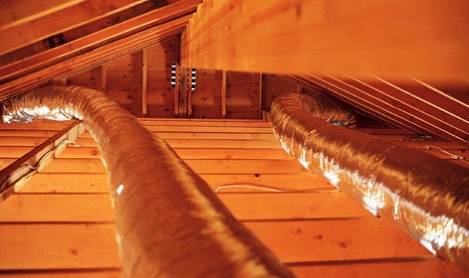 Your house is a glutton, gobbling energy like a starved elephant. Gain control by trimming energy use.
A good place to start is your HVAC ductwork. Ducts are notorious energy-wasters, leaking your heating and cooling air through holes and loose connections.
Sealing and insulating your ductwork can improve the efficiency of your heating and cooling system by as much as 20%, saving you $200 per year or more, according to Energy Star. You’ll make your home more comfortable, and a more-efficient system helps extend the life of your furnace, air conditioner, or heat pump.
Because ducts are usually hidden inside walls, ceilings, attics, and crawl spaces, sealing and insulating them may be a difficult and time-consuming DIY job. If you can’t reach all your ducts, concentrate on those that are accessible.
Use duct sealant — called mastic — or metal-backed tape to seal the seams, holes, and connections. Don’t use the confusingly named “duct tape,” which won’t provide a permanent solution. Be sure to seal connections at vents and floor registers — these are likely places for leaks to occur.
After sealing your ducts, wrap them in fiberglass insulation. Most hardware stores and home improvement centers have insulation wrap products made for ducts.
A professional heating and cooling contractor will charge $1,000 to $4,000 for the work, including materials, depending on the size of your home and accessibility to your ducts.
Insulating your ductwork may qualify for a rebate from your state or local municipality. Check the Database of State Incentives for Renewables & Efficiency.
I hope everyone is warm and safe today! We have rescheduled the open house that we had planned for today at 1565 Main Street in Holden to Wednesday, January 18th at 5pm.
1565 Main Street is brand new from the studs forward and is a masterpiece of luxury, upgrades and flexbility. This multi-level contemporary offers a first floor master, in-law suite and the possibility of commercial zoning.
We are open this Sunday, January 15th 1:30 to 3pm and also open Wednesday January 18th 5pm to 6:30pm with special guest Dan Woznicki from Wells Fargo. Dan will be available to discuss upgrade opportunities and financing options with Wells Fargo.
Don’t miss out on this house! Check out the pictures or watch the video here: http://www.youtube.com/watch?v=QCfm2H4V2cw


 Real Estate and *stuff *