Real Estate and *stuff *
A real person helping real people with real estate
You can scroll the shelf using ← and → keys
You can scroll the shelf using ← and → keys
How to reshape your house for the way you live now — and take control of your future.
by: Gale Steves
As if experiences gained through reaching midlife weren’t enough, the pop of the housing bubble and the uncertain drumbeat of economic news reinforce a resounding truth: things change.
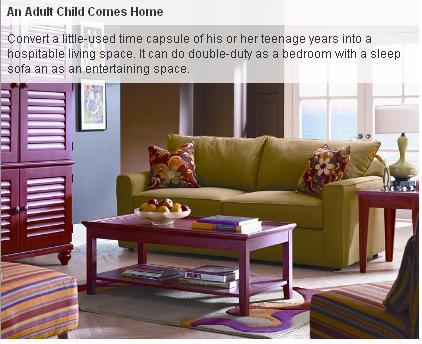 Maybe you’re working from home more often these days, or maybe you’re not sure where you’ll be working after the next quarter. Perhaps you’ve recently divorced, or your postcollege kids have moved out of the house, although a lot of their stuff hasn’t.
Many people in such circumstances consider downsizing — moving to a smaller, easier-to-manage home. But if Sonny doesn’t get a job within the next few months, he may be back. And it might not be too long until Mom will be unable to continue living on her own. Downsizing might not be the right thing right now.
But rightsizing may be. As things change, homes can change, too.
Rightsizing is the concept of working with what you have by making better use of existing space. It is a process in which you analyze the spaces in your home, how you currently use them and the practical possibilities to adapt them to better serve your needs and lifestyle. The promise is that you can live more fully in your longtime family home if you rightsize — and avoid the wrenching process of moving. Whether you’re driven by immediate or future needs, now may be the time to look at your home in a new way.
Rightsizing questions
The rightsizing process starts with an analysis of the existing spaces within your house and how they’re being used. Since home designs and individual lifestyles are diverse, it’s not possible to formulate a definitive list of questions, but typical issues include:
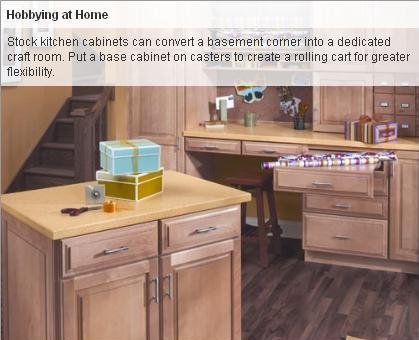 The point is to assess how you actually use the defined spaces in your home. For example, a foyer may be superfluous if your main entry is through the mudroom or garage. Similarly, the oversized great room of the 1990s doesn’t necessarily work for every family. This space might incorporate too many functions to be shared comfortably: TV viewing, eating, homework, reading or game playing. The dining room that gets used three times a year can be repurposed. And for many of us, one home office may simply not be enough; in this economy, more than one family member may be working from home.
How do you want (need) to live in your house?
Next, ask yourself what kind of spaces you really need in your home now. These questions often arise from lifestyle changes that typically occur in midlife, which may make new demands on the spaces available in your home:
Of course, there are many more questions depending on the size and floor plan of your home. But the answers to this set of questions typically can be found in your answers to the first set, which pinpointed the underused and misused areas of your home.
Rightsizing solutions
Start by forgetting about the traditional room names. Give yourself permission to reimagine how these spaces can be used based on your
family’s needs and varied activities. Often, the key to discovering good, usable space is decluttering — clearing out furniture and other items that have accumulated over the years. Visualize how the room would look, and then create a floor plan to work out the furniture changes before you begin to move things around.
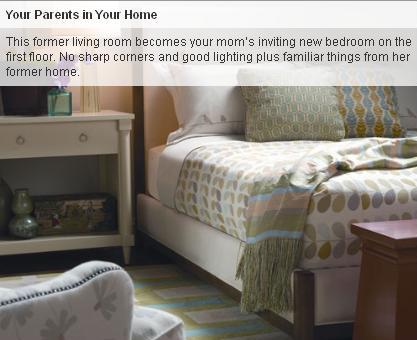 Take that seldom-used living room, for example. It could be a new office for a home-based business with easy access to the front door. Or it may make a perfect “chat room” for quiet conversations when the great room is otherwise occupied with sound and music. If Grandma is coming for an extended stay, could it be reconfigured as an easy-access, main-floor bedroom so she doesn’t have to climb the stairs? Can the first-floor powder room be expanded to a full bath just for her? She might enjoy helping in the kitchen if she didn’t have to reach so high for things stored in the wall cabinets, if she could work while sitting at a counter. Maybe some cabinet reconfiguration and pullout storage accessories are in order. Wouldn’t these rightsizing changes make sense for your own aging-in-place strategy?
Many more possible scenarios can be addressed with rightsizing so you can stay in your home for life (see “Rightsizing Strategies” below). All it takes is honest analysis, a little imagination and the will to change things for the better.
NEED MORE OFFICE SPACE
NEED STUDIO OR HOBBY SPACE
ADD ACCESSIBLE QUARTERS FOR ELDERLY RELATIVE
ADD QUARTERS FOR A BOOMERANG CHILD
NEED EASIER-TO-MANAGE KITCHEN
NEED QUIET SPACE TO READ AND RELAX
NEED MORE STORAGE SPACE
NEED TO MOVE LAUNDRY OUT OF THE BASEMENT
CONVERT POWDER ROOM INTO FAMILY BATH
Gale Steves is author of Rightsizing Your Home: How to Make Your House Fit Your Lifestyle (Northwest Arm Press). She writes about home design issues.
Once you start to develop a natural and nontoxic lifestyle, you can transform your home into a sanctuary of health, comfort and rejuvenation. Office Supply
check out this site for Garage Cabinets to make any garage great


 Real Estate and *stuff *