Real Estate and *stuff *
A real person helping real people with real estate
You can scroll the shelf using ← and → keys
You can scroll the shelf using ← and → keys
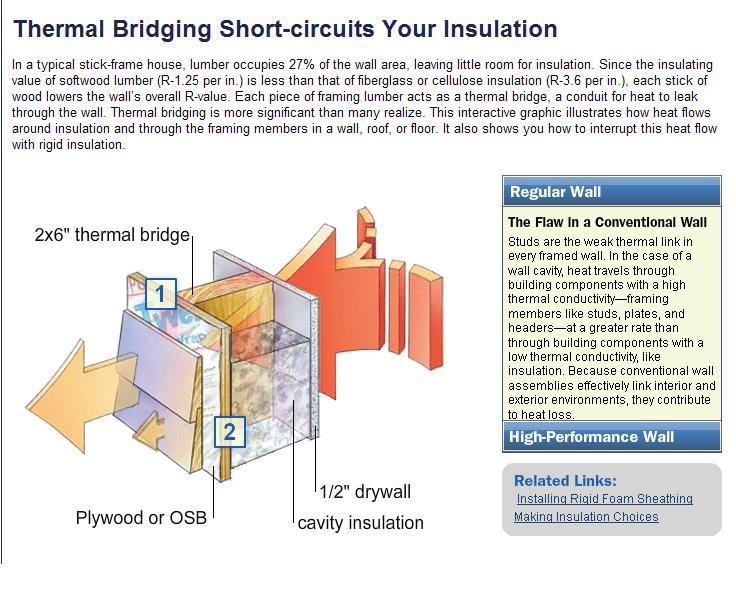
…but it’s really not. The traditional stick-frame house (which most of us live in) has walls built with lumber. 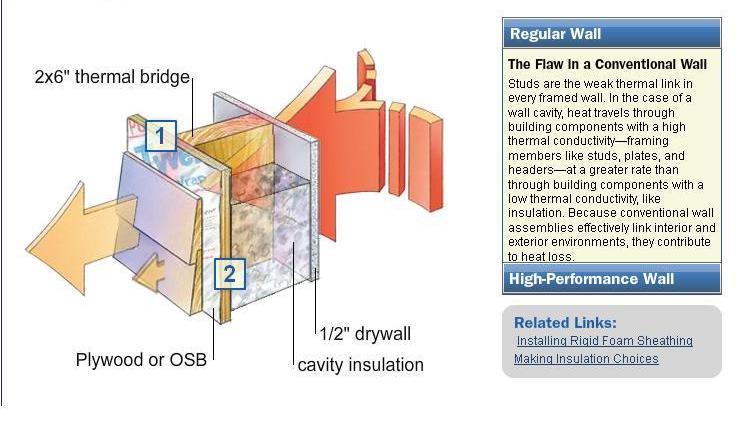 We put some insulation in-between the lumber and then attach interior walls. On the outside…if the house was built recently (in the past 30 years)…we hopefully have some plywood or OSB and then Tyvek house wrap. On top of that we put up our exterior siding of choice.
That sounds simple…and effective.
Or at least…I thought it would be effective. The framing lumber actually acts as a thermal bridge to help the heat escape from our homes through the walls. This reduces the overall effectiveness of the insulation and all our efforts to conserve energy.
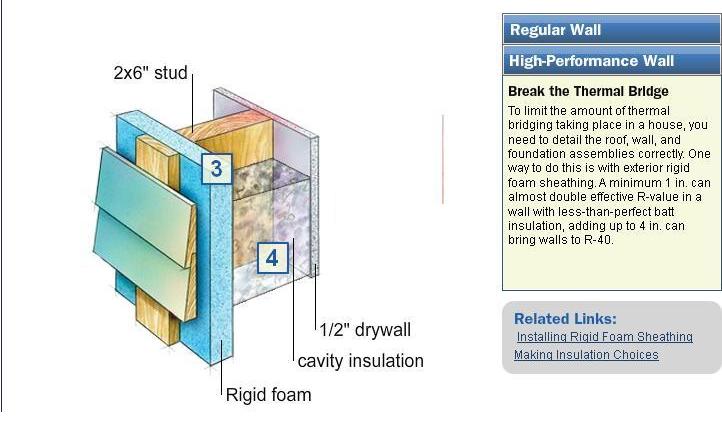 We can mitigate this mysterious concept of “thermal bridging” by adding rigid foam insulation to the exterior wall before we put on our exterior siding. A minimum of just one inch of rigid insulation can almost double the effective R value of a wall. The rigid foam (installed properly) creates the barrier that stops the thermal bridging and keeps more heat in our homes.
To see an interactive graph of the effect of thermal bridging on a traditional wall and a wall built with this in mind…click http://www.finehomebuilding.com/pages/thermal-bridging/. Fine Homebuilding has both a website and a magazine that you can pick up in your local Home Depot or Lowes. The website does have quite a few articles that are free without the subscription such as this one. It’s a great idea to think about when you’re doing your next home improvement project.
 Real Estate and *stuff *